










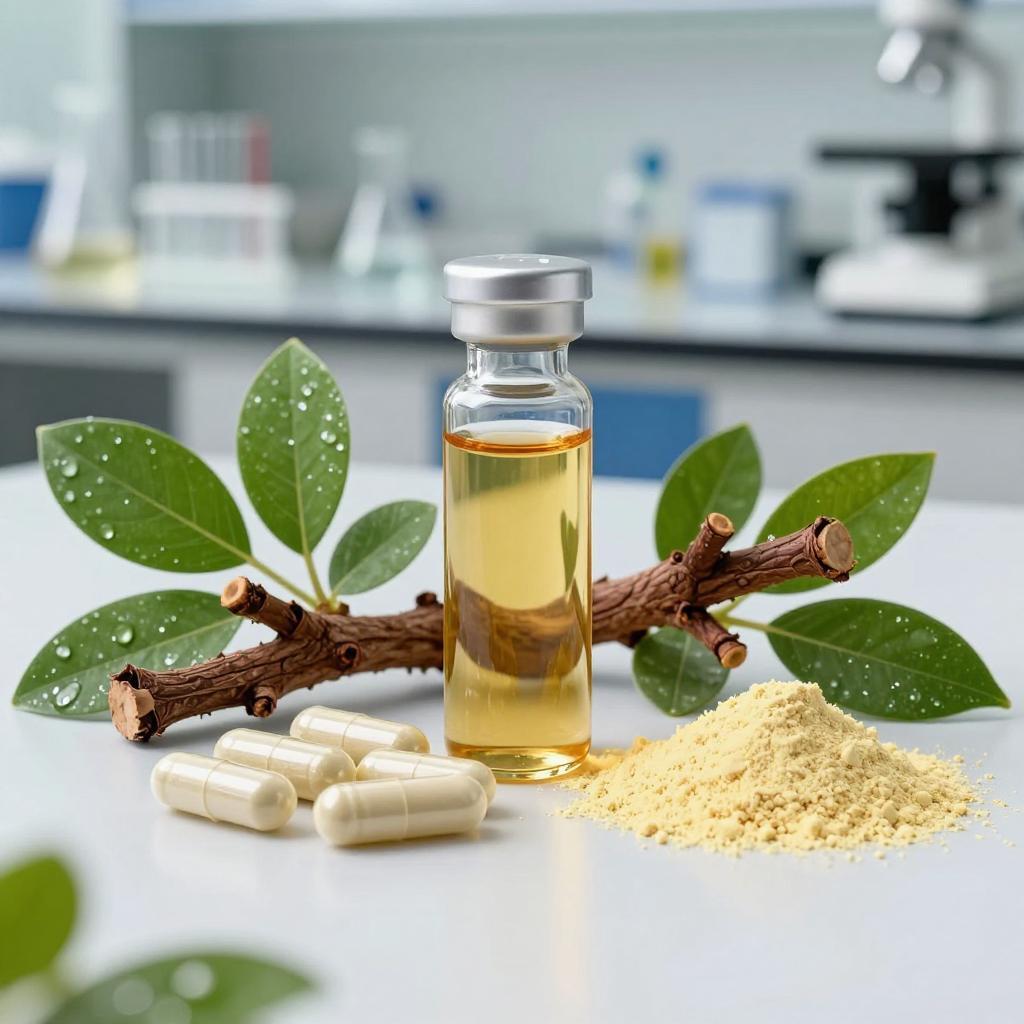
What Is Rhodiola Rosea Extract — And Why Is It Trending Now?
Few botanical ingredients have earned as consistent a reputation across traditional medicine and modern clinical science as Rhodiola rosea. Native to the Arctic and alpine regions of Siberia, Scandinavia, and the Tibetan Plateau, this perennial herb — colloquially known as “golden root” or “Arctic root” — has been used for centuries by Siberian communities to combat fatigue, enhance physical endurance, and build resilience against harsh environmental conditions. Today, it sits at the intersection of two of the fastest-growing supplement categories: adaptogens and cognitive health.
Understanding what drives the demand for Rhodiola rosea extract — and what separates high-quality product from commodity powder — is essential knowledge for any brand, formulator, or buyer operating in the nutraceutical space.
The Active Compounds: Rosavins and Salidroside
The pharmacological relevance of Rhodiola rosea extract is anchored in two primary classes of bioactive compounds:
Rosavins (rosavin, rosarin, rosin) — cinnamyl alcohol glycosides unique to R. rosea, distinguishing it from related species such as R. crenulata. Premium extracts are typically standardized to a 3% rosavin concentration.
Salidroside (p-tyrosol-glucoside) — a phenylpropanoid with demonstrated antioxidant, neuroprotective, and anti-fatigue properties, generally standardized at 1% in commercial extracts.
These two marker compounds work synergistically. Research published in the Bulletin of Experimental Biology and Medicine demonstrated that the endurance-enhancing effects observed in animal models were attributable specifically to the rosavin-salidroside complex — not salidroside alone — which explains why authentic R. rosea outperforms related species with higher salidroside content.
It is worth noting that Rhodiola rosea is classified as a CITES-listed species in some sourcing regions, meaning compliant exports require documentation to verify legal and sustainable collection. This regulatory layer makes traceability and certification a critical factor when evaluating extract suppliers.
Clinically Researched Benefits: What the Evidence Says
The body of evidence supporting Rhodiola rosea extract spans multiple domains of human health:
Cognitive Performance & Mental Fatigue A randomized, double-blind, placebo-controlled study (Phytomedicine, 2000) involving physicians working night shifts found that participants taking Rhodiola extract showed significantly reduced fatigue and improved cognitive function scores compared to placebo — effects observed within the first two weeks of supplementation. A 2012 study in Planta Medica further confirmed reductions in self-reported burnout symptoms in a stressed adult population over 12 weeks.
Stress Response & the HPA Axis Rhodiola rosea modulates the hypothalamic-pituitary-adrenal (HPA) axis — the central regulator of the body’s stress response. By influencing cortisol release and increasing stress protein synthesis (particularly Hsp70), the extract helps recalibrate physiological responses to acute and chronic stress without acting as a sedative or stimulant.
Physical Endurance & Exercise Performance Animal and human studies demonstrate improvements in mitochondrial ATP synthesis and reduced exercise-induced muscle damage. Importantly, a comparative study found that rats supplemented with R. rosea extract swam approximately 25% longer than controls before reaching exhaustion, with a less pronounced decline in skeletal muscle ATP — a finding attributed to rosavin-specific activity rather than salidroside concentration.
Mood Support Several clinical investigations have examined Rhodiola’s role in mild-to-moderate depressive symptoms, with outcomes suggesting a favorable effect on mood regulation via modulation of serotonin, dopamine, and norepinephrine pathways. However, buyers should be aware that making specific mood or mental health claims on consumer-facing labels requires adherence to applicable regulations in the target market (FDA in the US; EFSA in the EU).
Market Landscape: Adaptogens Continue to Expand
The adaptogen market broadly — and Rhodiola rosea specifically — is riding a sustained wave of consumer interest in stress management, cognitive longevity, and natural performance enhancement. Demand from both the sports nutrition and general wellness segments has pushed US market prices for standardized Rhodiola rosea extract above $150/kg in recent periods, reflecting both supply constraints and growing downstream demand.
Available standardized forms include:
- 1–3% rosavins / 1% salidroside powder (the most widely used)
- High-potency salidroside extracts for specialized applications
- Water-soluble and granulated forms for beverage formulations
- Organic-certified materials for clean-label brand positioning
OEM and ODM capabilities in the Rhodiola space now support a wide range of end formats: capsules, tablets, gummies, ready-to-mix powders, and functional beverage blends. Brands targeting the sports nutrition or nootropics verticals are particularly active in custom formulation, often pairing Rhodiola with complementary adaptogens (ashwagandha, eleuthero) or cognitive ingredients (lion’s mane, bacopa).
Sourcing & Quality Considerations
Given that Rhodiola rosea extract is derived from a plant native to ecologically sensitive regions, responsible sourcing is both a compliance requirement and a brand-building asset. Key quality benchmarks for B2B buyers include:
- Standardization certificates confirming rosavin (3%) and salidroside (1%) content via HPLC
- CITES documentation verifying legal collection or cultivation origin
- Third-party testing for heavy metals, solvent residues, and microbial contaminants
- Certifications: ISO 9001, HACCP, Halal, Kosher, and/or USDA Organic (depending on target market)
- Shelf life and stability data: properly packaged Rhodiola extract maintains potency for up to 24 months in sealed, low-humidity, light-protected storage
The distinction between R. rosea and cheaper substitute species such as R. crenulata is not always apparent visually — genetic authentication or fingerprint HPLC profiling is increasingly adopted by quality-conscious manufacturers to verify botanical identity.
Key Takeaways for Formulators and Buyers
Rhodiola rosea extract remains one of the most scientifically validated adaptogens on the market. Its dual utility across mental performance and physical endurance positions it as a high-value ingredient for brands operating in nootropics, sports nutrition, stress management, and healthy aging categories. The combination of clinical research depth, consumer recognition, and rising market demand makes it a strategic inclusion in OEM/ODM supplement portfolios targeting both North American and European consumers.
For formulators, the key is standardization: insist on documented biomarker concentrations and traceable sourcing. For brand owners, the regulatory environment in Western markets requires that structure/function claims be supported by credible evidence — a requirement that Rhodiola rosea’s established research dossier is well-positioned to meet.