










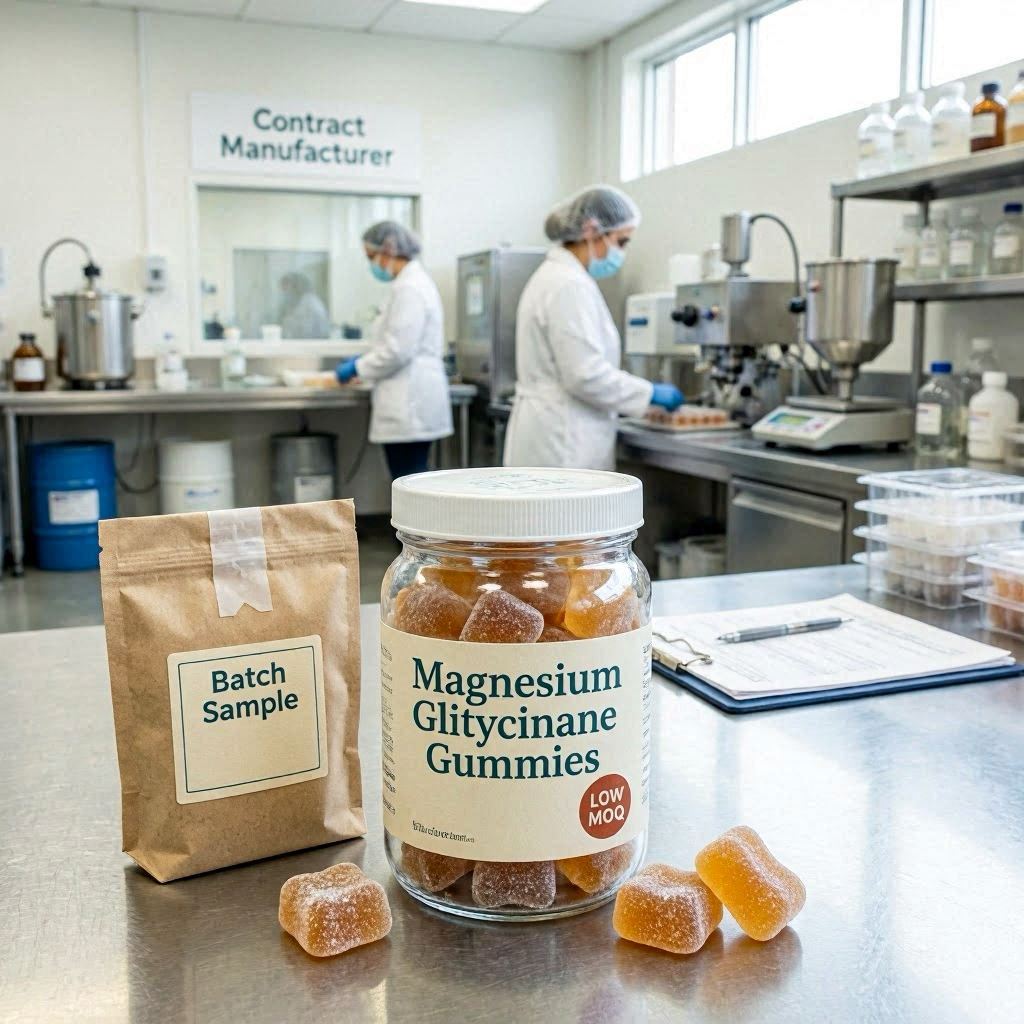
The Rising Demand for Magnesium Glycinate in the Private Label Market
Magnesium deficiency affects an estimated 50% of the global population, according to data published in Nutrients (2018). As consumer awareness of mineral supplementation grows, magnesium glycinate has emerged as one of the most bioavailable and well-tolerated forms of magnesium on the market. For brand owners, retailers, and entrepreneurs looking to enter the dietary supplement space, affordable custom magnesium glycinate supplement contract manufacturing offers a strategic pathway to launch high-performance products without the capital expenditure of building a dedicated manufacturing facility.
The global magnesium supplements market was valued at approximately USD 5.2 billion in 2023 and is projected to expand at a compound annual growth rate (CAGR) of 6.8% through 2030, according to Grand View Research. Within this broader category, chelated magnesium forms—particularly magnesium glycinate (also known as magnesium bisglycinate)—are capturing an increasing share of shelf space due to their superior absorption profile and gentle gastrointestinal tolerability compared to magnesium oxide or citrate.
This article examines the scientific rationale behind magnesium glycinate, evaluates contract manufacturing models for brand owners, analyzes formulation formats, and provides actionable guidance on quality assurance, cost optimization, and speed-to-market strategies.
—
The Biochemical Advantage of Magnesium Glycinate: Why Brands Are Prioritizing This Chelated Form
Magnesium glycinate is a chelated compound formed by bonding one magnesium ion with two molecules of the amino acid glycine. This structural configuration is the primary reason for its clinical and commercial success. Unlike inorganic magnesium salts, which dissociate completely in the digestive tract and are prone to forming insoluble soaps or precipitates that inhibit absorption, the magnesium-glycine complex remains stable through the gastrointestinal pH gradient.
Absorption Mechanisms and Bioavailability Data
Research indicates that magnesium glycinate exhibits approximately 2.5 to 3 times greater bioavailability than magnesium oxide. A study published in Magnesium Research (2001) demonstrated that magnesium aspartate, citrate, and glycinate produced significantly higher serum magnesium levels than magnesium oxide at equivalent dosages. The glycine component itself functions as an inhibitory neurotransmitter and a precursor to glutathione, providing a dual-function benefit that resonates strongly with consumers seeking stress-reduction and sleep-support formulations.
From a formulation standpoint, magnesium glycinate’s molecular weight is approximately 172.4 g/mol (for the bisglycinate chelate). This relatively low molecular weight per magnesium atom contributes to its efficient absorption via paracellular transport pathways and possibly via amino acid transporters that recognize the glycine moiety. For contract manufacturers, this biochemical profile translates into a selling point that justifies premium positioning: the same milligram potency delivers more bioactive magnesium to target tissues.
Dosage Ranges and Clinical Context
Contract manufacturing clients typically request dosage ranges between 100 mg and 400 mg of elemental magnesium per serving, delivered via magnesium glycinate. The Recommended Dietary Allowance (RDA) for magnesium is 310–420 mg per day for adults, depending on age and sex. Formulations targeting stress relief, sleep support, and muscle recovery frequently position at the higher end of this range (300–420 mg), often combined with complementary ingredients such as L-theanine, GABA, vitamin B6, or zinc glycinate.
Understanding these dosage parameters is essential for contract manufacturers when advising clients on capsule fill weights, tablet compression forces, and gummy pectin matrices. Magnesium glycinate’s bulk density, flow properties, and hygroscopicity directly influence manufacturing feasibility across different delivery formats.
—
Market Trajectory: Consumer Demand, Demographic Segmentation, and Channel Opportunities
The surge in magnesium glycinate demand is not a passing trend but a structural shift driven by multiple converging factors. Post-pandemic consumer focus on sleep quality, stress management, and immune resilience has accelerated the adoption of magnesium-based products. Data from SPINS (2023) indicates that magnesium supplements grew by 18.7% in the natural channel over a 52-week period, with chelated forms outperforming the category average.
Key Demographic Drivers
- **Sleep and Stress Segment**: Consumers aged 25–45 represent the fastest-growing demographic for magnesium glycinate SKUs positioned for relaxation and sleep. This segment responds strongly to clean-label positioning, vegan capsules, and sugar-free gummy formats.
- **Sports Nutrition and Active Lifestyle**: Magnesium plays a critical role in muscle contraction, protein synthesis, and electrolyte balance. Athletes and fitness enthusiasts seek magnesium glycinate for its reduced laxative effect compared to other forms, making it suitable for peri-workout dosing.
- **Healthy Aging and Bone Health**: Older adults (55+) prioritize magnesium for bone mineral density maintenance and cardiovascular health. This segment favors traditional formats (tablets, capsules) and values third-party testing and GMP certification prominently displayed on labels.
Channel Dynamics and Private Label Growth
The shift toward private label and contract-manufactured brands is particularly pronounced in the e-commerce channel. Amazon, brand-direct Shopify stores, and specialty wellness retailers increasingly source from contract manufacturers offering low minimum order quantities (MOQs) and flexible customization. The ability to differentiate through unique flavor profiles, functional inclusions (e.g., ashwagandha, tart cherry extract), and sustainable packaging has become a competitive necessity rather than a differentiator.
For brand owners evaluating affordable custom magnesium glycinate supplement contract manufacturing, the implication is clear: selecting a manufacturing partner with robust R&D capabilities, in-house flavor science, and agile production scheduling is more valuable than simply securing the lowest per-unit cost.
—
Contract Manufacturing Models: OEM vs. ODM and Strategic Considerations for Brand Owners
Navigating the landscape of supplement contract manufacturing requires clarity on the two dominant engagement models: OEM (Original Equipment Manufacturing) and ODM (Original Design Manufacturing). Each model offers distinct advantages depending on the brand owner’s internal capabilities, capital resources, and go-to-market timeline.
OEM Model: Full Customization, Collaborative Development
In the OEM model, the brand owner retains control over formulation specifications, ingredient sourcing standards, and often the selection of excipients and delivery format. The contract manufacturer executes production according to the brand’s proprietary formula or a jointly developed specification. This model suits brands with in-house product development expertise or those who have engaged a third-party formulator.
Key advantages of OEM for magnesium glycinate products:
- Complete intellectual property control over the formulation
- Ability to specify branded raw materials (e.g., Albion Minerals’ TRAACS chelated magnesium, if desired)
- Full transparency on the supply chain and certificate of analysis (COA) for each raw material
- Flexibility to iterate on flavor, texture, and release characteristics
Considerations:
- Longer development timelines (typically 12–20 weeks from formula finalization to first production)
- Higher upfront investment in formula R&D and stability testing
- MOQs may be higher for fully custom formulations, particularly for complex gummy or powder formats
ODM Model: Accelerated Speed-to-Market with Proven Formulations
ODM manufacturing provides brand owners with access to pre-developed, market-tested formulations that can be white-labeled or lightly customized (flavor variations, label design, packaging format). For magnesium glycinate, ODM providers typically maintain a portfolio of stock formulas across gummies, capsules, and powder sticks.
Key advantages of ODM:
- Dramatically reduced time-to-market (4–8 weeks from order to delivery for stock formulas)
- Lower development costs and reduced regulatory burden (the manufacturer’s existing dossier supports the product)
- Scalable MOQs starting as low as 1,000–3,000 units for gummies and 500–2,000 units for capsules
- Access to the manufacturer’s aggregated purchasing power for raw materials, reducing COGS
Considerations:
- Limited differentiation—competing brands may use the same base formula
- Less control over excipient selection and raw material sourcing
- Potential for formula commoditization if the category becomes saturated
Hybrid Approaches
Many contract manufacturers now offer hybrid models where brands can start with an ODM formula and progressively customize it—adjusting the magnesium potency, adding complementary actives, or modifying the flavor profile—as their volume and market feedback justify the investment. This graduated approach aligns well with emerging brands managing cash flow constraints while building market presence.
—
Delivery Format Engineering: Gummies, Capsules, and Powders—Technical Trade-offs and Formulation Strategies
The choice of delivery format is one of the most consequential decisions in custom magnesium glycinate product development. Each format presents distinct manufacturing challenges, cost structures, sensory profiles, and consumer perceptions. A sophisticated contract manufacturing partner will guide brand owners through these trade-offs with data-driven recommendations.
Gummies: The Sensory-First Format
Gummies have redefined the supplement experience for mainstream consumers, particularly in the stress-and-sleep category where magnesium glycinate is heavily positioned. However, formulating magnesium glycinate into a gummy matrix requires sophisticated techno-functional expertise.
Technical challenges:
- Magnesium glycinate is hygroscopic and can accelerate moisture migration within the gummy matrix, leading to texture degradation over shelf life.
- The bitter metallic aftertaste of magnesium salts necessitates advanced taste-masking strategies, including flavor encapsulation, acid-sweetener balancing, and the strategic use of cooling agents (e.g., erythritol, stevia rebaudioside M).
- Pectin-based gummies (vegan) behave differently from gelatin-based systems in the presence of high mineral loads; pectin requires careful pH control (optimal range 3.2–3.8) to achieve proper gel setting.
Manufacturing considerations:
- Starch-free depositors with controlled temperature profiles are essential to prevent premature cross-linking.
- Typical magnesium glycinate loading in gummies ranges from 50 mg to 100 mg elemental magnesium per gummy, requiring 2–4 gummies per serving to reach efficacious doses. This has labeling and cost implications.
- Gummy production typically commands higher per-unit costs than capsules but supports premium MSRP ($24.99–$39.99 for a 30–60-count bottle).
Capsules and Tablets: Precision and Cost Efficiency
Two-piece hard-shell capsules (HPMC for vegan, gelatin for standard) remain the workhorse format for magnesium glycinate. The format accommodates high elemental magnesium loads (200–420 mg per capsule) with minimal excipients.
Advantages:
- Superior cost-per-mg of magnesium compared to gummies
- Excellent stability profile; magnesium glycinate’s hygroscopicity can be managed with desiccant packaging and low-moisture excipients (e.g., maltodextrin, silicon dioxide as flow aid)
- Compatibility with delayed-release and enteric-coated capsule shells for targeted delivery
Tableting considerations:
- Magnesium glycinate has poor compressibility compared to magnesium oxide; direct compression tableting often requires granulation (wet or dry) to improve flow and reduce capping risk.
- Tablet formats are less popular for magnesium glycinate in the consumer market but remain relevant for cost-sensitive bulk SKUs and practitioner-channel products.
Powder Formats: Flexibility and Bioavailability Optimization
Powdered magnesium glycinate (often sold in stick packs or jars) offers the highest dosing flexibility and is favored by sports nutrition consumers who incorporate magnesium into pre-workout or nighttime recovery stacks.
Formulation priorities:
- Particle size distribution and dissolution rate are critical; micronized magnesium glycinate (D90 < 50 μm) improves dispersion in cold water and reduces gritty mouthfeel.
- Flavor systems for powder sticks typically incorporate malic acid or citric acid for brightness, balanced against natural sweeteners (stevia, monk fruit, allulose).
- Stick-pack formats (3–5 g powder per stick) require precise auger filling and humidity-controlled packaging environments to prevent clumping.
—
Quality Assurance Framework: GMP Compliance, Third-Party Testing, and Certificate of Analysis Standards
For B2B buyers of contract-manufactured magnesium glycinate supplements, the quality assurance infrastructure of the manufacturing partner is a primary due diligence criterion. Regulatory scrutiny of dietary supplements has intensified globally, with the FDA’s 21 CFR Part 111 (GMP for Dietary Supplements) providing the baseline standard in the United States, while equivalent frameworks (e.g., Health Canada’s NNHPD, TGA in Australia) apply in other markets.
GMP Certification and Facility Audits
A reputable contract manufacturer should hold current GMP certification from an accredited third-party auditing body (NSF International, SGS, TUV SUD, or equivalent). The audit scope should cover:
- Raw material receiving and quarantine procedures
- In-process quality control checkpoints (weight verification, blend uniformity, dissolution testing)
- Finished product release protocols, including microbiological testing
- Allergen control programs (critical if the facility also processes soy, dairy, or tree nuts)
- Pest control, sanitation, and environmental monitoring
Brand owners should request a copy of the manufacturer’s most recent GMP audit report and verify that the scope includes the specific production lines relevant to their product format (e.g., gummy kitchen, capsule filling, powder blending).
Raw Material Verification and Identity Testing
Magnesium glycinate, like all dietary supplement ingredients, is vulnerable to economic adulteration. Contract manufacturers must implement robust identity testing on every incoming raw material lot. For magnesium glycinate, this includes:
- **HPLC (High-Performance Liquid Chromatography)** to verify the presence and proportion of the glycine chelate
- **ICP-MS (Inductively Coupled Plasma Mass Spectrometry)** for elemental magnesium quantification and heavy metals screening (lead, arsenic, cadmium, mercury)
- **FTIR (Fourier-Transform Infrared Spectroscopy)** for rapid identity confirmation
The manufacturer should provide a certificate of analysis (COA) for each lot, detailing potency, heavy metals, microbiological parameters (total plate count, yeast/mold, Salmonella, E. coli, Staphylococcus aureus), and residual solvents if applicable.
Finished Product Testing and Stability Protocols
Beyond raw material testing, contract manufacturers should conduct finished product testing that includes:
- **Potency verification**: Ensuring label-claim accuracy (typically ±10% of declared magnesium content at release, ±15% through shelf life)
- **Disintegration/dissolution testing**: Particularly important for capsules and tablets to ensure bioavailability
- **Accelerated and long-term stability studies**: Typically 3–6 months at 40°C/75% RH (accelerated) and 12–24 months at 25°C/60% RH (long-term) to establish shelf life and recommended storage conditions
Brands targeting export markets should confirm that the manufacturer’s testing protocols align with the destination market’s regulatory expectations (e.g., Prop 65 compliance for California, maximum residue limits for heavy metals in the EU).
—
Cost Engineering and MOQ Strategy: Optimizing Margin Without Compromising Quality
One of the most persistent challenges in affordable custom magnesium glycinate supplement contract manufacturing is balancing per-unit cost targets with quality standards and customization requirements. Strategic cost engineering should begin at the formulation stage and extend through packaging selection, order volume planning, and supply chain optimization.
Raw Material Cost Drivers
Magnesium glycinate commands a price premium over magnesium oxide (approximately 4–6× higher per kg). However, because of its superior bioavailability, the effective cost-per-mg-of-absorbed-magnesium is often competitive. Cost-conscious brand owners can explore:
- **Blended mineral systems**: Combining magnesium glycinate with a small percentage of magnesium citrate or malate to achieve target cost points while maintaining a chelated magnesium marketing claim.
- **Spot-buy raw material programs**: Contract manufacturers with strong supplier relationships can sometimes offer spot pricing on magnesium glycinate, particularly for larger volume commitments (500 kg+ annually).
- **Private label packaging optimization**: Standard bottle sizes (60ct, 90ct, 120ct) benefit from economies of scale in label printing, cap liners, and secondary packaging.
MOQ Tiers and Price Breaks
Understanding the manufacturer’s MOQ structure is essential for accurate margin modeling. Typical MOQ tiers for magnesium glycinate products are:
| Format | Entry MOQ | Mid-Volume MOQ | Optimal Pricing MOQ |
|——–|———–|—————-|———————|
| Gummies | 3,000 bottles | 10,000 bottles | 25,000+ bottles |
| Capsules | 1,000 bottles | 5,000 bottles | 15,000+ bottles |
| Powder sticks | 5,000 units | 20,000 units | 50,000+ units |
These thresholds reflect the fixed costs of setup, cleaning validation, and minimum raw material order quantities. Brands should model their 12-month volume projections against these tiers to identify the optimal reorder frequency and inventory carrying cost trade-off.
Packaging as a Cost and Brand Lever
Packaging decisions significantly influence both COGS and consumer perception. Sustainable packaging options (post-consumer recycled PET bottles, compostable pouches for powder) typically add 10–25% to packaging costs but can support premium positioning and align with consumer values. For brands targeting the Amazon channel, packaging must also be optimized for ISTA-6 shipping simulation testing to minimize damage-related returns.
—
Frequently Asked Questions on Custom Magnesium Glycinate Contract Manufacturing
1. What is the typical lead time from formula approval to finished product delivery?
For ODM (stock formula) magnesium glycinate gummies or capsules, lead times generally range from 6 to 10 weeks, assuming label artwork and packaging components are finalized. OEM custom formulations require 14 to 22 weeks, accounting for formula development, stability testing (accelerated), and pilot batch production. Factors that extend lead time include custom flavor development, specialized packaging (e.g., child-resistant pouches), and peak-season production backlogs (Q3–Q4).
2. How does magnesium glycinate compare to magnesium citrate or oxide in terms of manufacturing complexity?
Magnesium glycinate is more hygroscopic than magnesium oxide and has different flow characteristics, which can affect tablet compression and capsule filling speeds. In gummy applications, magnesium glycinate requires more sophisticated moisture-control strategies than magnesium citrate. However, these technical challenges are well-understood by experienced contract manufacturers and do not typically result in significant cost premiums if the manufacturer has optimized their processes for chelated minerals.
3. Can magnesium glycinate gummies be formulated without added sugar?
Yes. Sugar-free magnesium glycinate gummies are routinely manufactured using alternative sweeteners such as allulose, erythritol, stevia rebaudioside M, and monk fruit extract. The choice of sweetener influences not only the caloric profile but also the gummy texture, browning tendency during storage, and digestive tolerance. Erythritol, for example, provides bulk and mouthfeel similar to sugar but can have a cooling aftertaste that must be balanced in the flavor system.
4. What certifications should I look for when selecting a contract manufacturer for magnesium glycinate?
At minimum, the manufacturer should hold current GMP certification (21 CFR Part 111 compliant). Additional certifications that enhance marketability include NSF Certified for Sport (for sports nutrition channels), USDA Organic or EU Organic (if formulating with organic magnesium glycinate), Non-GMO Project Verified, Vegan Action certification (for pectin gummies and HPMC capsules), and Halal or Kosher certification if targeting those consumer segments.
5. What is the shelf life of contract-manufactured magnesium glycinate products?
With proper formulation and packaging, magnesium glycinate capsules and tablets typically carry a 24-month shelf life from the date of manufacture. Gummies generally have a 12–18 month shelf life due to the potential for moisture migration and texture changes over time. Powdered products in stick packs or jars can achieve 18–24 months when packaged with desiccants in moisture-barrier films. Accelerated stability data should be reviewed before finalizing label claims.
6. Are there any compatibility concerns when combining magnesium glycinate with other active ingredients?
Magnesium glycinate is chemically compatible with a wide range of complementary actives, including L-theanine, GABA, ashwagandha extract, zinc (as zinc glycinate or picolinate), and vitamin D3. However, formulate cautiously with highly acidic ingredients (e.g., vitamin C in high doses) in gummy matrices, as pH shifts can affect chelate stability. In powder formats, magnesium glycinate should be kept dry and separate from hygroscopic ingredients like creatine monohydrate until the point of mixing.
7. What are the labeling compliance requirements for magnesium glycinate supplements?
In the United States, magnesium must be declared as “Magnesium (as Magnesium Glycinate)” on the Supplement Facts panel, with the elemental magnesium amount listed in mg and % Daily Value. The DV for magnesium is 420 mg. Labels must also include the manufacturer’s or distributor’s name and address, a lot code, and an expiration date. For export markets, labeling requirements vary—the EU requires nutrition labeling in grams per 100 g, while Canada uses a similar Supplement Facts format with French-language requirements.
8. How can I differentiate my magnesium glycinate product in a crowded market?
Differentiation strategies include: (1) clinically relevant dosing (300+ mg elemental magnesium per serving), (2) complementary ingredient synergy (e.g., magnesium glycinate + apigenin + L-theanine for sleep), (3) sustainable and transparent packaging, (4) third-party testing transparency (QR codes linking to COAs), (5) targeting underserved consumer niches (e.g., perimenopausal women, endurance athletes), and (6) clean-label formulation (no artificial colors, no high-fructose corn syrup, vegan-certified).
—
Conclusion: Strategic Partnership as a Competitive Advantage
The magnesium glycinate segment represents a high-opportunity category for brand owners who can combine scientific credibility, formulation quality, and agile go-to-market execution. Affordable custom magnesium glycinate supplement contract manufacturing is not merely a transactional procurement decision—it is a strategic partnership that influences product quality, regulatory compliance, brand reputation, and long-term margin structure.
Brand owners who invest time in evaluating contract manufacturing partners based on GMP certification, R&D capability, formulation track record with chelated minerals, and transparent quality systems position themselves to compete effectively in an increasingly sophisticated supplement market. The ideal manufacturing partner acts as an extension of the brand’s own team: providing formulation counsel, anticipating regulatory changes, optimizing cost structures as volume scales, and maintaining unwavering commitment to the quality standards that ultimately define brand trust.
As consumer demand for high-bioavailability magnesium supplements continues its upward trajectory, the brands that will capture market share are those that pair evidence-based formulation with operational excellence in manufacturing and supply chain execution. The contract manufacturing landscape offers the infrastructure to achieve both—provided the selection process is rigorous, the formulation strategy is sound, and the partnership is managed as a long-term strategic asset.
Disclaimer: These statements have not been evaluated by the Food and Drug Administration. This product is not intended to diagnose, treat, cure, or prevent any disease. The information provided in this article is for educational and informational purposes only and does not constitute medical advice. Always consult with a qualified healthcare professional before starting any supplement regimen.