










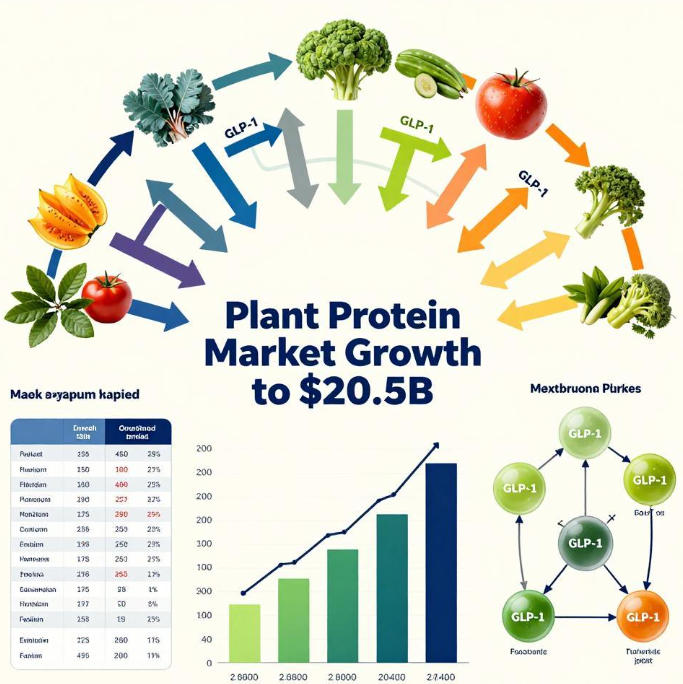
As we move through 2026, the global plant protein market is no longer just a “vegan” alternative—it has evolved into a strategic health necessity, projected to soar to $20.5 billion. While sustainability and ethical eating remain core drivers, the most disruptive force in this growth is the meteoric rise of GLP-1 receptor agonists (such as semaglutide and tirzepatide). This medical shift is fundamentally rewriting the rules of nutrition, creating a “Nutrient Density Era” where plant-based proteins are the MVP.
The GLP-1 Paradox: Eating Less, Needing More
The primary function of GLP-1 drugs is appetite suppression, leading many users to consume 30% to 40% fewer calories. However, this leads to a critical physiological challenge: the body still requires a full spectrum of nutrients to function.
- Protecting Muscle Mass: Research shows that up to 39% to 60% of weight lost on GLP-1 therapy can be lean body mass (muscle) rather than fat. To prevent “muscle wasting” and maintain a healthy metabolism, high-quality protein intake is non-negotiable.
- The Digestibility Factor: GLP-1 drugs slow gastric emptying, meaning users often feel “too full” or nauseous. Plant-based proteins—especially high-purity isolates from peas, fava beans, and rice—are often perceived as lighter and gentler on the digestive system compared to heavy animal fats.
Why Plants? The Shift to “Authentic Plant-Based”
In 2026, the market is moving away from “fake meat” and toward “Authentic Plant-Based” nutrition. Consumers are prioritizing functional benefits over mere imitation.
Bioactive Peptides & Fortification: Modern plant protein formulations are now fortified with specialized Active Peptides that support tissue repair and gut health, directly addressing the secondary needs of GLP-1 users.
Micronutrient Synergy: Ingredients like pumpkin and sunflower seeds naturally provide minerals like Phosphorus, Potassium, and Magnesium—essential electrolytes that GLP-1 users are prone to losing during rapid weight loss.
Global Market Dynamics: 2026 and Beyond
The plant protein market is experiencing its fastest large-scale growth in the United States (9.0% CAGR), followed closely by China (10.0%) and India (10.5%).
The Oral GLP-1 Wave: The 2026 launch of more affordable oral GLP-1 pills is expected to exponentially increase market penetration. As access expands to millions more, the demand for “companion nutrition” like high-protein functional beverages and nutrient-dense snacks will skyrocket.
Precision Formulation: Brands are now using Proteomics to ensure plant protein isolates (soy, pea, wheat) deliver the exact leucine levels required to trigger muscle protein synthesis (mTOR), ensuring effective weight loss means fat loss, not strength loss.
Summary: A New Pillar of Modern Metabolic Health
The intersection of biotechnology (GLP-1) and food science (Plant Protein) has created a unique $20.5 billion opportunity. For consumers, the choice is no longer just about lifestyle—it’s about optimizing a clinical journey. For the industry, the focus has shifted to high-purity, nutrient-dense, and easily digestible plant-based solutions that allow users to reach their goals without sacrificing their systemic health.