










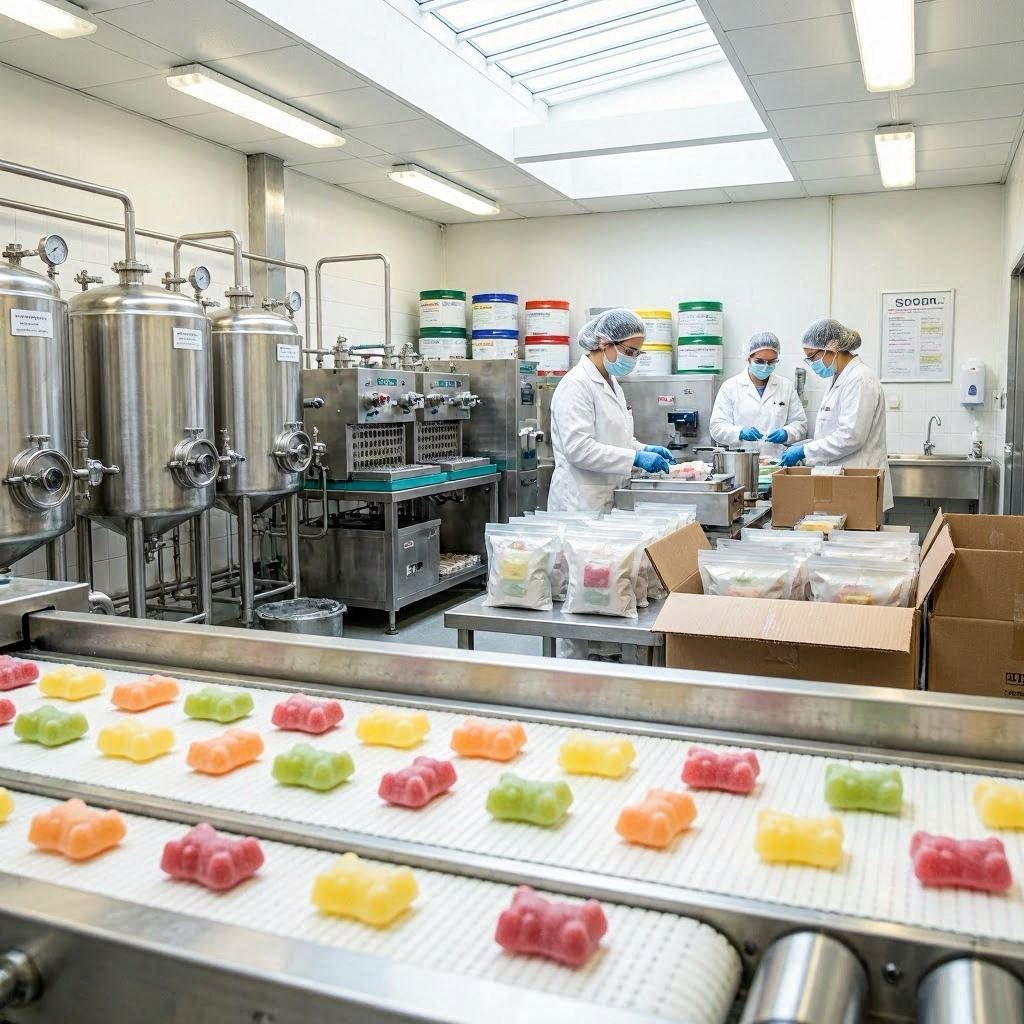
Introduction: The Evolution of Pediatric Supplementation
The global pediatric dietary supplement sector has experienced a profound paradigm shift. Driven by a tech-savvy generation of parents who prioritize both experiential compliance and rigorous ingredient transparency, the standard for children’s supplements has migrated away from traditional chewable tablets and chalky pills. Today, the market is overwhelmingly dominated by delivery forms that blend efficacy with high palatability: gummy vitamins.
For small and medium-sized e-commerce enterprises, Amazon FBA sellers, and social commerce brands on platforms like TikTok Shop, tapping into this lucrative vertical requires more than just standard product sourcing. It demands an intricate understanding of supply chain logistics, regulatory compliance, and functional formulation. This article provides a comprehensive, science-backed analysis of the kids gummy vitamin contract manufacturing landscape, outlining the critical metrics for brand differentiation and sustainable commercial scaling.
Market Trends and Consumer Psychographics in 2026
Modern pediatric supplement purchasing habits are governed by distinct macroeconomic and behavioral trends:
- Clean Label Imperatives: Modern parents scrutinize ingredient panels with unprecedented intensity. There is a universal demand for formulations free from artificial colorants (such as Red 40 or Yellow 5), high-fructose corn syrup (HFCS), and synthetic binders.
- The “No Fairy Dusting” Standard: Brands are moving away from proprietary blends that conceal sub-therapeutic dosages. Consumers and third-party lab auditors demand clear, clinically substantiated dosages of vital micronutrients.
- Allergen Mitigation: With the rise in childhood food sensitivities, top-performing SKUs must be non-GMO, gluten-free, gelatin-free (utilizing pectin alternative matrices), and free from the top 9 allergens.
For brand operators, these trends underscore the necessity of partnering with a sophisticated contract manufacturer capable of translating complex biochemical clean-label requirements into stable, commercial-scale shelf-stable confectionery matrices.
Technical Formulation & Matrix Science: Pectin vs. Gelatin
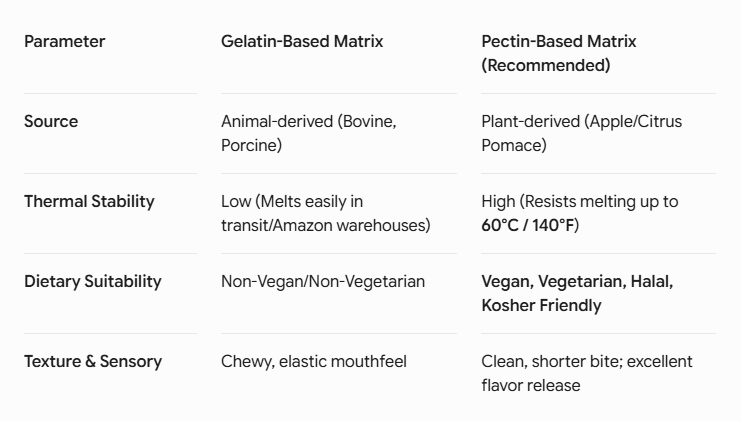
One of the earliest, most critical decisions in kids gummy vitamin contract manufacturing is the selection of the hydrocolloid gelling agent. This choice directly impacts regulatory compliance, manufacturing stability, and consumer targeting.
The Pectin Advantage for E-commerce Logistics
For digital-native brands utilizing automated fulfillment networks (like Amazon FBA), thermal stability is paramount. Gelatin-based gummies frequently deform, clump, or melt during transit in warm seasons or within unclimbed fulfillment centers, leading to catastrophic return rates and structural brand damage. Pectin-based formulations offer a robust thermal threshold, ensuring that the structural integrity of each gummy remains uncompromised from the factory floor to the end-consumer’s shelf.
Regulatory Compliance and Risk Mitigation (FDA & EFSA Guidelines)
In pediatric supplementation, regulatory infractions can lead to immediate product seizures, Amazon store suspensions, and severe legal liabilities. A professional contract manufacturing framework must operate strictly within the bounds of international food safety laws.
1. FDA Structure/Function Claims vs. Disease Claims
Under the Dietary Supplement Health and Education Act (DSHEA) of 1994, labels must strictly adhere to structure/function wording.
- Permissible: “Supports immune health in growing children,” “Helps maintain cognitive development.”
- Prohibited (K-Site Risk): “Cures ADHD,” “Prevents pediatric influenza,” “Treats chronic fatigue.” Any deviation that implies a supplement functions as a pharmaceutical alternative will result in regulatory enforcement.
2. Heavy Metal and Microbiological Testing
Children are highly susceptible to heavy metal toxicity. Manufacturers must implement strict Inductively Coupled Plasma Mass Spectrometry (ICP-MS) testing to verify that lead, arsenic, cadmium, and mercury levels fall far below the limits set by California Proposition 65 and FDA guidelines.
Strategic Scaling for Small-to-Medium Brands: The Low MOQ Paradigm
Historically, advanced gummy manufacturing was reserved for conglomerate brands due to high industrial Minimum Order Quantities (MOQs) reaching millions of units per run. However, the contemporary supply chain ecosystem allows flexible, modular manufacturing models.
By leveraging optimized tooling and agile pilot-batch lines, modern manufacturing partners can support emerging brands with accessible MOQs. This minimizes upfront capital risk, prevents inventory dead-stock, and allows agile entrepreneurs to A/B test distinct formulation profiles (e.g., Elderberry Immune Blend vs. Ashwagandha Calming Blend) directly in the live market.
Frequently Asked Questions (FAQ)
Q1: What is the standard shelf life for pectin-based kids gummy vitamins, and how is stability maintained?
A: The standard shelf life is 18 to 24 months when stored in a cool, dry place. Stability is maintained through precise water activity ($a_w$) control (typically targeted between 0.55 and 0.62) to prevent microbial proliferation while avoiding starch weeping or crystallization. Proper barrier packaging, such as PET or HDPE bottles with induction seals, is also vital to prevent moisture migration.
Q2: Can active botanical extracts like Elderberry or Echinacea be uniformly distributed in a gummy matrix?
A: Yes. Achieving uniform distribution of active botanicals requires precise temperature calibration and the use of natural emulsifiers or suspending agents within the slurry before deposit. This ensures every single gummy contains an identical, homogenized dose of the active constituent, fully compliant with label claims.
Q3: How do contract manufacturers ensure sugar-free gummies do not cause pediatric gastrointestinal distress?
A: Traditional sugar-free formulations relied heavily on sugar alcohols like Maltitol or Sorbitol, which can cause osmotic diarrhea in young children when consumed in excess. Advanced contract manufacturing utilizes natural, non-cariogenic sweeteners and prebiotic fibers such as Soluble Corn Fiber, Inulin, or trace amounts of Stevia and Monk Fruit to ensure a pleasant taste profile without metabolic or digestive irritation.
Q4: What certifications should an e-commerce brand demand from a gummy vitamin manufacturer?
A: At a minimum, a brand should verify that the contract manufacturer holds an active FDA Registration, cGMP (Current Good Manufacturing Practices) Certification (ideally audited by third parties like NSF or UL), and internationally recognized food safety certifications such as FSSC 22000 or BRCGS. For cross-border expansion, Halal and Kosher compliances are highly advantageous.