










Market Evolution & B2B Demand Drivers
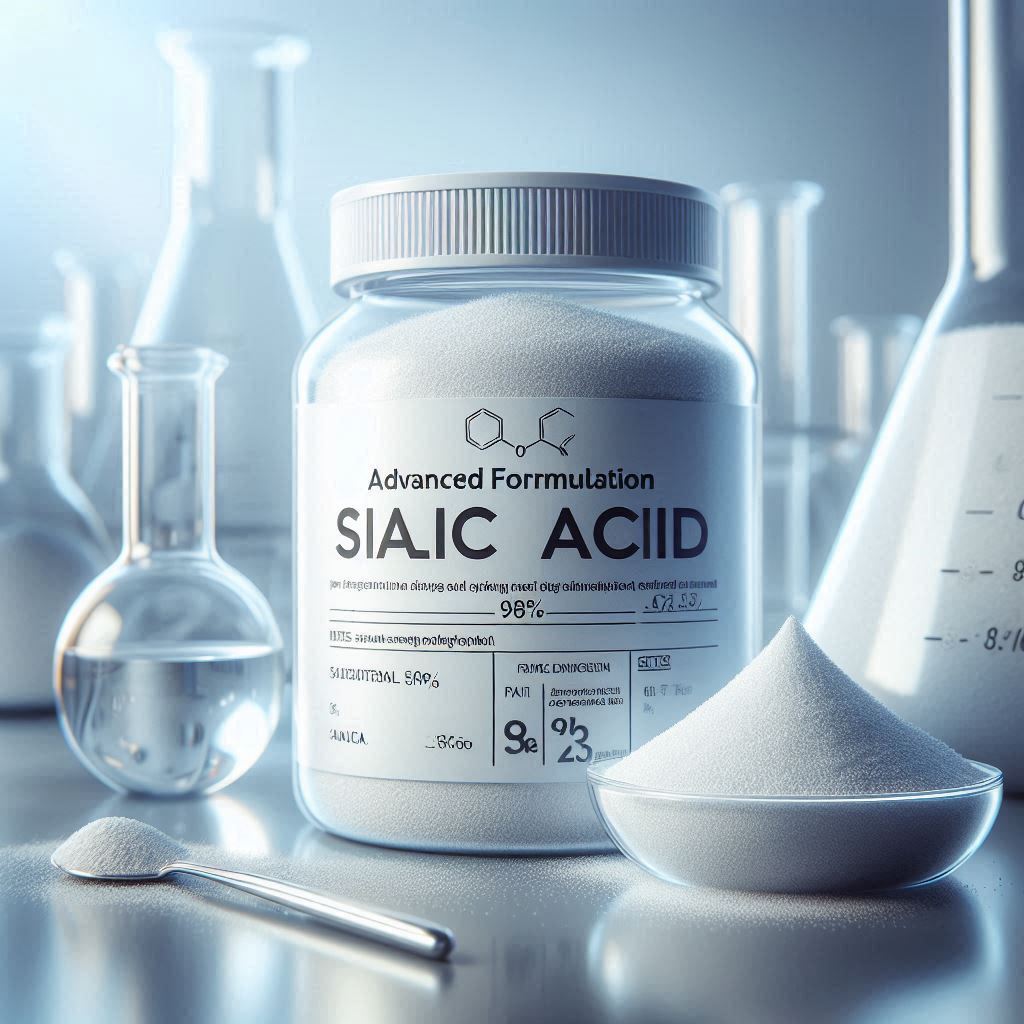
The global premium nutricosmetics and cognitive health sectors are witnessing a profound structural shift toward high-purity, bio-isolated compounds. N-Acetylneuraminic Acid (commonly referred to as Sialic Acid), with a benchmark purity of 98%, has emerged as a premier active ingredient in advanced functional foods, dietary supplements, and infant nutrition.
Historically sourced predominantly from traditional edible bird’s nests, modern biotechnological advancements—specifically precision fermentation—have enabled the scaling of 98% pure Sialic Acid powder. This molecular evolution provides cross-border dietary supplement brands, Amazon sellers, and independent site operators with a stable, standardized, and highly scalable raw material.
From a B2B market perspective, consumer interest in “beauty-from-within” (nutricosmetics) and “brain health” (nootropics) has merged. Consumers are no longer satisfied with surface-level cosmetic applications; they actively seek clean-label, bio-active powders backed by clinical quantification. The 98% purity specification represents the pharmaceutical-grade apex of this market, allowing brand owners to offer low-dosage, high-efficacy formulations that fit seamlessly into capsules, premium solid beverages, and oral solution product lines.
Cellular and Neurological Mechanisms
Sialic acid occupies a critical anatomical position within the human body. It is the dominant terminal sugar residue found on the oligosaccharide chains of glycoproteins and glycolipids, heavily concentrated within the mammalian central nervous system and cerebral cortex.
- Neurological Integrity and Nootropic Pathway: At the neural level, Sialic Acid is a structural component of gangliosides. These molecules are indispensable for synaptic membrane stability, neurotransmitter receptor function, and synaptic plasticity. Clinical and preclinical studies indicate that localized concentrations of N-acetylneuraminic acid in the brain directly correlate with enhanced synaptogenesis. This process facilitates long-term potentiation (LTP), the neurological bedrock of memory consolidation, learning performance, and overall cognitive longevity.
- The “Beauty-From-Within” Cellular Matrix: Beyond the blood-brain barrier, 98% Sialic Acid powder acts as a significant dermal matrix modulator. It functions as an endogenous booster for Hyaluronic Acid (HA) synthesis and type-1 pre-collagen production. In vitro testing evaluates that Sialic Acid provides non-competitive inhibition against Matrix Metalloproteinase-1 (MMP-1)—the primary enzyme responsible for collagen degradation under UV exposure and chronological aging. By preserving extracellular matrix (ECM) integrity, it assists in cellular hydration, downregulates melanin synthesis via tyrosinase regulation pathways, and fortifies the skin’s barrier resilience against environmental oxidative stress.
Formulation Architecture & Compliance Guidelines
To maximize the market value of 98% Sialic Acid Powder, B2B brands must employ intelligent formulation matrices. Because Sialic Acid is highly water-soluble and demonstrates excellent stability profile within a pH range of 3.0 to 10.0, it offers substantial formulation freedom.
- The Anti-Aging / Whitening Matrix: Pairing Sialic Acid with reduced Glutathione, Ergothioneine, and bioavailable Collagen Peptides (such as Marine Fish or Bovine Peptides) creates a synergistic cascade. While Glutathione manages systemic oxidative stress, Sialic Acid directly upgrades intercellular hyaluronic acid synthesis, leading to visible skin elasticity improvement.
- The Cognitive / Focus Formulation: For nootropic brands, blending 98% Sialic Acid with Phosphatidylserine (PS), PQQ (Pyrroloquinoline Quinone), and Lion’s Mane mushroom extract creates a comprehensive neuro-support powder mix suited for modern professionals and aging demographics.
Regulatory and Compliance Compliance (FDA/EFSA Frameworks): When marketing Sialic Acid products in North America and Europe, brands must adhere closely to strict regulatory frameworks to avoid product seizures or advertising penalties.
- USA (FDA): Sialic Acid (N-Acetylneuraminic Acid) holds New Dietary Ingredient (NDI) notifications and Generally Recognized as Safe (GRAS) self-affirmations for designated food categories. Brand owners are legally confined to Structure/Function Claims. Allowable labeling language includes: “Supports cognitive development,” “Promotes cellular communication,” or “Maintains healthy skin hydration.” Under no circumstances can marketing copy claim that Sialic Acid “treats Alzheimer’s disease,” “cures hyperpigmentation,” or “prevents viral infections.”
- Europe (EFSA): Approved as a Novel Food ingredient under Regulation (EU) 2015/2283. Labeling and daily dosage limits must remain strictly aligned with the authorized conditions of use (typically capped based on specific food groups or population sectors, such as infant formula or adult food supplements).
Technical B2B FAQ
Q1: What is the primary source of your 98% Sialic Acid powder, and how does it ensure stability in clean-label formulations?
A: The 98% Sialic Acid (N-Acetylneuraminic Acid) powder is derived via advanced, bio-engineered microbial precision fermentation, ensuring a sustainable, vegan, and highly stable ingredient free from the avian contaminants or heavy metal fluctuations associated with traditional bird’s nest extraction. Structurally, the dry powder exhibits premium stability profile in solid dosage forms and retains its biological activity across a broad thermal and pH processing spectrum, making it optimal for clean-label premium dietary mixes without requiring artificial stabilizers.
Q2: How does 98% purity Sialic Acid enhance the market positioning of an indie B2C brand compared to standard bird’s nest extracts?
A: Standard bird’s nest extracts typically feature variable, low single-digit percentages of active Sialic Acid combined with large, unstandardized protein matrices. By utilizing isolated 98% Sialic Acid powder, a brand can accurately quantify the active dose per serving on their Supplement Facts panel. This pharmaceutical-grade transparency appeals directly to discerning modern consumers and allows the creation of low-dose, high-potency formulations (e.g., 100mg to 250mg per serving) that minimize capsule sizes or powder scoop volumes while guaranteeing structural efficacy.
Q3: Are there any specific temperature constraints or processing limitations when integrating this powder into standard nutritional supplement lines?
A: Our 98% Sialic Acid powder is thermally stable under standard pasteurization and blending conditions. However, prolonged exposure to extreme heat exceeding 80°C in aqueous solutions with extreme pH values should be avoided to prevent slow molecular hydrolyzation. For manufacturing solid beverage powders, compressed tablets, or two-piece hard capsules, the material handles standard industrial environmental blending and high-speed filling equipment seamlessly without caking or degrading.
Q4: Can this 98% Sialic Acid powder be combined with bio-active peptides like collagen or marine peptides, and what are the manufacturing implications?
A: Yes, it is highly synergistic when blended with low-molecular-weight bioactive peptides (such as marine fish oligopeptides or bovine bone peptides). Because Sialic Acid carries a net negative charge at physiological pH, it complements the amphoteric nature of peptide chains well, assisting in clean solubility and preventing precipitation in liquid formulas. From a manufacturing perspective, ensuring uniform particle size distribution during the dry-blending phase is critical to preventing segregation in bulk packaging.