










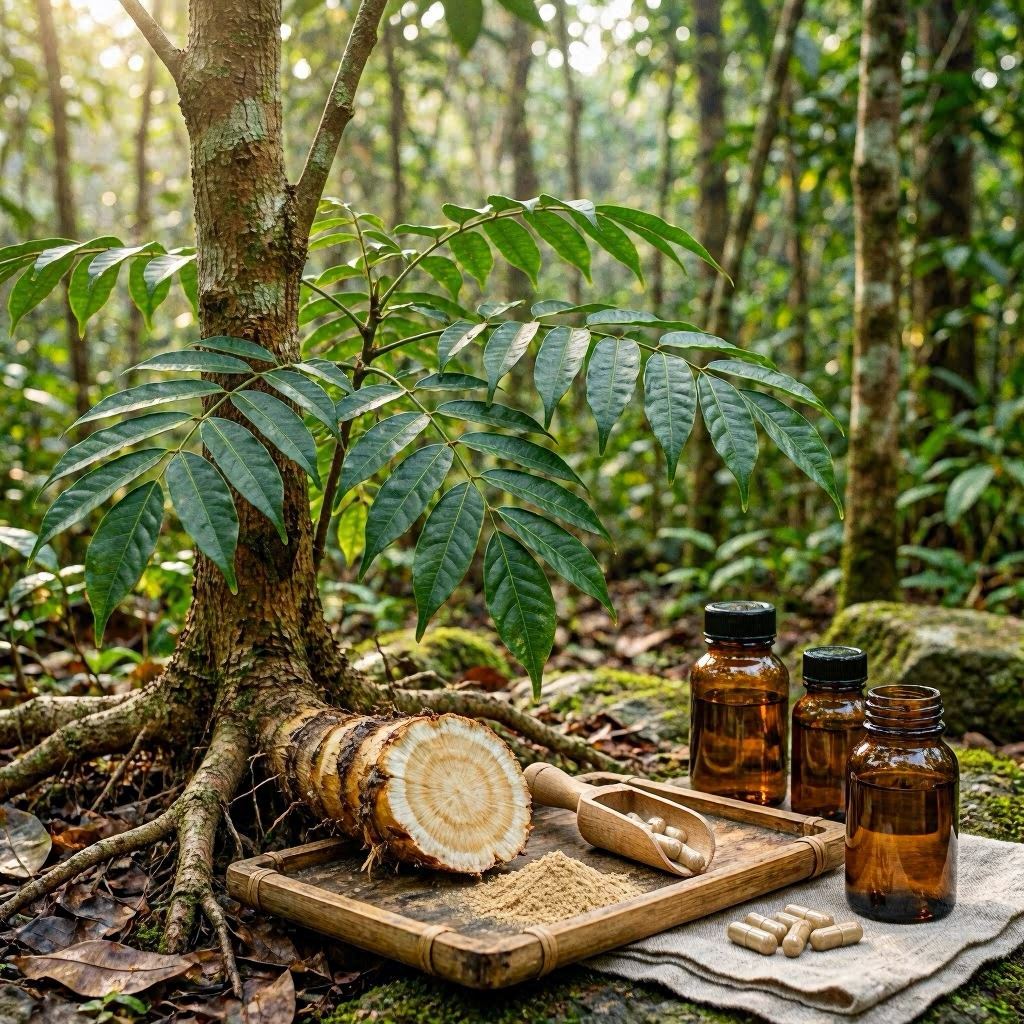
Amazon FBA Compliant Tongkat Ali Gummies Manufacturer: A Complete Guide for Supplement Brand Owners
Introduction
The global demand for Tongkat Ali (Eurycoma longifolia) has experienced remarkable growth over the past five years, driven by increasing consumer awareness of natural testosterone support, athletic performance enhancement, and general vitality. Among the fastest-growing delivery formats in the dietary supplement industry, gummies have emerged as the preferred choice for brands seeking to differentiate their product lines and capture impulse buyers. However, launching a Tongkat Ali gummy product on Amazon through the Fulfilled by Amazon (FBA) program introduces a complex set of regulatory, manufacturing, and logistical requirements that many emerging brands underestimate.
Finding a reliable Amazon FBA compliant Tongkat Ali gummies manufacturer represents one of the most consequential decisions a supplement brand owner will make. The wrong manufacturing partner can result in customs rejections, Amazon policy violations, failed third-party lab tests, and reputational damage that takes years to overcome. Conversely, partnering with an experienced manufacturer who understands both the science behind Tongkat Ali standardization and the specific compliance requirements of Amazon’s FBA program can accelerate time-to-market by months and provide a foundation for long-term category leadership.
This comprehensive guide covers everything brand owners need to know about sourcing, evaluating, and partnering with an Amazon FBA compliant Tongkat Ali gummies manufacturer. From understanding the pharmacologically active compounds in Tongkat Ali extract and their interaction with gummy matrix formulations, to navigating Amazon’s supplement category policies and managing the supply chain logistics that FBA demands, this article provides the authoritative B2B intelligence that serious supplement brands require.
Understanding Tongkat Ali: Bioactive Compounds and Product Science
Tongkat Ali, also known as Longjack, is a flowering plant native to Southeast Asia, with roots from Indonesia, Malaysia, Thailand, and Vietnam being most commonly sourced for commercial extract production. The primary bioactive compounds responsible for its physiological effects are the quassinoids, particularly eurycomaoside, eurycolactone, and eurycomanone. These compounds have been the subject of extensive research published in journals including the Journal of the International Society of Sports Nutrition, Phytotherapy Research, and the Journal of Ethnopharmacology.
The most clinically significant effect attributed to standardized Tongkat Ali extract is its influence on the hypothalamic-pituitary-gonadal axis, which regulates testosterone production in the body. Multiple randomized, double-blind, placebo-controlled studies have demonstrated that supplementation with standardized extracts containing minimum 20% glyco saponins and 0.8% eurycomanone can support healthy testosterone levels within four to twelve weeks of consistent use. A landmark study published in 2012 followed 76 male subjects and observed statistically significant improvements in serum testosterone concentrations and muscle strength metrics compared to placebo groups.
For gummy formulations specifically, manufacturers must account for several key formulation challenges. The bitter and astringent taste profile of Tongkat Ali extract requires sophisticated taste-masking technology, typically employing natural flavor systems combined with sweetener matrices that mask the extract’s harsh notes without creating a cloying or artificially sweet product. Additionally, the polyphenolic compounds in Tongkat Ali can interact with the gelatin or pectin base of gummies during storage, potentially affecting texture, color stability, and bioavailability over the product’s shelf life.
Reputable manufacturers address these challenges through proprietary microencapsulation processes that isolate the Tongkat Ali extract from the gummy matrix, preserving both sensory characteristics and ingredient potency. Brands should insist on working with manufacturers who can provide dissolution testing data demonstrating that the active compounds are released effectively in simulated gastric fluid, not merely bound within the gummy structure.
Market Trends and Demand Data: The Opportunity in Tongkat Ali Gummies
The global herbal supplement market was valued at approximately $55 billion in 2022 and is projected to reach $85 billion by 2030, representing a compound annual growth rate (CAGR) of roughly 5.6% according to industry analysis from Grand View Research. Within the broader adaptogen and testosterone support categories, Tongkat Ali has emerged as one of the fastest-growing ingredients, with market data from SPINS and Nutrition Business Journal indicating year-over-year retail sales growth exceeding 18% in natural channels.
The men’s health supplement segment specifically has shown robust expansion, driven by demographic trends including the aging millennial population reaching peak testosterone-sensitive age ranges and growing consumer comfort with proactive health supplementation. The global men’s health supplements market, valued at approximately $9.8 billion in 2023, is expected to surpass $15 billion by 2032, with herbal and botanical formulations capturing an increasingly larger share of new product launches.
The gummy format has been the single most transformative trend in the supplement industry over the past decade. Euromonitor data indicates that gummy supplements grew at a CAGR of 12.7% between 2018 and 2023, significantly outpacing capsule (4.2%), tablet (2.1%), and powder (6.8%) formats. This growth reflects fundamental shifts in consumer behavior, particularly among the 25-45 age demographic that dominates Amazon supplement purchasing. Gummies offer superior swallowability, improved compliance rates in clinical studies, and a perceived naturalness that aligns with the botanical ingredient positioning of Tongkat Ali products.
For Amazon FBA sellers, the combination of Tongkat Ali’s growing search volume and the gummy format’s conversion advantages creates a compelling market opportunity. Amazon search volume data for Tongkat Ali supplements has grown consistently, with related long-tail keywords including “tongkat ali for men,” “tongkat ali testosterone booster,” and “tongkat ali gummies” all showing upward trajectory over the past 24 months. The competitive landscape remains fragmented, with no single brand commanding dominant market share, creating opportunity for well-positioned new entrants.
Manufacturing Considerations: Formulation, Stability, and Bioavailability
Manufacturing Tongkat Ali gummies for Amazon FBA compliance demands attention to several technical dimensions that distinguish experienced supplement manufacturers from commodity producers. The most critical considerations center on extract standardization, matrix stability, and bioavailability optimization.
Extract standardization represents the foundation of product efficacy. Amazon FBA policies and FDA dietary supplement regulations both require that finished products contain the ingredients as listed on the label. For Tongkat Ali, this means the extract must be standardized to consistent levels of its marker compounds, typically eurycomanone (minimum 0.8% for premium extracts) and total protein (minimum 22%). Brands should request Certificates of Analysis (COA) from their manufacturer showing HPLC (High-Performance Liquid Chromatography) testing results for each batch of raw Tongkat Ali extract, verifying that the active compound levels match the specifications used during product formulation.
Stability testing presents another non-negotiable requirement. Gummy products are inherently hygroscopic, meaning they absorb moisture from the environment, which can cause textural degradation, microbial proliferation, and ingredient degradation over time. Amazon FBA warehouses maintain environmental conditions that can accelerate these processes, particularly in regions with high humidity. A qualified manufacturer will conduct accelerated stability studies following International Council for Harmonisation (ICH) guidelines, testing products at elevated temperature and humidity conditions to predict shelf-life performance. For Tongkat Ali gummies, a minimum shelf life of 24 months at room temperature is the industry standard expectation, with moisture content and active compound levels remaining within specification throughout the entire period.
Bioavailability considerations are particularly important for Tongkat Ali in gummy format. The extract’s quassinoid compounds have historically shown variable absorption rates depending on the delivery matrix. Modern manufacturing techniques address this through several approaches: nanoemulsion technology that creates smaller particle sizes for enhanced absorption, liposomal encapsulation that protects compounds through the digestive system, and the use of bioavailability-enhancing excipients such as black pepper extract (piperine) at clinically relevant concentrations of 5 milligrams per serving.
OEM and ODM Benefits for Brand Owners
Partnering with an OEM (Original Equipment Manufacturer) or ODM (Original Design Manufacturer) for Tongkat Ali gummies offers strategic advantages that directly impact a brand’s ability to compete effectively on Amazon’s FBA platform. Understanding the distinction between OEM and ODM models is essential for making the right partnership decision.
An OEM manufacturer produces products based on the brand owner’s exact specifications, using formulations, packaging designs, and ingredient profiles that the brand provides. This model provides maximum formulation control and intellectual property protection, making it ideal for established brands with dedicated R&D teams or those working with third-party formulators. OEM partnerships typically involve higher upfront investment in exchange for complete customization freedom.
An ODM manufacturer provides end-to-end product development services, from initial formulation through packaging design and regulatory compliance documentation. For emerging brands or private label sellers entering the Tongkat Ali category for the first time, ODM partnerships dramatically reduce the technical barriers to market entry. A capable ODM partner will have existing proprietary Tongkat Ali gummy formulas ready for customization, pre-designed label templates that comply with FDA labeling requirements, and established relationships with Amazon-compliant packaging suppliers.
Regardless of the partnership model, minimum order quantities (MOQ) represent a critical commercial consideration. The gummy manufacturing process involves dedicated equipment setups, tempering systems, and individual mold cavities that create inherent production batch sizes. Industry-standard MOQ for private label Tongkat Ali gummies typically ranges from 300 to 1,000 units for initial orders, with per-unit costs decreasing significantly at volume thresholds of 5,000 and 10,000 units. Amazon FBA sellers should plan their inventory strategy around these batch economics, balancing storage costs in Amazon’s fulfillment centers against per-unit landed costs.
Speed-to-market advantages associated with experienced OEM/ODM partners can prove decisive in competitive Amazon categories. The complete production cycle from formula finalization to FBA-ready inventory, including flavor development, stability testing, packaging procurement, and quality assurance documentation, typically ranges from 90 to 150 days with an experienced manufacturing partner. Attempting to navigate this process with an inexperienced or under-resourced manufacturer can extend timelines to six months or longer, during which competitive dynamics may shift substantially.
Quality Assurance and Compliance Requirements
Quality assurance in the Tongkat Ali gummy manufacturing space encompasses multiple layers of verification that Amazon FBA sellers cannot afford to overlook. The FDA’s Current Good Manufacturing Practice (cGMP) regulations, codified in 21 CFR Part 111, establish the baseline operational requirements for dietary supplement manufacturers, covering everything from personnel qualifications and equipment maintenance to production and process controls.
A compliant manufacturer will maintain third-party GMP certification from organizations such as NSF International, UL Solutions, or the National Safety Foundation, verifiable through public certification databases. This certification involves annual audits assessing facility design, sanitation protocols, allergen control programs, metal detection procedures, and documentation practices. For Amazon FBA sellers specifically, third-party GMP certification provides critical documentation to defend against any product authenticity or safety inquiries that may arise from Amazon’s internal compliance team or customer complaints.
Third-party laboratory testing extends beyond basic COA documentation to encompass comprehensive contaminant screening. Each batch of Tongkat Ali extract should be tested for heavy metals (arsenic, cadmium, lead, mercury) with maximum allowable limits well below FDA guidance levels, microbial contaminants including total plate count, E. coli, Salmonella, and Staphylococcus aureus, as well as pesticide residues for products sourced from agricultural regions where chemical crop protection is practiced. Additionally, identity authentication testing using DNA barcoding or macroscopic/microscopic botanical analysis ensures that the raw material is genuinely Eurycoma longifolia and not adulterated with related but ineffective species.
For Amazon FBA specifically, the platform’s supplement category policies impose requirements that sometimes exceed FDA minimums. Amazon requires that testosterone support and male vitality supplements undergo category approval, demonstrating compliance with applicable regulations and providing documentation of product safety. The platform also maintains restrictions on certain claims language, requiring that product listings avoid language that could be interpreted as making drug claims. An experienced manufacturer will provide pre-approved label review services, helping brand owners construct compliant front panel labeling and backend A+ content that communicates product benefits within Amazon’s guidelines.
Formulation Formats: Gummies vs Capsules vs Powder
The choice between gummy, capsule, and powder delivery formats involves tradeoffs across multiple dimensions including consumer preference, manufacturing complexity, cost structure, and bioavailability performance. For Tongkat Ali specifically, each format presents distinct advantages and limitations.
Gummy supplements offer the highest perceived value and consumer appeal among the three primary formats. Consumer research consistently shows that gummies achieve the highest trial rates and compliance metrics, particularly among consumers who dislike swallowing traditional capsules or tablets. The sensory experience of a pleasant-tasting gummy creates positive brand associations that support customer retention and repeat purchase rates on Amazon. However, gummies carry inherent limitations in ingredient dose per serving. Due to the physical constraints of a typically 3-5 gram gummy piece, formulations containing high-potency botanical extracts often require multiple gummies per serving, which can affect cost efficiency and consumer convenience.
Capsules, particularly vegetarian pullulan or HPMC capsules, remain the gold standard for high-potency botanical extracts. A single capsule can contain significantly more Tongkat Ali extract than a single gummy, with 400-600mg of standardized extract per capsule being a standard formulation range. Capsules also offer superior stability profiles and longer shelf lives without the special packaging requirements that gummies demand. For consumers seeking a straightforward, no-frills approach to supplementation, capsules often represent the preferred choice. The primary disadvantage is the complete absence of flavor or sensory experience, which can negatively impact brand perception in a market where experience matters.
Powder formats provide maximum flexibility in dosing and mixing, allowing consumers to customize their serving size based on individual response and goals. Powdered Tongkat Ali can be blended into smoothies, protein shakes, or simply mixed with water. This format offers the lowest per-serving cost at equivalent ingredient doses. However, the bitter taste profile of Tongkat Ali extract creates significant palatability challenges in powder applications, and the lack of pre-measured convenience reduces compliance compared to both gummies and capsules. Powder products also face unique Amazon FBA logistics challenges related to package density and potential spillage during fulfillment center handling.
For brands targeting the mainstream Amazon supplement consumer, gummies represent the highest-growth opportunity with the strongest visual merchandising advantages. A well-formulated Tongkat Ali gummy with appropriate taste masking, clean-label ingredients, and professional packaging can command premium positioning that justifies higher price points and drives favorable review velocity.
Frequently Asked Questions
What standardization level should I require for Tongkat Ali extract in gummy formulations?
Premium Tongkat Ali extract should be standardized to minimum 20% glyco saponins and 0.8% eurycomanone as marker compounds. Some manufacturers offer ultra-standardized extracts at 40% glyco saponins for enhanced potency, though this comes at a higher per-kilogram cost. Always request batch-specific COA documentation confirming these values, and ensure the manufacturer uses the same extract specification consistently across all production batches to maintain product-to-product consistency.
How do I verify that a Tongkat Ali gummies manufacturer is genuinely Amazon FBA compliant?
Request documentation of their FDA facility registration number, third-party GMP certification, and a copy of their most recent facility audit report. Ask specifically about their experience producing gummy supplements for the Amazon market and request references from other supplement brands they supply. Reputable manufacturers will provide sample production runs for you to evaluate sensory quality and label compliance before committing to larger orders. Additionally, confirm that their packaging and labeling design process accounts for Amazon’s FBA labeling requirements, including FNSKU barcode placement and suffocation warning compliance.
What is a realistic minimum order quantity for private label Tongkat Ali gummies?
Most established manufacturers set initial MOQ between 300 and 500 units per SKU. However, pricing economics improve significantly at higher volumes: expect unit costs to decrease approximately 15-20% when scaling from 500 to 2,500 units, and another 10-15% reduction moving to 5,000+ units. Some manufacturers offer starter packages at reduced MOQ for first-time private label buyers, though the per-unit cost will be higher. Calculate your total landed cost including Amazon FBA storage fees and fulfillment costs when evaluating whether a particular MOQ aligns with your business model.
How long does the complete production process take from formula finalization to FBA-ready inventory?
A realistic timeline with an experienced manufacturer ranges from 90 to 150 days. This includes initial formula confirmation and flavor profiling (15-30 days), packaging and label design with regulatory review (20-30 days), production scheduling and manufacturing (30-45 days), quality control testing and COA generation (10-15 days), and shipping to Amazon fulfillment centers (7-21 days depending on origin country and shipping method). Factor in potential delays from FDA labeling reviews if your product makes any structure-function claims that require disclaimer language.
What certifications should I look for in a Tongkat Ali gummy manufacturing partner?
Essential certifications include FDA-registered facility status, third-party GMP certification (NSF, UL, or equivalent), HACCP food safety plan documentation, and organic or non-GMO verification if relevant to your brand positioning. For international supply chains, request documentation of the extract’s country of origin, phytosanitary certificates, and any halal or kosher certification if applicable to your target demographic. Third-party testing certifications from ISO 17025 accredited laboratories demonstrate that the manufacturer’s testing protocols meet internationally recognized standards.
How should I handle the taste masking challenge with Tongkat Ali in gummy format?
Taste masking in Tongkat Ali gummies typically requires a multi-component approach. Natural flavor systems using citrus oils, berry extracts, or tropical fruit profiles can partially mask the bitter quassinoid notes. Sweetener systems combining low-glycemic sugar alternatives such as maltitol or allulose with high-intensity sweeteners like stevia or monk fruit extract create a palatable sweetness profile without excessive caloric load. The most effective manufacturers employ spray-chilled microencapsulation or lipid matrix coating technologies that physically isolate Tongkat Ali particles from taste receptors during consumption. Request sensory evaluation samples during the product development phase and conduct consumer taste panels with your target demographic before committing to full production.
What shelf life can I expect from Tongkat Ali gummies, and how does this impact FBA inventory management?
Properly manufactured Tongkat Ali gummies with appropriate packaging and moisture barrier properties typically maintain potency and sensory quality for 24 months from the date of manufacture. Amazon’s FBA program requires that products have a minimum of 90 days remaining shelf life at the time of receipt at the fulfillment center. Effective inventory management should target a maximum of 180 days of inventory at any FBA location, cycling through stock to ensure consumers consistently receive product with adequate remaining shelf life. Consider requesting staggered production dates from your manufacturer if you plan large inventory builds, allowing for sequential fulfillment center shipments that maximize product freshness upon delivery to customers.
What common regulatory pitfalls should Amazon FBA sellers avoid with Tongkat Ali supplements?
The most frequently encountered compliance issues involve prohibited claim language, insufficient disclaimer statements, and labeling format violations. Tongkat Ali products must not make explicit or implicit testosterone or fertility drug claims that would classify the product as an unapproved drug rather than a dietary supplement. All structure-function claims require FDA-approved disclaimer language including “This statement has not been evaluated by the Food and Drug Administration. This product is not intended to diagnose, treat, cure, or prevent any disease.” Front panel labeling must accurately reflect the product identity, net quantity, supplement facts panel, and manufacturer or distributor information in the format prescribed by FDA’s 21 CFR Part 101 regulation.
Conclusion
Launching a Tongkat Ali gummy product through Amazon’s FBA program demands strategic alignment with a manufacturing partner who possesses deep expertise across formulation science, regulatory compliance, and e-commerce logistics. The market opportunity is substantial and well-documented, with Tongkat Ali’s clinical recognition and the gummy format’s consumer appeal creating favorable conditions for well-prepared brands.
Success in this category hinges on three foundational pillars: sourcing from a manufacturer who produces extract-standardized, third-party tested Tongkat Ali with demonstrated bioavailability in gummy matrices; partnering with a supplier who demonstrably understands Amazon FBA compliance requirements including FDA labeling regulations, cGMP standards, and Amazon’s supplement category policies; and selecting a manufacturing partner capable of delivering commercial-scale production with consistent quality across sequential batches.
Brand owners who invest the necessary time in qualifying manufacturing partners, verifying certifications, and establishing clear quality specifications will be well-positioned to capture market share in one of the supplement industry’s most dynamic growth categories. The brands that succeed will be those that treat their manufacturing partnership as a strategic asset rather than a commodity procurement decision, recognizing that the quality of their manufacturing foundation determines the ceiling of their brand’s potential on Amazon’s platform.
Disclaimer: These statements have not been evaluated by the Food and Drug Administration. This product is not intended to diagnose, treat, cure, or prevent any disease. The information provided in this article is for educational and informational purposes only and does not constitute medical advice. Always consult with a qualified healthcare professional before starting any supplement regimen.