










Introduction
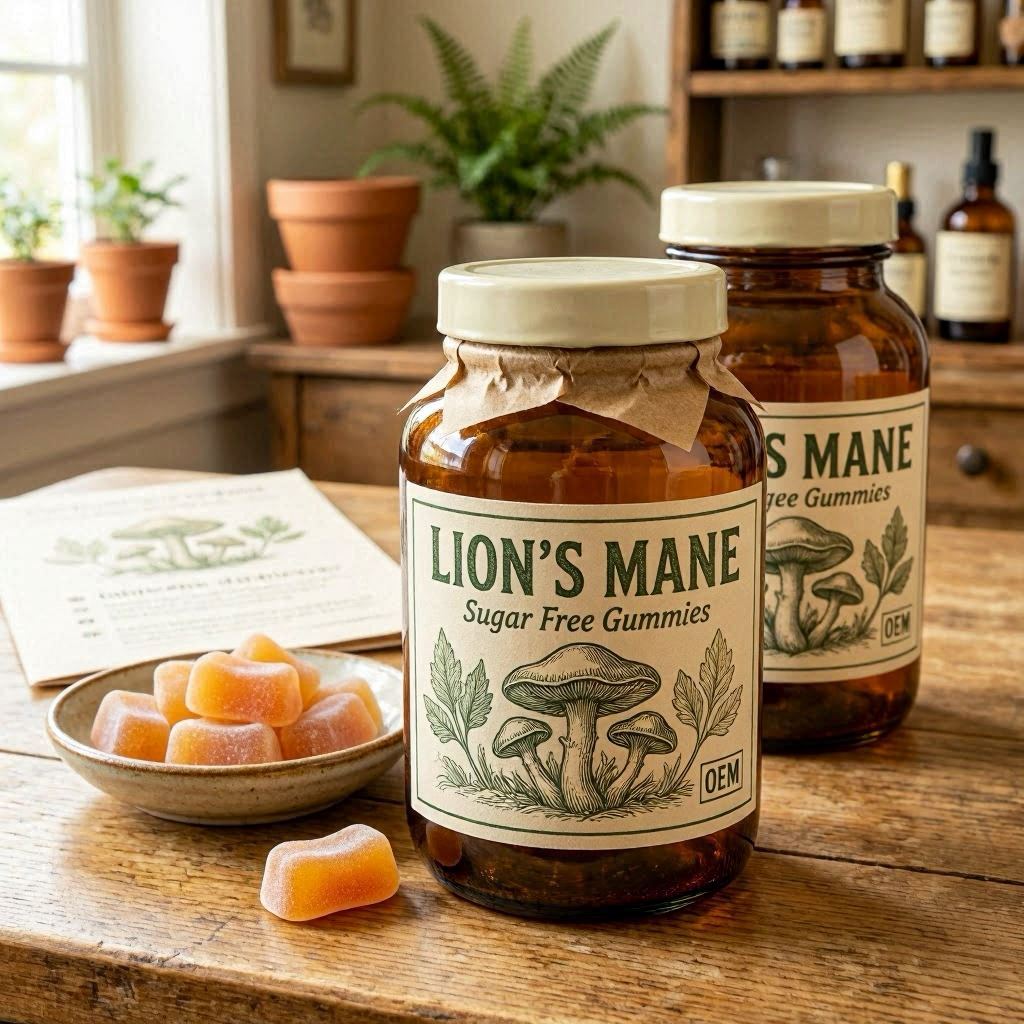
The functional mushroom market has experienced remarkable growth over the past five years, with Lions Mane mushroom emerging as one of the most sought-after ingredients in the nootropic and holistic wellness space. For brand owners and entrepreneurs looking to launch Amazon FBA-compliant Lions Mane mushroom gummies, understanding the manufacturing landscape is essential to building a successful private-label product.
Amazon’s strict regulations around dietary supplements require that every product meets specific labeling, testing, and compliance standards before it reaches consumers. Working with the right Amazon FBA compliant Lions Mane mushroom gummies manufacturer can mean the difference between a smooth product launch and costly compliance failures.
This comprehensive guide covers everything you need to know about sourcing and partnering with manufacturers for Lions Mane gummy products. From understanding the science behind Lions Mane extracts and their cognitive benefits to navigating OEM production minimums, certification requirements, and Amazon’s specific policies, we provide the practical insights that B2B buyers need to make informed decisions.
Whether you are launching a new supplement brand, expanding an existing product line, or exploring the functional mushroom category for the first time, this article equips you with the knowledge to approach manufacturers with confidence and clarity.
The Science Behind Lions Mane Mushroom and Cognitive Function
Lions Mane mushroom (Hericium erinaceus) has been used in traditional medicine for centuries, particularly in East Asian cultures, where it is prized for its potential to support neurological health and cognitive function. Modern scientific research has begun validating these traditional uses, establishing a compelling evidence base that drives consumer demand in Western markets.
The primary bioactive compounds in Lions Mane are hericenones and erinacines, which are uniquely capable of stimulating nerve growth factor (NGF) synthesis. NGF is a protein that plays a critical role in the survival, maintenance, and growth of neurons. By promoting NGF production, Lions Mane compounds may support neuroplasticity, the brain’s ability to form new neural connections, which is fundamental to learning, memory, and cognitive flexibility.
Clinical studies have explored Lions Mane’s impact on mild cognitive impairment, with promising results. A 2009 study published in the journal Phytotherapy Research followed older adults with mild cognitive impairment over 16 weeks, finding significant improvements in cognitive function scores compared to placebo groups. More recent research has examined Lions Mane’s potential role in supporting focus, mental clarity, and mood regulation, positioning it as a versatile ingredient for the growing consumer segment seeking natural cognitive support.
For gummy formulations specifically, Lions Mane is typically supplied as a standardized extract, often featuring 30% to 50% beta-glucans, which are polysaccharide compounds associated with immune support and overall mushroom efficacy. The extraction process—whether using hot water, alcohol, or dual extraction—significantly influences the final concentration of bioactive compounds. Reputable manufacturers will provide Certificates of Analysis (COA) confirming the beta-glucan content, hericenone and erinacine concentrations, and the absence of contaminants such as heavy metals, pesticides, and microbial pathogens.
Understanding these scientific foundations helps brand owners evaluate manufacturers’ technical capabilities, assess extract quality, and communicate the value proposition of their products effectively to end consumers.
Market Trends and Demand Data for Functional Mushroom Gummies
The global functional mushroom market was valued at approximately $25 billion in 2022 and is projected to grow at a compound annual growth rate (CAGR) of around 9% through 2030, according to industry analyses from Grand View Research and Mordor Intelligence. Within this broader category, Lions Mane consistently ranks among the top three mushroom species by consumer interest and retail sales velocity, alongside Reishi and Cordyceps.
The gummy format represents one of the fastest-growing delivery formats in the supplement industry. Euromonitor and SPINS data indicate that gummy supplements have outpaced traditional formats like capsules and tablets in terms of new product launches and market share growth over the past five years. This trend is particularly pronounced among younger consumers aged 25 to 45, who cite palatability, convenience, and dosing ease as primary reasons for preferring gummies over conventional supplements.
On Amazon specifically, the search volume for Lions Mane supplement products has increased steadily year over year, with gummy formats capturing an increasing share of search impressions and conversion. The platform’s algorithm favors products with strong click-through rates, positive reviews, and competitive pricing—all of which are influenced by the quality of the underlying formulation and manufacturing execution.
For brand owners entering this market, the competitive landscape presents both opportunity and challenge. Differentiation through premium ingredients, transparent labeling, third-party certifications, and compelling brand storytelling has become essential. Products that simply replicate commodity formulations face price erosion and review volatility. Working with a capable Lions Mane mushroom gummies manufacturer that can support differentiation through customization, unique flavor profiles, and added-value ingredient combinations provides a meaningful competitive advantage.
Manufacturing Considerations for Lions Mane Gummy Production
Producing high-quality Lions Mane gummies presents distinct technical challenges that require specialized manufacturing expertise. Understanding these considerations allows brand owners to ask the right questions when vetting potential manufacturing partners.
Extract Compatibility and Stability: Lions Mane extract has a distinctive earthy, slightly bitter flavor profile that can be challenging to mask in a gummy matrix. Experienced manufacturers employ advanced flavor masking techniques using natural flavor systems, sweeteners, and citrus acid adjustments to create a palatable product without compromising stability. The stability of the bioactive compounds throughout the product’s shelf life—typically 24 months—is another critical consideration. Manufacturers must optimize the gummy matrix and packaging to protect sensitive compounds from oxidation and moisture ingress.
Dosage Precision: Effective Lions Mane dosages in research typically range from 500 mg to 3,000 mg of standardized extract per day, often divided into two or three servings. Gummy formats require precise dosing per individual gummy piece, accounting for factors like weight variation, extract concentration, and ingredient distribution throughout the matrix. Top-tier manufacturers utilize micro-ingredient premixing and encapsulation technologies to ensure uniform distribution and label claim accuracy within each gummy.
Bioavailability Enhancement: While Lions Mane extracts are generally bioavailable, certain manufacturers incorporate bioavailability-enhancing technologies such as liposomal delivery, nanoemulsification, or pairing with complementary absorption-supporting ingredients like Black Pepper extract (piperine) or medium-chain triglycerides (MCTs). These approaches can improve the rate and extent of absorption, though they add complexity and cost to the formulation.
Sugar-Free and Clean Label Options: Consumer demand for clean-label products has driven manufacturers to develop sugar-free gummy formulations using natural sweeteners such as allulose, erythritol, or monk fruit extract. These alternatives require different processing parameters and formulation adjustments compared to traditional sugar-based gummies. Manufacturers with advanced R&D capabilities can produce great-tasting, sugar-free gummies that meet consumer expectations for clean, transparent labeling.
OEM and ODM Benefits for Brand Owners
Partnering with an OEM (Original Equipment Manufacturer) or ODM (Original Design Manufacturer) for Lions Mane gummy production offers significant strategic advantages for brand owners, particularly those launching private-label products through Amazon FBA.
Low Minimum Order Quantities: Traditional contract manufacturing often requires prohibitively high MOQs that exceed the inventory needs of emerging brands. Many OEM manufacturers now offer MOQs starting at 300 to 500 units per SKU, making private-label gummy production accessible to startups and solo entrepreneurs. This lower barrier to entry allows brands to test market demand with manageable inventory investment before scaling up.
Rapid Speed to Market: Established manufacturers with in-house formulation, prototyping, and production capabilities can often take a brand from concept to shelf-ready product in 8 to 14 weeks. This speed is particularly valuable on Amazon, where first-mover advantage and product ranking momentum can significantly influence long-term sales performance. ODM partners who offer pre-formulated base products can accelerate this timeline even further, reducing the development phase to labeling and packaging customization.
Comprehensive Customization Services: OEM/ODM partnerships typically include support for custom flavor development, shape and color options, packaging design, and label artwork. Some manufacturers provide full-service branding packages that encompass product concept development, regulatory review, and Amazon-optimized content creation. This turnkey approach reduces the number of vendors a brand owner needs to coordinate, streamlining the supply chain and accelerating launch timelines.
Scalability Built In: Reputable manufacturers design their production lines with scalability in mind. As a brand’s sales grow, the same manufacturer can increase production volumes without requiring a complete vendor transition. Building this long-term relationship from the outset provides continuity in product quality, formulation specifications, and supplier reliability—all of which are critical for maintaining Amazon listing performance and customer satisfaction.
Quality Assurance and Regulatory Compliance
For Amazon FBA compliance and consumer safety, rigorous quality assurance is non-negotiable. Brand owners must ensure their manufacturing partner operates within a comprehensive quality framework that addresses every stage of production.
Good Manufacturing Practice (GMP) Certification: GMP-certified facilities adhere to documented quality management systems covering personnel training, equipment calibration, raw material sourcing, production procedures, and finished product testing. In the United States, dietary supplement manufacturers are required to operate under 21 CFR Part 111, which establishes current Good Manufacturing Practice (cGMP) standards. Third-party GMP certifications from organizations such as NSF International, UL, or the Food Safety System Certification (FSSC 22000) provide additional assurance of facility quality.
Third-Party Laboratory Testing: Comprehensive testing protocols should include identity verification of Lions Mane extract through DNA barcoding or microscopy, potency testing to confirm beta-glucan and hericenone/erinacine content, microbial testing for total plate count, yeast and mold, E. coli, Salmonella, and Staphylococcus aureus, heavy metal analysis for lead, mercury, cadmium, and arsenic, pesticide screening, and allergen verification. All test results should be documented in Certificates of Analysis that are batch-specific and available to brand owners upon request.
COA Review and Transparency: A Certificate of Analysis is not merely a compliance document—it is a critical tool for brand owners to verify product quality and substantiate label claims. Amazon’s policies require that supplement products contain the amounts of ingredients stated on the label. Working with a manufacturer that provides COA documentation for every production batch protects brands from compliance disputes and supports Amazon listing approval.
Regulatory Support: Manufacturers with regulatory affairs expertise can guide brand owners through FDA labeling requirements, Amazon’s specific supplement category guidelines, and international export requirements. This includes ensuring that structure/function claims are properly substantiated, Supplement Facts panels are formatted correctly, allergen declarations are complete, and usage directions are clear and accurate.
Comparing Delivery Formats: Gummies, Capsules, and Powder
The choice between gummy, capsule, and powder formats involves trade-offs in consumer experience, manufacturing complexity, cost, and shelf stability.
Gummies: Offer superior palatability and consumer adherence, particularly for daily cognitive support applications. They are pre-dosed for convenience and appeal to consumers who dislike swallowing pills. However, gummies typically have higher per-unit production costs, shorter shelf life compared to stable capsules, and may require refrigeration or temperature-controlled storage to maintain texture and efficacy. Gummy formats also face greater regulatory scrutiny on added sugar content, which has driven demand for sugar-free and reduced-sugar formulations.
Capsules: Provide excellent stability, longer shelf life, and precise dosing in a cost-effective format. Capsules are well-suited for high-potency Lions Mane extracts where consumers need concentrated doses per serving. They are also preferred by consumers seeking clean-label products without the sugar and gelatin considerations associated with gummies. The primary trade-off is consumer experience—capsules may be perceived as less enjoyable to consume compared to gummies.
Powder: Offers maximum flexibility in dosing and the ability to mix with food or beverages. However, powder formats face compliance challenges on Amazon FBA, as spillover, inconsistent dosing, and consumer preparation steps can negatively impact reviews and return rates. Powders also require more complex packaging solutions to ensure moisture protection and dosing accuracy.
For brands focused on the cognitive support and nootropic consumer segment, gummies often represent the optimal balance of consumer experience and market positioning. The format commands a premium price point, generates strong consumer engagement, and performs well in Amazon’s conversion-focused algorithm.
Frequently Asked Questions
What is the minimum order quantity for private-label Lions Mane gummies?
Minimum order quantities vary by manufacturer but typically range from 300 to 1,000 units per SKU for gummy products. Some manufacturers offer lower MOQs for entry-level brands, while others require higher volumes in exchange for more competitive per-unit pricing. Brand owners should consider their launch budget, projected sales velocity, and storage capacity when evaluating MOQ requirements.
What certifications should I look for in a Lions Mane gummy manufacturer?
Key certifications include FDA-registered facility status, cGMP compliance (21 CFR Part 111), NSF or similar third-party GMP certification, ISO 22000 food safety certification, and specific testing certifications such as ISO/IEC 17025 for laboratory testing. Additional market-relevant certifications may include USDA Organic, Non-GMO Project Verified, Halal, Kosher, Gluten-Free, and Vegan certifications depending on your target consumer demographics.
How do I verify the quality of Lions Mane extract used in my gummies?
Request batch-specific Certificates of Analysis that verify beta-glucan content (ideally 30% to 50%), hericenone and erinacine concentrations, and negative results for heavy metals, pesticides, microbial contaminants, and allergens. Some manufacturers also provide DNA authentication testing to confirm the species identity of the mushroom material. Third-party lab verification through organizations like BSCG or NSF can provide an additional layer of credibility.
What is the typical shelf life for Lions Mane gummies?
Most Lions Mane gummy products have a shelf life of 18 to 24 months when stored in a cool, dry environment away from direct sunlight. Sugar-free formulations may have slightly different stability profiles. Manufacturers should conduct stability testing and provide recommended storage conditions and expiration dating on the label.
Can manufacturers create sugar-free or low-sugar gummy formulations?
Yes, most established gummy manufacturers offer sugar-free formulations using alternative sweeteners such as allulose, erythritol, stevia, or monk fruit. These formulations require specialized processing techniques and recipe adjustments to achieve acceptable texture and flavor. Discuss your clean-label requirements and sweetness preferences with potential manufacturers during the vendor evaluation phase.
How long does the production process take from formulation to delivery?
A typical timeline from initial concept to finished goods delivery ranges from 10 to 16 weeks. This includes formulation development and prototyping (2 to 4 weeks), flavor and packaging approval (1 to 2 weeks), production scheduling and manufacturing (4 to 6 weeks), and quality control testing and shipping (2 to 4 weeks). Expedited timelines may be available for additional cost, depending on the manufacturer’s production schedule.
What labeling and packaging requirements does Amazon FBA impose on supplement products?
Amazon requires that all supplement products comply with FDA labeling regulations, including a Supplement Facts panel, ingredient list, allergen declarations, net quantity statement, manufacturer information, and recommended serving size. Additionally, FBA requirements include scannable barcodes (UPC or EAN), child-resistant packaging if required, and polybagged or shrink-wrapped units for products with multiple pieces per packaging. Review Amazon’s current Seller Central guidelines for the most up-to-date requirements, as policies are periodically updated.
How can I ensure my product listing complies with Amazon’s advertising policies?
Amazon restricts certain health claims for supplement products. Focus on structure/function claims that are substantiated by competent and reliable scientific evidence, and avoid disease claims or claims that the product diagnoses, treats, cures, or prevents any disease. Use plain text descriptions of ingredients and their traditional uses rather than therapeutic language. Working with manufacturers who have regulatory affairs teams can help ensure your listing content meets Amazon’s compliance standards.
Conclusion
Launching Amazon FBA-compliant Lions Mane mushroom gummies requires careful navigation of manufacturing capabilities, quality assurance protocols, regulatory requirements, and market positioning. The growing consumer demand for functional mushroom products, combined with the gummy format’s popularity, creates a compelling opportunity for brand owners who approach the market with informed strategy and reliable supplier partnerships.
Success in this category hinges on three core pillars: selecting a manufacturing partner with proven expertise in functional mushroom gummy production and comprehensive quality certification; investing in formulation differentiation that goes beyond commodity products to deliver genuine consumer value; and maintaining rigorous compliance with Amazon’s labeling, testing, and policy requirements throughout the product lifecycle.
Brands that prioritize these fundamentals position themselves to capture market share in a high-growth segment, build sustainable competitive advantages, and develop products that generate positive reviews, repeat purchases, and long-term Amazon ranking momentum. The functional mushroom market will continue to evolve as research expands and consumer awareness grows—brands that establish strong manufacturing foundations today will be best positioned to adapt and scale as the category matures.
Disclaimer: These statements have not been evaluated by the Food and Drug Administration. This product is not intended to diagnose, treat, cure, or prevent any disease. The information provided in this article is for educational and informational purposes only and does not constitute medical advice. Always consult with a qualified healthcare professional before starting any supplement regimen.