










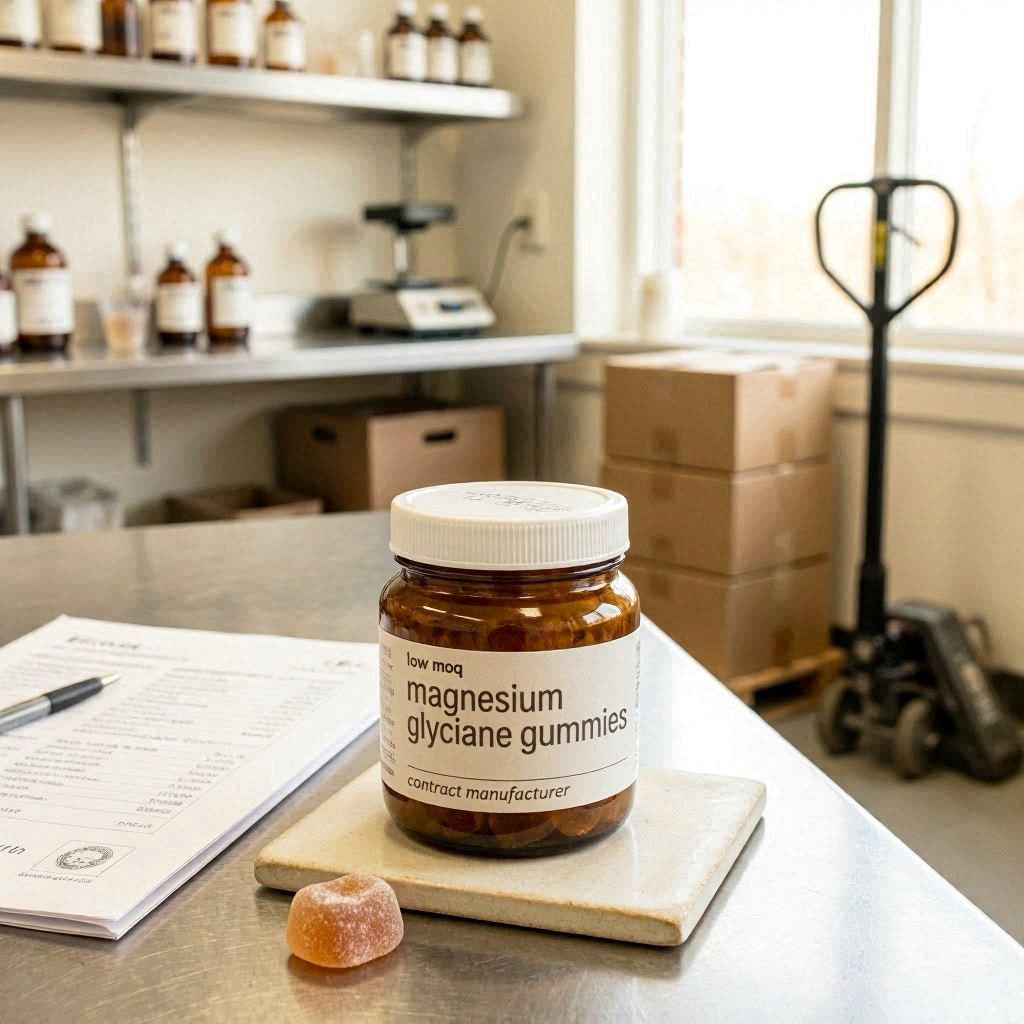
Affordable Custom Pure NMN Supplement Contract Manufacturing: A Complete Guide for Brand Owners
Introduction
The global demand forNicotinamide Mononucleotide (NMN) supplements has experienced remarkable growth over the past five years, driven by compelling scientific research into cellular aging and energy metabolism. As brand owners and entrepreneurs seek to enter this lucrative market, understanding the nuances of affordable custom pure NMN supplement contract manufacturing becomes essential for building a successful product line.
NMN, a direct precursor to Nicotinamide Adenine Dinucleotide (NAD+), has emerged as one of the most researched抗衰老 ingredients in the nutraceutical industry. Clinical studies have demonstrated its potential to enhance cellular energy production, support mitochondrial function, and promote overall vitality. These scientifically-backed benefits have created substantial market opportunity for brands capable of delivering high-quality, properly manufactured NMN products.
For companies without in-house manufacturing capabilities, partnering with experienced contract manufacturers offers the most efficient path to market. However, navigating the complexities of NMN formulation—including purity requirements, stability challenges, bioavailability optimization, and regulatory compliance—demands careful consideration of manufacturing partners and production strategies.
This comprehensive guide examines the critical factors that brand owners must understand when seeking affordable custom pure NMN supplement contract manufacturing services. From product science and market dynamics to quality assurance protocols and formulation options, we provide the insights necessary to make informed decisions about NMN product development and production partnerships.
The Science Behind NMN: Understanding Mechanism of Action
Cellular Energy and NAD+ Depletion
Nicotinamide Mononucleotide operates as a critical intermediate in the NAD+ biosynthetic pathway. NAD+ serves as an essential coenzyme present in every living cell, playing fundamental roles in energy metabolism, DNA repair, and cellular signaling. Unfortunately, NAD+ levels decline significantly with age—research indicates that by age 50, individuals typically possess only half the NAD+ levels they had at age 20.
This natural decline in NAD+ correlates with decreased mitochondrial function, impaired cellular energy production, and various age-related physiological changes. Supplementing with NMN offers a direct strategy to support NAD+ restoration, as NMN converts to NAD+ through a single enzymatic reaction involving the NMN adenylyltransferase (NMNAT) enzyme.
Bioavailability Considerations
One of the primary scientific challenges in NMN supplementation involves ensuring adequate bioavailability. Oral NMN bioavailability studies have demonstrated that the molecule can be effectively absorbed through the small intestine via specific transporters, including SLC12A8, which is highly expressed in intestinal tissues. Research published in journals including Nature Metabolism has confirmed that oral NMN administration successfully elevates NAD+ levels in multiple tissue types, including liver, muscle, and brain tissue.
However, the stability of NMN in various formulation environments presents manufacturing challenges. NMN demonstrates sensitivity to moisture, heat, and certain pH conditions. Effective contract manufacturers must implement appropriate encapsulation or coating technologies to protect the active ingredient throughout the product’s shelf life while ensuring optimal release in the digestive system.
Dosage Considerations and Research Context
Current clinical research on NMN has utilized daily dosages ranging from 100mg to 500mg, with most human studies employing 250mg as a standard dose. The optimal dosage for any specific formulation depends on numerous factors, including target consumer demographics, intended health claims (within regulatory limits), and the specific delivery format. Experienced manufacturers can provide guidance on formulation development that aligns dosage recommendations with available scientific evidence while ensuring compliance with applicable regulations.
Market Analysis: The Growing Demand for NMN Supplements
Global Market Size and Projections
The global NMN supplement market has established itself as one of the fastest-growing segments within the broader anti-aging and longevity nutraceutical category. Market research indicates that the global NMN market reached approximately $300 million in 2023, with projections suggesting growth to over $600 million by 2028, representing a compound annual growth rate (CAGR) exceeding 15%.
North America currently leads in NMN supplement consumption, driven by high consumer awareness of anti-aging supplements, substantial purchasing power, and favorable regulatory frameworks for dietary supplements. The Asia-Pacific region, particularly Japan, China, and South Korea, represents the second-largest market, with Japan pioneering NMN research and commercial applications dating back to the early 2000s.
Consumer Demographics and Purchasing Behavior
The primary consumer demographic for NMN supplements consists of health-conscious individuals aged 35 to 65, with particular concentration in the 45 to 60 age bracket. These consumers typically demonstrate higher disposable income levels, strong interest in evidence-based supplementation, and willingness to invest in premium anti-aging products. Survey data indicates that NMN consumers prioritize product purity, manufacturing transparency, and third-party testing verification when making purchasing decisions.
Brand owners targeting this demographic must emphasize quality credentials, manufacturing transparency, and scientific backing in their marketing strategies. Contract manufacturers who can provide comprehensive documentation—including Certificates of Analysis, manufacturing process descriptions, and quality system certifications—offer significant value to brands seeking to establish credibility in this demanding market segment.
Competitive Landscape and Market Positioning
The competitive environment for NMN supplements continues to intensify as more brands enter the market. Differentiation strategies increasingly focus on unique delivery technologies, enhanced bioavailability formulations, combination products (NMN paired with complementary ingredients such as resveratrol, pterostilbene, or alpha-lipoic acid), and transparent sourcing narratives. Contract manufacturers capable of supporting these differentiation strategies—whether through advanced delivery systems, flexible formulation capabilities, or comprehensive quality documentation—position their brand partners for market success.
Manufacturing Considerations for Pure NMN Supplements
Purity Requirements and Raw Material Sourcing
The foundation of any high-quality NMN supplement lies in the purity of the raw material. Premium NMN typically requires purity levels of 98% or higher, with many sophisticated brands specifying 99%+ purity targets. Contract manufacturers must source NMN from reputable suppliers capable of providing consistent, high-purity material with comprehensive Certificates of Analysis.
The synthesis method for NMN—whether enzymatic conversion, fermentation, or chemical synthesis—can influence both purity and cost. Enzymatic production methods have gained favor among quality-focused manufacturers due to their ability to produce cleaner products with fewer process-related impurities. Brand owners should discuss raw material sourcing strategies with potential manufacturing partners to ensure alignment with their quality standards and brand positioning.
Stability Challenges and Solutions
NMN demonstrates particular vulnerability to degradation under certain environmental conditions. Moisture exposure represents the primary stability concern, as NMN can undergo hydrolysis reactions that reduce potency over time. Temperature fluctuations during storage and transportation also impact product stability, necessitating robust packaging solutions and appropriate storage condition specifications.
Experienced contract manufacturers address stability challenges through multiple strategies: moisture-resistant packaging (such as induction-sealed bottles with desiccant inserts), temperature-controlled manufacturing environments, and potentially buffered formulations that protect the active ingredient. Accelerated stability testing during product development provides data to support shelf life claims and establish appropriate storage recommendations for consumers.
Bioavailability Enhancement Technologies
Beyond basic stability, manufacturers can implement various technologies to enhance NMN bioavailability. Liposomal encapsulation, which involves enveloping NMN molecules within lipid bilayers, has shown promise in improving absorption rates. Nanoemulsion delivery systems offer another approach, reducing particle size to enhance intestinal absorption. Sublingual tablet formulations provide an alternative absorption pathway, potentially bypassing first-pass metabolism in the liver.
The selection of bioavailability enhancement technologies depends on multiple factors, including target price points, desired delivery format, and consumer preferences. Not all enhancement technologies are necessary or cost-effective for every product concept. Sophisticated manufacturing partners can guide brand owners through technology selection based on their specific product requirements and market positioning.
OEM/ODM Benefits for Brand Owners
Understanding Manufacturing Partnership Models
Original Equipment Manufacturer (OEM) and Original Design Manufacturer (ODM) partnerships represent the two primary models for brand owners seeking to bring NMN supplements to market without investing in manufacturing infrastructure. OEM partnerships involve the manufacturer producing products according to the brand owner’s exact specifications, using formulations and packaging designs provided by the brand. This model offers maximum control over product design while leveraging the manufacturer’s production capabilities.
ODM partnerships provide greater support throughout the product development process, with the manufacturer offering pre-formulated base products that brand owners can customize through label design, minor formulation adjustments, and packaging selection. ODM arrangements typically reduce development timelines and initial investment requirements, making them attractive to emerging brands and companies testing new market opportunities.
Minimum Order Quantities and Cost Efficiency
One of the primary advantages of contract manufacturing lies in the ability to achieve production economics that would be impossible with small-scale in-house manufacturing. Established contract manufacturers operate equipment sized for efficiency at volumes ranging from a few thousand to hundreds of thousands of units per production run. This scale enables competitive pricing while maintaining quality standards.
For NMN supplements specifically, minimum order quantities typically range from 500 to 3,000 units depending on the manufacturing partner and formulation complexity. Products utilizing standard capsule formats with common bottle configurations generally offer lower MOQs than specialty formats such as gummies or unique delivery systems. Brand owners should clarify MOQ expectations early in partner selection discussions and evaluate whether production quantities align with anticipated demand and available capital.
Speed to Market Advantages
Contract manufacturing dramatically accelerates time to market compared to building proprietary manufacturing capabilities. From initial formulation development through final product release, experienced NMN manufacturers can complete production cycles in 8 to 16 weeks, depending on formulation complexity and packaging requirements. This timeline includes necessary quality testing, Certificate of Analysis generation, and compliance verification steps.
The speed advantage becomes particularly significant in rapidly evolving market segments where first-mover advantages or responsive product launches can meaningfully impact market position. Contract manufacturing eliminates the 18 to 24 months typically required to establish GMP-compliant manufacturing facilities, allowing brands to focus resources on marketing, distribution, and customer acquisition.
Quality Assurance and Regulatory Compliance
Good Manufacturing Practice Standards
Any contract manufacturer producing dietary supplements for commercial sale must operate in compliance with Good Manufacturing Practice (GMP) regulations. In the United States, FDA’s 21 CFR Part 111 establishes the specific GMP requirements for dietary supplements, encompassing all aspects of production including facility design, equipment qualification, personnel training, production and process controls, and quality assurance operations.
GMP compliance involves comprehensive documentation of all manufacturing processes, including material specifications, production procedures, in-process testing, and final product verification. Manufacturers must implement written procedures for every aspect of production and maintain records demonstrating compliance with those procedures. Regular internal audits and external inspections verify ongoing adherence to GMP standards.
For brands seeking international market access, additional compliance requirements may apply. European Union regulations, Australian TGA requirements, and other national frameworks establish specific standards that export products must meet. Quality-focused contract manufacturers typically maintain certifications demonstrating compliance with multiple regulatory jurisdictions, facilitating market expansion for their brand partners.
Third-Party Testing and Certificate of Analysis
Third-party laboratory testing provides independent verification of product quality, purity, and safety. Reputable NMN supplement manufacturers submit products for testing by independent analytical laboratories capable of verifying identity, purity, potency, and absence of contaminants. Testing protocols typically include high-performance liquid chromatography (HPLC) for NMN content verification, microbial testing for safety verification, heavy metal analysis, and potentially testing for residual solvents or other potential contaminants.
The Certificate of Analysis (COA) documents test results and provides the authoritative record of product quality. Comprehensive COAs include specification limits, actual results, testing methodology references, and laboratory accreditation information. Brands should insist on receiving batch-specific COAs with each shipment and verify that testing laboratories hold appropriate accreditations such as ISO 17025 certification.
Heavy Metal and Contaminant Screening
Dietary supplements, including NMN products, require rigorous screening for heavy metals including lead, arsenic, cadmium, and mercury. Regulatory frameworks establish maximum permissible levels for these contaminants, and responsible manufacturers implement testing protocols to verify compliance well before products reach consumers. Testing frequency depends on ingredient variability and manufacturing process characteristics, with many manufacturers testing each raw material lot and each finished product batch.
Microbial contamination represents another critical safety concern. Testing protocols address total plate count, yeast and mold, E. coli, Salmonella, and other potential pathogens. The appropriate testing scope depends on product format and intended market, with some markets requiring more extensive pathogen testing than others.
Formulation Formats: Gummies, Capsules, and Powder Compared
Capsule Formulations
Hard-shell capsules remain the most common delivery format for pure NMN supplements. Capsules offer several advantages: straightforward manufacturing processes that minimize handling of the active ingredient, excellent protection against moisture and oxidation, and consumer familiarity that facilitates product adoption. NMN capsules typically contain the active ingredient in powder form, potentially combined with excipients to improve flow characteristics and ensure content uniformity.
Capsule manufacturing accommodates various size options, allowing brands to balance consumer convenience with dosage requirements. For NMN dosages of 250mg or higher per serving, larger capsule sizes may be necessary, potentially impacting swallowability for some consumers. Vegetarian and vegan capsule options (typically made from plant cellulose rather than animal-derived gelatin) expand market accessibility for brands seeking to serve these consumer segments.
Gummy Formulations
Gummy supplements have experienced substantial growth across virtually all supplement categories, and NMN gummies represent an increasingly popular product format. Gummies offer significant consumer appeal, particularly for individuals who have difficulty swallowing capsules or prefer a more pleasant supplement experience. The format also supports premium positioning through distinctive textures, flavors, and visual appearances.
However, gummy manufacturing presents unique challenges for NMN formulations. The manufacturing process involves heating and humidity exposure that can degrade NMN if not carefully controlled. Additionally, the high-sugar or sugar-free gummy matrix may interact with NMN stability over extended storage periods. Experienced manufacturers address these challenges through process optimization, appropriate ingredient sequencing, and potentially encapsulated NMN formulations that protect the active ingredient during manufacturing and storage.
Powder and Liquid Formats
Powder formats offer maximum flexibility for NMN supplementation, allowing consumers to customize their dosage and potentially combine NMN with other supplements. Powder products typically demonstrate excellent stability when properly packaged in moisture-resistant containers with desiccant protection. The primary disadvantage involves preparation requirements and potential taste issues, as NMN has a somewhat bitter taste that may require masking in unflavored applications.
Stick pack and single-serve packet formats have gained popularity for NMN powder products, offering convenience advantages and portion control. These formats typically command premium pricing but may appeal to specific consumer segments prioritizing convenience over cost efficiency.
Frequently Asked Questions
What minimum order quantities should I expect for custom NMN supplement manufacturing?
Minimum order quantities for custom NMN supplement manufacturing typically range from 500 to 3,000 units per SKU, depending on the manufacturing partner and specific product configuration. Standard capsule products in common bottle sizes generally offer lower MOQs, while specialty formats such as gummies, unique shapes, or custom packaging may require higher minimums. Some manufacturers offer smaller runs at premium pricing for brands conducting market testing or launching limited-edition products. Discussing MOQ requirements early in the partner selection process ensures alignment between production capabilities and business objectives.
How do I verify the purity of NMN in my supplement products?
Verifying NMN purity requires both raw material testing at ingredient receipt and finished product testing before release. Request Certificates of Analysis from your manufacturing partner that document HPLC testing results showing NMN content typically at 98% purity or higher. The COA should also verify the absence of relevant contaminants. For additional verification, consider commissioning independent laboratory testing of finished products. Third-party testing by ISO 17025-accredited laboratories provides the strongest verification of product quality and purity claims.
What certifications should I require from an NMN supplement manufacturer?
Essential certifications for NMN supplement manufacturers include FDA-registered facility status, current Good Manufacturing Practice (GMP) compliance verification, and third-party quality audits. Additional valuable certifications include NSF International or similar third-party GMP certification, organic certification if applicable, and potentially certifications specific to your target markets such as Kosher, Halal, or non-GMO Project verification. Request documentation of these certifications and verify their current validity through appropriate certification body databases.
How long does NMN supplement shelf life typically extend?
Properly manufactured and packaged NMN supplements typically carry shelf life declarations of 24 to 36 months when stored under recommended conditions. The actual achievable shelf life depends on formulation specifics, packaging quality, and storage conditions. Stability testing conducted under accelerated aging conditions provides data supporting shelf life claims. Your manufacturing partner should conduct appropriate stability studies during product development and provide supporting documentation for the declared shelf life.
What regulatory claims can I make about NMN supplements?
NMN supplement claims must comply with applicable dietary supplement labeling regulations, which generally prohibit disease claims and require specific disclaimer language for health claims. NMN is not an approved drug and cannot be marketed with claims to diagnose, treat, cure, or prevent any disease. General wellness claims related to energy support, cellular health, or aging gracefully may be appropriate depending on specific regulatory frameworks. Consult regulatory compliance professionals familiar with your target markets to ensure claim strategies align with applicable requirements.
How do I address taste masking for NMN products?
NMN possesses an inherently bitter taste that presents formulation challenges for chewable products, powders, and liquid formats. Effective taste masking strategies include encapsulation of NMN particles, use of flavor systems specifically designed to complement bitter ingredients, and the addition of sweetening agents. The appropriate approach depends on product format and target consumer preferences. Capsule products largely bypass taste concerns, while gummies and powders require more sophisticated taste management. Discuss taste masking options with your manufacturing partner during formulation development.
What packaging options protect NMN stability most effectively?
Optimal packaging for NMN supplements prioritizes moisture protection and light shielding. Induction-sealed plastic bottles with cotton or silica gel desiccant inserts provide effective moisture barriers for capsule and tablet products. For enhanced protection, consider foil-backed blister cards that provide individual dose protection against both moisture and oxidation. Packaging selection should also address child resistance requirements where applicable and sustainability considerations increasingly important to consumers. Your manufacturing partner can recommend packaging solutions balancing protection requirements, cost constraints, and consumer preferences.
Can I combine NMN with other ingredients in custom formulations?
Custom NMN formulations frequently incorporate complementary ingredients to create differentiated products. Common combinations include NMN with resveratrol or pterostilbene (potentially enhancing NAD+ activation pathways), alpha-lipoic acid (supporting cellular energy metabolism), or various antioxidant compounds. Formulation compatibility requires consideration of ingredient interactions, potential stability conflicts, and synergistic or antagonistic effects. Experienced manufacturers can evaluate proposed ingredient combinations and recommend appropriate formulations that maintain NMN stability while achieving desired product characteristics.
Conclusion
The market opportunity for NMN supplements continues to expand as consumer awareness of cellular health and anti-aging supplementation grows. For brand owners seeking to capture value in this dynamic market segment, partnering with an experienced, quality-focused contract manufacturer represents the most efficient path to market success.
Affordable custom pure NMN supplement contract manufacturing requires careful evaluation of manufacturing capabilities, quality assurance systems, and the specific expertise necessary to handle this sensitive ingredient effectively. Key selection criteria include demonstrated GMP compliance, comprehensive third-party testing protocols, appropriate stability solutions for NMN’s specific requirements, and flexible formulation capabilities supporting various delivery formats.
The investment in establishing strong manufacturing partnerships yields returns through consistent product quality, scalable production economics, and the agility to respond to evolving market opportunities. Brands that prioritize quality credentials, manufacturing transparency, and regulatory compliance position themselves for sustainable success in the competitive NMN supplement market.
As the science supporting NMN supplementation continues to develop and consumer interest in cellular health expands, the brands prepared with properly manufactured, high-quality products will be best positioned to capture market opportunity. Thoughtful manufacturer selection, beginning with understanding the factors outlined in this guide, establishes the foundation for long-term success in this promising product category.
Disclaimer: These statements have not been evaluated by the Food and Drug Administration. This product is not intended to diagnose, treat, cure, or prevent any disease. The information provided in this article is for educational and informational purposes only and does not constitute medical advice. Always consult with a qualified healthcare professional before starting any supplement regimen.