










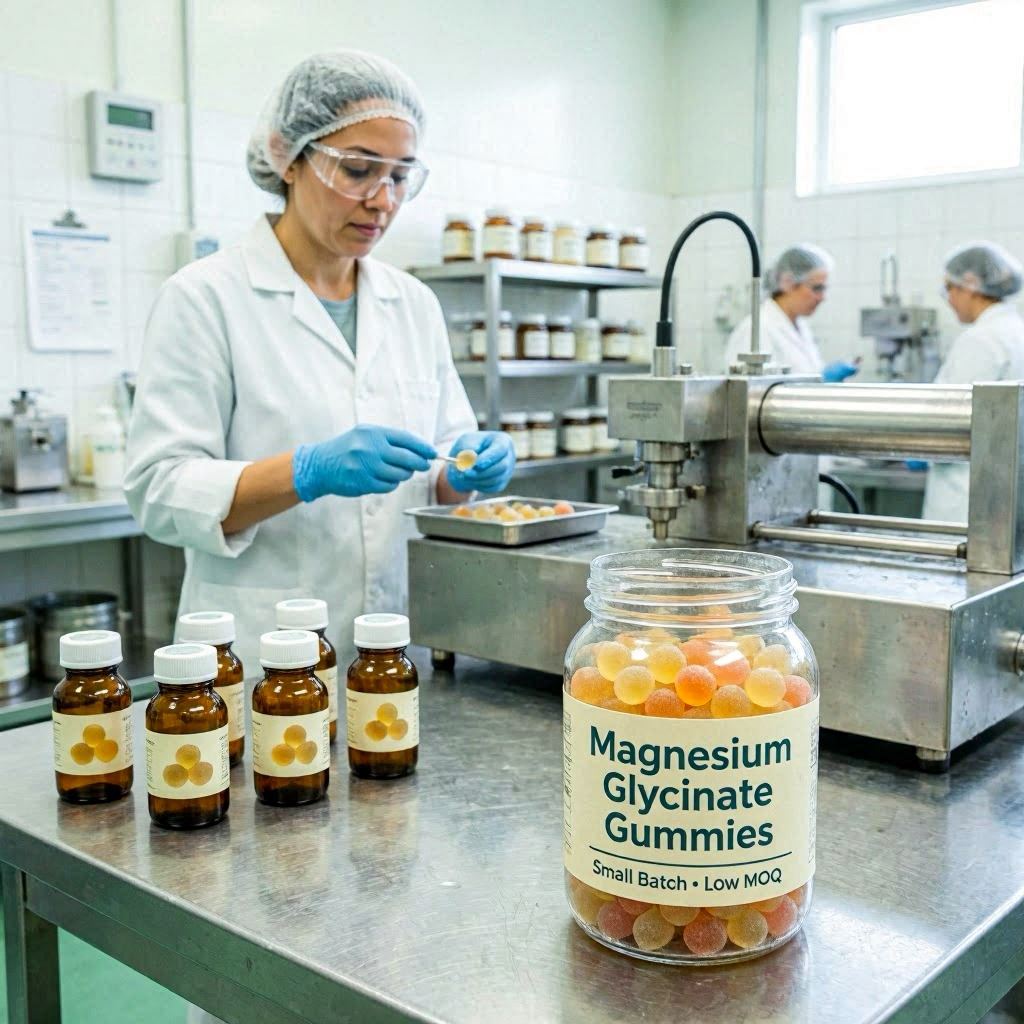
Affordable Custom Ashwagandha Supplement Contract Manufacturing: A Comprehensive Buyer’s Guide
Introduction
Ashwagandha (Withania somnifera) has transitioned from a niche Ayurvedic herb to one of the most commercially sought-after adaptogens in the global dietary supplement market. For brand owners and wellness entrepreneurs looking to enter or expand within this category, the challenge is no longer about whether ashwagandha works—it is about how to bring a differentiated, high-quality product to market without exhausting startup capital. Affordable custom ashwagandha supplement contract manufacturing bridges this gap, enabling businesses of any scale to leverage professional formulation science, compliant production facilities, and scalable supply chains without the overhead of building their own manufacturing infrastructure. Whether you are a clinician launching a practitioner-grade line, an e-commerce brand scaling from Amazon FBA to retail, or a mid-market retailer seeking private-label exclusivity, understanding the economics and logistics of contract manufacturing for ashwagandha supplements is essential. This article covers the full landscape—from the pharmacodynamics of ashwagandha’s active compounds to practical considerations around minimum order quantities, bioavailability technology, third-party testing protocols, and the growing consumer demand for gummy and powder formats. By the end, you will have a framework for evaluating manufacturing partners and building a product that stands out in a crowded but still-expanding category.
—
The Science Behind Ashwagandha: Why Formulation Matters
Ashwagandha’s therapeutic reputation is built on a class of bioactive steroidal lactones known as withanolides, of which withaferin A and withanolide D are the most extensively studied. These compounds modulate the hypothalamic-pituitary-adrenal (HPA) axis, reducing serum cortisol levels by 15–30% in chronically stressed individuals, according to meta-analyses published in the Journal of Alternative and Complementary Medicine. They also exhibit neuroprotective properties by upregulating superoxide dismutase and glutathione peroxidase activity in cortical tissue, which supports the growing consumer interest in ashwagandha for cognitive function and stress resilience. However, the bioavailability of raw withanolides is inherently limited. Oral administration of standard root powder yields a mere 1–2% systemic absorption due to poor aqueous solubility and extensive first-pass hepatic metabolism. This is where contract manufacturing expertise becomes critical.
A reputable contract manufacturer will employ bioavailability enhancement strategies such as liposomal encapsulation, cyclodextrin complexation, or phytosome technology (withanolides bound to phospholipids), which can increase absorption by 3–5 times compared to unformulated extract. They will also standardize raw material to a specific withanolide percentage—typically 2.5%, 5%, or 10%—rather than relying on crude root powder with batch-to-batch variability. The choice of standardization level directly impacts both efficacy and cost. A 2.5% withanolide extract is commonly used for 300–600 mg daily dosing in stress formulas, while 5% or 10% extracts enable lower serving sizes (125–300 mg) in premium lines. When evaluating affordable custom ashwagandha supplement contract manufacturing, always verify that the manufacturer uses HPLC (high-performance liquid chromatography) testing to confirm withanolide content and screens for heavy metals, pesticides, and microbial contaminants. Ashwagandha roots are bioaccumulators of lead and cadmium, so raw material sourced from regions with lax agricultural regulations requires rigorous incoming inspection. A proper Certificate of Analysis (COA) from an ISO 17025-accredited lab should accompany every production lot, covering identity, potency, purity, and heavy metals per USP monograph limits.
—
Market Trends and Demand Data
The global ashwagandha supplement market was valued at approximately USD 320 million in 2023 and is projected to grow at a compound annual growth rate (CAGR) of 10.5% through 2030, according to industry tracking reports. This growth is fueled by three converging drivers: the post-pandemic surge in mental health awareness, the mainstreaming of adaptogenic ingredients across sports nutrition and functional food categories, and increasing clinical validation of ashwagandha’s efficacy in randomized controlled trials. Google Trends data shows steady upward search momentum for terms such as “ashwagandha for sleep,” “ashwagandha testosterone,” and “ashwagandha gummies” over the past five years, with particularly strong growth in the 25–44 age demographic. On Amazon, ashwagandha consistently ranks among the top 10 best-selling supplement subcategories by unit volume, with gummy formats capturing an increasing share of new product launches.
From a B2B procurement perspective, this demand creates both opportunity and complexity. Retail buyers and e-commerce platform algorithms now expect branded supplements to deliver on specific claims—stress reduction, cortisol management, sleep quality, or athletic recovery—which in turn requires precisely formulated products rather than generic bulk extracts. A 2024 survey of supplement brand owners found that 68% cited “product differentiation” as their primary reason for choosing custom contract manufacturing over stock private-label products. For brand owners exploring affordable custom ashwagandha supplement contract manufacturing, the most cost-effective entry point is often a mid-range withanolide standardization (2.5–5%) in a capsule format, which allows for competitive retail pricing while maintaining margin. However, the trend toward premium formats—organic-certified, vegan, non-GMO, and third-party verified—commands 20–40% higher retail prices, making it attractive for brands targeting health-conscious or clinically oriented consumers. The fastest-growing sub-segment within ashwagandha is combination formulas that pair it with other adaptogens such as Rhodiola rosea, L-theanine, or phosphatidylserine, often in gummy or powder stick-pack formats. These multi-ingredient products require more sophisticated formulation work, but they also command higher unit economics and lower price sensitivity at retail.
—
Manufacturing Considerations: Formulation, Stability, and Bioavailability
Formulating ashwagandha for contract production involves several technical decisions that influence both cost and finished product quality. The first decision is extract type. The three most common forms are KSM-66 (a full-spectrum water-based root extract standardized to 5% withanolides), Sensoril (a patented extract standardized for both withanolide glycosides and withaferin A), and generic hydro-ethanolic extracts at various standardization levels. Each has different solubility profiles and sensory characteristics. Generic 10:1 or 20:1 extracts are widely available and offer the lowest raw material cost, but they may lack the consistency and clinical documentation that can be leveraged in marketing claims. For affordable custom ashwagandha supplement contract manufacturing, many brand owners start with a standardized generic extract at 2.5% or 5% withanolides and upgrade to a clinically studied extract once the brand reaches a volume threshold that justifies the premium.
Stability testing is a non-negotiable aspect of formulation. Ashwagandha extracts are hygroscopic—they absorb moisture from the air—which can cause clumping in capsule blends and degradation of withanolide content over time. A professional contract manufacturer will conduct accelerated stability studies (40°C/75% RH for six months, per ICH guidelines) before finalizing the formula and packaging format. For capsule products, desiccant canisters and blister packs significantly extend shelf life compared to bulk HDPE bottles. For gummy formulations, the challenge is greater: the aqueous gummy matrix accelerates withanolide hydrolysis unless the extract is microencapsulated or the pH is carefully controlled. Gummy ashwagandha products typically require 1.5–2x overage of withanolide content at the time of manufacture to ensure label claim potency through the end of shelf life (typically 18–24 months). This increases raw material cost by 15–25% compared to capsule equivalents, a factor that must be weighed against the higher price point gummies can command at retail.
Bioavailability remains the single most important formulation differentiator. European and North American manufacturers increasingly offer enhanced delivery formats such as self-emulsifying drug delivery systems (SEDDS), in which the extract is pre-dissolved in lipid and surfactant carriers to form micelles upon contact with gastrointestinal fluids. Clinical data on SEDDS ashwagandha shows a 7.5-fold increase in maximum plasma concentration of withaferin A compared to standard extract, enabling lower effective doses and faster onset of action. While these technologies add 10–20% to the per-unit manufacturing cost, they can be positioned as premium products commanding significantly higher retail margins. For cost-sensitive launches, a simpler approach—formulating ashwagandha with black pepper extract (piperine, 5 mg per serving)—increases withanolide absorption by approximately 200%, per published bioavailability studies, and adds negligible material cost. This is one of the most cost-effective strategies in affordable custom ashwagandha supplement contract manufacturing and is widely adopted in mid-market products.
—
OEM/ODM Benefits for Brand Owners
Engaging a contract manufacturer on an OEM (original equipment manufacturing) or ODM (original design manufacturing) basis offers brand owners a direct path to market that bypasses the significant capital expenditure required for building and certifying a production facility. A GMP-compliant manufacturing facility typically costs USD 2–5 million to establish, not including the 12–18 months required for FDA registration, state licensing, and third-party certification audits. By contrast, an affordable custom ashwagandha supplement contract manufacturing partnership can be initiated for a total investment of USD 5,000–15,000 for formulation development, stability testing, and the first production run, depending on MOQ and format complexity.
ODM partnerships are particularly attractive for first-time brand owners. Under an ODM model, the manufacturer proposes a formulary based on market intelligence—suggesting a 600 mg ashwagandha capsule at 5% withanolides, for example—and handles all aspects of sourcing, blending, encapsulation, bottling, and labeling. The brand owner provides the label artwork and distribution channel. This reduces the time from concept to shelf-ready inventory to as little as 8–12 weeks. OEM partnerships, on the other hand, are better suited for established brands with proprietary formulas or patented delivery technologies. In an OEM arrangement, the brand owner supplies the formulation, raw material specifications, and sometimes even the ingredients themselves, while the manufacturer executes blending and encapsulation. This model provides maximum control over intellectual property and ingredient quality but requires deeper formulation expertise on the brand side.
Minimum order quantities (MOQs) vary significantly across manufacturers. Large-scale GMP facilities in the United States and Western Europe typically require an MOQ of 50,000–100,000 capsules or 10,000 gummy units per SKU. However, many mid-tier manufacturers operating in India—which produces approximately 70% of the world’s raw ashwagandha root—offer MOQs as low as 10,000 capsules for liquid-filled softgels or 5,000 units for pouch-packed powders. Asian manufacturers generally offer the most affordable custom ashwagandha supplement contract manufacturing pricing due to lower labor costs and direct access to raw material supply chains, but brand owners must factor in shipping costs (typically USD 500–2,000 per pallet for ocean freight), import duties (2.5–6.5% under HTS 2106.90 for the US market), and lead times of 10–16 weeks total. Domestic US manufacturing costs 30–50% more per unit but offers shorter lead times (4–8 weeks), easier quality audits, and no customs clearance delays, which can be critical for brands launching in tight seasonal windows.
—
Quality Assurance: GMP, Third-Party Testing, and Documentation
Quality assurance in supplement contract manufacturing is not a single step—it is a chain of controls that spans raw material procurement, in-process manufacturing, finished product testing, and post-market stability monitoring. For affordable custom ashwagandha supplement contract manufacturing to deliver commercially viable products, the QA program must be thorough enough to satisfy retailer compliance requirements (Amazon’s expiry dating policy, Target’s vendor standards, Whole Foods’s premium body care standards) without inflating the unit cost to an uncompetitive level.
The foundational certification is cGMP (current Good Manufacturing Practices) as defined in 21 CFR Part 111 for the US market. A legitimate contract manufacturer will make their most recent third-party GMP audit certificate available upon request. For export-oriented partnerships, look for manufacturers that hold one or more of the following: ISO 22000 (food safety management), FSSC 22000, NSF-GMP, or EU GMP for supplements. Halal and Kosher certifications are increasingly expected in gummy formulations, which commonly use gelatin derived from bovine or porcine sources. Pectin-based vegan gummies are available but require different processing equipment and cost 10–15% more in raw materials.
Third-party finished product testing is the single most important verification step. Every production lot should be sent to an independent ISO 17025-accredited laboratory for the following assays: identity confirmation via HPTLC fingerprinting or DNA barcoding, potency testing by HPLC to verify withanolide content within ±10% of label claim, heavy metals screening (lead ≤ 0.5 ppm, arsenic ≤ 0.5 ppm, cadmium ≤ 0.5 ppm, mercury ≤ 0.1 ppm per USP limits), microbial limits testing (total aerobic plate count, yeast and mold, E. coli, Salmonella, Staphylococcus aureus), and aflatoxin and pesticide residue panels. Some retailers now also request ethanol solvent residue testing if the extract was produced via hydro-ethanolic extraction. Each COA should include the laboratory’s accreditation scope, test methods, results, passing specifications, and the date and signature of a qualified reviewer. Retail buyers increasingly require that these COAs be uploaded to third-party verification platforms such as Clean Label Project or USP Verified Mark programs. While achieving USP Verified status can cost USD 15,000–30,000 and take 6–12 months, brands pursuing clinical or medical channel distribution will find it nearly essential.
—
Formulation Formats: Gummies vs. Capsules vs. Powders
Ashwagandha contract manufacturing spans three primary delivery formats, each with distinct cost structures, consumer demographics, and manufacturing complexity.
Capsules remain the dominant format, accounting for approximately 55% of ashwagandha supplement sales by volume. They offer the lowest per-unit cost (USD 0.04–0.08 per capsule for manufacturing, depending on extract standardization and capsule size), the best stability profile (2–3 year shelf life with proper desiccant packaging), and the widest range of contract manufacturing options. Hydroxypropyl methylcellulose (HPMC) vegetarian capsules are preferred over gelatin for brands targeting vegan consumers. Capsules also enable precise dose control—each capsule delivers an exact milligram quantity of extract, which is important for clinical dosing—and allow for high payloads (up to 700 mg per size “00” capsule) without the taste-masking challenges of other formats. For affordable custom ashwagandha supplement contract manufacturing, capsules are almost always the recommended starting format for new brands due to their low barrier to entry.
Gummies are the fastest-growing format, with year-over-year category growth of 28% in 2023. They appeal strongly to younger consumers and those who dislike swallowing pills. However, gummy manufacturing presents unique challenges. The base formulation—a hot-melt suspension of sugar, glucose syrup, pectin or gelatin, citric acid, and flavoring agents—must be carefully engineered to maintain extract stability during the 80–95°C cooking process. Withanolides begin to degrade above 70°C, so the extract must be added during the post-cook cooling phase (below 50°C) or be protected by microencapsulation. Gummy production also requires specialized equipment (depositing lines, drying tunnels, starch moguls) that many capsule-only manufacturers do not operate. Unit manufacturing costs for ashwagandha gummies range from USD 0.12–0.25 per gummy depending on gummy size (2.5 g vs. 4 g), extract standardization, and organic certification of base ingredients. The sugar content (2–3 g per gummy) may need disclosure for certain retailers and can conflict with label aesthetics for sugar-avoidant consumers. Sugar-free gummies using isomaltulose or allulose are available but require additional formulation work to prevent crystallization and maintain mouthfeel.
Powders and stick packs represent a small but growing segment (approximately 12% of ashwagandha sales) favored in the sports nutrition and functional beverage channels. They offer the advantage of customizable serving sizes and easy mixing into shakes or drinks. Manufacturing is straightforward—the extract is blended with a carrier such as inulin or maltodextrin, natural flavors, and sometimes sweeteners like stevia or monk fruit. The key challenge is particle segregation during blending and filling if particle sizes differ significantly between ingredients. Stick-pack packaging requires multi-lane vertical form-fill-seal equipment, which has a different capital profile than capsule filling lines. Unit costs range from USD 0.08–0.15 per stick pack at MOQs of 25,000 units and above. Powders offer the highest flexibility for combination formulas and are the format of choice for ashwagandha-l-theanine sleep blends and ashwagandha-creatine sports stacks.
—
Frequently Asked Questions
Q1: What is the typical minimum order quantity for custom ashwagandha capsules?
MOQs vary by manufacturer and format. For capsule production, MOQs typically range from 10,000 capsules (smaller Indian and Southeast Asian facilities) to 100,000 capsules (large US and European GMP facilities). Gummy MOQs are generally higher at 25,000–50,000 units due to the cost of tooling and line setup. Many contract manufacturers offer flexibility: a higher per-unit price for smaller first runs, with tiered pricing that decreases as volume increases. It is common to negotiate a first-run MOQ at a slightly elevated unit price with a commitment to reorder at a higher volume within 12 months.
Q2: How long does the product development cycle take from concept to finished inventory?
A typical timeline is 12–16 weeks for capsules and 16–24 weeks for gummies. The breakdown is: formulation development and raw material sourcing (2–4 weeks), stability testing (4–8 weeks, sometimes run concurrently with early production), label artwork design and regulatory review (2–3 weeks), production and packaging (2–4 weeks), and third-party finished product testing and COA release (1–2 weeks). Rush orders can reduce some of these timelines by 2–4 weeks but usually incur expediting fees of 10–20% of the total order value.
Q3: Do I need to use a clinically studied ashwagandha extract like KSM-66 or Sensoril to be competitive?
No, but it helps. Clinically studied extracts have published RCT data supporting specific dose and claim language, which can be cited on websites and in marketing materials. However, they cost 20–40% more than generic standardized extracts. Many successful mid-tier brands use generic extracts standardized to 5% withanolides and focus their differentiation on organic certification, third-party testing transparency, and value pricing. If your brand targets the premium segment or makes structure-function claims on labeling, a clinically studied extract is strongly advisable.
Q4: What certifications should I look for in a contract manufacturer?
At minimum, cGMP compliance certified by a recognized third-party audit body (NSF, SGS, UL, or Intertek). For international shipments, look for ISO 22000 or FSSC 22000 certification. If you plan to sell through natural food retailers, expect to need organic certification (USDA Organic or equivalent) from your manufacturer. Halal and Kosher certifications are important for gummy products. Vegan/vegetarian claims require HPMC capsules rather than gelatin, and gummy manufacturers must use pectin instead of gelatin. Request current certificates and verify expiry dates.
Q5: How much should I budget for my first ashwagandha product run?
For a capsule product with 10,000 capsules at a 5% withanolide extract, budget approximately USD 1,500–3,500 for formulation and stability (one-time), USD 1,000–2,500 for label artwork, USD 800–1,500 for third-party testing, and USD 1,500–4,000 for manufacturing and packaging, for a total first-run investment of USD 5,000–12,000. Gummy products start higher, around USD 12,000–25,000 for the first run due to higher tooling and raw material costs. These figures assume a mid-tier manufacturer; premium domestic US manufacturers may quote 40–60% higher.
Q6: How do I verify that my product actually contains the declared amount of withanolides?
Retain a sealed sample from every production lot and send it to an independent ISO 17025-accredited laboratory for HPLC analysis of total withanolides. Compare the result against the COA provided by your manufacturer. Discrepancies beyond ±10% of label claim should trigger a quality investigation, and you should have a quality agreement in place with your manufacturer that specifies remedies for potency failures, including replacement product or credit at a negotiated rate.
Q7: What is the typical shelf life for ashwagandha supplements, and how is it determined?
Capsule formulations typically carry a 24–36 month shelf life, gummies 18–24 months, and powders 18–24 months when packed in moisture-barrier foil pouches. Shelf life is determined by accelerated stability studies conducted during formulation development and then confirmed by real-time stability testing over the product’s life. Always check the expiry dating policy of your target retail channel—many major retailers require at least 12 months of remaining shelf life at the time of delivery.
Q8: Can I combine ashwagandha with other ingredients in a single formulation?
Yes, and it is increasingly common. Popular combination ingredients include L-theanine (for synergistic stress reduction), Rhodiola rosea (for adrenal support), phosphatidylserine (for cortisol management), melatonin (for sleep formulas), and black pepper extract (for bioavailability enhancement). Multi-ingredient formulations require more extensive compatibility and stability testing, as interactions between active compounds can affect degradation rates. Expect development timelines to extend by 2–4 weeks and third-party testing costs to increase by 30–50% for multi-analyte potency assays.
—
Conclusion
The ashwagandha supplement market continues to expand at a robust pace, driven by strong consumer demand for evidence-based stress management solutions. Affordable custom ashwagandha supplement contract manufacturing makes this category accessible to brand owners of all sizes, from startup entrepreneurs launching their first product to established wellness companies looking to extend their adaptogen portfolios. The key to success lies in making informed decisions at each stage: choosing the right withanolide standardization level, selecting a bioavailability strategy that matches your price point, negotiating appropriate MOQs and quality agreements, and investing in the certifications and testing that retail buyers require. Capsules offer the fastest and most cost-effective route to market for new entrants, while gummies and powders provide opportunities for differentiation at higher price points. Regardless of format, never compromise on raw material quality, adulterant screening, or third-party verification. In a category where consumer trust is built on clinical credibility and manufacturing transparency, a product that is affordable to produce but rigorous in quality will always outperform one that cuts corners. By partnering with a manufacturer whose capabilities align with your brand vision, you can bring a competitive ashwagandha product to market efficiently—and scale from there.
Disclaimer: These statements have not been evaluated by the Food and Drug Administration. This product is not intended to diagnose, treat, cure, or prevent any disease. The information provided in this article is for educational and informational purposes only and does not constitute medical advice. Always consult with a qualified healthcare professional before starting any supplement regimen.