










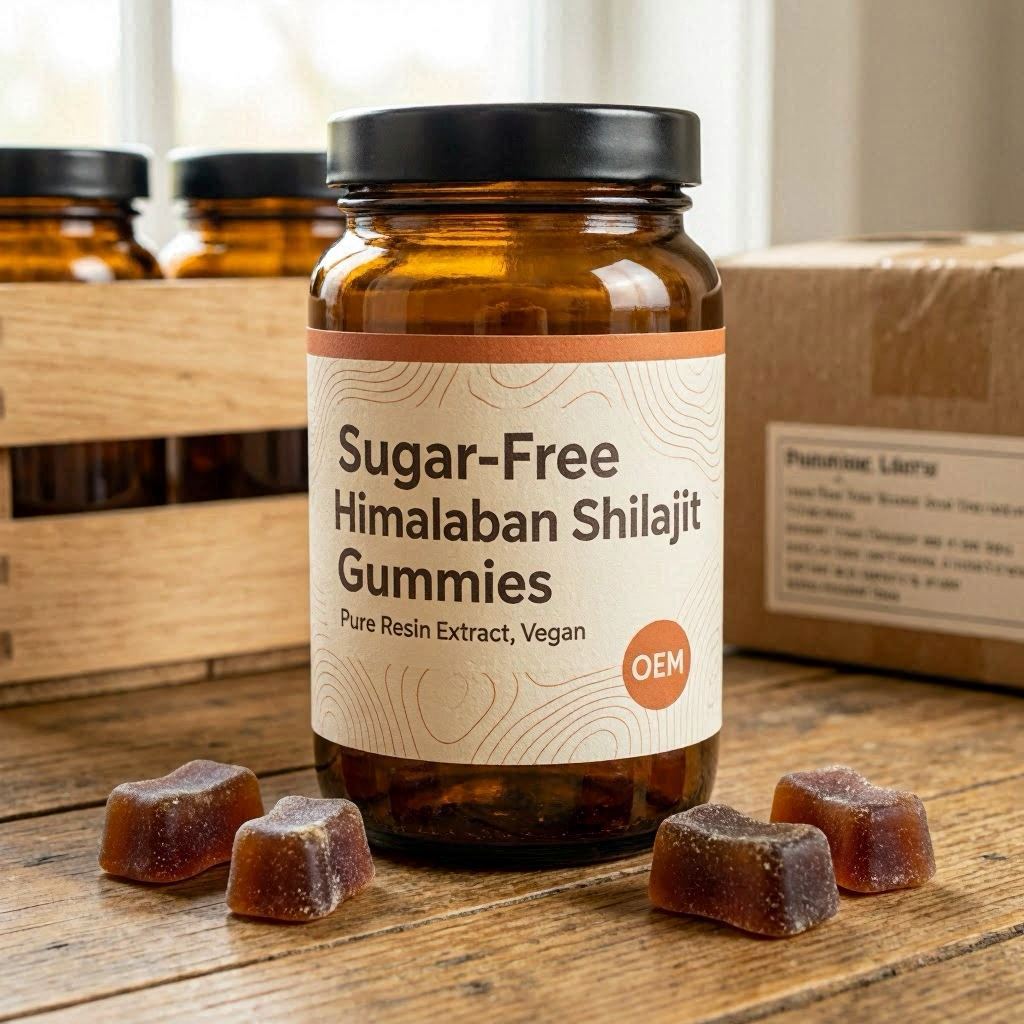
Acid Resistant Himalayan Shilajit Probiotics Powder: The Complete B2B Procurement Guide
Introduction
The convergence of two of nature’s most researched wellness ingredients—Himalayan shilajit and precision probiotic formulations—has created a rapidly expanding market segment that forward-thinking supplement brands cannot afford to ignore. Acid resistant Himalayan shilajit probiotics powder represents a sophisticated delivery system designed to overcome one of the most significant bioavailability challenges in the supplement industry: the destructive passage through the stomach’s acidic environment.
For procurement managers, brand owners, and wholesale buyers evaluating this category, understanding the science behind acid-resistant encapsulation, the supply chain dynamics of authentic Himalayan shilajit, and the manufacturing nuances that separate premium formulations from substandard alternatives is essential. This comprehensive guide covers everything you need to know about sourcing, evaluating, and launching acid resistant Himalayan shilajit probiotics powder at wholesale scale.
The global probiotics supplements market exceeded $58 billion in 2023 and continues growing at a compound annual rate of approximately 8.5%, while the adaptogenic supplements segment—where shilajit occupies a prominent position—has demonstrated even more robust growth patterns. Within these converging markets, powder formulations with acid resistant properties have emerged as the preferred choice for brands seeking superior shelf stability and targeted delivery. This article examines the product science, manufacturing considerations, quality parameters, and strategic advantages that make acid resistant Himalayan shilajit probiotics powder a compelling addition to any supplement portfolio.
Understanding the Science: How Acid Resistant Formulation Works
The Bioavailability Challenge
Probiotics face an extraordinary challenge from the moment they enter the human body. The stomach environment maintains a pH between 1.5 and 3.5—a highly acidic condition designed to break down food and kill potentially harmful microorganisms. Unfortunately, this same acidity is devastatingly effective against beneficial probiotic bacteria. Research published in the Journal of Functional Foods indicates that without protective encapsulation, up to 99% of probiotic bacteria can be destroyed before reaching the intestinal tract where they exert their beneficial effects.
Himalayan shilajit presents its own distinct bioavailability considerations. This tar-like substance, formed over centuries from the slow decomposition of plant matter in high-altitude rock formations, contains fulvic acid, humic acid, dibenzo-alpha-pyrones, and more than 84 trace minerals. While shilajit’s molecular structure provides exceptional nutrient-carrying capabilities, its dense composition requires careful formulation to ensure optimal absorption.
Enteric Coating and Acid Resistance Technology
Acid resistant formulations address these challenges through enteric coating technology—a manufacturing process that applies a protective barrier around probiotic cells and active ingredients. This coating is designed to remain intact in the acidic stomach environment (typically stable at pH below 5.5) but dissolve in the more alkaline conditions of the small intestine (pH 6.5 and above).
For Himalayan shilajit probiotics powder, the acid resistant technology serves multiple functions. First, it protects viable probiotic colonies from gastric destruction. Second, it shields the delicate fulvic acid complexes within shilajit from premature degradation. Third, it enables the synchronized release of both components in the intestinal region where absorption rates are optimized.
The acid resistant properties are typically achieved through the use of enteric-grade coating materials such as cellulose acetate phthalate, hydroxypropyl methylcellulose acetate succinate, or methacrylic acid copolymers. These materials create a physical barrier that withstands gastric conditions while allowing controlled dissolution in intestinal fluids.
Synergistic Benefits of Combined Formulation
When properly formulated, the combination of Himalayan shilajit and acid resistant probiotics creates synergistic effects that neither ingredient achieves independently. Shilajit’s fulvic acid content has been shown in preliminary research to support gut barrier function and enhance nutrient transport across intestinal membranes. This improved intestinal environment potentially supports probiotic colonization and activity.
Furthermore, shilajit’s traditional use as a rejuvenative and energy-supporting compound complements the gut-brain axis research increasingly associated with probiotic function. Modern consumers understand that gut health influences energy levels, mental clarity, and overall vitality—making a combined shilajit-probiotic formulation a compelling product positioning opportunity.
Market Trends Driving Demand
Global Probiotics Market Dynamics
The wholesale demand for advanced probiotic formulations has been driven by several converging market forces. Consumer awareness of gut microbiome importance has expanded dramatically, fueled by scientific publications, mainstream media coverage, and social media health influencers. The market research firm Grand View Research projects the global probiotics market will reach $91 billion by 2026, with therapeutic and specialty formulations representing the fastest-growing segment.
Within this broader market, powder-format probiotics have gained substantial traction. Powder delivery systems offer advantages in dosage flexibility, faster absorption rates compared to capsule formats, and often lower production costs that can be passed to consumers. The wholesale segment has responded accordingly, with powder probiotic contracts representing an increasing share of B2B supplement procurement.
The Adaptogens Category Expansion
Simultaneously, adaptogenic ingredients—substances believed to help the body resist physiological and psychological stress—have experienced remarkable market growth. Shilajit occupies a unique position within this category, offering a naturally occurring complex of bioactive compounds rather than isolated adaptogenic molecules.
The Ayurvedic and traditional wellness movements have introduced Himalayan shilajit to mainstream Western consumers, with market analysts estimating the global shilajit market at approximately $85 million in 2023 with projected growth rates exceeding 12% annually. This growth reflects increased consumer interest in traditional remedies supported by modern scientific validation.
The Premium Formulation Premium
Perhaps most significantly for B2B buyers, market research indicates that consumers increasingly recognize and are willing to pay premium prices for enhanced delivery technologies. Acid resistant, bioavailable, and clinically studied formulations command price premiums of 30-50% compared to basic alternatives. For brand owners and wholesale buyers, this premium positioning creates attractive margins and competitive differentiation opportunities.
The combination of proven ingredients (probiotics and shilajit) with advanced delivery technology (acid resistance) positions these products in the premium segments where brand loyalty and repeat purchase rates tend to be highest.
Manufacturing Considerations for Wholesale Procurement
Raw Material Sourcing and Authentication
The foundation of any quality Himalayan shilajit probiotics powder begins with authentic raw materials. Genuine Himalayan shilajit is sourced from high-altitude rock formations in the Himalayan mountain range, primarily from regions spanning Nepal, Bhutan, India, and Tibet. The geological composition of these formations, with their specific mineral profiles and botanical inputs accumulated over millennia, creates the complex bioactive profile that defines authentic shilajit.
Wholesale buyers should verify that their manufacturing partners source shilajit from established suppliers with documented supply chains. Key authentication markers include fulvic acid content (typically ranging from 50-70% in quality extracts), heavy metal testing documentation, and microbial contamination screening. Some suppliers offer shilajit standardized to specific dibenzo-alpha-pyrone concentrations, providing more consistent formulation potential.
For probiotics components, wholesale specifications should define specific strains, colony-forming unit (CFU) counts, and storage stability requirements. Common probiotic strains used in combination with shilajit include Lactobacillus acidophilus, Bifidobacterium lactis, and Lactobacillus rhamnosus, though formulation optimization depends on target consumer benefits.
Formulation Development and Stability
Developing a stable acid resistant Himalayan shilajit probiotics powder requires expertise in multiple scientific disciplines. The formulation must achieve several simultaneous objectives: maintaining probiotic viability throughout shelf life, preserving shilajit’s bioactive compounds, ensuring acid resistant coating effectiveness, and creating a powder with acceptable handling characteristics.
Stability studies are critical for wholesale procurement decisions. Accelerated stability testing at elevated temperatures (40°C) and controlled humidity conditions provides predictive data on shelf life performance. Quality manufacturers will share stability protocol results, including CFU counts and coating integrity assessments at multiple time points.
The moisture content of finished powder requires particular attention. Shilajit naturally contains moisture that must be addressed during processing, while excessive drying can damage heat-sensitive probiotic organisms. Premium manufacturers employ low-temperature drying technologies and humidity-controlled processing environments to optimize both parameters.
Bioavailability Enhancement Techniques
Beyond basic acid resistance, sophisticated manufacturers employ multiple bioavailability enhancement techniques. Nanoparticle sizing of shilajit extracts can improve cellular absorption. Prebiotic fiber inclusion (such as galacto-oligosaccharides or xylo-oligosaccharides) provides nourishment for probiotic organisms during storage and potentially enhances gut colonization post-consumption.
Some formulations incorporate enzyme co-factors that support probiotic activity in the intestinal environment. Others utilize proprietary coating technologies that provide graduated release profiles rather than simple binary acid resistance. Wholesale buyers should discuss these enhancement options with potential manufacturing partners to identify formulations aligned with their brand positioning.
Strategic Advantages of OEM/ODM Partnerships
Low Minimum Order Quantities and Market Testing
For brands seeking to enter the shilajit-probiotic category without extensive capital commitment, OEM (Original Equipment Manufacturer) and ODM (Original Design Manufacturer) partnerships offer compelling advantages. Many contract manufacturers now offer MOQs (Minimum Order Quantities) starting at 50-100 kilograms for specialty formulations, enabling market testing and gradual scaling.
This flexibility proves particularly valuable for new brands, private label operators, and established companies developing product line extensions. The ability to test consumer response to acid resistant Himalayan shilajit probiotics powder before committing to large-volume production significantly reduces market entry risk.
Formulation Customization Opportunities
OEM/ODM relationships provide extensive customization capabilities. Brands can work with manufacturers to develop proprietary blend ratios, select specific probiotic strains based on target consumer demographics, incorporate preferred excipients and flavor systems, and design unique packaging solutions.
Common customization options include flavor selection (from neutral to berry, citrus, or tropical profiles), sweetener systems (stevia-based, monk fruit, or sugar-free options), and additional functional ingredient inclusions (vitamin D, zinc, or botanical blends). For brands targeting specific consumer segments—such as athletes, older adults, or stress-prone professionals—tailored formulations provide meaningful differentiation.
Speed-to-Market Advantages
Working with established contract manufacturers dramatically accelerates product launch timelines. Quality manufacturers maintain inventory of common raw materials, operate validated production processes, and possess established quality control infrastructure. This infrastructure enables production timelines of 4-8 weeks from formula finalization to finished goods delivery for standard formulations.
For brands facing competitive pressure or seasonal market opportunities, this speed-to-market advantage can be decisive. Many manufacturers also offer pre-formulated “shelf-ready” products that can be launched with minimal customization, further compressing development timelines.
Quality Assurance and Regulatory Compliance
Good Manufacturing Practice Standards
Wholesale procurement of acid resistant Himalayan shilajit probiotics powder must prioritize manufacturers operating under strict quality management systems. Current Good Manufacturing Practice (cGMP) compliance, as mandated by FDA regulations for dietary supplements, establishes baseline requirements for facility sanitation, personnel training, production controls, and documentation practices.
Third-party GMP certifications from organizations such as NSF International, UL, or the Natural Products Association provide independent verification of manufacturing quality. Wholesale buyers should request copies of relevant certifications and verify their current status through issuing organization databases.
Third-Party Testing and Certificate of Analysis
Comprehensive third-party testing represents an essential component of quality assurance for probiotic-containing products. Key testing parameters include probiotic identity verification (confirming the presence and ratio of declared strains), CFU potency testing (quantifying viable organism counts), heavy metal analysis (lead, arsenic, mercury, and cadmium), microbial safety testing (absence of pathogens including Salmonella, E. coli, and Staphylococcus aureus), and residual solvent screening if extraction processes were employed.
Reputable manufacturers provide Certificate of Analysis (COA) documentation for each production batch, including actual test results rather than simply certifying compliance. Wholesale buyers should establish clear specifications for required testing and establish protocols for reviewing and accepting COA documentation.
Certification Portfolio Considerations
For brands targeting specific consumer segments, certifications beyond basic GMP compliance may be essential. Relevant certifications include USDA Organic (for shilajit sourced from certified organic regions), Non-GMO Project Verified, Halal certification for Muslim consumers, Kosher certification, and Gluten-Free certification forceliac-sensitive populations.
These certifications often require dedicated production runs, segregation of raw materials, and additional documentation—factors that influence pricing and lead times. Wholesale buyers should clarify certification availability and associated requirements during vendor evaluation.
Formulation Formats: Powder Considerations
Advantages of Powder Delivery Systems
While capsules and gummies dominate much of the retail supplement market, powder formulations offer distinct advantages for acid resistant Himalayan shilajit probiotics products. Powder formats provide superior flexibility in dosage titration, allowing consumers to adjust serving sizes based on individual needs. This customization capability aligns well with the sophisticated consumer demographic typically interested in advanced formulations.
Powder delivery also offers faster onset of effects compared to capsule formats, as the powdered ingredients begin interaction with digestive fluids immediately upon consumption rather than waiting for capsule shell dissolution. For probiotic products specifically, powder formats can be consumed directly or mixed with beverages, providing versatile usage options.
Formulation for Consumer Experience
Consumer acceptance of powder supplements depends heavily on sensory characteristics. Shilajit’s naturally occurring earthy aroma and taste can be challenging, making flavor masking an important formulation consideration. Quality manufacturers employ natural flavor systems and sweetener technologies that effectively mask undesirable notes while maintaining clean-label positioning.
Mixability represents another critical factor. Powder formulations must disperse quickly in both cold and warm liquids without clumping or settling. Manufacturers achieve this through particle size optimization, the inclusion of natural emulsifiers, and proprietary processing techniques.
Packaging and Shelf Life Optimization
Powder format packaging requires attention to moisture and oxygen protection. Quality manufacturers utilize moisture barrier materials, desiccant inclusion, and nitrogen flushing during packaging to maximize shelf life stability. For probiotic-containing powders, packaging technology directly impacts viable CFU counts at the time of consumer use.
Frequently Asked Questions
What CFU count should I specify for Himalayan shilajit probiotics powder?
For retail-ready formulations, a total CFU count of 10-50 billion colony-forming units per serving represents the typical commercial range. However, the optimal specification depends on your target consumer benefits and positioning. Therapeutic-grade formulations may target 100+ billion CFU, while general wellness products often specify 5-10 billion CFU. Remember that acid resistant technology improves the effective delivery of whatever CFU count you specify, so a 10 billion CFU acid resistant product may outperform a 50 billion CFU non-protected product in intestinal delivery.
How do I verify the authenticity of Himalayan shilajit in the formulation?
Authentic Himalayan shilajit can be verified through multiple methods. Request documentation of geographic origin from your manufacturer, including sourcing coordinates and supplier certifications. Quality shilajit should contain 50-70% fulvic acid, measurable through third-party laboratory analysis. Additionally, fulvic acid content above 60% typically indicates genuine high-altitude sourced material, as lower-elevation alternatives often contain higher proportions of humic acid. COA documentation should include heavy metal testing confirming compliance with international safety limits.
What is a realistic shelf life for acid resistant probiotic powder?
With proper manufacturing and packaging, acid resistant Himalayan shilajit probiotics powder typically maintains stability for 18-24 months from production date. The acid resistant coating technology significantly contributes to shelf life by protecting probiotic organisms from degradation. Always request accelerated stability data from potential manufacturers and establish clear expiration dating in your product specifications.
What MOQ should I expect for private label production?
Minimum order quantities for private label acid resistant probiotic powder typically range from 50 kilograms to 500 kilograms, depending on manufacturer capabilities and customization requirements. Standard formulations with minor label variations may allow lower MOQs, while custom formulations with proprietary ingredient specifications or unique packaging may require larger orders. Establish MOQ expectations early in vendor discussions and factor these requirements into your market entry planning.
How do I ensure proper storage and handling of bulk powder orders?
Probiotic powders require temperature-controlled storage environments, ideally maintained between 15-25°C with relative humidity below 40%. While acid resistant technology provides some protection, extreme temperature exposure should be avoided. For bulk orders, ensure your receiving facility has appropriate climate control and plan for FIFO (first-in, first-out) inventory rotation. Most manufacturers recommend against prolonged storage beyond labeled expiration dates, even under ideal conditions.
What regulatory claims can I make about this product?
Regulatory compliance for supplement claims varies by market. In the United States, structure/function claims are permitted with appropriate FDA notification, while disease claims are prohibited without drug-level approval. Common compliant claims for shilajit-probiotic combinations include supporting energy levels, promoting digestive wellness, supporting immune function, and aiding recovery from physical stress. Your manufacturer should provide claim guidance documentation and ensure label compliance review is included in their service offering.
How do acid resistant coatings affect product cost?
Acid resistant technology adds approximately 15-30% to base manufacturing costs compared to non-protected formulations. This premium reflects the specialized coating materials, additional processing steps, and enhanced quality control requirements. However, when calculated against consumer price points for premium-positioned products, this cost increment typically represents only 5-10% of retail pricing—making the technology cost-effective for brands commanding premium positioning.
What third-party testing should I require from manufacturers?
Essential third-party testing for shilajit probiotics powder includes: probiotic strain verification through PCR or similar methods, CFU potency testing at production and shelf-life endpoints, comprehensive microbial testing (Total Plate Count, Yeast/Mold, E. coli, Salmonella, Staphylococcus), heavy metal analysis (lead, arsenic, mercury, cadmium), and pesticide screening for organic-positioned products. Request testing from accredited laboratories (ISO 17025 certified) and establish acceptance specifications before placing orders.
Conclusion
The acid resistant Himalayan shilajit probiotics powder category represents a compelling opportunity for brands seeking differentiation in an increasingly competitive supplement marketplace. By combining two scientifically supported ingredients—Himalayan shilajit with its fulvic acid mineral complex and precision probiotic formulations—within an advanced acid resistant delivery system, manufacturers have created products that address genuine consumer needs for bioavailability and efficacy.
For wholesale buyers and brand owners, success in this category requires attention to multiple factors: verifying raw material authenticity and quality, understanding the manufacturing complexities of dual-ingredient formulations, establishing robust quality assurance requirements, and selecting manufacturing partners with demonstrated expertise in probiotic and shilajit processing.
The market fundamentals support continued category growth. Consumer awareness of gut microbiome importance continues expanding, adaptogenic ingredients remain in strong demand, and sophisticated buyers increasingly recognize and reward enhanced bioavailability technologies. Brands that establish presence in this category now position themselves for long-term success in a market that rewards quality and differentiation.
Strategic OEM/ODM partnerships provide accessible entry points for brands of all sizes, with flexible MOQs enabling market testing before major commitment. By working with established manufacturers, establishing clear quality specifications, and maintaining rigorous vendor oversight, wholesale buyers can confidently source acid resistant Himalayan shilajit probiotics powder that meets the expectations of demanding consumers and positions their brands for sustainable growth.
Disclaimer: These statements have not been evaluated by the Food and Drug Administration. This product is not intended to diagnose, treat, cure, or prevent any disease. The information provided in this article is for educational and informational purposes only and does not constitute medical advice. Always consult with a qualified healthcare professional before starting any supplement regimen.