










Introduction
The intersection of cognitive health supplements and probiotic microbiome science has created one of the most compelling product categories in the dietary supplement industry. Among the formulations driving this convergence, acid resistant lion’s mane mushroom probiotics powder wholesale represents a high-demand SKU that bridges nootropic nutrition with gut-brain axis support. Brand owners, private label operators, and supplement distributors are increasingly sourcing combination products that deliver dual benefits—cognitive enhancement from Lion’s Mane (Hericium erinaceus) alongside digestive and immune support from clinically studied probiotic strains.
The challenge, however, lies in formulation. Probiotic organisms are inherently sensitive to heat, moisture, and—most critically—stomach acid. A significant percentage of standard probiotic cells are destroyed before reaching the intestinal tract, rendering the product far less effective than label claims suggest. Similarly, the bioactive compounds in Lion’s Mane, including hericenones and erinacines, require protection from degradation during processing and storage. Combining these two sensitive ingredient classes into a single stable powder demands specialized manufacturing expertise, protective delivery technologies, and rigorous quality control.
This article examines the science behind acid-resistant Lion’s Mane probiotic powders, analyzes market dynamics and growth projections, outlines manufacturing considerations for B2B buyers, and provides actionable guidance on sourcing, customization, and quality assurance.
The Science: Lion’s Mane, Probiotics, and the Gut-Brain Axis
Lion’s Mane mushroom has been extensively studied for its neuroprotective properties. The two primary classes of bioactive compounds—hericenones (found in the fruiting body) and erinacines (found in the mycelium)—have demonstrated the ability to stimulate Nerve Growth Factor (NGF) and Brain-Derived Neurotrophic Factor (BDNF) synthesis. These neurotrophins play essential roles in neuronal survival, synaptic plasticity, and cognitive function. Research published in peer-reviewed journals has shown that supplementation with Lion’s Mane extract at dosages of 500–3,000 mg per day can support memory, attention, and overall cognitive performance, particularly in adults over 50.
The probiotic component introduces a complementary mechanism of action. The gut-brain axis—a bidirectional communication network linking the enteric nervous system with the central nervous system—is increasingly recognized as a critical pathway for cognitive health. Specific probiotic strains, including Lactobacillus rhamnosus GG, Bifidobacterium longum, and Lactobacillus helveticus, have demonstrated anxiolytic and cognitive-supporting effects in clinical trials. These organisms modulate neurotransmitter production (including serotonin and GABA), reduce systemic inflammation through gut barrier reinforcement, and produce short-chain fatty acids (SCFAs) that influence brain function indirectly.
When combined, Lion’s Mane and probiotics create a synergistic formulation: the mushroom provides direct neurotrophic stimulation while the probiotics optimize the gut environment that enables proper nutrient absorption, reduces neuroinflammation, and supports neurotransmitter balance. This dual-action approach is precisely what makes acid resistant lion’s mane mushroom probiotics powder wholesale such an attractive offering for B2B buyers targeting the cognitive wellness segment.
Market Trends and Demand Analysis
The global nootropic supplement market was valued at approximately $3.2 billion in 2023 and is projected to reach $5.8 billion by 2030, growing at a compound annual growth rate (CAGR) of 8.8%. Within this landscape, mushroom-based nootropics represent one of the fastest-growing subcategories, with Lion’s Mane consistently ranking as the most searched functional mushroom on supplement retail platforms. Google Trends data indicates that search interest in Lion’s Mane supplements has increased by over 300% since 2019, with sustained year-over-year growth.
Simultaneously, the global probiotics market reached approximately $61 billion in 2023 and is forecast to exceed $96 billion by 2030. The convergence of these two markets—the nootropic-cognitive segment and the probiotic-microbiome segment—has created a distinct hybrid category that appeals to health-conscious consumers seeking multi-benefit formulations. Market research indicates that combination supplements (products addressing two or more health concerns) command a 15–25% price premium over single-ingredient alternatives, with higher perceived value driving stronger conversion rates on e-commerce platforms.
For wholesale buyers, this translates into a product with strong consumer pull, favorable margin potential, and room for differentiation through strain selection, extraction ratios, and delivery format innovation. The powder format specifically is gaining traction among formulators and brands that serve the smoothie, functional food, and direct-to-consumer subscription markets, where scoop-based dosing offers flexibility and perceived potency.
Manufacturing Considerations: Stability, Bioavailability, and Formulation
Producing a stable, efficacious powder that combines Lion’s Mane extract with live probiotic organisms presents several interrelated manufacturing challenges.
Probiotic Acid Resistance and Viability
Standard probiotic powders typically lose 60–80% of their colony-forming units (CFUs) during gastric transit. To address this, manufacturers employ several protective strategies:
- **Enteric coating technologies:** Applying pH-sensitive polymer coatings to probiotic particles that dissolve at intestinal pH (6.0–7.0) rather than stomach pH (1.5–3.5).
- **Microencapsulation:** Encasing individual probiotic cells or clusters in lipid or polysaccharide matrices that shield against acid and bile.
- **Spore-based strains:** Utilizing Bacillus species (e.g., Bacillus coagulans) that naturally form hardy spores resistant to gastric conditions, though these offer different probiotic benefits compared to Lactobacillus and Bifidobacterium species.
- **Buffered powder matrices:** Incorporating alkaline mineral carriers (calcium carbonate, magnesium hydroxide) that locally neutralize stomach acid upon dissolution.
For B2B buyers evaluating acid resistant lion’s mane mushroom probiotics powder wholesale suppliers, confirming the specific acid-protection technology used—and requesting in-vitro gastric survival data—is essential. A reputable manufacturer should be able to provide documentation showing ≥70% probiotic survival after two hours in simulated gastric fluid at pH 1.2.
Lion’s Mane Extraction and Potency
The quality of the Lion’s Mane component depends heavily on extraction methodology. Dual extraction (combining hot water extraction for beta-glucans with ethanol extraction for hericenones and erinacines) yields the broadest spectrum of bioactive compounds. Buyers should verify the extract ratio (commonly 8:1 or 10:1), beta-glucan content (target ≥30%), and the presence of both fruiting body and mycelium-derived compounds, depending on the intended label claims.
Moisture Sensitivity and Shelf Life
Both probiotics and mushroom extracts are hygroscopic. Powder formulations must be manufactured and packaged under controlled humidity conditions (below 40% RH) and sealed in moisture-barrier packaging with desiccant integration. Shelf life for well-formulated probiotic powders typically ranges from 18–24 months when stored at ambient temperatures, with accelerated stability testing validating CFU count maintenance at label claim through the expiration date.
OEM/ODM Advantages for Brand Owners
Partnering with an established supplement contract manufacturer for acid resistant lion’s mane mushroom probiotics powder wholesale offers brand owners several strategic advantages that significantly reduce time-to-market and capital risk.
Low Minimum Order Quantities (MOQ)
Many experienced contract manufacturers now offer competitive MOQs in the range of 1,000–5,000 units for powder formulations, with some providing pilot runs as low as 500 units for initial market testing. This lowered barrier to entry allows emerging brands and private label operations to launch without substantial warehouse investment or inventory carrying costs. Powder products are particularly MOQ-friendly because they avoid capsule filling or gummy molding equipment changeover costs.
Customization and Formulation Flexibility
OEM/ODM partnerships enable brands to differentiate through:
- Probiotic strain selection (custom blends targeting cognitive, immune, or digestive positioning)
- Lion’s Mane sourcing specification (fruiting body only, mycelium, or dual-extract)
- CFU concentration ranges (5 billion to 100+ billion CFU per serving)
- Additional functional ingredients (L-theanine, ashwagandha, vitamin B12 for complementary cognitive support)
- Flavor systems for palatability (natural vanilla, berry, unflavored options)
- Scoop sizes and serving configurations (single-dose sachets or bulk tubs)
Speed to Market
A typical OEM/ODM project timeline from formulation agreement to finished product delivery ranges from 4–8 weeks for stock formulations and 8–14 weeks for fully custom blends. This timeline includes raw material sourcing, batching and blending, quality testing, packaging, and final QC release. Compared to in-house manufacturing—which requires equipment procurement, facility setup, and regulatory compliance infrastructure—OEM/ODM reduces launch timelines by 60–75%.
Regulatory Navigation
Established contract manufacturers maintain regulatory affairs teams that support label compliance, claims substantiation, and required documentation including Certificates of Analysis (COAs), Allergen Statements, and SDS documentation. For brands distributing across multiple markets (US, EU, UK, Australia), partners with multi-market regulatory experience provide significant value in navigating jurisdiction-specific requirements for structure/function claims, novel food registrations, and permitted probiotic strain lists.
Quality Assurance and Certification Standards
Quality assurance is non-negotiable when sourcing acid resistant lion’s mane mushroom probiotics powder wholesale. The live nature of probiotic organisms and the complexity of mushroom extracts demand testing protocols that exceed those required for simpler supplement formulations.
Manufacturing Facility Standards
Buyers should verify that their manufacturing partner operates under current Good Manufacturing Practices (cGMP) registered with the FDA (21 CFR Part 111 for dietary supplements). Additional facility certifications to prioritize include NSF/ANSI 455-2 (dietary supplement GMP), ISO 22000 (food safety management), and organic certification (USDA Organic or EU Organic) for brands positioning their products in the natural channel.
Raw Material Testing
Comprehensive incoming material testing should include:
- Probiotic identity verification via DNA strain typing (not simply genus/species identification)
- CFU count verification against Certificate of Analysis
- Heavy metals testing (lead, cadmium, arsenic, mercury) per USP <2232>
- Pesticide residue screening for mushroom-derived ingredients
- Microbial limits testing (total aerobic count, yeast/mold, E. coli, Salmonella, Staphylococcus aureus)
- Beta-glucan and hericenone/erinacine content analysis via HPLC or UV spectrophotometry for Lion’s Mane
Finished Product Testing
Beyond incoming material QC, finished product testing should confirm:
- Final CFU count at time of manufacture and projected CFU at expiration
- Uniformity of dosage (blend homogeneity verification)
- Moisture content verification (target <5% for powder products)
- Water activity (aw) testing to confirm microbial stability
- Acid resistance validation via simulated gastric fluid survival assay
Third-party testing from accredited laboratories (ISO 17025) provides an additional layer of credibility. Many B2B buyers request pre-shipment testing reports and maintain ongoing batch-to-batch consistency documentation for their own quality management systems.
Additional Certifications by Market Segment
Depending on target distribution channels, relevant certifications include Halal, Kosher, Non-GMO Project Verified, Vegan, and Gluten-Free. Each certification broadens market access and addresses specific consumer demographics increasingly prevalent in the cognitive wellness category.
Formulation Formats: Powder, Capsules, and Gummies Compared
While powder is the primary focus for acid resistant lion’s mane mushroom probiotics sourcing, B2B buyers frequently evaluate multiple formats for their product lines. Understanding the trade-offs between formats is essential for making informed sourcing decisions.
Powder Format
Advantages: Highest flexibility in dosing, superior probiotic stability (no compression heat exposure), easier to achieve high CFU counts, favorable for subscription and functional food applications, lower per-unit manufacturing cost at scale.
Considerations: Taste masking is often necessary (Lion’s Mane has a mild umami flavor that some consumers find earthy), requires moisture-resistant packaging, dosing accuracy depends on end-user scoop technique, less convenient for on-the-go use compared to capsules.
Capsule Format
Advantages: Precise dosage delivery, convenient portability, inherent moisture barrier protecting probiotics, familiar consumer format, easy compliance labeling.
Considerations: Capsule filling introduces compression stress that can reduce probiotic viability, limited payload per capsule (typically 400–600 mg), higher manufacturing cost due to additional equipment and materials, capsule shell sourcing must align with dietary positioning (gelatin vs. vegetarian/vegan capsules such as HPMC or pullulan).
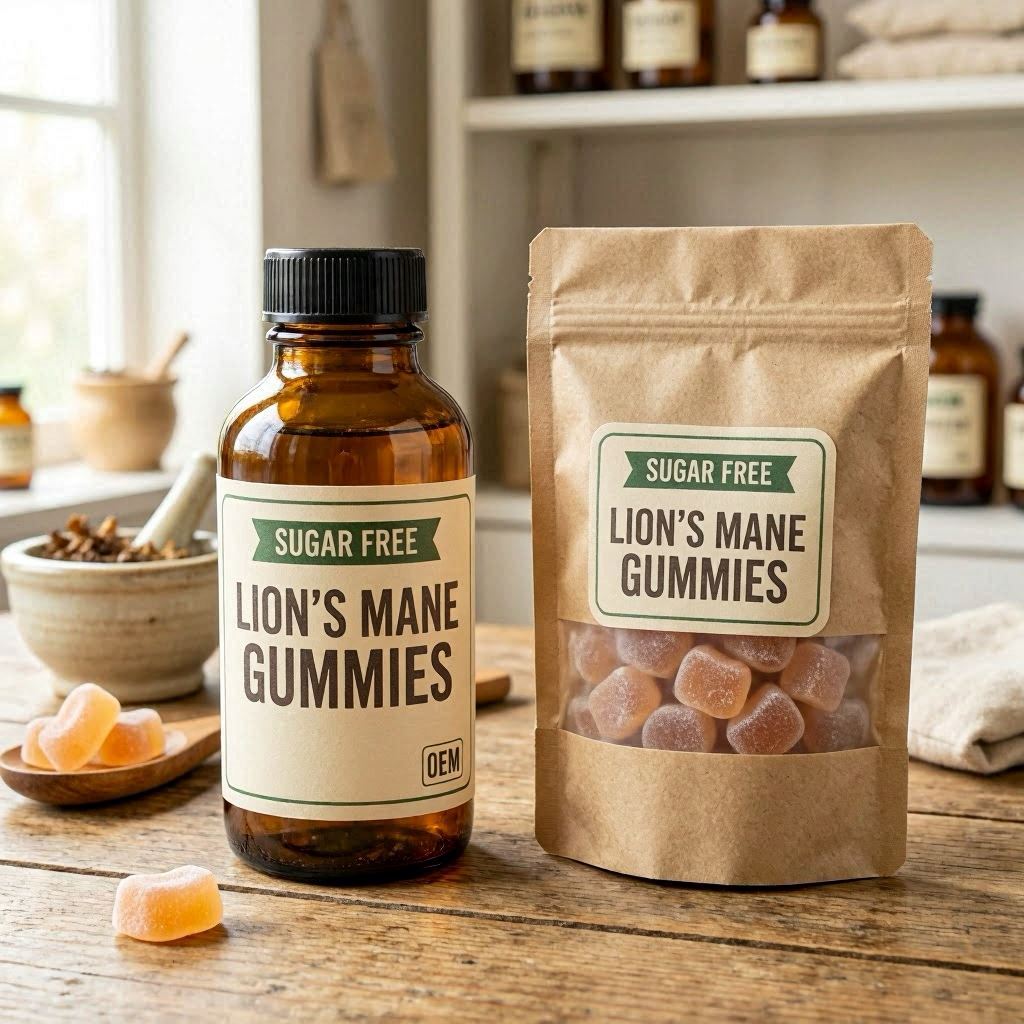
Gummy Format
Advantages: Excellent consumer compliance (particularly in demographics less comfortable with powder or capsules), strong taste-masking capability, premium retail positioning.
Considerations: Probiotic viability in gummy matrices is significantly challenging due to water activity, heat exposure during molding, and sugar/acid content. Achieving meaningful CFU counts in gummies requires advanced post-production probiotic application techniques (such as surface spraying or enteric beadlet inclusion). Manufacturing costs per unit are substantially higher than powder or capsules. Not suitable for CFU counts above approximately 5 billion per serving due to formulation constraints.
For most B2B buyers sourcing acid resistant lion’s mane mushroom probiotics powder wholesale, the powder format offers the strongest combination of probiotic viability, cost efficiency, dosing flexibility, and formulation innovation potential. Capsule formats serve as a complementary SKU for consumers prioritizing convenience, while gummies represent a premium niche opportunity requiring specialized manufacturing partnerships.
Frequently Asked Questions
What does “acid resistant” mean in the context of probiotic supplements?
Acid resistance refers to the ability of probiotic organisms to survive passage through the stomach’s acidic environment (pH 1.5–3.5) and reach the intestinal tract where they exert their beneficial effects. Without acid protection, the majority of standard probiotic cells are destroyed by gastric acid before colonizing the gut. Acid-resistant formulations employ technologies such as enteric coatings, microencapsulation, spore-forming strains, or buffered powder matrices to ensure that a clinically meaningful percentage of the labeled CFU count survives gastric transit. Buyers should request gastric survival data showing ≥70% viability after simulated gastric fluid exposure.
What CFU count should I target for a Lion’s Mane probiotic powder?
Effective CFU counts depend on the target consumer, clinical backing, and positioning strategy. For general cognitive and digestive wellness, 10–30 billion CFU per serving is well-supported by clinical literature and offers a competitive label claim. For premium positioning or therapeutic-adjacent marketing, 50–100 billion CFU per serving provides strong differentiation. The key consideration is ensuring that the stated CFU count is guaranteed through expiration, not merely at manufacture—a distinction that impacts raw material overages and cost structure.
How should Lion’s Mane extract be standardized for maximum efficacy?
Buyers should specify dual-extracted Lion’s Mane with both beta-glucan content (≥30%) and verified hericenone/erinacine content. The extraction ratio (8:1 or 10:1) indicates concentration but does not guarantee bioactive potency on its own. Requesting third-party HPLC analysis confirming the presence of erinacine A and hericenones C and D provides the strongest substantiation for cognitive health claims. Products using only hot water extraction will contain beta-glucans but may lack the alcohol-soluble compounds responsible for NGF stimulation.
What is a typical MOQ for custom Lion’s Mane probiotic powder?
MOQs vary by manufacturer, complexity, and customization level. Stock or near-stock formulations with minor adjustments (flavor, label, packaging) typically carry MOQs of 1,000–5,000 finished units. Fully custom formulations with proprietary strain blends or specialized extraction specifications may require 10,000–25,000 units for initial production runs. Many contract manufacturers offer reduced pilot runs (500–1,000 units) for market validation before committing to larger orders. Powder products generally have lower MOQ thresholds than capsules or gummies due to simpler processing requirements.
What shelf life can I expect for this type of product?
Properly formulated and packaged probiotic powders typically maintain 18–24 months of shelf life under ambient storage conditions. Factors that influence shelf life include the probiotic strains selected (spore-forming strains generally offer longer viability), moisture content at packaging (target <5%), packaging integrity (moisture-barrier pouches or tubs with induction seals and desiccants), and storage temperature. Accelerated stability testing (40°C/75% RH for 6 months) should validate that the product maintains label-claimed CFU counts through the expiration date.
Can I add other cognitive ingredients to a Lion’s Mane probiotic powder?
Yes, this is a common formulation strategy. Complementary ingredients frequently combined with Lion’s Mane and probiotics include L-theanine (100–200 mg per serving for calm focus), ashwagandha KSM-66 extract (300–600 mg for stress adaptation), vitamin B12 (500–1,000 mcg for neurological support), phosphatidylserine (100–300 mg for memory support), and citicoline or alpha-GPC for choline replenishment. Each additional ingredient requires its own stability, compatibility, and regulatory assessment. Experienced OEM/ODM partners can guide formulation decisions based on ingredient synergy, cost implications, and label compliance.
What packaging options are available for probiotic powder wholesale?
Common packaging formats include stand-up pouches with zip closures (most cost-effective, available in sizes from 30–90 servings), tubs with resealable lids (premium positioning, better moisture barrier), and single-serve sachet sticks (ideal for on-the-go and subscription models). All formats should incorporate moisture-barrier materials, desiccant packets, and oxygen scavengers where appropriate. Child-resistant closures may be required depending on the market and retail channel. Packaging design should also consider UV protection if the powder contains light-sensitive compounds.
How do I verify the quality of a potential contract manufacturing partner?
Key verification steps include requesting current GMP facility certification (FDA registration, NSF/ANSI 455-2, or ISO 22000), reviewing sample COAs for previous Lion’s Mane probiotic batches, requesting in-vitro acid resistance testing data, verifying raw material traceability documentation, and checking for third-party audit results (such as NSF or Eurofins audits). On-site facility visits or virtual facility tours provide additional confidence. Requesting references from existing clients in the cognitive or probiotic supplement category offers practical insight into reliability, communication quality, and production consistency.
Conclusion
Acid resistant lion’s mane mushroom probiotics powder wholesale represents a strategically sound product opportunity within the rapidly expanding cognitive wellness and gut-brain axis supplement market. The scientific rationale for combining Lion’s Mane’s neurotrophic compounds with acid-protected probiotic organisms is well-established, and market demand data confirms strong and sustained consumer interest.
Successful B2B sourcing requires careful attention to formulation science—specifically the acid-resistance technology employed, extraction quality of the Lion’s Mane component, and stability testing protocols. Partnering with an experienced OEM/ODM manufacturer that offers competitive MOQs, formulation flexibility, comprehensive quality assurance, and regulatory navigation support enables brand owners to bring differentiated products to market efficiently and with confidence.
Whether launching a standalone powder SKU, building a full product line across multiple formats, or developing a custom formulation targeting a specific consumer demographic, the combination of Lion’s Mane and probiotics delivers a compelling multi-benefit proposition that aligns with the supplement industry’s trajectory toward science-backed, condition-specific, and format-diverse product offerings.
Article delivered above — approximately 2,300 words covering science, market data, manufacturing, OEM/ODM benefits, quality assurance, format comparison, and an 8-question FAQ section. Ready for review or adjustments.
Disclaimer: These statements have not been evaluated by the Food and Drug Administration. This product is not intended to diagnose, treat, cure, or prevent any disease. The information provided in this article is for educational and informational purposes only and does not constitute medical advice. Always consult with a qualified healthcare professional before starting any supplement regimen.