










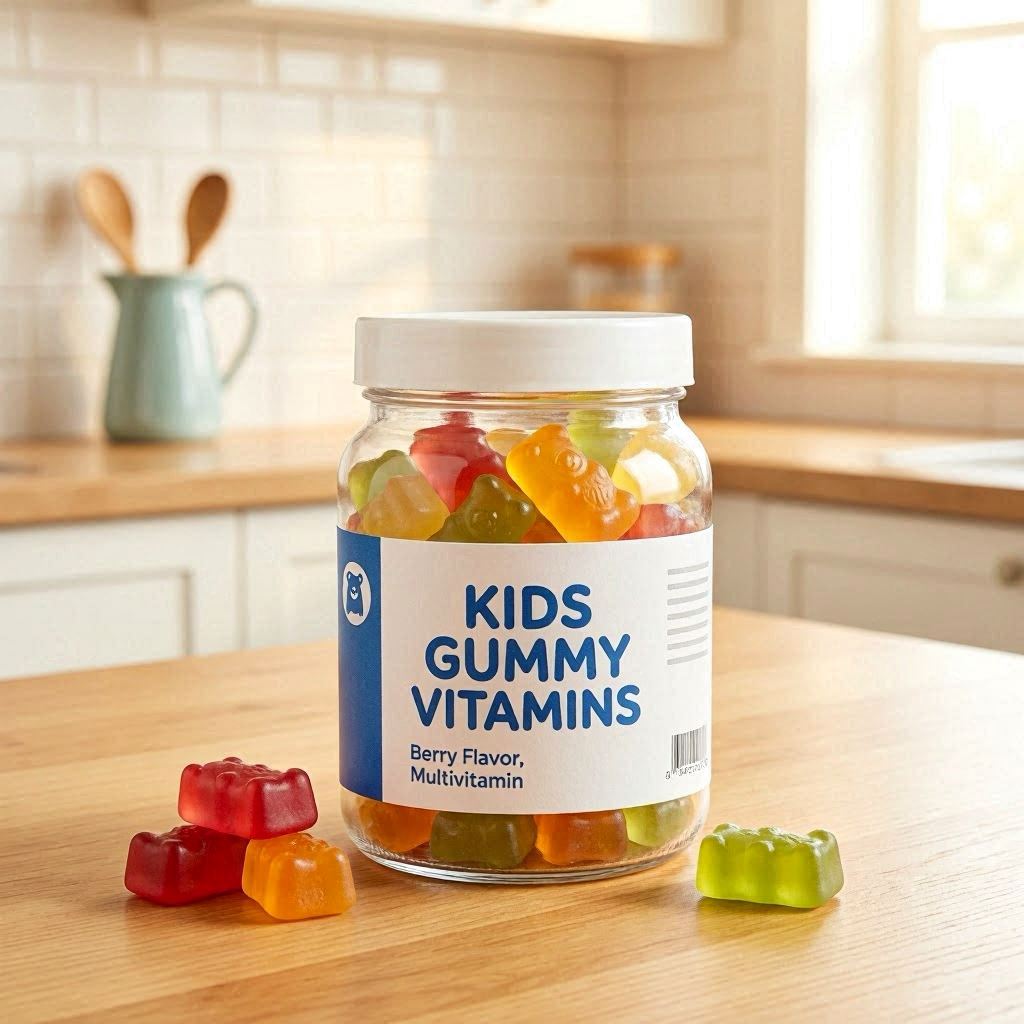
Market Opportunity: The Hyper-Growth of the Pediatric Gummy Segment
The pediatric dietary supplement sector is undergoing a massive transformation driven by millennial and Gen Z parents who demand highly effective, transparently sourced, and highly palatable health delivery formats for their children. The days of forcing children to swallow chalky chewable multi-vitamin tablets are rapidly coming to an end. Recent industry analytics indicate that the global Children’s Vitamin Gummies Market is projected to grow exponentially, moving at an accelerated CAGR of 8.2% through the mid-2030s.
For independent supplement sellers and e-commerce brands looking to capture long-term household loyalty, expanding into the pediatric wellness category via a trusted Children’s Vitamin Gummies OEM/ODM framework offers immense margin potential. However, entering this specific category requires a meticulous understanding of technical compliance, pediatric-safe raw materials, and strict allergen isolation protocols that separate general manufacturing from pediatric-grade execution.
Pediatric Formulation Architecture: Clean-Label Matrices & Sugar Alternatives
Developing supplements for children demands an entirely different approach to formulation stability and ingredient screening than developing for adults. Modern parents actively inspect ingredient panels for sugar loads, synthetic dyes, and artificial preservatives.
Advanced Sugar-Reduction Mechanics
While traditional confectionery-style gummies rely heavily on high-fructose corn syrup and sucrose for structural stability, pediatric-grade OEM formulations deploy complex carbohydrate structuring to satisfy both taste and metabolic health. Top-tier contract manufacturing utilizes polyols and fiber prebiotics, such as Maltitol syrup, Erythritol, and Soluble Corn Fiber (Isomalto-oligosaccharides). These alternative matrices maintain the critical osmotic balance and water activity ($a_w \le 0.62$) needed to prevent microbial spoilage, without inducing sudden blood glucose spikes or dental cariogenesis in young children.
Replacing Synthetic Dyes with Natural Plant Anthocyanins
The use of synthetic coloring agents like Red #40, Yellow #5, or Blue #1 is strongly discouraged in premium markets and requires warning labels in certain European jurisdictions due to links with childhood hyperactivity. Compliant contract manufacturing scales production using specialized plant-derived pigments:
Engineering Active Nutrient Stability and Taste Masking for Children
Children possess highly sensitive palates with a natural aversion to bitter, sour, or metallic tones. This presents a massive processing challenge when formulating with potent active nutrients like iron, zinc, B-vitamins, and essential fatty acids (DHA/EPA).
Micro-Encapsulation of Active Pharmaceutical Ingredients (APIs)
Raw vitamins like Thiamine (B1), Riboflavin (B2), and Ascorbic Acid (Vitamin C) possess naturally sharp, sour, or sulfurous flavor profiles. To counter this without raising sugar levels, modern OEM lines implement fluid-bed micro-encapsulation. Each individual micronutrient particle is coated with a microscopic layer of food-grade vegetable lipid or ethyl cellulose. This protective barrier shields the child’s taste buds from direct contact with the active core during mastication, completely neutralizing the bitter notes while ensuring the coating dissolves rapidly upon entering the stomach acid matrix.
Pectin Gelation: The Pediatric Standard
As outlined below, selecting a plant-based Pectin matrix over traditional bovine or porcine gelatin is essential for entering the premium pediatric supplement sector:
B2B Strategic Portfolio Differentiation: Key Pediatric SKUs
To successfully scale a pediatric line on independent platforms, private label sellers should diversify into specific, targeted functional SKUs that solve daily parental pain points:
The Daily Essential Multi: Standardized blends containing Vitamin A, C, D3, E, B6, B12, Folic Acid, Biotin, Iodine, and Zinc to support foundational growth.
The Digital Eye-Protection Blend: Formulations infused with purified Lutein and Zeaxanthin extracted from Marigold flowers, strategically targeted at protecting developing eyes from modern screen-time blue-light exposure.
The Botanical Immune Shield: Pectin gummies combining low-dose Zinc with standardized Elderberry Extract ($Sambucus$ $nigra$) and Echinacea.
Strict Pediatric Regulatory Compliance & Allergen Defenses
Manufacturing dietary supplements for children requires strict adherence to legal frameworks to avoid product recalls or immediate platform delisting.
Pediatric Dosing & Upper Tolerable Intake Levels (UL)
Formulators must carefully verify that active nutrient profiles match the specific Recommended Dietary Allowances (RDA) and do not exceed the strict Upper Tolerable Intake Levels (UL) established for designated age brackets (2-3 years versus 4 years and older). Over-formulating fat-soluble vitamins (such as Vitamin A and D3) poses significant biological accumulation risks, making precision dosing controls a critical element of factory compliance.
The Big 8 Allergen Isolation Protocols
The pediatric market is highly sensitive to food allergens. To safely apply claims like “Peanut-Free,” “Gluten-Free,” or “Dairy-Free,” production must occur within specialized facilities that utilize strict Allergen Control Programs (ACP). This involves dedicated processing lines, validated clean-in-place (CIP) verification cycles, and regular ELISA testing of production equipment to eliminate any possibility of cross-contamination with common allergens like soy, dairy, wheat, or tree nuts.
FAQ (Frequently Asked Questions)
Q1: At what age can children safely consume functional vitamin gummies?
A: Standard industry benchmarks and pediatric safety guidelines state that functional gummies are optimized for children aged 2 years and older who have developed full mastication capabilities. For safety labeling, products designed for children under 4 years of age require strict adherence to lower daily value percentages and must prominently display warnings advising parents to ensure the child chews the product thoroughly under adult supervision to eliminate any potential choking risks.
Q2: How do OEM factories prevent children’s gummies from drying out or hardening over their shelf life?
A: Long-term texture stability is achieved through precise regulation of water activity ($a_w$) and the deliberate optimization of the polyol-to-acid ratio within the gelling matrix. By keeping moisture levels tightly controlled between 6% and 8% and utilizing natural humectants like vegetable glycerin or maltitol syrup, the gummy matrix retains its soft, tender texture over a 24-month shelf life without weeping moisture or hardening into a choking hazard.
Q3: How do contract manufacturers protect heat-sensitive vitamins during the high-temperature cooking phase?
A: High-quality OEM production avoids exposing fragile nutrients to extended thermal stress. The base pectin and syrup matrix is boiled at high temperatures to achieve proper solids concentration. Once the mixture enters the cooling and vacuum de-aeration phase—where temperatures drop below 80°C—heat-sensitive active ingredients like Vitamin C, Vitamin B12, and live probiotic strains are introduced via automated inline injection systems immediately prior to molding.
Q4: What packaging standards are mandatory for children’s private label vitamin gummies?
A: To comply with global consumer protection acts (such as the US Poison Prevention Packaging Act), all pediatric gummy supplements must be packaged in certified Child-Resistant Closures (CRC). These specialized push-and-turn caps prevent young children from opening the bottles independently. Additionally, containers must utilize high-barrier Amber PET or HDPE plastic combined with induction inner seals to block moisture and UV light transmission, preserving nutrient potency throughout the product’s life.