










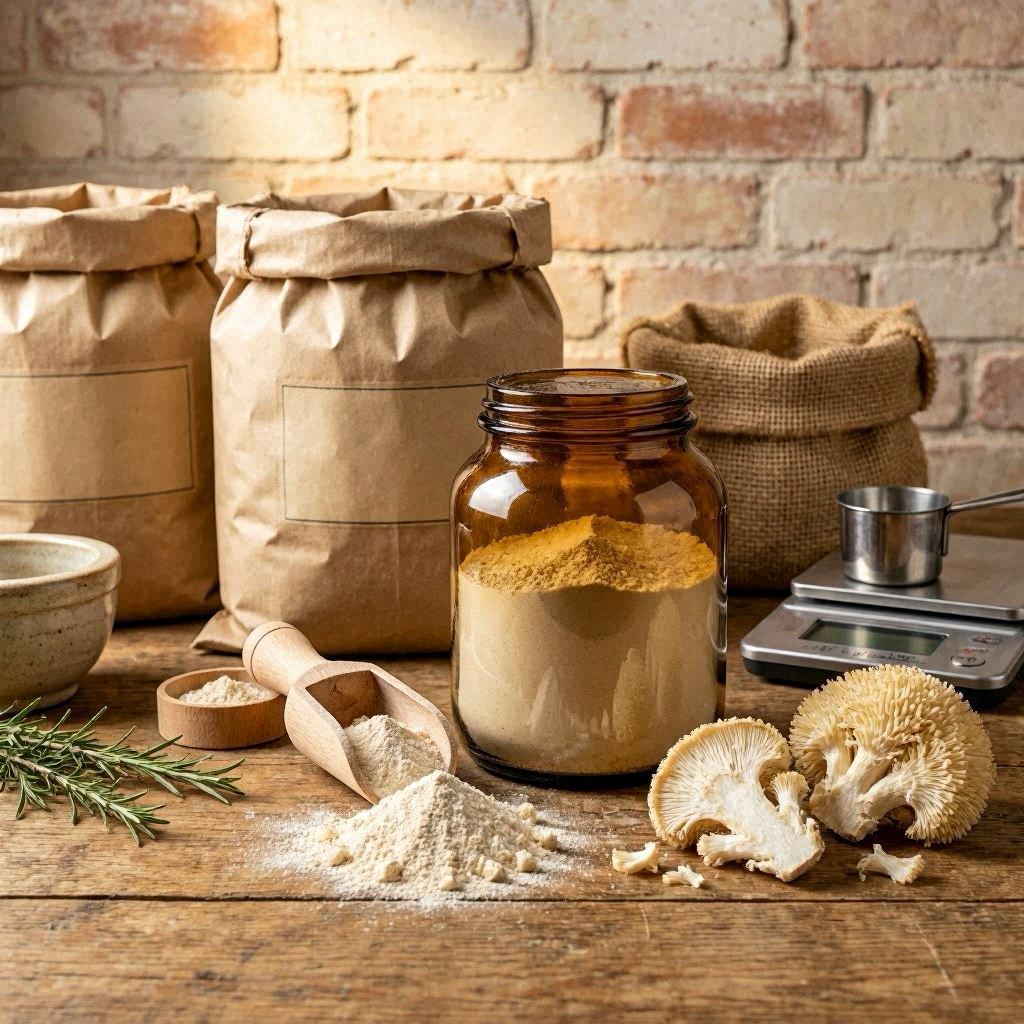
The Nootropic Market Shift: Mushroom Biotics as a Core Industry Pillar
The global functional mushroom market has expanded far beyond traditional alternative medicine to become a foundational pillar of the modern cognitive health and functional food sectors. Leading this rapid advancement is Lion’s Mane Mushroom ($Hericium$ $erinaceus$), which has established itself as the leading ingredient within the competitive nootropic market. Comprehensive financial forecasts indicate that the global market for Lion’s Mane mushroom supplements is projected to hit an impressive evaluation of USD 1.6 billion by 2034, maintaining a double-digit compound annual growth rate (CAGR) of 13.5%.
Driven by the mainstream adoption of functional mushroom coffee blends, ready-to-drink (RTD) mental clarity shots, and targeted brain-boosting capsules, bulk procurement demands are shifting significantly. Discerning e-commerce brand owners and institutional product formulators no longer purchase generic, unstandardized mushroom powders. Success in today’s digital landscape requires sourcing premium, scientifically validated Bulk Lion’s Mane Extract standardized for verified bioactive thresholds.
The Analytical Science: Active Biomolecules & Extraction Methodologies
To effectively market a brain-health SKU to sophisticated modern consumers, brands must base their messaging on clear analytical biochemistry. Lion’s Mane is clinically renowned for its rare ability to stimulate the synthesis of Nerve Growth Factor (NGF)—a critical neurotrophic protein responsible for the maintenance, proliferation, and survival of neurons within the cerebral cortex.
Hericenones vs. Erinacines: Anatomy of Neurogenesis
The therapeutic efficacy of Lion’s Mane is derived from two distinct classes of secondary metabolites:
- Hericenones: Found exclusively within the physical fruiting body of the mushroom. These are aromatic compounds that can stimulate peripheral NGF synthesis.
- Erinacines: Found exclusively within the submerged liquid-fermented mycelium matrix. Erinacines represent some of the most powerful natural neuroprotective agents discovered, capable of crossing the blood-brain barrier to actively stimulate central nervous system neurogenesis.
Advanced Extraction Kinetics: Water vs. Dual-Extraction
Raw mushroom cell walls are composed of a rigid, indigestible structural carbohydrate framework known as chitin. Humans lack the chitinase enzymes necessary to break down this matrix, meaning unextracted raw mushroom powder passes through the digestive tract largely unabsorbed. To unleash the bioactives, sophisticated industrial processing is mandatory:
- Hot Water Extraction: Optimized specifically to isolate water-soluble $\beta$-glucans (Beta-Glucans). This process breaks down the chitin walls via thermal pressure, ensuring excellent immunomodulatory support.
- Dual-Extraction (Water + Ethanol): Because hericenones and erinacines are highly hydrophobic (alcohol-soluble), a secondary hydro-ethanolic extraction phase is required. This premium dual-pathway method isolates both the immune-supporting polysaccharides and the neuroprotective diterpenes, creating a highly comprehensive nootropic ingredient.
Sourcing Quality Identifiers: Standardizing Beta-Glucans and Avoiding Adulteration
The bulk ingredient sector frequently suffers from quality variations and misleading labeling. For B2B buyers looking to safeguard their brand identity, understanding the difference between genuine extract and grain-based fillers is vital.
The Mycelium on Grain (MOG) Contamination Issue
A significant percentage of low-cost wholesale “Lion’s Mane” available on the global market consists of Mycelium on Grain (MOG). In this cheap cultivation method, the mushroom mycelium is grown on a sterilized grain substrate (such as oats, rice, or barley). Instead of isolating the pure mushroom tissue, the final product is ground up entirely—substrate included. As a result, the finished bulk powder contains high levels of alpha-glucans (highly generic grain starch) rather than actual therapeutic mushroom compounds.
Analytical Standardization Markers
When reviewing a Certificate of Analysis (COA) from a contract manufacturing partner, brands should verify the following strict analytical parameters:
- Polysaccharide Content vs. Total Beta-Glucans: A high “total polysaccharide” percentage can easily be faked using residual grain starch. High-tier suppliers specify $\beta$-1,3/1,6-glucan content via Megazyme testing, ensuring a pure mushroom origin.
- True Chromatographic Testing: Premium bulk extracts should provide High-Performance Thin-Layer Chromatography (HPTLC) or High-Performance Liquid Chromatography (HPLC) fingerprinting to definitively verify the presence of active hericenones or erinacines.
Technical Finished-Product Applications
Standardized premium bulk Lion’s Mane extract (typically supplied at concentrations like 10:1, 20:1, or standardized to 30% Beta-Glucans) features versatile physical traits that allow for seamless cross-industry product integration:
Functional Beverage Powders: Requires ultra-fine particle sizes (typically 80-120 mesh) with excellent cold-water solubility to prevent grittiness or settling in instant mushroom coffees or matcha blends.
Solid Oral Dosage (Capsules/Tablets): Requires optimized bulk density and low hygroscopicity to prevent moisture clumping on automated high-speed encapsulating machinery.
Nutraceutical Gummies: Requires precise balancing of natural mushroom astringency with organic masking components to deliver an enjoyable consumer tasting experience.
Compliance, Labeling Transparency, and Regulatory Safety
When selling nootropics internationally, keeping your brand fully compliant with regulatory bodies like the FDA, FTC, and European Food Safety Authority (EFSA) is essential for avoiding platform penalties or inventory seizures.
Substantiating Nootropic Claims
Under current guidelines, brands can utilize generic structure-function claims to describe cognitive support, provided they are supported by internal verification. Acceptable phrases include “Supports cognitive clarity,” “Promotes focus and concentration,” or “Helps maintain long-term brain health.” Brands must avoid any unauthorized therapeutic terminology such as “prevents Alzheimer’s disease,” “reverses dementia,” or “cures ADHD,” as these statements will immediately trigger severe regulatory enforcement action.
Third-Party Transparency Testing
To secure placement on major premium distribution networks and retail shelves, bulk batches must be backed by a comprehensive documentation package, including:
- ISO/IEC 17025 Accredited Lab Validation: Verifying strict heavy metal thresholds (Lead $\le$ 2.0 ppm, Arsenic $\le$ 2.0 ppm, Cadmium $\le$ 1.0 ppm, Mercury $\le$ 0.1 ppm).
- Microbiological Purity Assurance: Documenting zero tolerance for Salmonella, E. coli, and pathogenic molds.
- Origin and Sourcing Certifications: Offering verified Organic (USDA/EU), Non-GMO, and Kosher certifications to maximize market appeal and build true consumer confidence.
FAQ (Frequently Asked Questions)
Q1: What is the scientific difference between Lion’s Mane mushroom powder and a standardized extract?
A: Raw mushroom powder consists simply of dried, pulverized fruiting bodies or mycelium, meaning the active ingredients remain trapped within the indigestible chitin cell walls, resulting in very low human absorption. A standardized extract undergoes a meticulous industrial hot-water or hydro-ethanolic extraction process that breaks down the chitin walls, concentrating the bioactives (such as beta-glucans and hericenones) and standardizing them to precise percentages on the Certificate of Analysis (COA) for consistent potency.
Q2: Why does the presence of “Alpha-Glucans” on a COA indicate potential product adulteration?
A: Alpha-glucans are standard glucose polymers found primarily in common plant starches like rice, corn, and oats. Beta-glucans, specifically $\beta$-1,3/1,6-glucans, are the specialized structural polysaccharides native to functional mushrooms. If an analytical report shows high levels of alpha-glucans, it indicates that the source material was likely grown on a heavy grain substrate (Mycelium on Grain) and contains extensive starch fillers rather than pure, concentrated mushroom extract.
Q3: When should a brand choose a Hot Water Extract versus a Dual-Extract formulation?
A: The choice depends entirely on your targeted functional label claims. If your product is primarily designed for immune system modulation and gut lining integrity, a traditional hot water extract is excellent, as it maximizes the yield of water-soluble Beta-Glucans. If your product line is specifically targeting brain optimization, cognitive clarity, and neurogenesis, a dual-extract is mandatory, as alcohol is required to successfully pull out the lipophilic neuroactive diterpenes (hericenones and erinacines).
Q4: How does bulk Lion’s Mane extract behave regarding shelf-life and moisture absorption during manufacturing?
A: High-concentration mushroom extracts are naturally hygroscopic, meaning they readily absorb ambient moisture from the air. To ensure a stable 24-to-36-month shelf life, bulk extract must be stored in its original, unopened double-layer food-grade PE bags inside sealed fiber drums in a cool, climate-controlled environment. During encapsulation or blending, facility humidity should ideally be maintained below 40% to prevent clumping and ensure optimal machinery throughput.