










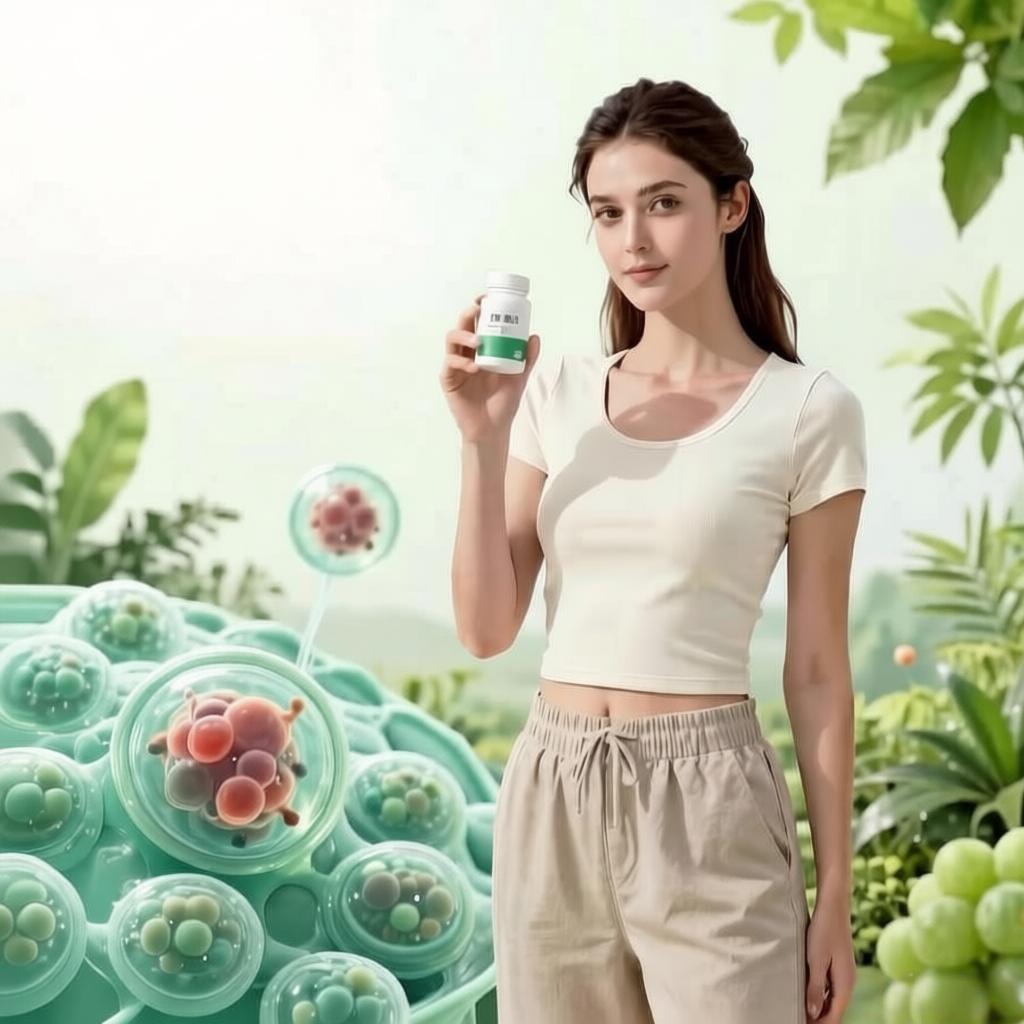
Introduction: Beyond Traditional Antioxidants
In the rapidly evolving landscape of nutritional science, few compounds have captured the attention of both the longevity community and biotechnological researchers as intensely as L-Ergothioneine (EGT). Often referred to as the “Longevity Vitamin,” EGT is a naturally occurring thiol-amino acid that humans cannot synthesize internally. Unlike common antioxidants like Vitamin C or E, EGT possesses a dedicated transport system within the human body, signaling a profound evolutionary relationship between this molecule and human cellular health.
The Science of OCTN1: The Gateway to Longevity
The biological significance of Ergothioneine was solidified with the discovery of the OCTN1 transporter. This specific protein acts as a “cellular vacuum,” actively pulling EGT from the bloodstream into cells that are under high oxidative stress. High concentrations of OCTN1 are found in the mitochondria—the powerhouse of the cell—and in tissues highly susceptible to damage, such as the eyes, liver, and brain. This dedicated transport mechanism ensures that EGT is not just circulating but is strategically deployed where it is needed most, providing a level of bioavailability that many synthetic compounds fail to achieve.
Molecular Stability and Mitochondrial Protection
From a chemical perspective, EGT is exceptionally stable. While glutathione—the body’s master antioxidant—can be quickly depleted or oxidized, EGT remains active even under extreme physiological conditions. In 2026, clinical research has increasingly focused on its role in mitochondrial DNA protection. By neutralizing reactive oxygen species (ROS) directly within the mitochondria, EGT prevents the “leaky gut” equivalent of the cell, maintaining ATP production and slowing down the hallmarks of cellular aging. This makes it a cornerstone ingredient for “Mitophagy” and anti-senescence formulations.
Market Trends 2026: The Shift to Fermentation Technology
The global market for Ergothioneine has transitioned from chemical synthesis to high-efficiency microbial fermentation. This shift is driven by the demand for “Clean Label” ingredients and higher purity profiles. Modern OEM standards now require HPLC (High-Performance Liquid Chromatography) verification to ensure a purity of >99%. In 2026, the trend in the SME (Small and Medium Enterprise) sector is the integration of EGT into diverse delivery formats, including sublingual drops, functional beverages, and “Beauty from Within” nutricosmetics.
Regulatory Compliance and Safety Profiles
Navigating the regulatory landscape is crucial for independent brands. EGT has received GRAS (Generally Recognized as Safe) status by the FDA and has been approved as a Novel Food in the European Union. However, brands must be cautious with label claims. Under FTC and EFSA guidelines, EGT should be marketed as a “supportive” nutrient for cellular health rather than a “cure” for age-related diseases. Ensuring that manufacturing facilities are GMP-certified and ISO-compliant is the baseline for any brand entering the US or European markets.
FAQ: Professional Insights for Ergothioneine
Q1: How does Ergothioneine differ from Glutathione in terms of half-life?
- A: Unlike Glutathione, which has a very short half-life in the blood, EGT can remain in the human body for up to 30 days. This long-term retention allows for sustained antioxidant protection with consistent dosing.
Q2: Is Ergothioneine stable during the manufacturing process?
- A: Yes, EGT is highly heat-stable and resistant to pH changes, making it suitable for complex formulations such as gummies, liquids, and powders without significant degradation.
Q3: What is the ideal molecular weight for absorption?
- A: Ergothioneine is a small molecule (approx. 229 Daltons). This small size, combined with the OCTN1 transporter, allows for excellent intestinal absorption and blood-brain barrier penetration.
Q4: Can it be combined with other active peptides?
- A: Absolutely. Synergistic effects are often seen when EGT is paired with active peptides like Collagen Peptides or Carnosine, where EGT protects the peptide structure from oxidative damage.
Q5: What are the primary sources for 2026 premium EGT?
- A: While mushrooms are a natural source, commercial-grade EGT is primarily produced via Hansenula polymorpha or E. coli fermentation, providing a vegan-friendly, high-purity alternative.