










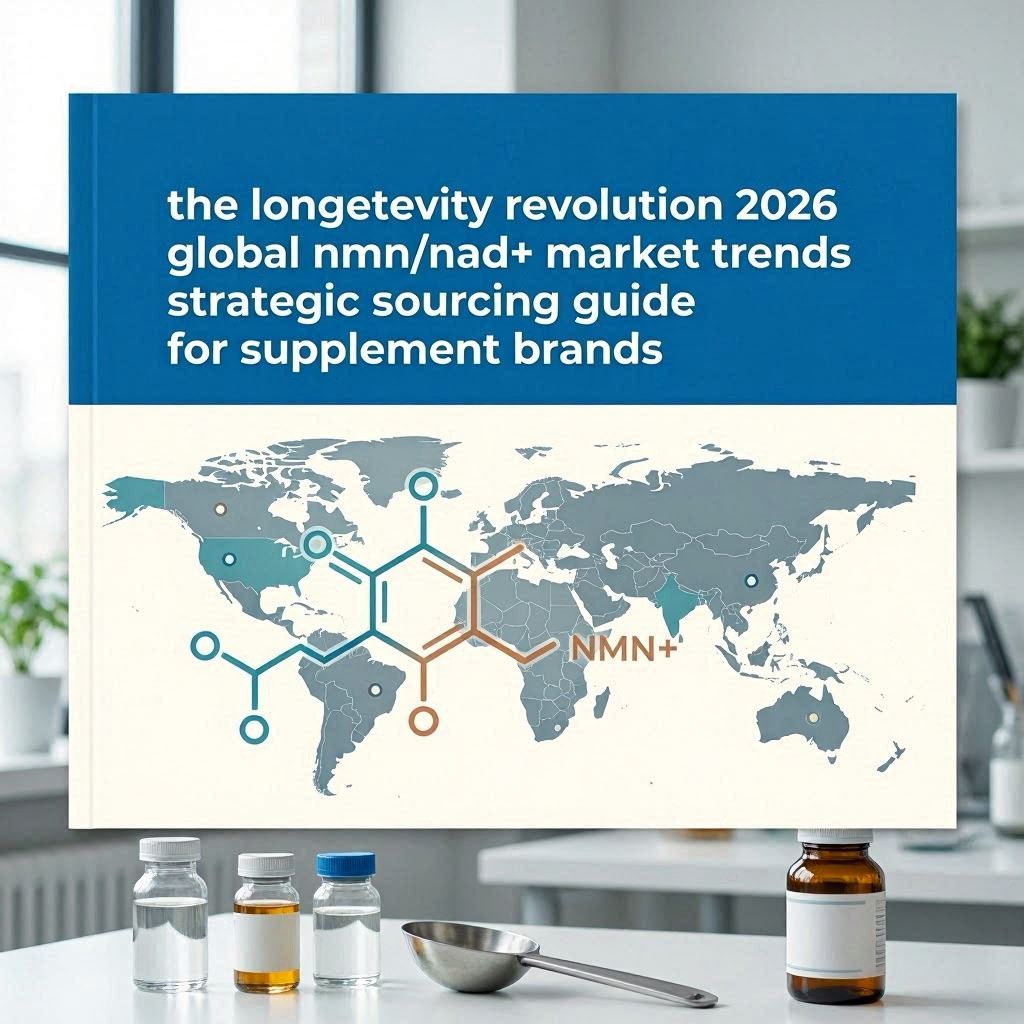
Sugar-Free Pure NMN Gummies: A Complete Guide to OEM Manufacturing
Introduction
The NAD+ precursor supplement market has experienced unprecedented growth as consumers increasingly seek scientifically-backed solutions for cellular health and longevity. Within this dynamic category, sugar-free pure NMN gummies have emerged as a particularly compelling product format, combining the demonstrated benefits of nicotinamide mononucleotide with the consumer preference for convenient, great-tasting supplements that align with modern dietary lifestyles.
For brand owners and supplement companies exploring private label opportunities, understanding the complexities of NMN gummy manufacturing—particularly sugar-free formulations—represents a critical strategic consideration. This comprehensive guide examines the science behind NMN supplementation, current market dynamics, manufacturing requirements, quality standards, and the practical advantages of partnering with experienced OEM/ODM providers for sugar-free NMN gummy production.
The formulation of sugar-free NMN gummies presents unique technical challenges that distinguish this product category from conventional supplement manufacturing. From maintaining NMN stability during processing to achieving acceptable taste profiles without sugar, each aspect of production requires specialized expertise and rigorous quality control. Brand owners who understand these considerations are better positioned to make informed decisions about product development, supplier selection, and market positioning.
This article provides B2B buyers with actionable insights into the NMN gummy manufacturing process, enabling more effective collaboration with OEM partners and ultimately delivering superior products to end consumers.
The Science of NMN: Mechanism of Action and Health Benefits
Understanding Nicotinamide Mononucleotide
Nicotinamide mononucleotide (NMN) is a naturally occurring nucleotide that serves as a direct precursor to nicotinamide adenine dinucleotide (NAD+), an essential coenzyme present in every living cell. NAD+ plays fundamental roles in cellular energy metabolism, DNA repair, and sirtuin activation—processes that decline significantly with age, contributing to cellular dysfunction and age-related health concerns.
The molecular structure of NMN consists of a nicotinamide group, a ribose sugar, and a phosphate group. This composition enables NMN to function as an efficient substrate for NAD+ biosynthesis, bypassing some of the metabolic bottlenecks that limit other NAD+ precursor pathways. Research published in peer-reviewed journals has demonstrated that oral NMN supplementation effectively increases NAD+ levels in various tissues, including liver, muscle, and brain tissue.
From a biochemical perspective, NMN is converted to NAD+ through the enzymatic action of NMN adenylyl transferases (NMNATs). This conversion occurs rapidly following absorption, with human clinical studies documenting measurable increases in blood NAD+ levels within 30-120 minutes of oral NMN administration. The efficiency of this conversion pathway makes NMN particularly attractive for supplement formulation, as it offers a direct route to NAD+ restoration.
Cellular Health and Longevity Applications
The primary appeal of NMN supplementation lies in its potential to support multiple aspects of cellular health. NAD+ serves as a critical cofactor for sirtuins, a family of proteins that regulate cellular stress responses, inflammation, and metabolic homeostasis. As NAD+ levels decline with age—often declining by 50% or more by midlife—sirtuin activity correspondingly diminishes, potentially accelerating cellular aging processes.
Scientific research has identified several key mechanisms through which NMN supplementation may support health:
Mitochondrial function: NAD+ is essential for mitochondrial respiration and ATP production. NMN supplementation has demonstrated the ability to improve mitochondrial function in multiple tissue types, potentially supporting cellular energy levels and metabolic efficiency.
DNA repair: NAD+ serves as a substrate for PARP enzymes involved in DNA repair mechanisms. Adequate NAD+ levels support the body’s natural DNA repair capacity, addressing a fundamental contributor to cellular aging.
Metabolic health: Research indicates that NMN supplementation may support healthy insulin sensitivity, lipid metabolism, and overall metabolic function. These effects are particularly relevant given the growing consumer interest in metabolic wellness.
Cognitive function: Preclinical studies suggest that NMN may support neuronal health and cognitive function through improved mitochondrial function in neural tissues and enhanced cerebral blood flow.
The scientific foundation supporting NMN supplementation continues to strengthen, with ongoing human clinical trials investigating specific health applications. For supplement brands, this growing body of evidence provides compelling positioning opportunities for NMN-containing products.
Market Trends and Demand Data
Global NMN Supplement Market Growth
The global NAD+ precursor supplement market has expanded substantially over recent years, driven by increasing consumer awareness of cellular health and anti-aging interventions. Market research indicates that the NMN supplement segment alone achieved valuations exceeding $400 million globally in 2023, with compound annual growth rates (CAGR) projections between 15-22% through 2030.
Several factors contribute to this robust market expansion:
Aging population demographics: The global demographic shift toward older populations has amplified consumer interest in healthspan extension and age-management solutions. Consumers aged 45 and above represent the fastest-growing segment of supplement purchasers, with cellular health becoming an increasingly prioritized category.
Scientific literacy: Today’s supplement consumers demonstrate higher levels of scientific understanding than previous generations. The direct relationship between NAD+ and cellular function resonates with consumers who research ingredients and seek mechanistically-backed supplements.
Clean label preferences: The broader clean label movement has influenced NMN product development, with manufacturers responding to consumer demand for sugar-free, non-GMO, and allergen-free formulations that align with health-conscious lifestyles.
Sugar-Free Formulation Market Opportunity
The sugar-free supplement segment specifically has experienced accelerated growth as consumers increasingly scrutinize sugar content across all product categories. Within the gummy vitamin market—historically associated with sugar-heavy formulations—sugar-free alternatives now command premium positioning and demonstrate strong growth trajectories.
Sugar-free NMN gummies address multiple consumer trends simultaneously:
- **Diabetic and prediabetic populations**: These consumers actively seek supplements that exclude sugar and fast-digesting carbohydrates, expanding the potential market for sugar-free NMN products.
- **Keto and low-carb adherents**: Following ketogenic or low-carbohydrate dietary patterns represents a significant and growing consumer segment, with these individuals specifically avoiding sugar-containing supplements.
- **Dental health considerations**: Sugar-free formulations appeal to consumers concerned about dental health, particularly when gummies represent a daily supplement habit.
- **Weight management consumers**: Those monitoring caloric intake often prefer sugar-free options that deliver supplement benefits without additional sugar calories.
Market analysis suggests that sugar-free gummy products command a price premium of 20-35% over traditional sugar-containing equivalents, providing favorable unit economics for brands and retailers.
Manufacturing Considerations for Sugar-Free NMN Gummies
Formulation Challenges and Solutions
The development of sugar-free NMN gummies presents technical complexities that distinguish this product category from both conventional gummy vitamins and standard NMN supplement formulations. Successful manufacturing requires careful attention to multiple interrelated factors:
NMN Stability: Nicotinamide mononucleotide demonstrates sensitivity to heat, humidity, and processing conditions. During gummy production, where temperatures may exceed 80°C during cooking and molding stages, NMN degradation can occur if proper protocols are not implemented. Experienced manufacturers address this challenge through:
- Optimized processing temperatures that minimize thermal degradation
- Encapsulation technologies that protect NMN during manufacturing
- Careful timing of ingredient addition during the production sequence
- pH optimization to maintain NMN molecular integrity
Sugar-Free Sweetening Systems: Achieving acceptable taste profiles without sugar requires sophisticated sweetening approaches. Common sugar alternatives in NMN gummy formulations include:
- **Maltitol syrup and crystalline maltitol**: Provide texture and sweetness with reduced glycemic impact
- **Erythritol**: Offers excellent tolerability and minimal impact on blood glucose
- **Stevia and monk fruit extracts**: Provide intensity sweetness for formula balancing
- **Allulose**: Contributes to texture while offering minimal caloric contribution
Each sweetening agent brings specific functional properties and limitations. Maltitol systems typically provide the closest texture match to traditional sugar gummies but may impact blood glucose more than other alternatives. Erythritol offers excellent digestive tolerance but can contribute a cooling sensation and requires higher usage levels for equivalent sweetness. Blending multiple sweetening agents often produces optimal results, with experienced formulators adjusting ratios based on desired texture, sweetness profile, and target consumer preferences.
Texture Engineering: Sugar contributes significantly to gummy texture through its hygroscopic properties and crystallization behavior. Sugar-free formulations must compensate through alternative texturizing approaches:
- Increased usage of gelatin or pectin matrix systems
- Addition of humectants that retain moisture
- Careful balance of maltitol syrup solids
- Optimization of cooking parameters to achieve target moisture content
Bioavailability Optimization
Ensuring that NMN remains bioavailable throughout the manufacturing process and following consumption requires attention to multiple factors. While NMN demonstrates relatively good oral bioavailability compared to some other compounds, formulation choices can meaningfully impact absorption efficiency.
Particle size optimization: Fine grinding of NMN powder can improve dispersion within the gummy matrix and potentially enhance dissolution and absorption rates following consumption.
Matrix composition: The gummy matrix itself can influence NMN release and absorption. Formulations that promote faster dissolution may support more rapid NMN availability, though this must be balanced against desired shelf life and texture characteristics.
Stability protection: As noted previously, protecting NMN from degradation during shelf life directly impacts the amount of bioavailable NMN delivered to consumers. Accelerated stability testing under various temperature and humidity conditions helps establish appropriate formulation specifications and shelf life claims.
OEM/ODM Benefits for Brand Owners
Private Label Manufacturing Advantages
Partnering with experienced OEM (Original Equipment Manufacturer) or ODM (Original Design Manufacturer) providers offers strategic advantages for brands entering or expanding within the NMN supplement space:
Reduced capital requirements: Establishing dedicated NMN gummy manufacturing capability requires substantial equipment investment, technical expertise, and regulatory compliance infrastructure. OEM partnerships provide access to established manufacturing capacity without capital expenditure for equipment, facility certification, or production staff.
Accelerated time-to-market: From concept to commercial product, OEM partnerships typically enable faster market entry than building internal manufacturing capability. Established manufacturers maintain validated processes, approved raw material suppliers, and quality systems that streamline the development pathway.
Technical expertise access: Formulation challenges specific to sugar-free NMN gummies benefit from specialized knowledge that takes years to develop. OEM partners with relevant experience provide immediate access to formulation capabilities, troubleshooting expertise, and process optimization knowledge.
Scalable production: OEM relationships accommodate production scale ranging from pilot batches to commercial volumes without requiring brands to invest in variable manufacturing capacity. This flexibility supports market testing before committing to large-scale production.
Key MOQ Considerations
Minimum order quantities (MOQ) vary significantly across OEM providers and represent an important consideration for brand owners, particularly those at earlier growth stages. Understanding MOQ structures enables more effective planning:
Typical MOQ ranges for NMN gummies:
- Small-batch specialty manufacturers: 500-1,500 units
- Mid-tier contract manufacturers: 2,000-5,000 units
- High-capacity facilities: 5,000-10,000+ units
Brands should evaluate MOQ alongside per-unit costs, as lower MOQ arrangements often involve higher unit pricing. Total inventory investment requirements should factor into decision-making, particularly for seasonal products or brands with evolving demand patterns.
MOQ negotiation factors:
- Commitment to reorder volume over defined periods
- Payment terms and prepayment requirements
- Inclusion of multiple SKU variants
- Off-season versus peak-season timing
Experienced procurement teams often find that slightly higher MOQs with established manufacturers deliver superior overall value through lower unit costs, improved consistency, and more responsive production scheduling.
Quality Assurance and Regulatory Compliance
Manufacturing Certifications
Comprehensive quality assurance programs distinguish professional NMN gummy manufacturers from substandard producers. B2B buyers should verify relevant certifications and quality systems:
Good Manufacturing Practice (GMP) certification: Indicates compliance with FDA or equivalent regulatory standards for supplement manufacturing, including facility design, personnel training, production controls, and documentation requirements.
Third-party testing protocols: Reputable manufacturers implement testing at multiple production stages:
- Raw material identity and purity verification
- In-process quality checks
- Finished product analysis
- Stability testing across recommended shelf life
Certificate of Analysis (COA) availability: Comprehensive COA documentation should accompany finished products, detailing results for:
- NMN content (typically via HPLC testing)
- Microbial contamination (total plate count, yeast/mold, E. coli, Salmonella)
- Heavy metal analysis (lead, arsenic, mercury, cadmium)
- Residual solvent testing where applicable
- Confirmation of sugar-free status
Additional Certifications for Market Positioning
Depending on target market requirements and consumer expectations, additional certifications may provide competitive differentiation:
- **Non-GMO Project Verified**: Increasingly expected by health-conscious consumers
- **Halal certification**: Required for Muslim consumer markets
- **Kosher certification**: Expands retail distribution possibilities
- **Organic certification**: Aligns with clean label preferences
- **Vegan certification**: Addresses ethical consumer concerns (requires plant-based alternatives to gelatin)
Certifications add processing time and cost but may unlock premium positioning and retail channel access that justify the investment.
Formulation Format Comparison: Gummies vs. Capsules vs. Powder
Gummy Advantages and Considerations
Sugar-free NMN gummies offer distinct positioning advantages that influence market appeal:
Consumer compliance: Gummies demonstrate higher consumer compliance rates compared to capsules and powder formats, particularly for daily supplement regimens. The sensory experience of taking a gummy supports habit formation.
Taste masking effectiveness: For NMN, which has a somewhat bitter taste, gummy delivery provides excellent taste masking through sweetening systems and flavor compounds.
Convenience: No water required, easy to take while traveling, appeals to consumers who dislike swallowing capsules.
Limitations to consider:
- Typically higher cost per serving compared to capsule equivalents
- Lower NMN dose per serving may require multiple gummies for therapeutic-level dosing
- Sugar-free versions may command significant price premiums
- Texture and stability may vary more than with capsule formats
Capsule Format Considerations
NMN capsules offer complementary advantages:
- Higher NMN concentration per unit typically possible
- Longer shelf stability with less formulation complexity
- Lower manufacturing costs per unit of active ingredient
- Easier to achieve specific dosage precision
Capsules may appeal to consumers prioritizing value, higher dosage options, or minimal ingredient simplicity.
Powder Format Analysis
NMN powder formulations provide flexibility:
- Customizable dosing by consumers
- Lower packaging costs
- Ability to incorporate into beverages or food
Powder formats may be less convenient for daily supplementation and face taste acceptance challenges.
The optimal format depends on brand positioning, target consumer preferences, dosage requirements, and price point strategy. Many brands choose to offer multiple formats to address different consumer needs.
Frequently Asked Questions
What NMN dosage is typically used in sugar-free gummy formulations?
Effective NMN dosages in supplement formulations typically range from 100mg to 500mg per serving, with most commercial products featuring 250mg or 300mg doses. Clinical research has examined doses ranging from 100mg to 1000mg daily, with evidence suggesting that lower doses (250-500mg) effectively increase NAD+ levels in human studies. Brand owners should consider target consumer demographics, competitive positioning, and cost implications when establishing dosage levels. Sugar-free gummy formulations may face practical constraints on maximum NMN content due to ingredient volume limitations and taste considerations.
How should sugar-free NMN gummies be stored to maintain product quality?
Storage recommendations for sugar-free NMN gummies typically include keeping products in a cool, dry environment away from direct sunlight and heat sources. While gummy formulations generally demonstrate reasonable stability at room temperature, elevated temperatures can accelerate both NMN degradation and texture changes in the gummy matrix. Recommended storage conditions typically specify temperatures below 25°C (77°F) with relative humidity below 65%. For retail products, packaging that provides moisture and oxygen barriers helps maintain quality throughout shelf life. Extended exposure to heat during shipping may require insulated packaging or temperature-controlled logistics, particularly for tropical or summer deliveries.
What is the typical shelf life for sugar-free NMN gummies?
Shelf life specifications for sugar-free NMN gummies generally range from 18 to 24 months from manufacturing date when stored under recommended conditions. Stability testing under accelerated aging conditions (elevated temperature and humidity) helps establish appropriate shelf life claims. NMN content should remain within acceptable potency ranges (typically 90-110% of label claim) throughout the stated shelf life. The sugar-free nature of these products may actually support longer shelf stability compared to traditional gummies, as reduced moisture content can inhibit microbial growth and texture degradation.
Are there any regulatory considerations for NMN supplement labeling?
NMN supplement labeling must comply with FDA requirements for dietary supplements, including proper ingredient listing, supplement facts panel formatting, allergen declarations, and manufacturer information. NMN itself (nicotinamide mononucleotide) is generally recognized as a lawful dietary ingredient, though regulatory status may vary by country. Claims must adhere to structure/function and health claim regulations. Sugar-free status requires accurate labeling with appropriate qualifying terms. Brands should work with regulatory specialists to ensure label compliance for their specific target markets.
How do sugar alcohols in sugar-free gummies affect digestive tolerance?
Sugar alcohols used in sugar-free gummy formulations, particularly maltitol and erythritol, may cause digestive discomfort in some consumers when consumed in larger quantities. Erythritol is generally recognized as having the best digestive tolerance profile among common sugar alcohols, with most individuals tolerating moderate intakes without issues. Maltitol has a higher glycemic impact than erythritol but lower than sugar. Product labels often include advisory statements about potential laxative effects from excessive consumption. Formulation optimization can help minimize sugar alcohol levels while maintaining acceptable sweetness and texture.
What testing methods verify NMN content and purity in finished gummies?
High-Performance Liquid Chromatography (HPLC) represents the primary analytical method for NMN quantification in supplement products, providing accurate measurement of NMN content. Additional testing typically includes HPLC or LC-MS methods for identity confirmation and purity assessment. Third-party laboratory testing provides independent verification beyond manufacturer in-house testing. Certificates of Analysis should specify testing methodology, results, and acceptance criteria. Some manufacturers provide HPLC chromatograms with finished product documentation, offering transparency into testing procedures.
Can NMN gummies be formulated with additional ingredients?
Multi-ingredient NMN formulations are common in the supplement market, with brands often combining NMN with complementary compounds such as resveratrol, pterostilbene, alpha-lipoic acid, or other NAD+ boosters. Gummy formulations can incorporate additional ingredients, though formulation complexity increases with each added component. Compatibility between ingredients, stability interactions, and taste masking requirements all require careful evaluation. Common additions include:
- Supporting antioxidants (resveratrol, quercetin)
- Energy metabolism cofactors (alpha-lipoic acid, acetyl-L-carnitine)
- Cognitive support compounds (lion’s mane extract, phosphatidylserine)
- General wellness additions (vitamin D, zinc, selenium)
Formulation with multiple actives may increase per-unit manufacturing costs and require more extensive stability testing.
What packaging options are available for NMN gummy products?
Packaging choices for NMN gummies typically include:
- **Bottles**: Plastic containers with induction-sealed caps, commonly used for 30-90 count gummy supplies
- **Blister packs**: Individual cavity packaging offering portion control and enhanced freshness protection
- **Pouches**: Flexible packaging with zipper closures, increasingly popular for larger count supplies
- **Single-serve sachets**: Portioned packets for on-the-go convenience
Packaging material selection should consider moisture barrier properties, child resistance requirements, and retail display considerations. Custom labeling and branding opportunities exist across all packaging formats.
Conclusion
Sugar-free pure NMN gummies represent a compelling opportunity within the broader cellular health supplement category. The combination of demonstrated NMN science, favorable consumer trends toward sugar-free products, and the convenience appeal of gummy delivery format positions this product category for continued market expansion.
Successful market entry requires thoughtful consideration of multiple interconnected factors: formulation challenges related to NMN stability and sugar-free sweetening systems, quality assurance requirements that ensure product potency and safety, OEM partnership structures that balance cost efficiency with flexibility, and regulatory compliance across all applicable jurisdictions.
Brand owners who invest time in understanding manufacturing considerations, quality standards, and market positioning opportunities position themselves for more effective collaboration with OEM partners and ultimately more successful product launches. The technical complexities of sugar-free NMN gummy manufacturing underscore the importance of partnering with experienced manufacturers who have demonstrated capability in this specialized product category.
As consumer interest in cellular health and longevity supplements continues to grow, sugar-free NMN gummies offer brands a differentiated product opportunity that addresses both scientific supplement preferences and modern dietary lifestyle choices. With proper formulation development, rigorous quality control, and strategic market positioning, sugar-free NMN gummies can deliver meaningful value to both brand partners and end consumers seeking premium cellular health support.
Disclaimer: These statements have not been evaluated by the Food and Drug Administration. This product is not intended to diagnose, treat, cure, or prevent any disease. The information provided in this article is for educational and informational purposes only and does not constitute medical advice. Always consult with a qualified healthcare professional before starting any supplement regimen.