










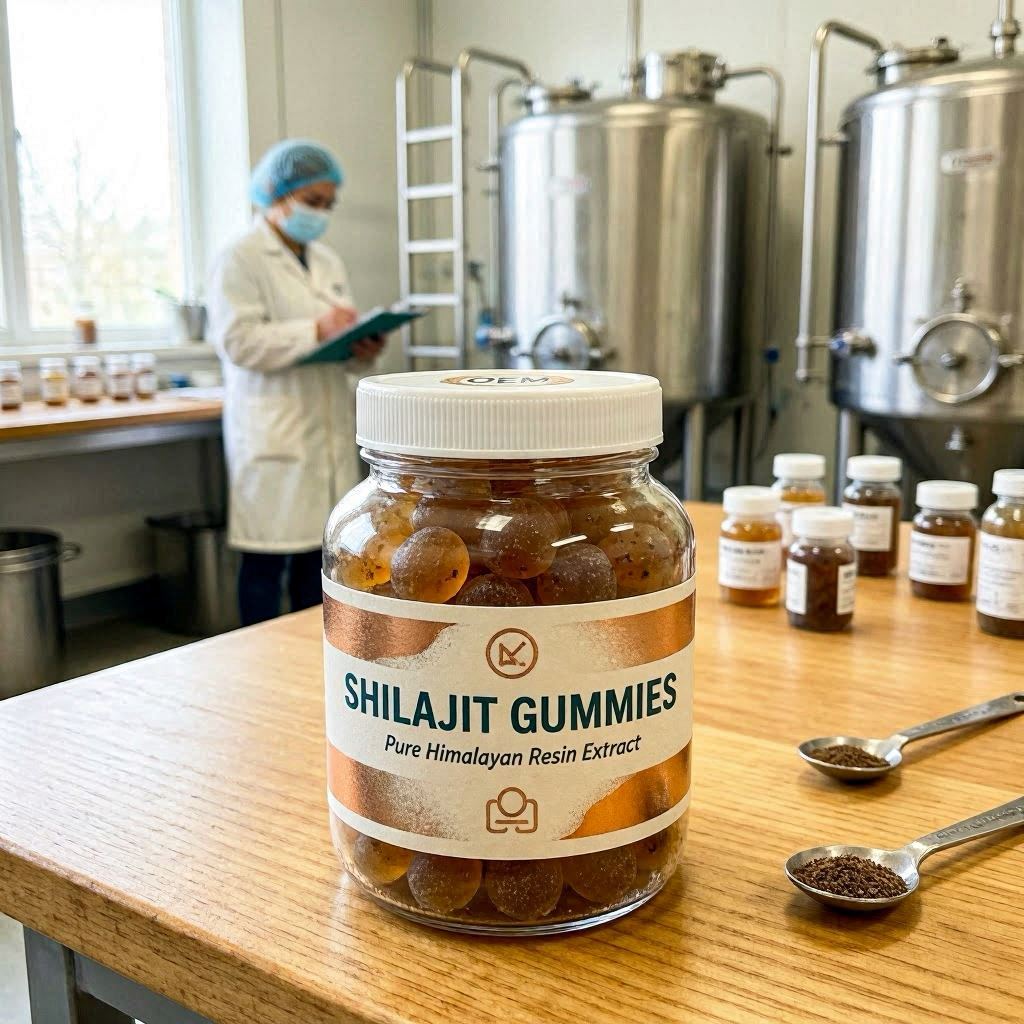
Market Overview
The global dietary supplement gummy market surpassed $10.45 billion in 2024, with North America commanding 44.3% of global revenue. The compound annual growth rate (CAGR) is forecast at 12.7% through 2031. Within this space, Shilajit Gummies have emerged as a breakout SKU, driven by explosive social media interest and the broader consumer shift toward adaptogenic and mineral-dense supplements.
What Is Shilajit? The Science Behind the Ingredient
Shilajit is a naturally occurring mineral pitch found in high-altitude rock strata across the Himalayas, Altai, and Caucasus mountains. Formed over millions of years through the geological compression of organic plant matter, authentic Shilajit contains 40–70% fulvic acid by dry weight, along with humic acid, over 80 trace minerals, and bioactive peptide fractions. The fulvic acid content is the primary quality benchmark evaluated by responsible manufacturers and buyers.
Published clinical literature supports claims including mitochondrial energy support, testosterone optimization (a 2016 RCT in Andrologia demonstrated significant increases in total and free testosterone with 250mg/day purified Shilajit over 90 days), antioxidant activity via humic acid fractions, and preliminary evidence for cognitive support through tau protein aggregation inhibition. These substantiated health claims make Shilajit a particularly compelling ingredient for B2B formulators targeting men’s health, energy, and longevity categories.
The Commercial Case for the Gummy Format
The gummy delivery format addresses the primary compliance barrier of traditional Shilajit resin — its intense earthy taste, inconvenient dosing, and off-putting odor. Gummy formulations with natural berry or citrus masking flavors dramatically improve palatability, enabling consistent daily use. For B2B buyers, this translates directly to improved repeat purchase cycles and higher lifetime customer value (LTV) for their end consumers.
Key OEM/ODM Manufacturing Parameters
When evaluating a Shilajit Gummies OEM partner, buyers must specify and verify: fulvic acid standardization (minimum 40% by dry weight, with COA and UV spectrophotometry reports); heavy metal compliance for lead, mercury, arsenic, and cadmium per USP and target-market regulatory limits; GMP certification (cGMP minimum for US market, EFSA compliance for EU, FSA for UK); and MOQ flexibility. China’s manufacturing clusters in Guangdong and Henan provinces typically offer MOQs from 500–2,000 units, appropriate for small-to-mid-size brand entries.
Formulation & Differentiation Strategies for Brands
Effective differentiation strategies for Shilajit Gummies brands include: stack formulations pairing Shilajit with Ashwagandha (men’s vitality positioning), CoQ10 (mitochondrial energy), or Zinc + Vitamin D3 (testosterone + immunity); vegan pectin-based gummies to access vegetarian, halal, and kosher-certified market segments; and sugar-free SKUs using erythritol and monk fruit sweetener to target keto-diet consumers. Each differentiation angle also creates distinct SEO keyword opportunities and advertising angle segmentation.
Regulatory Compliance Essentials
In the US, Shilajit operates under DSHEA as a dietary ingredient, permitting structure/function claims with appropriate disclaimers. EU and UK markets require Novel Food status assessment under Regulation (EU) 2015/2283 and the UK FSA framework respectively, making regulatory due diligence a critical step before product launch in those territories.
FAQ:Shilajit Gummies
Q1: What is the effective dose for Shilajit Gummies, and how do manufacturers ensure per-gummy dosing consistency? Clinically studied doses range from 200–500mg of standardized extract (standardized to fulvic acid content) per day. Reputable OEM manufacturers use precision batching systems and blend uniformity testing (BUR) protocols to ensure consistent active delivery per gummy piece. Always request batch-level BUR documentation from your manufacturing partner.
Q2: How can buyers distinguish authentic Himalayan Shilajit from inferior substitutes? Authentic Shilajit dissolves completely in water but remains insoluble in alcohol. Verified fulvic acid content ≥40% via UV spectrophotometry (not just label claims), combined with heavy metal screening reports from accredited third-party laboratories, are non-negotiable quality benchmarks. Request both a Certificate of Analysis and an origin traceability declaration from your supplier.
Q3: What is the typical MOQ for Shilajit Gummies OEM manufacturing? Standard MOQs from established Chinese OEM facilities range from 500 to 2,000 bottles (based on 60-count per bottle). Manufacturers offering stock formulas may accept lower MOQs (around 500 units) to reduce entry barriers for new brands. Custom ODM formulations typically carry higher MOQs due to R&D and process validation costs.
Q4: Are there special storage or shelf-life considerations for Shilajit Gummies? Fulvic acid fractions in Shilajit are sensitive to heat, moisture, and UV exposure. Standard shelf life is 18–24 months under sealed conditions. Responsible manufacturers incorporate antioxidant stabilizers (Vitamin E, rosemary extract) and nitrogen-flush packaging to protect potency. Always request an Accelerated Stability Testing (AST) report before finalizing formulation and packaging specifications.
References
1. Bhardwaj, P. et al. (2016). Clinical evaluation of purified Shilajit on testosterone levels in healthy volunteers. Andrologia, 48(5), 570–575. https://doi.org/10.1111/and.12482
2. Carrasco-Gallardo, C. et al. (2012). Shilajit: A Natural Phytocomplex with Potential Procognitive Activity. International Journal of Alzheimer’s Disease. https://doi.org/10.1155/2012/674142
3. Fortune Business Insights (2024). Gummy Supplements Market Size, Share & COVID-19 Impact Analysis. Market Research Report.
4. Grand View Research (2025). U.S. Dietary Supplements Market Size, Share & Trends Analysis Report. https://www.grandviewresearch.com/industry-analysis/dietary-supplements-market
5. US FDA. Dietary Supplement Health and Education Act of 1994 (DSHEA). 21 U.S.C. § 321(ff).
6. European Commission. Regulation (EU) 2015/2283 on Novel Foods.