










Introduction
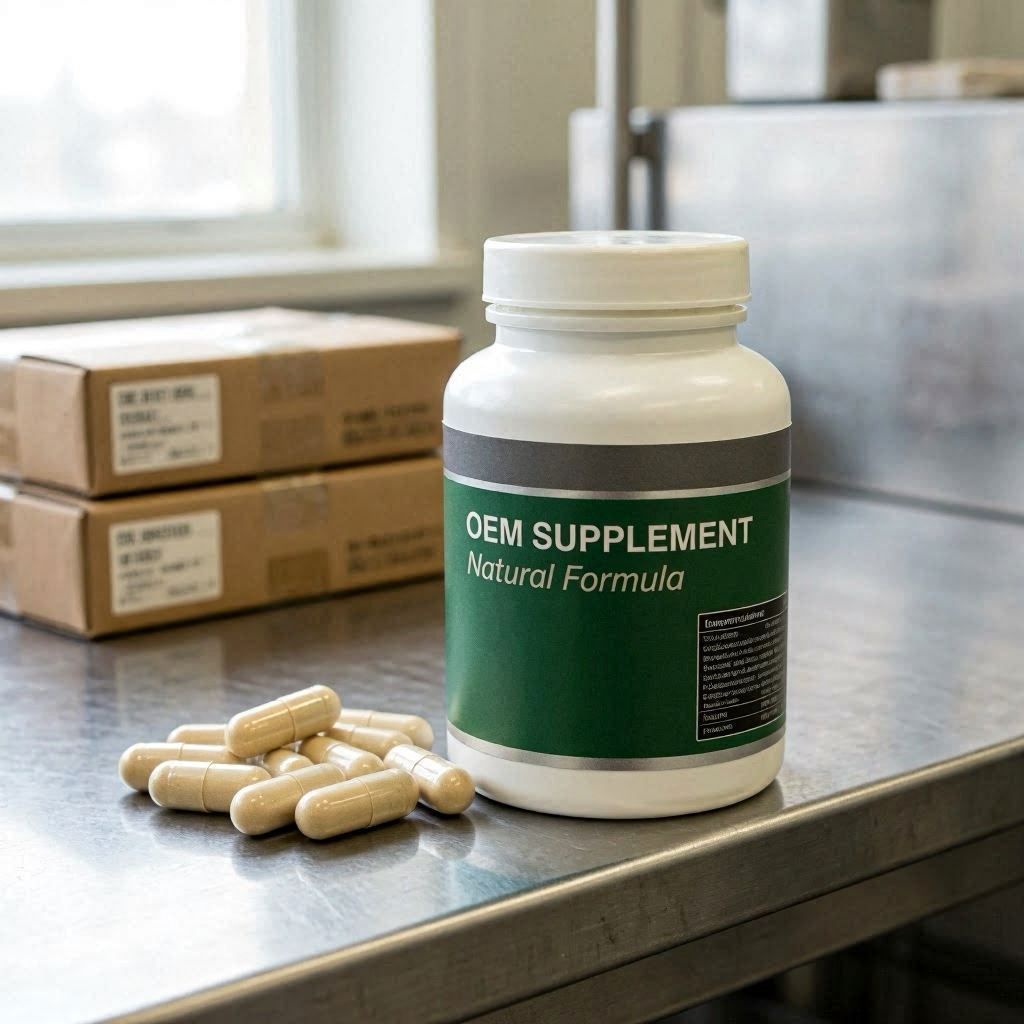
The global dietary supplement landscape is moving at a blistering pace, powered by e-commerce platforms like Amazon, TikTok Shop, and Shopify storefronts. For brand owners, focusing on digital marketing, brand positioning, and customer acquisition is paramount. To scale successfully without multi-million-dollar capital investments in hardware, choosing a world-class supplement OEM (Original Equipment Manufacturer) or ODM partner is the single most critical business decision. This guide outlines the essential technical benchmarks required to evaluate a nutritional contract manufacturer.
Understanding Supplement OEM vs. ODM
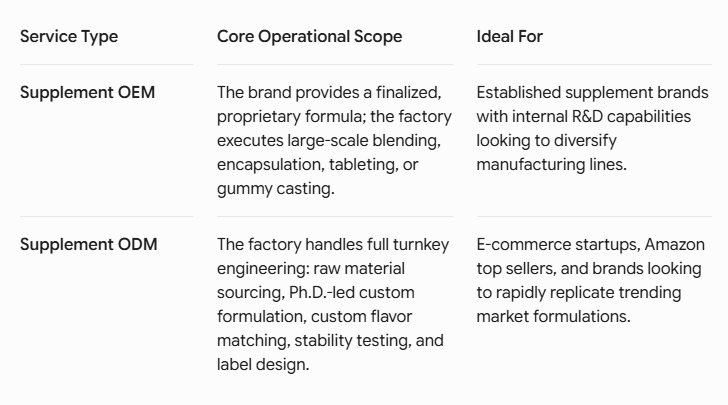
Before finalizing an agreement, brand owners must identify whether their project requires standard contract manufacturing (OEM) or full-service turnkey development (ODM):
Critical Compliance Checkpoints for Global Export
A supplement is only as reliable as its factory’s certifications. If your brand intends to distribute products internationally (such as the US, EU, or Southeast Asia), your contract manufacturing partner must strictly comply with global food safety and quality management audits:
1. cGMP (Current Good Manufacturing Practice)
Ensures that every single production batch is manufactured under rigid control systems. This covers everything from raw ingredient material identity verification to automated equipment sanitation protocols, preventing cross-contamination.
2. GFSI-Recognized Food Safety Benchmarks
For premium retail and cross-border distribution, seek factories carrying elite Global Food Safety Initiative (GFSI) recognitions, including:
- FSSC 22000 / BRCGS Food Safety: Essential for high-end international distribution and enterprise-level retail placement.
- HACCP & ISO 9001: Fundamental foundational frameworks ensuring hazard prevention and operational consistency.
- Halal & Kosher Certifications: Expands market reach into specialized dietary consumer groups.
The Strategic Importance of Low MOQ and Flexible Turnaround
For modern agile brands, mitigating inventory risk is crucial to surviving rapid market shifts. Partnering with an OEM that supports low MOQ (Minimum Order Quantity) structures—such as starting from 500 to 1,000 bottles per run—allows brands to test market viability without heavy capital commitment.
Furthermore, supply chain speed determines profitability. A high-efficiency contract manufacturer should ideally offer accelerated operational timelines:
- Formulation & 48-Hour Design: Rapid turnaround on ingredient matching and packaging graphics.
- 7-Day Sampling: Quick-to-market prototyping to verify custom flavors, shapes, and textures.
- 15-Day Bulk Production: Compressed production cycles ensuring products hit the market while consumer demand remains at peak levels.
Conclusion
A robust contract manufacturing relationship is built on transparency, technical expertise, and rigorous quality verification. When selecting a supplement OEM, always demand comprehensive batch COAs (Certificates of Analysis), verify facility compliance, and look for integrated services like custom color matching and turnkey private label capabilities to future-proof your product pipeline.