










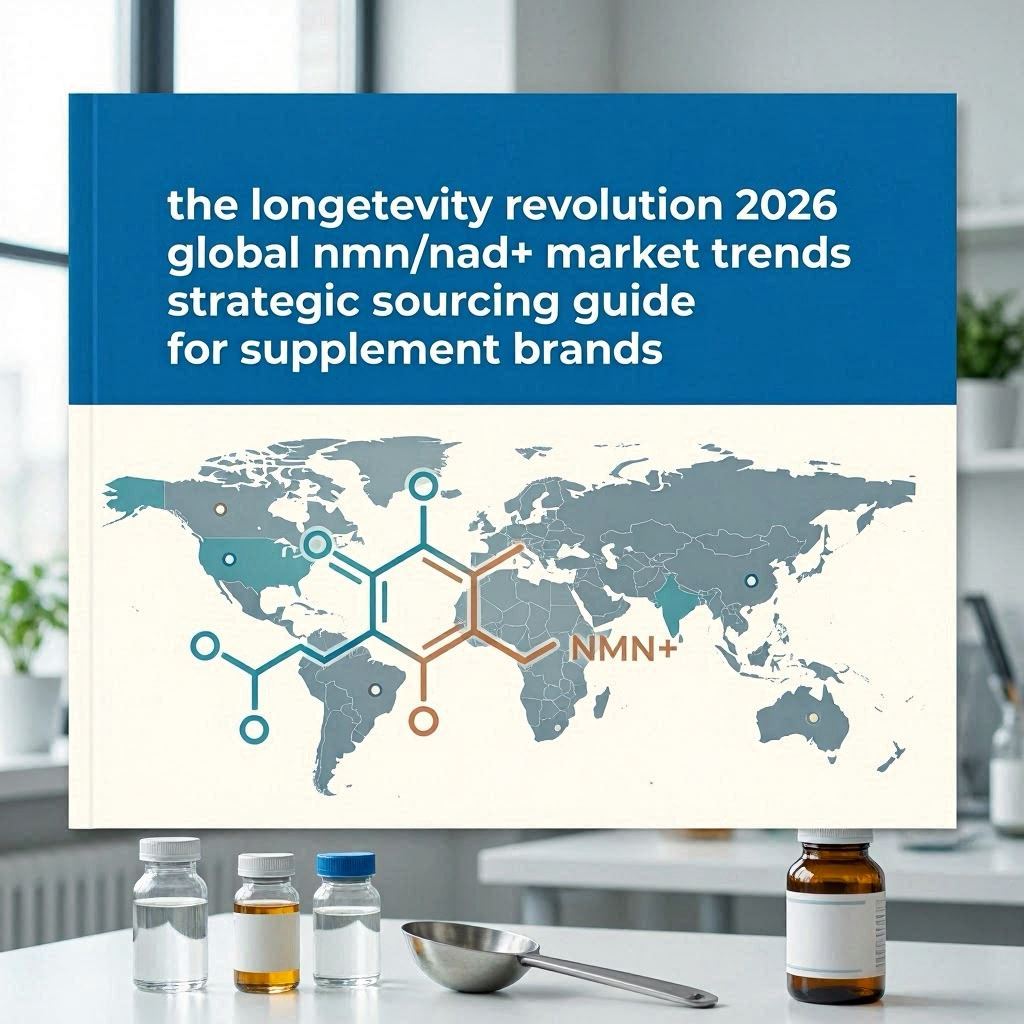
Nano Encapsulated Pure NMN Liquid Custom Formulation: A Comprehensive Guide for B2B Buyers
Introduction
The dietary supplement industry continues to evolve at a remarkable pace, with innovative delivery technologies reshaping how bioactive compounds reach consumers. Among the most promising developments in this space is nano encapsulated pure NMN liquid custom formulation—a technology that addresses one of the most significant challenges in nicotinamide mononucleotide supplementation: bioavailability.
NMN has emerged as one of the most researched compounds in the longevity and anti-aging supplement market. As a direct precursor to nicotinamide adenine dinucleotide (NAD+), NMN plays a critical role in cellular energy production, DNA repair, and metabolic function. However, the therapeutic potential of traditional NMN supplements has been limited by poor absorption rates and inconsistent bioavailability across different delivery formats.
Nano encapsulation technology offers a transformative solution. By reducing NMN particles to nanoscale dimensions and suspending them in optimized liquid matrices, manufacturers can achieve significantly higher absorption rates compared to conventional powder or capsule formulations. This advancement has opened new possibilities for brand owners seeking differentiated products in an increasingly competitive market.
This article provides a comprehensive exploration of nano encapsulated NMN liquid formulation from a B2B manufacturing perspective. We examine the scientific mechanisms underlying this technology, market dynamics driving demand, manufacturing considerations for quality assurance, and the strategic advantages of working with OEM/ODM partners for custom formulation projects. Whether you are launching a new longevity-focused supplement line or reformulating existing products, understanding these factors will position your brand for success in this high-growth category.
The Science Behind Nano Encapsulated NMN
Understanding NMN and NAD+ Biology
Nicotinamide mononucleotide is a naturally occurring compound found in small quantities in foods such as broccoli, cabbage, cucumber, and avocado. As a nucleoside riboside variant of nicotinamide, NMN serves as a critical building block for NAD+ synthesis in every living cell. The importance of maintaining adequate NAD+ levels cannot be overstated—this coenzyme participates in over 500 enzymatic reactions in the human body, including those governing energy metabolism, cellular repair mechanisms, and gene expression regulation.
Research published in leading journals including Nature, Cell, and Science has demonstrated that NAD+ levels decline by approximately 50% between the ages of 40 and 60, with continued decreases thereafter. This decline correlates with the onset of age-related metabolic dysfunction, cognitive decline, and reduced cellular repair capacity. By supplementing with NMN, the body can bypass the rate-limiting steps of NAD+ synthesis and more efficiently restore cellular NAD+ pools.
Clinical studies have explored NMN supplementation across dosages ranging from 100mg to 500mg daily, with subjects demonstrating improvements in markers of metabolic health, including insulin sensitivity, physical endurance, and biomarkers of vascular function. However, translating these research findings into effective consumer products requires overcoming significant formulation challenges.
How Nano Encapsulation Enhances Absorption
The bioavailability challenge with NMN stems from its molecular characteristics. Standard NMN powder exhibits relatively poor intestinal absorption due to limited permeability across the gut epithelium. Pharmacokinetic studies indicate that conventional oral NMN formulations achieve only 20-40% absolute bioavailability, meaning a substantial portion of the active compound is lost before reaching systemic circulation.
Nano encapsulation addresses this limitation through several mechanisms. First, reducing NMN particles to sizes below 200 nanometers dramatically increases surface area-to-volume ratios, facilitating more efficient transport across intestinal membranes. Second, nano-sized particles can exploit transcellular absorption pathways that are typically inaccessible to larger aggregates. Third, liquid formulations enable the creation of stable colloidal dispersions that maintain particle size consistency throughout the gastrointestinal tract.
Advanced nano encapsulation systems may incorporate additional optimization strategies, including lipid-based carriers such as liposomes or nanostructured lipid carriers, which further enhance membrane fusion and cellular uptake. Some formulations also employ stabilization agents to prevent particle aggregation and maintain consistent delivery characteristics. The result is a nano encapsulated pure NMN liquid that can achieve bioavailability improvements of 2-5 times compared to conventional formulations, depending on the specific encapsulation technology employed.
Market Trends and Industry Demand
Growth Trajectory of the NMN Supplement Market
The global NMN supplement market has experienced extraordinary growth, driven by increasing consumer awareness of longevity science and the democratization of advanced anti-aging interventions. Industry analysts estimate the current market value at approximately $400-500 million, with compound annual growth rates projected between 18-25% through 2030. This growth trajectory positions NMN among the fastest-expanding segments within the broader nicotinamide riboside and NAD+ precursor category.
North America currently represents the largest regional market, accounting for approximately 40% of global consumption, followed by East Asia (30%) and Europe (20%). The concentration of high-net-worth consumers, sophisticated supplement users, and longevity-focused communities in these regions has created robust demand for premium NMN products that deliver measurable efficacy improvements.
Several factors contribute to accelerating market growth. First, the publication of peer-reviewed clinical trials has substantiated health claims that previously relied primarily on preclinical evidence. Second, reductions in bulk NMN manufacturing costs have improved margins and enabled broader price accessibility. Third, innovative delivery formats such as nano encapsulated liquids have differentiated premium products in ways that justify higher price points and drive category expansion.
Consumer Preferences Driving Format Innovation
Market research indicates clear consumer preferences shaping product development in the NMN category. Convenience ranks among the top factors influencing purchase decisions—consumers increasingly favor liquid formulations over capsules and tablets due to perceived faster onset of effects and easier daily integration. Taste and palatability matter significantly for liquid supplements, with consumers demonstrating willingness to pay premiums for products with neutral or pleasant flavor profiles.
Efficacy expectations continue rising among sophisticated supplement users who compare products based on advertised bioavailability claims and dosage transparency. This trend favors nano encapsulated formulations that can substantiate absorption advantages through third-party testing data. Brand differentiation increasingly depends on demonstrable formulation quality rather than simply listing NMN content on supplement facts panels.
The intersection of these preferences creates compelling opportunities for nano encapsulated pure NMN liquid custom formulation. By combining enhanced bioavailability with consumer-friendly delivery characteristics, brands can position premium products that command market share in a rapidly growing category.
Manufacturing Considerations for Quality Formulation
Formulation Development and Stability
Creating a stable nano encapsulated NMN liquid requires careful attention to multiple formulation parameters. The base liquid matrix must maintain chemical compatibility with NMN while providing optimal conditions for particle stability. Aqueous systems with appropriate pH buffering capacity prevent NMN degradation, which occurs more rapidly under acidic conditions.
Temperature sensitivity represents a significant consideration throughout the manufacturing and storage process. Nano encapsulated NMN formulations typically require cold chain storage and transport to maintain particle size distribution and prevent aggregation. Accelerated stability testing under elevated temperature conditions (40°C and 50°C) provides predictive data for shelf life determination under recommended storage conditions.
Preservative systems must balance microbial protection with sensory characteristics and consumer preference for clean-label ingredients. Options range from naturally-derived preservatives such as rosemary extract and vitamin E to conventional systems including potassium sorbate and sodium benzoate. The selection depends on regulatory requirements, target market preferences, and compatibility with the specific formulation matrix.
Bioavailability Optimization Techniques
Beyond basic nano encapsulation, advanced manufacturing techniques can further optimize bioavailability performance. Lipid-based delivery systems such as self-emulsifying drug delivery systems (SEDDS) create spontaneous emulsions upon contact with aqueous gastrointestinal fluids, protecting NMN during transit and enhancing lymphatic absorption. This approach bypasses first-pass hepatic metabolism to a degree, potentially increasing systemic bioavailability.
Phospholipid complexes represent another optimization strategy, binding NMN to phosphatidylcholine molecules to create amphiphilic complexes with improved membrane permeability. Some manufacturers employ proprietary absorption-enhancing excipients such as piperine or medium-chain triglycerides to synergistically improve uptake kinetics.
For B2B procurement purposes, understanding the specific technology employed by a manufacturer enables more informed evaluation of product claims. Requesting pharmacokinetic study data, preferably from peer-reviewed publications or proprietary human clinical trials, provides evidence beyond theoretical mechanisms of action.
Strategic Advantages of OEM/ODM Partnership
Custom Formulation for Brand Differentiation
Working with an experienced OEM/ODM partner for nano encapsulated pure NMN liquid custom formulation enables brand owners to create differentiated products without capital investment in manufacturing infrastructure. Custom formulation options span multiple dimensions including dosage concentration, flavor profiles, sweetener systems, and packaging configurations.
Minimum order quantities (MOQs) for custom liquid formulations typically range from 1,000 to 5,000 units, though some partners offer lower thresholds for initial production runs. This flexibility enables brand owners to test market reception before committing to larger volumes, reducing inventory risk during product launches or line extensions.
The formulation development process with an OEM/ODM partner generally proceeds through several stages: initial concept consultation, formulation prototype development, stability testing, sensory evaluation, pilot production, and full-scale manufacturing. Timeline expectations range from 4-8 months from project initiation to first commercial shipment, depending on formulation complexity and regulatory requirements.
Speed-to-Market and Scalability
OEM/ODM partnerships provide significant advantages in speed-to-market compared to vertical integration approaches. Established manufacturers with proven nano encapsulation capabilities can leverage existing equipment, validated processes, and regulatory documentation to accelerate project timelines. This compressed development cycle enables brands to capitalize on market opportunities more quickly than building internal capabilities would allow.
Scalability represents another critical consideration for growing brands. OEM/ODM partners typically maintain multiple production facilities or flexible capacity that can accommodate volume increases without requiring customers to invest in additional equipment or personnel. This scalability proves particularly valuable for products experiencing rapid sales growth or seasonal demand fluctuations.
Intellectual property considerations warrant careful attention during partnership formation. Reputable manufacturers implement robust confidentiality protocols and can structure agreements that protect proprietary formulations from use with competing brands. Negotiating clear terms regarding formulation exclusivity, process improvements, and regulatory ownership ensures long-term partnership sustainability.
Quality Assurance and Regulatory Compliance
Good Manufacturing Practice Standards
Quality assurance begins with adherence to Good Manufacturing Practice (GMP) standards as defined by regulatory agencies including the FDA in the United States and analogous bodies in other jurisdictions. GMP-compliant facilities implement comprehensive quality management systems covering personnel training, equipment qualification, raw material verification, in-process testing, and finished product release criteria.
Facility certification through third-party audits provides independent verification of GMP compliance. Common certification programs include NSF International, UL Solutions, and SGS, which conduct regular inspections against established standards. Brands sourcing from manufacturers holding multiple certifications demonstrate commitment to quality that resonates with sophisticated consumers.
Documentation practices represent a key quality indicator. GMP-compliant manufacturers maintain complete batch records including ingredient lot numbers, processing parameters, environmental conditions, and testing results for every production run. This traceability enables rapid investigation of any quality concerns and supports regulatory compliance requirements.
Third-Party Testing and Certificate of Analysis
Independent laboratory testing provides objective verification of product quality claims. For nano encapsulated NMN liquid formulations, critical testing parameters include NMN content verification, particle size distribution analysis, microbial limits testing, heavy metal screening, and stability-indicating assay methods that demonstrate content consistency over shelf life.
Reputable manufacturers provide Certificate of Analysis (COA) documentation with each batch, certifying that products meet predetermined specifications. COAs should reference validated testing methodologies, include actual numerical results with acceptance criteria, and identify the testing laboratory conducting analyses. For brands marketing nano encapsulated formulations, requesting particle size distribution data on COAs confirms that the nano encapsulation technology performs as specified.
Additional certifications may enhance marketability depending on target demographics and distribution channels. These include NSF Certified for Sport (important for athletic populations), Non-GMO Project Verified, USDA Organic, Halal certification for Muslim consumers, and Kosher certification for Jewish consumers. Manufacturers with diverse certification portfolios offer brand owners greater flexibility in positioning and market expansion.
Formulation Format Comparison
Liquid Solutions
Nano encapsulated pure NMN liquid formulations offer several distinct advantages that drive growing market preference. Liquid delivery enables rapid absorption initiation compared to solid dosage forms that must first undergo disintegration and dissolution processes. The sublingual absorption pathway available with liquid formulations can bypass first-pass metabolism entirely, potentially enhancing bioavailability and onset time.
From a manufacturing perspective, liquid formulations allow precise dosage customization through graduated delivery mechanisms such as droppers or measured pumps. This flexibility supports multiple serving sizes within a single product configuration and enables brands to offer different dosage strengths for varied consumer segments.
However, liquid formats present certain challenges including shorter shelf life compared to stabilized dry formats, requirement for temperature-controlled storage and shipping, and potential compatibility issues with packaging materials. Brands must evaluate these factors against consumer preferences when selecting formulations for their product lines.
Gummy and Softgel Alternatives
Gummy supplements represent the fastest-growing format in the broader supplement industry, offering superior palatability and consumer compliance compared to traditional capsules or tablets. For NMN specifically, gummy formulations face significant technical challenges related to the compound’s taste profile and thermal sensitivity during the gummy manufacturing process.
Successfully incorporating NMN into gummy matrices requires careful ingredient selection and process optimization. High-heat gummy cooking steps can degrade heat-labile NMN, necessitating post-coating application or modified processing parameters. Taste masking strategies must address NMN’s slightly bitter notes without compromising bioavailability.
Softgel capsules offer an intermediate option, combining the stability advantages of sealed unit dose packaging with potential for enhanced absorption from lipid-based fill materials. Softgel manufacturing requires specialized equipment and expertise, but produces a premium-format product that commands higher retail price points.
Capsule and Powder Options
Traditional capsule formats remain relevant for brands prioritizing shelf stability and consumer familiarity. Hard-shell capsules containing NMN powder require higher dosages to achieve equivalent systemic exposure compared to nano encapsulated liquids due to absorption limitations. However, capsules offer advantages in terms of portability, dosing convenience, and shelf life under ambient storage conditions.
Powder formats serve consumers who prefer flexible dosing and mixing capabilities. Standalone NMN powder products face the same bioavailability constraints as capsule formats, but powder enables incorporation into beverages or foods that might mask taste issues. Nano encapsulated powder options, while technically feasible, typically sacrifice some of the bioavailability advantages associated with liquid delivery systems.
Frequently Asked Questions
What dosage range is recommended for nano encapsulated NMN supplementation?
Clinical research has explored NMN dosages ranging from 100mg to 500mg daily, with most studies employing 250mg as a standard dose. Nano encapsulated liquid formulations may achieve equivalent or superior efficacy at lower dosages due to improved bioavailability—some products marketed as “high-potency” formulations provide 125-150mg per serving with claims of performance equivalent to 300-500mg conventional NMN. Brands should base dosage recommendations on specific formulation testing rather than applying generalized clinical study dosages.
How does nano encapsulation technology improve NMN stability?
Nano encapsulation creates a protective barrier around NMN molecules, shielding them from environmental factors that promote degradation including oxygen exposure, light, and temperature fluctuations. The reduced particle size also distributes NMN more uniformly throughout the liquid matrix, minimizing concentration gradients that can accelerate stability decline. Stability testing comparing nano encapsulated to conventional formulations typically demonstrates 20-40% longer shelf life under equivalent storage conditions.
What is the typical shelf life for nano encapsulated NMN liquid products?
Shelf life depends on specific formulation composition, packaging characteristics, and storage conditions. Properly formulated nano encapsulated liquids typically achieve 18-24 months of shelf life when stored under refrigerated conditions (2-8°C). Products stored at ambient temperature may demonstrate reduced shelf life of 12-18 months. Manufacturers should conduct real-time and accelerated stability studies to establish expiration dating for specific formulations and packaging configurations.
Are there any contraindications or interactions with NMN supplementation?
NMN is generally well-tolerated in human studies with minimal reported adverse effects. However, individuals taking blood sugar-regulating medications should exercise caution as NMN may enhance insulin sensitivity and potentiate pharmaceutical effects. Pregnant or breastfeeding individuals should consult healthcare providers before supplementation. As with any dietary supplement, brands should include appropriate cautionary statements on product labeling consistent with regulatory requirements.
What packaging options work best for nano encapsulated NMN liquids?
Amber glass bottles offer excellent light protection and chemical inertness but add significant weight and shipping costs. Opaque plastic containers (HDPE or PET) provide adequate light protection with reduced breakage risk and lower transportation costs. Both options should incorporate child-resistant closures where required by local regulations. Unit-dose packaging such as foil pouches or blow-fill-seal ampules offer convenience advantages but require larger minimum order quantities and higher per-unit costs.
How do regulatory frameworks affect NMN supplement marketing?
Regulatory status of NMN varies by jurisdiction. In the United States, NMN is marketed as a dietary supplement ingredient with no pre-market approval requirement, though structure/function claims must be substantiated and include required disclaimers. The FDA does not specifically approve NMN products but can take enforcement action against unsubstantiated claims or adulterated products. In other markets, including Australia, Canada, and the European Union, NMN’s regulatory status may differ—some jurisdictions classify NMN as a novel food requiring pre-market safety assessment. Brands distributing internationally should verify compliance requirements for each target market.
What testing should brands request from manufacturers to verify nano encapsulation quality?
Essential testing includes high-performance liquid chromatography (HPLC) for NMN content verification, dynamic light scattering (DLS) for particle size distribution confirmation, microbial testing for safety verification, and heavy metal screening for contamination exclusion. For bioavailability claims, brands may request in vitro dissolution testing or sponsor pharmacokinetic studies comparing their product against conventional NMN formulations. Third-party testing from accredited laboratories provides independent verification beyond manufacturer Certificate of Analysis documentation.
What factors influence pricing for custom nano encapsulated NMN formulation?
Several variables affect formulation and manufacturing costs including NMN raw material grade and source, encapsulation technology complexity, flavor and sweetener system selection, packaging configuration, order volume, and regulatory compliance requirements. Nano encapsulation adds premium to base manufacturing costs, typically representing 30-60% higher per-unit pricing compared to conventional powder formulations. However, the bioavailability advantages may justify premium positioning and higher retail pricing. Requesting detailed quotations that itemize cost components enables more informed comparison across potential manufacturing partners.
Conclusion
Nano encapsulated pure NMN liquid custom formulation represents a significant advancement in the dietary supplement industry, combining cutting-edge delivery technology with the most researched longevity-supporting compound currently available. For brand owners and product developers, understanding the science, market dynamics, and manufacturing considerations outlined in this article positions your brand to make informed decisions about product development and partner selection.
The convergence of clinical evidence supporting NMN efficacy, consumer demand for enhanced bioavailability products, and manufacturing capabilities enabling sophisticated nano encapsulation creates compelling market opportunities. Brands that successfully leverage these innovations can differentiate themselves in an increasingly competitive landscape while delivering genuine value to consumers seeking optimal supplementation outcomes.
Quality assurance remains paramount throughout the development and manufacturing process. Working with GMP-certified partners who provide transparent testing documentation, maintain robust stability programs, and demonstrate technical expertise in nano encapsulation technology protects brand reputation and ensures product performance claims remain defensible. The investment in quality infrastructure pays dividends through consumer trust, repeat purchases, and reduced risk of regulatory complications.
As the longevity supplement category continues maturing, formulation innovation will increasingly drive competitive differentiation. Nano encapsulated liquid NMN represents one of the most promising vectors for this innovation—offering demonstrable bioavailability advantages, consumer-friendly delivery characteristics, and premium positioning potential. Brands prepared to invest in understanding and implementing these technologies will be well-positioned to capture growth in one of dietary supplements’ most exciting emerging segments.
Disclaimer: These statements have not been evaluated by the Food and Drug Administration. This product is not intended to diagnose, treat, cure, or prevent any disease. The information provided in this article is for educational and informational purposes only and does not constitute medical advice. Always consult with a qualified healthcare professional before starting any supplement regimen.