










Introduction
The berberine supplements market has experienced remarkable growth as consumers increasingly seek natural alternatives for metabolic health support. Berberine HCl gummies, in particular, have emerged as one of the most promising categories within the functional supplement space, combining the well-documented benefits of berberine with a highly palatable delivery format. For brands looking to launch or expand their berberine gummy product lines on Amazon FBA, selecting the right manufacturing partner is arguably the single most consequential decision in the entire supply chain.
Manufacturing berberine HCl gummies that meet Amazon’s stringent FBA compliance requirements while maintaining product efficacy, shelf stability, and consumer appeal presents a unique set of challenges that differ substantially from those encountered in traditional capsule or tablet production. From navigating the complexities of sugar-free and low-sugar formulation to ensuring third-party lab verification and COA documentation, the bar for entry is considerably higher than many new market entrants initially anticipate.
This article provides a comprehensive overview of everything you need to know about sourcing an Amazon FBA compliant berberine HCl gummies manufacturer. We will explore the science behind berberine, examine current market dynamics, walk through critical manufacturing and formulation considerations, outline the tangible benefits of partnering with an OEM/ODM supplier, and detail the quality assurance standards your manufacturing partner must meet. By the end of this guide, you will have a clear, actionable framework for evaluating and selecting a manufacturing partner that aligns with your brand’s quality standards and commercial objectives.
The Science Behind Berberine HCl in Gummy Format
What Is Berberine and How Does It Work
Berberine is a bioactive alkaloid compound extracted from several plants, including Berberis vulgaris (barberry), Coptis chinensis (goldthread), and Hydrastis canadensis (goldenseal). It has been a cornerstone of traditional Chinese medicine and Ayurvedic practice for centuries, but modern clinical research has brought renewed scientific attention to its mechanisms of action.
The compound operates through multiple biochemical pathways, which is why it is frequently referenced in the context of broad-spectrum metabolic support. Most notably, berberine activates AMP-activated protein kinase (AMPK), an enzyme often described as a master regulator of cellular energy metabolism. This activation influences glucose uptake, lipid metabolism, and insulin sensitivity — mechanisms that have generated substantial interest among both researchers and consumers.
From a supplement formulation perspective, berberine HCl refers specifically to the hydrochloride salt form of berberine, which offers superior bioavailability compared to the base berberine form. The HCl salt improves dissolution and absorption in the gastrointestinal tract, making it the preferred choice for commercial supplement applications. Standard berberine HCl dosages in clinical research range from 900 mg to 1,500 mg per day, typically divided across two to three servings, though gummy formulations may adjust this range based on serving size constraints and desired consumer experience.
Why Gummy Delivery Is a Strategic Choice
The decision to formulate berberine as a gummy rather than a traditional capsule or tablet is not merely a matter of consumer preference — it reflects meaningful commercial and physiological considerations. Gummies offer significantly improved compliance rates, particularly among consumers who struggle with swallowing large capsules or who dislike the bitter taste commonly associated with berberine extract. Research in supplement adherence consistently shows that format convenience correlates strongly with repeat purchase behavior, a metric that directly impacts Amazon BSR (Best Seller Rank) performance.
From a manufacturing standpoint, however, gummy delivery introduces specific challenges. Berberine’s natural bitterness must be effectively masked, and the compound must remain chemically stable within a sugar or sugar-free gummy matrix that maintains its structural integrity through varying storage temperatures. These considerations shape virtually every decision in the OEM/ODM production process, from base ingredient selection to final packaging configuration.
Market Trends and Demand Dynamics
Growth Drivers in the Berberine Supplement Space
The global berberine supplement market was valued at approximately USD 460 million in 2022 and is projected to grow at a compound annual growth rate (CAGR) of 6.8% through 2030, according to industry analysis from multiple market research firms tracking the nutraceutical sector. This growth trajectory places berberine among the faster-growing natural compound categories, driven by rising consumer awareness of metabolic health, growing resistance to pharmaceutical interventions for pre-diabetic conditions, and increased spending on preventive wellness products.
The gummy format is accelerating this growth specifically within the United States supplement market. Data from the Council for Responsible Nutrition indicates that gummy supplement formulations have captured the fastest-growing segment of the domestic supplement market over the past five years, with gummy-specific supplement sales outpacing traditional formats by nearly three times in terms of year-over-year growth percentage. This shift is particularly pronounced in the Amazon marketplace, where gummy supplements consistently rank among the top-performing categories in the digestive health and blood sugar support subcategories.
Amazon FBA adds an additional layer of opportunity and complexity. The platform’s Fulfilled by Amazon logistics infrastructure provides brands with access to Prime-eligible customers and automated inventory management, but it also subjects products to rigorous compliance screening, including label accuracy requirements, ingredient verification, and claims substantiation standards. Brands that source from manufacturers unfamiliar with Amazon’s specific compliance protocols frequently encounter costly delays, rejections, or account-level penalties.
For berberine HCl gummies specifically, market intelligence tools tracking Amazon search volume indicate a consistent upward trend in branded keyword searches over the trailing twelve months, with search volume for “berberine gummies” increasing by approximately 34% year-over-year. This growing consumer demand creates a compelling opportunity for brands with compliant, high-quality products, while simultaneously raising the stakes for manufacturing quality and supply chain reliability.
Manufacturing Considerations for Berberine HCl Gummies
Formulation Challenges and Solutions
Formulating berberine HCl into a stable, effective gummy requires solving several interconnected technical challenges that distinguish this product category from more straightforward supplement formats.
The first challenge is taste masking. Berberine possesses a pronounced bitter profile that can overwhelm even strong flavoring systems if not properly addressed. Experienced manufacturers typically employ a multi-layered masking approach, combining natural flavor oils, citrus bioflavonoids, and strategically selected sweetening systems to achieve a neutral or mildly pleasant flavor profile. Sugar alcohols such as maltitol or erythritol are frequently used in combination with high-intensity sweeteners like stevia to balance sweetness without adding excessive calories.
The second challenge is dosage precision. Gummy manufacturing processes involve heating and cooling cycles that can affect the stability of heat-sensitive active ingredients. Manufacturers must validate through analytical testing that the declared berberine HCl content remains within an acceptable range (typically ±10% of label claim) throughout the product’s shelf life, which Amazon FBA requires to be a minimum of 90 days remaining upon receipt at the fulfillment center.
The third challenge involves texture and shelf stability. A gummy that becomes excessively sticky, dries out, or loses structural integrity within weeks of manufacturing will generate negative customer reviews and return requests that damage brand performance on Amazon. Modern manufacturers address this through carefully calibrated gelatin or pectin-based matrices, optimized moisture content, and premium barrier packaging that protects against humidity and temperature fluctuations during transit and storage.
Bioavailability Enhancement Techniques
A critical consideration for any berberine HCl gummy formulation is bioavailability — the proportion of the active compound that actually reaches systemic circulation after consumption. Raw berberine HCl has a notoriously low oral bioavailability, estimated at less than 1% in some pharmacokinetic studies, due to rapid metabolism and poor intestinal absorption.
Leading manufacturers address this through several evidence-based enhancement strategies. Liposomal encapsulation coats berberine particles in phospholipid layers that improve intestinal absorption and protect the compound from premature degradation. Self-emulsifying drug delivery systems (SEDDS) use lipid-based formulations that spontaneously form emulsions upon contact with digestive fluids, significantly improving absorption kinetics. Some manufacturers also incorporate absorption-promoting compounds such as piperine (a bioenhancer extracted from black pepper) at clinically validated levels to further optimize bioavailability.
When evaluating potential manufacturing partners, brands should request data on the manufacturer’s internal bioavailability studies, comparison testing against standard berberine formulations, and any proprietary delivery technologies employed. A manufacturer that cannot articulate a clear bioavailability strategy for its berberine gummy products may be producing formulations with significantly diminished consumer-perceived efficacy.
The OEM/ODM Advantage for Brand Owners
Low Minimum Order Quantities and Scalability
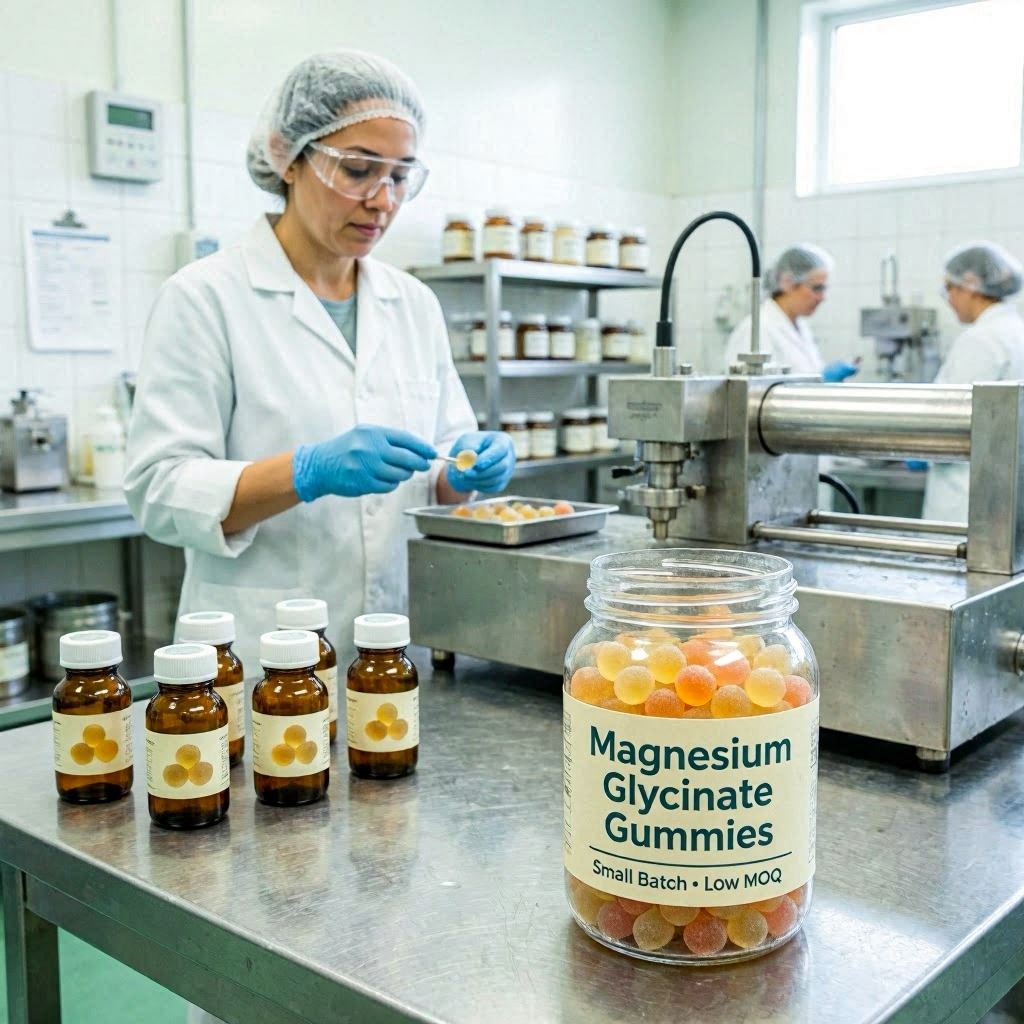
One of the most compelling reasons to partner with an OEM/ODM manufacturer for berberine HCl gummies is the accessibility that these partnerships provide to emerging and mid-market brands. Traditional contract manufacturing often requires minimum order quantities (MOQs) that place initial production runs out of reach for brands in early growth stages or those testing new product variations. Many OEM/ODM partners serving the Amazon FBA market now offer MOQs starting as low as 300 to 500 units per SKU, with flexible scaling options as the brand grows.
This low-barrier entry model has democratized private-label supplement production and is a significant factor in the proliferation of brand-specific berberine gummy products across the Amazon marketplace. Brands can launch with a focused initial SKU, gather real-world sales data and customer feedback, and scale production volumes with favorable per-unit economics as demand confirms product-market fit.
Customization and Speed-to-Market
OEM/ODM partnerships also offer substantial customization capabilities that enable brands to differentiate their berberine gummy offerings in a crowded market. Customization options typically extend across the full product development spectrum, including flavor and sweetness profile development, shape and color selection for the gummy dosage form, label and packaging design with full Amazon-compliant labeling, and proprietary blend variations that combine berberine HCl with complementary ingredients such as chromium, alpha-lipoic acid, or cinnamon bark extract.
Speed-to-market represents another critical competitive advantage. The entire product development cycle — from initial formulation consultation to production-ready product in an Amazon fulfillment center — can be compressed to as little as 12 to 16 weeks when working with an experienced manufacturer that maintains established berberine gummy base formulations. This acceleration allows brands to capitalize on emerging market trends and seasonal demand patterns with minimal lag time.
Quality Assurance and Compliance Standards
GMP Certification and Regulatory Requirements
Any manufacturer producing berberine HCl gummies for Amazon FBA resale must operate within a robust quality assurance framework that satisfies both regulatory requirements and platform-specific compliance standards. At the foundational level, this means operating from a facility certified under Current Good Manufacturing Practice (cGMP) regulations as outlined by the FDA in 21 CFR Part 111.
GMP certification ensures that the manufacturer has documented and implemented standard operating procedures across all production stages, from incoming raw material inspection through finished product release. This includes equipment calibration and maintenance records, personnel training documentation, environmental monitoring protocols, and complete chain of custody documentation for all raw materials and finished products.
For Amazon FBA specifically, brands should confirm that their manufacturer can provide a comprehensive Certificate of Analysis (COA) for each production batch, documenting berberine HCl potency verification, microbial testing results (including total plate count, E. coli, Salmonella, and yeast/mold), heavy metal analysis (lead, arsenic, cadmium, and mercury), and residual solvent testing if any extraction processes were used in raw material processing.
Third-Party Testing and Verification
While in-house quality testing provides a baseline of product safety, forward-thinking brands should insist on third-party laboratory verification for all critical quality attributes. Third-party testing eliminates potential conflicts of interest and provides an independent layer of verification that Amazon’s compliance team and increasingly discerning consumers both recognize as a mark of quality.
Testing should be conducted by ISO/IEC 17025 accredited laboratories, which maintain internationally recognized standards for testing competence and data reliability. Specific tests relevant to berberine HCl gummies include high-performance liquid chromatography (HPLC) for berberine potency confirmation, disintegration testing to verify that the gummy format releases its active contents appropriately, and stability testing under accelerated aging conditions to project shelf life under various storage scenarios.
Additional certifications that enhance brand credibility and Amazon listing strength include NSF International certification, USDA Organic certification (for gummies using organic-certified ingredients), Halal and Kosher certifications for brands targeting observant consumer segments, and Non-GMO Project Verified status for products using non-genetically modified ingredients.
Comparing Gummy, Capsule, and Powder Formats
Why Gummies Win for Consumer Experience
When evaluating berberine delivery formats, brands must weigh consumer preference against manufacturing complexity and cost. Capsules remain the dominant format in the professional-grade supplement market due to their high bioavailability, low manufacturing cost, and straightforward quality control. Powder formats offer maximum dosage flexibility and rapid absorption but suffer from poor portability and the same taste-masking challenges that affect gummies.
Gummies occupy a distinct market position: they deliver the best-in-class consumer experience for the mass-market wellness segment, they significantly outperform capsules and powders in repeat purchase rates according to multiple consumer behavior studies, and they command a price premium that justifies higher per-unit manufacturing costs. For brands targeting the Amazon health supplement market — where customer reviews, repeat purchase frequency, and star rating directly determine organic search visibility — the gummy format’s compliance and satisfaction advantages often outweigh capsule-formulated competition.
The one caveat is dosage ceiling. Gummy serving sizes are physically constrained by the practical limits of how much gummy matrix a consumer can or will consume in a single sitting. Brands targeting clinical-level berberine dosages above 1,000 mg per serving may find capsules to be a more practical primary format, or may choose to offer berberine gummies as a secondary product for maintenance-level dosing.
Frequently Asked Questions
What is the minimum order quantity for berberine HCl gummies through an OEM/ODM manufacturer?
Minimum order quantities for berberine HCl gummies typically range from 300 to 1,000 units per SKU, depending on the manufacturer and the complexity of the formulation. Brands seeking ultra-low MOQs should specifically inquire about pilot or startup-friendly production tiers that some manufacturers offer for emerging brands. It is worth noting that lower MOQs often correlate with higher per-unit costs, so brands should model total landed cost across different order volumes before making a decision.
How do I ensure my berberine gummies are compliant with Amazon FBA requirements?
Amazon FBA imposes specific requirements on supplement products that go beyond basic FDA compliance. These include accurate product labeling with a complete supplement facts panel, a batch-specific COA from a third-party laboratory, compliance with Amazon’s restrictions on certain disease claims (berberine cannot be marketed as treating or preventing any disease), and packaging that passes Amazon’s prep and FBA labeling requirements. Your manufacturer should be thoroughly familiar with FBA inbound shipping requirements and able to provide documentation packages in the format Amazon’s compliance team expects.
What certifications should I look for in a berberine HCl gummy manufacturer?
At minimum, seek manufacturers with FDA-registered facilities operating under cGMP guidelines, ISO/IEC 17025 accredited third-party testing capabilities, and the ability to provide batch-specific COAs with full potency and purity data. Depending on your target market, also look for organic certification (if applicable), Halal or Kosher certification, and Non-GMO verified status. A manufacturer that lacks transparency about its certifications or is unwilling to share facility audit reports should be treated as a significant compliance risk.
How long does it take to bring a berberine gummy product from concept to Amazon’s warehouse?
The typical timeline ranges from 12 to 20 weeks, depending on formulation complexity, packaging design requirements, and the manufacturer’s current production schedule. The process generally breaks down into formulation development and tasting (3 to 5 weeks), pilot batch and analytical testing (2 to 4 weeks), packaging and label design (2 to 4 weeks), and production and FBA inbound preparation (4 to 8 weeks). Brands can compress this timeline by selecting a manufacturer with pre-validated base formulations that only require flavor or packaging customization.
What dosage of berberine HCl is typical in gummy supplements?
Most berberine HCl gummy products on the market deliver between 500 mg and 1,000 mg of berberine HCl per serving (typically 2 gummies), which corresponds to a lower-dosage maintenance approach compared to clinical protocols. This reflects the practical trade-off between gummy physical constraints and the desire to provide a meaningful dose. Brands should clearly communicate their chosen dosage and ensure that the product’s claims — whether explicit or through structure-function language — are substantiated by the dose delivered.
Can I add complementary ingredients to my berberine gummy formulation?
Yes, and combining berberine HCl with synergistic ingredients is a common differentiation strategy. Popular additions include chromium picolinate (which complements berberine’s glucose metabolism support), cinnamon bark extract, alpha-lipoic acid, and bitter melon extract. However, every added ingredient increases the complexity of the formulation, the regulatory burden of claim substantiation, and the manufacturing cost. Work with your OEM/ODM partner to evaluate whether the added commercial value of each ingredient justifies its impact on formulation stability, taste masking complexity, and regulatory compliance requirements.
How do I verify the berberine potency in my finished gummy product?
Request a certificate of analysis from an independent ISO/IEC 17025 accredited laboratory that includes HPLC testing for berberine HCl content. The result should fall within 90% to 110% of the label claim. Additionally, ask your manufacturer about stability testing results that confirm potency is maintained throughout the full labeled shelf life under recommended storage conditions. Potency loss over time is a common issue with poorly formulated berberine products and directly impacts consumer satisfaction and review quality.
What packaging options are available for Amazon FBA berberine gummies?
Common packaging formats include single-serve pouches (ideal for subscription models and travel convenience), amber glass bottles with induction seals (projecting a premium, natural product image), and high-density polyethylene (HDPE) bottles with child-resistant caps (balancing safety, cost, and shelf presence). All packaging must display a scannable barcode (UPC or EAN) and an Amazon-compliant FNSKU label. Work with your manufacturer to select packaging that maintains gummy texture and potency during Amazon’s fulfillment center handling and the variety of storage conditions your product may encounter.
Conclusion
Launching a successful berberine HCl gummy product on Amazon FBA demands far more than identifying a capable manufacturer — it requires a strategic approach that integrates product science, manufacturing expertise, regulatory compliance, and consumer-focused brand positioning. The brands that consistently outperform in this category are those that treat their manufacturing partnership as a long-term strategic relationship rather than a transactional procurement decision.
By understanding the scientific foundations of berberine delivery, the market forces driving demand, the technical challenges inherent in gummy formulation, and the quality assurance standards that Amazon’s compliance framework demands, you position your brand to make informed decisions at every stage of the product development process. Prioritize manufacturers with demonstrable experience in berberine-specific formulation, transparent third-party testing protocols, and a track record of supporting Amazon FBA brands through the full compliance journey.
The opportunity in the berberine gummy market is substantial and growing. With the right manufacturing partner, a commitment to quality, and a clear understanding of what distinguishes compliant, effective products from the commodity noise that populates the Amazon marketplace, your brand is well-positioned to capture lasting market share in one of the most dynamic segments of the functional supplement industry.
Disclaimer: These statements have not been evaluated by the Food and Drug Administration. This product is not intended to diagnose, treat, cure, or prevent any disease. The information provided in this article is for educational and informational purposes only and does not constitute medical advice. Always consult with a qualified healthcare professional before starting any supplement regimen.