










Quick Answer for B2B Buyers: A good-tasting bench sample does not prove that a commercial powder will deliver a consistent serving. Before approving scale-up, agree on the ingredient specifications, representative sampling plan, analytical method, filling checks and final-pack stability assessment. Compare suppliers on the evidence they can provide, not a mixer name or an unsupported claim of perfect uniformity.
For an Amazon seller, a sports nutrition distributor or a retail brand, the commercial question is simple: will the powder in the last serving behave like the sample you approved? The answer depends on formulation, movement through the line, packaging and storage. This guide sets out a practical approval sequence for procurement and QA teams commissioning a custom blend.
Separate three questions that are often treated as one
Blend uniformity concerns how ingredients are distributed in the mixture. Fill-weight consistency concerns how much powder enters each pack. Serving consistency concerns what the consumer actually measures and uses. An accurate filling machine cannot correct an uneven blend, and a uniform blend can still segregate during transfer. A scoop also measures volume rather than a fixed mass, so bulk density and the user’s filling technique matter.
Write these as separate acceptance questions in the manufacturing agreement. The testing scope should be appropriate to the actual formula and market; there is no universal sample count or numerical uniformity limit that fits every supplement blend.
Start with the formula’s risk map, not the equipment brochure
List each ingredient’s inclusion level, particle size, density, moisture sensitivity and handling characteristics. A low-inclusion vitamin presents a different distribution problem from a gram-level amino acid. A botanical extract with a carrier may behave differently from the pure marker compound used to describe it. Oily powders, fine flavor components and particles with very different densities can create additional mixing or transfer challenges.
Ask the development team which component will be used to evaluate the blend and why. A convenient marker is not automatically representative of every active ingredient. Confirm whether the laboratory method can measure that marker in the finished matrix, rather than only in the incoming raw material.
| Decision | Evidence to request | Approval question |
|---|---|---|
| Low-inclusion ingredient | Weighing records, premix rationale and a suitable assay | Does the sampling plan address this ingredient? |
| Density or particle-size mismatch | Material specifications and transfer observations | Could ingredients separate after mixing? |
| Flavored sports powder | Defined preparation method and sensory reference | Are taste and dispersion acceptable at the intended serving? |
| Moisture-sensitive formula | Moisture controls and final-pack stability plan | Is the selected pack appropriate for storage and shipping? |
A worked buying example: grape-flavored BCAA powder
Suppose your brief is a grape-flavored powder in a black jar. First confirm the amino acid composition, amount per serving, net weight and intended preparation instructions. Then evaluate flavor, sweetness, dispersion and residue under a repeatable preparation method. Do not accept a pleasant sample made at a different dilution as proof that the label serving will be pleasant.
Next, check whether the approved bench recipe can be manufactured with the proposed raw materials and packaging. Ask for the commercial batch size, the premix approach where relevant, and a clear change-control agreement. Switching an ingredient carrier, flavor supplier or anti-caking component can affect handling even when the ingredient names on the label appear unchanged.
NuCoreBio’s grape BCAA powder product reference and watermelon BCAA powder reference show alternative product and packaging directions. They are starting points for a project brief, not a substitute for a signed formula specification or batch-specific test report.
Make the pilot a test of the route to the final pack
A pilot is useful when it tests the risks of the intended commercial route. Agree on the materials, equipment route, transfer steps, fill format and observations to be recorded. If the pilot uses a different process from the commercial line, document the differences and how they will be addressed before release.
The useful questions are operational: does the blend flow reliably, does dust or adhesion affect yield, does the filling process remain consistent, and are samples collected before and after the relevant transfer steps? Identify sampling locations and times in advance. Retain records that link the results to the lot and packaging configuration.
Ask for representative results, not one reassuring number
A single composite sample may conceal variation between locations or filling stages. Ask the manufacturer how the sampling plan represents the batch, what the analytical method measures and how individual results are reviewed against the agreed specification. Sampling itself can introduce bias, so the plan and method need an appropriate technical rationale.
Keep the acceptance criteria, method, investigation process and release responsibility explicit. If results fail, the next step is a documented investigation, not simply repeated testing until one result passes. A COA summarizes release findings; discuss access to supporting records where the buyer’s audit scope requires more detail.
Packaging is part of product development
Choose a jar, pouch or single-serving format based on the formula, use pattern, barrier needs and manufacturing feasibility. A jar is opened repeatedly; a single-serving pack introduces different filling and packaging requirements. Review closure, seal, pack material, shipping conditions and artwork together. Confirm whether a desiccant is appropriate rather than assuming it solves every moisture issue.
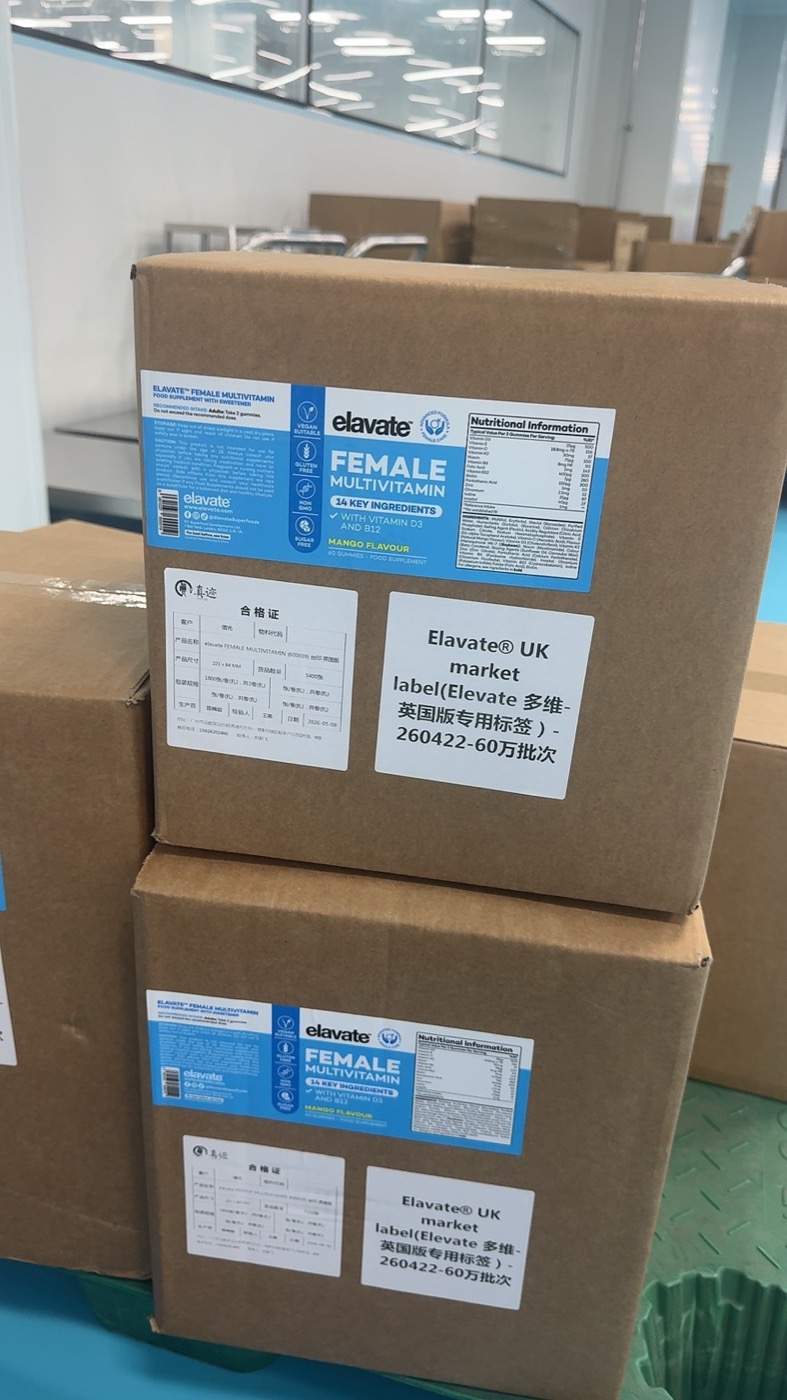
Evaluate stability in the actual intended pack. Visible caking, color change or poor dispersion can be commercially important even when an assay remains within specification. Shelf-life decisions require appropriate evidence, agreed storage conditions and responsibility for ongoing review. A real export-carton photograph establishes a packaging context, not a universal stability guarantee.
Compare quotations on the same scope
Send each supplier the same formula assumptions, quantity, serving size, net weight, pack format and target market. Separate ingredient and manufacturing cost from sampling, analytical work, stability assessment, packaging tooling and logistics. Ask which costs recur on every batch and which apply to development only.
Agree on who approves changes and what triggers a fresh evaluation. A cheaper quote that excludes the required assay, final packaging or label review is not a like-for-like saving. Likewise, MOQ depends on the blend and pack: do not apply a gummy-bottle launch minimum to a custom powder project.
Build a traceable approval file with NuCoreBio
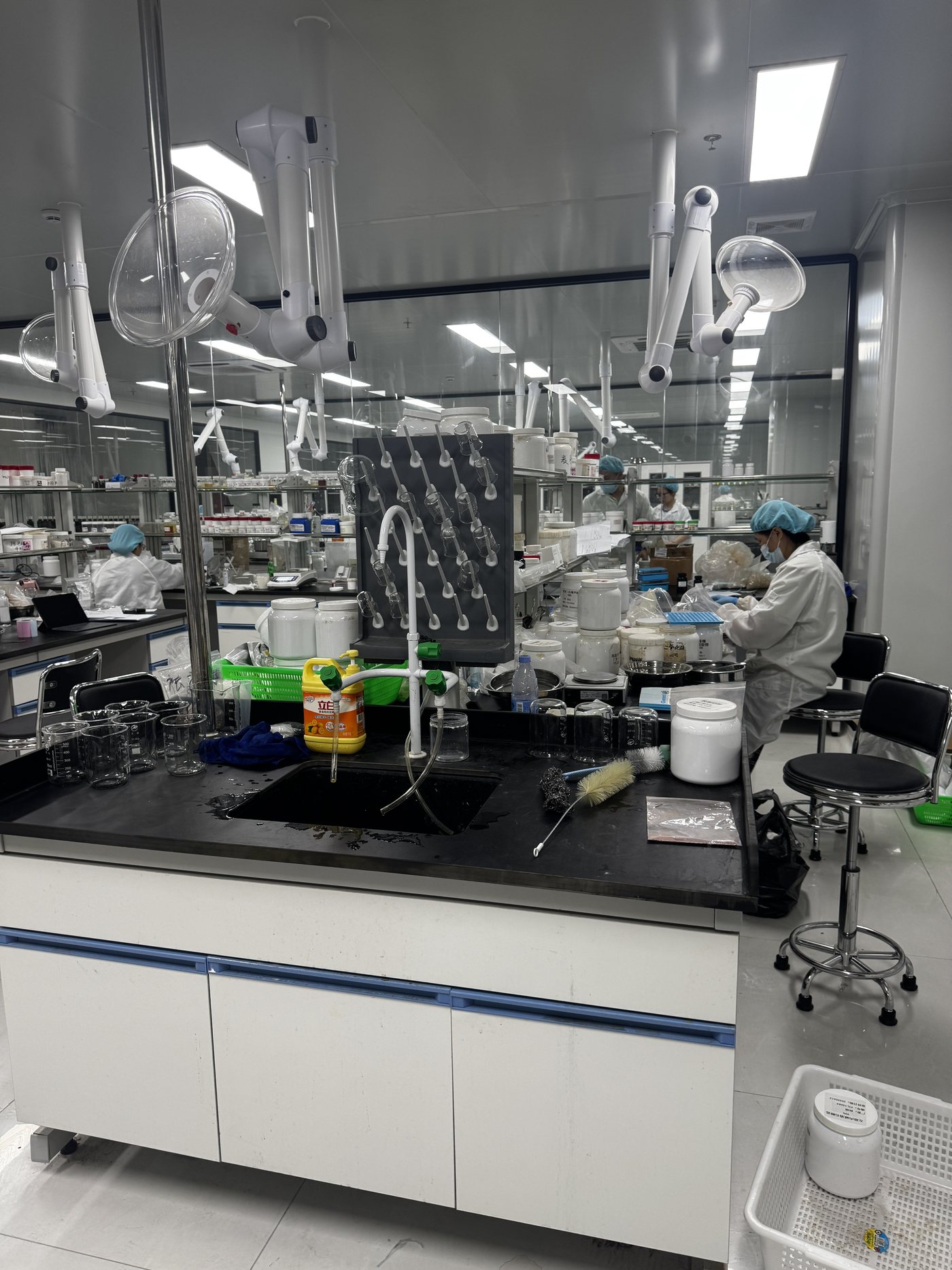
Use the powder supplement manufacturing service, quality and testing resource and R&D team introduction to begin capability review. NuCoreBio’s published laboratory and packaging photographs provide real operational context. Before purchase, request the documents relevant to your actual formula: signed specifications, sample approval, planned tests, COA scope, packaging approval and batch traceability.
For botanical-containing blends, the tart cherry extract reference can support a separate discussion of marker specification, carrier and sensory impact. Do not infer a tested formula or guaranteed performance from a product concept image.
Request sample and formulation discussion with your target country, formula or concept, serving size, pack preference, quantity and launch date. Ask the team to confirm sample availability, any shipping or testing charges and the evidence needed before commercial approval.
Technical context
The buying framework is original NuCoreBio content. Manufacturer references include GFR Pharma’s blending capability page for process-record context and Vici’s powder manufacturing page for formula and packaging feasibility. Their capabilities and performance statements are not attributed to NuCoreBio.
Buyer Questions
Can a supplier guarantee uniformity from equipment choice alone?
No. Equipment selection must be supported by formula-specific process, sampling and analytical evidence.
Should every supplier quote include the same tests?
Compare quotes against the same agreed specification and scope. Necessary tests depend on formula risk and target-market requirements.
Do the factory photographs prove my batch passed testing?
No. Photographs provide operational context. Your batch needs its own agreed release records and documentation.