










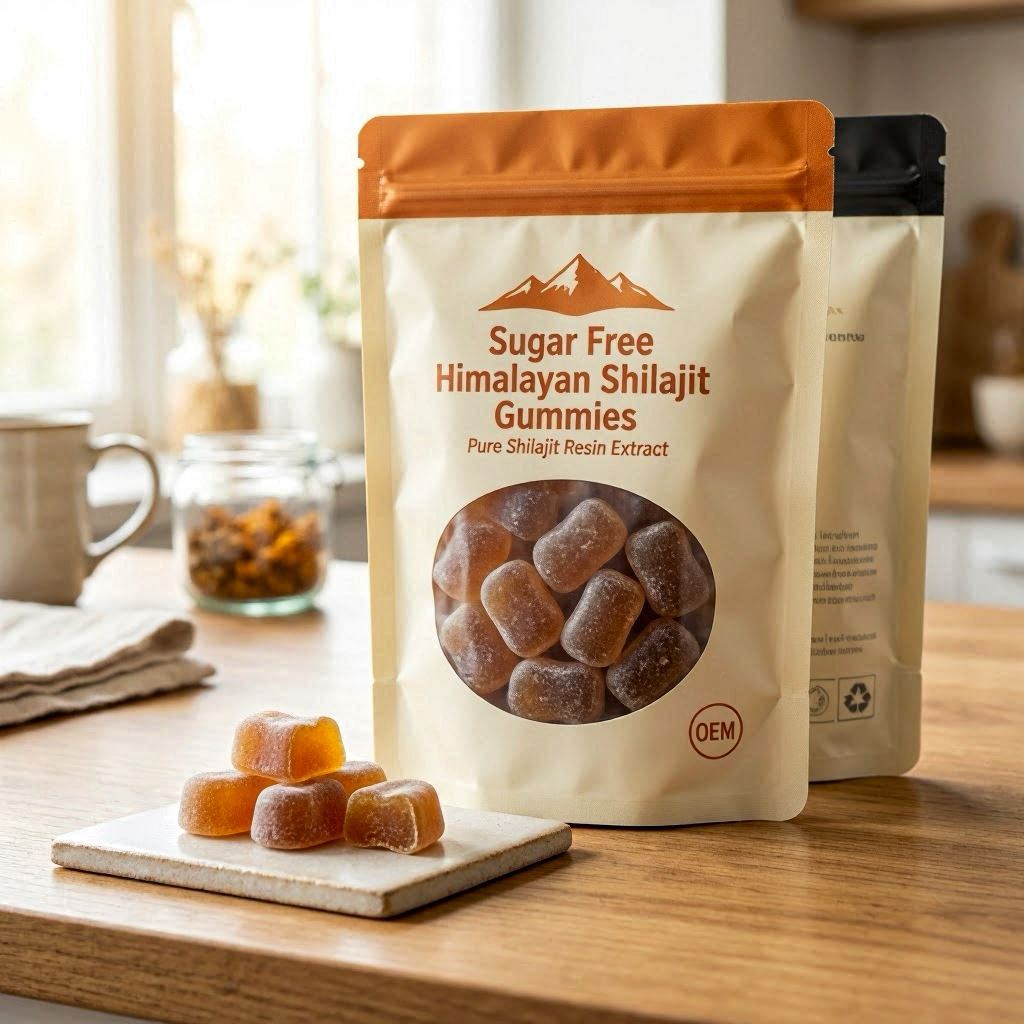
The Rising Demand for Shilajit Gummies in the Amazon FBA Ecosystem
The dietary supplement industry has witnessed a remarkable transformation over the past decade, with traditional Ayurvedic ingredients finding new life in modern delivery formats. Among these, shilajit has emerged as one of the most sought-after ingredients in the functional gummy category. For Amazon FBA sellers and private label brand owners, understanding the supply chain dynamics, formulation challenges, and market opportunities surrounding shilajit gummies is essential for building a competitive product lineup.
Shilajit, a tar-like substance rich in fulvic acid and over 84 minerals, has been used in traditional medicine for centuries. Its transition from powdered resin to convenient, great-tasting gummies represents both a formulation challenge and a significant commercial opportunity. This article explores the critical considerations for sourcing shilajit gummies from OEM/ODM suppliers, with a focus on the technical, regulatory, and commercial factors that determine product success in the Amazon marketplace.
The global shilajit market has experienced compound annual growth rates exceeding 12% since 2020, driven primarily by increased consumer awareness of adaptogenic compounds and the mainstream adoption of Ayurvedic wellness practices. Within this broader category, gummy delivery formats have captured an outsized share of new product launches, accounting for approximately 34% of all shilajit-containing supplement introductions in 2023 and 2024. For Amazon FBA sellers, this trend translates into both opportunity and heightened competition, making supplier selection and product differentiation more critical than ever.
Understanding Shilajit: Bioactive Composition and Mechanism of Action
To formulate effective shilajit gummies, suppliers and brand owners must first understand the complex biochemical profile of this ingredient. Authentic shilajit is composed primarily of fulvic acid (typically 30-60% by weight in purified extracts), humic acid, trace minerals, dibenzo-alpha-pyrones, and various polyphenols. The fulvic acid fraction is widely considered the primary bioactive component, responsible for many of the compound’s purported benefits related to energy metabolism, nutrient absorption, and cellular respiration.
The mechanism of action of shilajit is multifaceted. Fulvic acid functions as a natural chelator, binding to minerals and enhancing their bioavailability at the cellular level. This property is particularly relevant in gummy formulations, where mineral content must remain stable and bioavailable throughout the product’s shelf life. Additionally, shilajit contains dibenzo-alpha-pyrones, which have demonstrated mitochondrial support properties in preclinical studies, contributing to cellular energy production.
From a formulation perspective, the raw material grade significantly impacts the final gummy product. Shilajit resin typically undergoes purification and standardization processes to achieve consistent fulvic acid concentrations. For gummy applications, suppliers generally utilize purified shilajit extract standardized to 50% fulvic acid or higher, as this concentration provides an optimal balance between bioactive potency and flavor masking requirements. Lower-grade materials with excessive humic acid content can impart bitter, astringent notes that are difficult to mask in gummy matrices.
The dosage range for shilajit gummies typically falls between 250mg and 500mg of purified extract per serving, equivalent to approximately 125mg to 250mg of fulvic acid. This range aligns with traditional usage patterns while remaining within the self-affirmed GRAS (Generally Recognized As Safe) parameters that most contract manufacturers adhere to. It is worth noting that shilajit’s bioactivity is dose-dependent, but formulation stability constraints in gummy systems often dictate the upper limit of incorporation.
When evaluating shilajit raw material for gummy production, buyers should request HPLC testing results that verify fulvic acid content, heavy metal screening (particularly lead, mercury, arsenic, and cadmium), and microbial analysis. Premium suppliers provide full-panel Certificates of Analysis (COA) that include identity testing via macroscopic and microscopic examination, as well as solubility profiles that predict performance in aqueous gummy formulations.
Market Dynamics: Shilajit Gummies and the Amazon FBA Opportunity
The convergence of several market trends has created a particularly favorable environment for shilajit gummy products in the Amazon FBA channel. First, the broader adaptogen market has expanded dramatically, with global sales of adaptogenic supplements projected to reach $15.2 billion by 2028, representing a CAGR of approximately 8.5% from 2023 baseline figures. Within this macro-category, shilajit holds a distinctive position as one of the few traditional ingredients with both historical provenance and emerging clinical interest.
Amazon-specific data reveals compelling insights for FBA sellers. Search volume for “shilajit gummies” has increased by an estimated 180% year-over-year from 2022 to 2024, with peak search activity concentrated in the United States, Canada, the United Kingdom, and Australia. The competitive landscape remains fragmented, with no single brand commanding dominant market share, which presents an opening for well-formulated private label products backed by reliable supplier partnerships.
Consumer purchasing patterns for shilajit gummies on Amazon reveal several key preferences that should inform product development and supplier selection. First, buyers demonstrate a willingness to pay premium pricing ($25-$45 per bottle) for products that offer third-party testing transparency, appealing flavor profiles, and clean-label positioning. Second, subscription uptake rates for shilajit gummies outperform category averages, with approximately 28% of customers opting for Subscribe & Save options, indicating strong repeat purchase potential.
The Amazon FBA model introduces specific logistical considerations for shilajit gummy suppliers and brand owners. Gummy products are sensitive to temperature fluctuations and humidity—two factors that can affect product stability during Amazon’s warehousing and fulfillment cycles. Suppliers capable of providing climate-stable formulations, robust moisture barrier packaging, and appropriate shelf-life validation data provide a distinct advantage for FBA sellers seeking to minimize return rates and negative reviews related to product degradation.
Regional regulatory variations also impact market access and supplier requirements. In the United States, shilajit gummies are regulated as dietary supplements under the DSHEA framework, requiring compliance with current Good Manufacturing Practices (cGMPs) and proper labeling standards. The European market, accessible to FBA sellers through Amazon’s pan-European fulfillment network, imposes additional constraints through the Novel Food regulation, though shilajit’s historical use status provides a pathway to compliance in many EU member states.
Formulation Challenges and Manufacturing Considerations for Shilajit Gummies
Translating shilajit from traditional resin form into a shelf-stable, palatable gummy requires sophisticated formulation expertise. The primary challenge lies in the ingredient’s inherent organoleptic properties—shilajit possesses a strong earthy, mineral taste and dark pigmentation that can dominate the sensory profile of a gummy. Successful suppliers employ multi-layered flavor masking strategies that typically combine fruit concentrates (mixed berry, plum, or pomegranate work particularly well), natural sweeteners, and carefully calibrated acidulants.
The pectin versus gelatin question represents another critical formulation decision for shilajit gummies. Pectin-based gummies, while more expensive to produce, offer several advantages for this specific application. Pectin systems are more tolerant of the mineral content in shilajit without texture degradation, provide a clean-label positioning that resonates with health-conscious consumers, and avoid the melting point concerns associated with gelatin in Amazon fulfillment centers that may experience temperature excursions. However, pectin formulations require precise pH control and processing conditions that not all contract manufacturers are equipped to handle.
Stability testing is non-negotiable for shilajit gummy products. The fulvic acid content must remain consistent throughout the labeled shelf life, typically 18 to 24 months for gummy supplements. Accelerated stability studies (40°C/75% relative humidity for 3 months) provide predictive data on fulvic acid degradation, color migration, and texture changes. Reputable suppliers conduct these studies as part of their product development process and make the resulting data available to brand owners for label claim substantiation and Amazon listing compliance.
Bioavailability enhancement represents an additional formulation frontier for shilajit gummies. Some advanced suppliers offer liposomal delivery systems or phospholipid complexes that can be incorporated into gummy matrices to improve the absorption of shilajit’s bioactive compounds. While these technologies increase the cost of goods, they provide a compelling differentiation angle for premium product positioning on Amazon, where consumers increasingly research ingredient efficacy before purchasing.
The manufacturing environment itself demands scrutiny. Shilajit gummies should be produced in facilities that hold current GMP certification, with separate production lines or thorough cleaning validation protocols to prevent cross-contamination with allergens (particularly if the facility also processes tree nuts, soy, or dairy). For Amazon FBA sellers targeting health-conscious demographics, supplier capabilities around organic certification, non-GMO verification, and halal or kosher certification can significantly expand addressable market segments.
OEM/ODM Partnerships: Strategic Advantages for Amazon FBA Sellers
For Amazon FBA sellers, the choice between developing a proprietary formulation from scratch versus leveraging an ODM (Original Design Manufacturer) turnkey formula has significant implications for time-to-market, capital requirements, and competitive positioning. ODM solutions, where suppliers offer pre-developed shilajit gummy formulations that can be white-labeled or minimally customized, enable market entry in as little as 8-12 weeks from initial order to Amazon stocking. This accelerated timeline allows sellers to capitalize on trend momentum and seasonal demand spikes.
MOQ (Minimum Order Quantity) structures vary considerably among shilajit gummy suppliers and represent a key consideration for Amazon sellers managing cash flow and inventory turnover. Entry-level MOQs for private label gummy runs typically range from 1,000 to 3,000 bottles, though some suppliers offer flexible batch sizing for initial market testing. Understanding the MOQ implications of customization choices is essential—minor label changes may not affect minimums, but formula modifications, custom flavor development, or unique packaging specifications often trigger higher volume commitments.
Customization depth varies across the supplier spectrum. At the basic level, private label partnerships allow brand owners to select from pre-existing shilajit gummy formulations and apply custom labeling, bottle selection, and outer packaging. Mid-tier customization may include flavor adjustments, inclusion of complementary ingredients (suchilajit plus CoQ10, or shilajit with ashwagandha), and tailored serving size configurations. Full custom formulation, involving proprietary ingredient ratios and potentially patented delivery technologies, requires substantially higher investment and longer development timelines but provides the strongest barrier to entry for competitors.
Speed-to-market considerations extend beyond manufacturing lead times to include regulatory preparation. Experienced OEM/ODM suppliers provide comprehensive documentation packages that support Amazon listing compliance, including certified COAs, facility registration details, and formulation specifications suitable for generating supplement facts panels. Some suppliers also assist with Amazon-specific requirements such as prop 65 compliance documentation for California sales, and can provide high-resolution product photography and specification sheets that streamline the listing creation process.
The financial structure of supplier partnerships also merits careful evaluation. Beyond the per-unit cost, Amazon FBA sellers should clarify payment terms, sample policies, reformulation fees, and the cost implications of inventory replenishment at different volume tiers. Suppliers offering transparent, scalable pricing models with clear escalation paths as volume increases provide more predictable unit economics as the brand grows within the Amazon ecosystem.
Quality Assurance Protocols and Certification Standards
In the dietary supplement industry, and particularly for products sold on platforms like Amazon where transparency and customer trust directly influence conversion rates, quality assurance is not a value-added feature—it is a fundamental requirement. For shilajit gummies, the complexity of the raw material, combined with the formulation challenges of the gummy delivery system, makes rigorous quality protocols essential at every stage of production.
GMP (Good Manufacturing Practice) compliance forms the foundation of supplier evaluation. Facilities should hold current GMP certification issued by accredited third-party organizations, with audit reports available for review by potential brand partners. The GMP framework encompasses personnel training, facility design, equipment maintenance, sanitation protocols, and systematic record-keeping—all of which contribute to batch-to-batch consistency in the finished shilajit gummies.
Raw material verification represents the first critical quality gate. Premium shilajit suppliers source raw resin from verified geographic origins (primarily the Himalayan region, Altai mountains, and certain Central Asian highlands), with documentation tracing the material from harvest through purification. Identity testing should confirm the presence of characteristic biomarkers, while purity screening must demonstrate compliance with heavy metal limits established by regulatory authorities (typically <2 ppm lead, <0.1 ppm mercury, <1 ppm arsenic, and <0.5 ppm cadmium in the finished product).
In-process quality control during gummy manufacturing includes monitoring mix temperature, pH, depositing accuracy, and drying conditions. These parameters directly affect the uniformity of shilajit distribution within each gummy, the texture and mouthfeel of the finished product, and the stability of bioactive compounds during storage. Suppliers employing real-time process monitoring and statistical process control methodologies produce more consistent products and experience fewer batch failures that could delay Amazon fulfillment schedules.
Finished product testing encompasses both identity/strength verification and stability assessment. Each production batch should be accompanied by a COA listing fulvic acid content (via HPLC), microbial limits (total aerobic microbial count, yeast and mold, absence of pathogens including E. coli and Salmonella), and heavy metal residues. For Amazon FBA sellers, these COAs serve both as quality documentation and as marketing assets—many successful listings incorporate COA summaries or third-party test result highlights into their product imagery and A+ content.
Certification beyond GMP can further differentiate shilajit gummy products in a crowded Amazon marketplace. Organic certification (USDA Organic, EU Organic) appeals to the clean-label segment. Non-GMO Project verification addresses consumer concerns about genetically modified ingredients. Halal and kosher certifications expand market access to observant consumer segments. Suppliers that maintain these certifications across their facility and supply chain simplify the process of obtaining certified finished products for brand owners.
Comparative Analysis: Gummies Versus Alternative Delivery Formats
While gummies represent one of the fastest-growing delivery formats for shilajit, understanding how they compare to capsules, tablets, and powdered formats helps brand owners make informed decisions about product positioning and supplier selection. Each format presents distinct advantages and limitations that influence manufacturing complexity, consumer appeal, and competitive dynamics on Amazon.
Gummies offer undeniable advantages in consumer compliance and enjoyment. The pleasant taste and chewable format remove the friction associated with swallowing pills, which is particularly relevant for older demographics and consumers with digestive sensitivities. On Amazon, products in gummy format benefit from higher review velocities and more favorable sentiment analysis in customer reviews, as the consumption experience itself is more positive. However, gummies face formulation constraints around ingredient loading—the percentage of active ingredient that can be incorporated while maintaining acceptable texture and taste is lower than in capsule formats, potentially requiring multiple gummies per serving to achieve target dosages.
Capsules (both gelatin and vegetable cellulose) remain the dominant format for shilajit supplements, primarily due to their manufacturing simplicity and higher ingredient payload capacity. A single size 00 capsule can accommodate 400-600mg of shilajit extract, allowing for straightforward dosing. Capsules also provide superior protection from oxidation and moisture compared to gummies, resulting in longer shelf lives and reduced sensitivity to Amazon warehouse conditions. For suppliers, capsule manufacturing requires less specialized equipment than gummy production, which can translate to more competitive pricing and lower MOQs.
Powdered shilajit products, typically sold as loose powder or in stick packs, offer the highest flexibility for consumers who prefer to mix the ingredient into beverages. This format also allows for the highest doses per serving and the cleanest label (often containing only purified shilajit resin with no excipients). However, powdered formats face significant taste and solubility challenges that limit broad consumer appeal. On Amazon, powdered shilajit products tend to receive more polarized reviews, with efficacy appreciated by knowledgeable users but taste and mixing characteristics frequently criticized.
From a supplier capability perspective, the decision to launch shilajit gummies versus alternative formats should align with manufacturing strengths and target market positioning. Suppliers with robust gummy production capabilities, in-house flavor chemists, and established stability testing protocols are better positioned to deliver competitive gummy products. Conversely, suppliers specializing in capsule or powder formats may offer advantages in cost structure, minimum order flexibility, or speed-to-market for those delivery systems.
Frequently Asked Questions
What is the typical lead time for a private label shilajit gummy order?
Lead times vary based on customization level and supplier capacity, but typical timelines range from 10 to 16 weeks for a first order with custom labeling. This includes formulation finalization (2-3 weeks), label design approval (1-2 weeks), raw material procurement (2-4 weeks), manufacturing and quality control testing (3-4 weeks), and shipping and Amazon inbound processing (2-3 weeks). Established suppliers with raw material inventory and streamlined approval processes can sometimes reduce this timeline to 8-10 weeks. Reorder lead times are generally shorter, typically 8-12 weeks, assuming no formula changes.
What MOQs should I expect when sourcing shilajit gummies from an OEM supplier?
Minimum order quantities for private label shilajit gummies commonly start at 1,000 to 5,000 bottles per SKU, with bottle sizes typically ranging from 30 to 60 gummies. Suppliers offering turnkey formulations with standard flavor profiles and minimal customization tend to have lower MOQs, while fully custom formulations with unique ingredient blends or specialized packaging often require commitments of 10,000 units or more. Some suppliers offer batch splitting options that allow brand owners to spread large MOQs across multiple flavor variants or SKUs to reduce per-SKU inventory risk.
How do I verify that a supplier’s shilajit gummies contain authentic, purified shilajit?
Authenticity verification begins with supplier transparency. Request HPLC test results that quantify fulvic acid content, and confirm that the fulvic acid percentage aligns with the labeled shilajit extract potency. Reputable suppliers provide COAs from ISO-accredited third-party laboratories, not in-house testing only. Additionally, request information about raw material sourcing—authentic shilajit is harvested from specific geographic regions, and suppliers should be able to provide harvest region documentation. Some advanced suppliers also offer isotope ratio analysis or fingerprinting techniques that can detect adulteration with inert fillers or lower-grade humic substances.
What are the main challenges in formulating shilajit into gummy format?
The primary challenges are taste masking, color management, and stability. Shilajit has a strong, earthy taste and dark brown-black pigmentation that can dominate the gummy’s sensory profile. Formulators must balance palatability with clean-label constraints, avoiding artificial flavors or excessive sweetener systems. Additionally, the mineral content in shilajit can interact with gelling agents, potentially affecting texture over the product’s shelf life. Stability testing is essential to confirm that fulvic acid content remains consistent and that the gummy does not experience syneresis (moisture migration) or texture hardening during storage.
Do shilajit gummies require refrigeration or special storage conditions?
Properly formulated shilajit gummies with adequate moisture barrier packaging do not require refrigeration and are stable at room temperature. However, they should be protected from excessive heat (above 25-30°C / 77-86°F) and high humidity (above 60% RH) to prevent texture changes, color migration, or syneresis. For Amazon FBA sellers, this means considering the climate of Amazon fulfillment centers, particularly during summer months. Suppliers can provide stability data and may recommend desiccant packets or upgraded packaging (such as blister packs or foil pouches) for enhanced protection in challenging storage environments.
What certifications should I look for in a shilajit gummy supplier?
At minimum, the manufacturing facility should hold current GMP certification from an accredited third-party auditor (such as NSF, SGS, or TUV). Additional valuable certifications include USDA Organic or equivalent (if positioning a clean-label product), non-GMO verification, and facility registration with the FDA (for U.S. market access). For broader market reach, halal and kosher certifications are advantageous. Suppliers that maintain ISO 17025-accredited in-house laboratories or partner with accredited third-party testing facilities provide higher confidence in batch-to-batch quality and regulatory compliance documentation.
How does the cost structure of shilajit gummies compare to capsules or powder formats?
Gummies typically carry a higher cost of goods compared to capsules or powders, driven by more complex manufacturing processes, flavor system costs, and packaging requirements. On a per-serving basis, shilajit gummies may cost 20-40% more to produce than equivalent-dose capsules. However, the retail price premium that consumers are willing to pay for gummies—often 30-60% higher than capsule equivalents—can more than offset the increased production cost, resulting in favorable gross margin profiles for brand owners who execute the product positioning effectively.
What labeling and compliance considerations are specific to shilajit gummies for Amazon?
Shilajit gummies sold as dietary supplements on Amazon must comply with FDA labeling requirements, including a properly formatted Supplement Facts panel, ingredient statement, allergen declarations, and contact information for the responsible entity. Amazon’s policy requires that dietary supplements be labeled with the name and address of the manufacturer, packer, or distributor, and that the product is not misbranded under applicable regulations. Additionally, any performance or benefit claims on the packaging or listing must be substantiated and avoid drug-like language. Suppliers experienced with Amazon’s compliance requirements can provide guidance on claim language and assist with documentation needed for category approval.
Conclusion
The intersection of ancient Ayurvedic ingredients and modern delivery formats represents one of the most compelling growth areas in the dietary supplement industry. For Amazon FBA sellers and private label brand owners, shilajit gummies offer a differentiated product opportunity backed by growing consumer demand, favorable margin potential, and a still-fragmented competitive landscape. Success in this category, however, depends heavily on supplier selection, formulation quality, and rigorous attention to testing and compliance standards.
Partnering with an OEM/ODM supplier that combines GMP-certified manufacturing, sophisticated flavor masking capabilities, and transparent quality documentation provides the foundation for a competitive product. As the market matures, differentiation will increasingly come from formulation innovation—whether through enhanced bioavailability technologies, complementary ingredient stacks, or superior stability performance—rather than price competition alone. For brand owners willing to invest in product quality and supplier relationships, shilajit gummies represent a compelling addition to a diversified Amazon FBA supplement portfolio.
Disclaimer: These statements have not been evaluated by the Food and Drug Administration. This product is not intended to diagnose, treat, cure, or prevent any disease. The information provided in this article is for educational and informational purposes only and does not constitute medical advice. Always consult with a qualified healthcare professional before starting any supplement regimen.