










Amazon FBA Compliant Himalayan Shilajit Gummies Manufacturer: A Complete Guide for Supplement Brand Owners
Introduction
The global demand for adaptogenic supplements has reached unprecedented levels, with consumers increasingly seeking natural products that support energy, cognitive function, and cellular health. Within this expanding category, Himalayan shilajit has emerged as one of the most sought-after ingredients, and the convenience of gummy delivery formats has captured a significant share of the modern supplement market. For brand owners planning to launch shilajit gummies through Amazon FBA, understanding the manufacturing landscape is the single most important step in building a compliant, competitive, and high-quality product.
Sourcing from a qualified Amazon FBA compliant Himalayan shilajit gummies manufacturer presents both remarkable opportunity and genuine complexity. The intersection of a specialized raw material, a strict regulatory environment, and the operational demands of Amazon’s fulfillment network creates requirements that cannot be met by a standard supplement manufacturer. From sourcing authentic Himalayan shilajit resin with verified fulvic acid content to ensuring every production batch meets Current Good Manufacturing Practice (cGMP) standards, the decisions made at the manufacturing stage directly determine whether a product succeeds or fails in a crowded marketplace.
This guide covers what supplement brand owners need to know before approaching manufacturers, including product science, market dynamics, manufacturing requirements, quality assurance protocols, and the specific operational considerations that Amazon FBA demands. Whether launching a new brand or expanding an existing supplement line, the following sections provide a comprehensive framework for making informed decisions about shilajit gummy production.
The Science Behind Himalayan Shilajit in Gummy Format
Understanding Shilajit’s Bioactive Composition
Shilajit is a sticky, tar-like substance that seeps from rock formations in high-altitude mountain ranges, most notably the Himalayas, though similar deposits exist across Central and South Asia. Its formation is a geological process spanning centuries, as organic plant matter becomes compressed and decomposed within rock crevices at elevations typically exceeding 3,000 meters. The resulting substance is rich in humic substances, fulvic acids, dibenzo-alpha-pyrone chromoproteins, and over 84 trace minerals including iron, zinc, magnesium, and selenium.
The primary bioactive compounds that drive shilajit’s popularity are fulvic acid and dibenzo-alpha-pyrones. Fulvic acid, typically present at concentrations ranging from 60 to 80 percent of shilajit’s total composition, functions as a low-molecular-weight electrolyte that facilitates cellular nutrient transport. Research published in journals examining adaptogenic compounds has indicated that fulvic acid may enhance mitochondrial ATP production, support the body’s natural detoxification pathways, and improve the bioavailability of co-administered nutrients. Dibenzo-alpha-pyrone chromoproteins contribute to shilajit’s antioxidant properties, helping to neutralize free radicals that accumulate during physical and cognitive stress.
For gummy formulations, the挑战 lies in preserving these sensitive bioactive compounds through the manufacturing process. Shilajit resin is heat-sensitive, and the gummy production process—typically involving temperatures between 70 and 85 degrees Celsius during cooking and molding phases—can degrade fulvic acid content if not carefully controlled. A skilled manufacturer will use low-temperature processing techniques, encapsulation methods, or phased ingredient addition to maintain potency from raw material to finished product.
Why Gummies Represent a Strategic Delivery Format
Gummy supplements have evolved from a children’s vitamin format into a serious adult delivery system, and the data supports this shift. The global gummy supplement market was valued at approximately $8.5 billion in 2023 and is projected to grow at a compound annual growth rate exceeding 6 percent through 2030, according to industry market intelligence reports. Among the key drivers is consumer preference for improved swallowability and sensory experience compared to traditional capsules or tablets.
For shilajit specifically, the gummy format addresses one of the ingredient’s most significant market barriers: its distinctive earthy taste and smell. While shilajit resin in its raw form has a strong, somewhat bitter mineral flavor, modern manufacturing techniques enable effective taste masking through flavor systems that complement rather than overpower the product’s natural character. Options typically include berry blends, citrus formulations, and tropical fruit combinations, with sucrose-free and sugar-free variants also available to meet diverse consumer preferences.
The bioavailability of shilajit in gummy format has been a subject of active discussion within the supplement science community. Some manufacturers claim that the gelatin or pectin matrix in gummies may slow the release of active compounds compared to liquid formats, potentially affecting absorption kinetics. However, the convenience factor and consistent dosing that gummies provide have made them the preferred format for a growing segment of consumers who otherwise struggle with capsule compliance.
Market Trends and the B2B Opportunity
Growth Drivers in the Adaptogen and Shilajit Category
The supplement market’s trajectory points strongly toward functional ingredients with demonstrated health benefits, and shilajit fits squarely within this trend. Market research across multiple regions indicates that the global shilajit market is expanding at a rate of approximately 7 to 9 percent annually, driven by increasing consumer awareness of mitochondrial health, anti-aging protocols, and adaptogenic supplementation. The North American and European markets have shown particularly strong growth in shilajit product launches, with gummy formats accounting for an increasing share of new SKUs.
Several converging factors fuel this demand. First, the wellness community’s focus on cellular energy—often framed around concepts like mitochondrial dysfunction and cellular senescence—has elevated shilajit from an Ayurvedic curiosity to a scientifically backed ingredient in mainstream supplement conversations. Second, influencer and practitioner endorsement across platforms has driven substantial consumer awareness, creating pull demand that retailers and e-commerce sellers are racing to meet. Third, premium pricing in the shilajit category provides healthy margins that make it attractive for brand differentiation and private-label expansion.
For brand owners, this market environment creates a compelling case for entry. The combination of strong consumer demand, relatively low category saturation compared to ubiquitous ingredients like magnesium or zinc, and the premium positioning that gummy formats enable positions Himalayan shilajit gummies as a high-potential product category. However, capturing this opportunity requires working with a manufacturer that understands both the ingredient’s complexity and the marketplace’s stringent requirements.
Amazon FBA Dynamics and Category Considerations
Selling supplements through Amazon FBA introduces specific operational and compliance requirements that must be factored into product design from the outset. Amazon maintains strict policies for supplement products, including requirements for third-party testing, specific labeling standards, and restrictions on certain claims language. Products that fail to meet these standards face suppression, removal, or account-level penalties.
The Amazon FBA compliance framework for supplements typically requires a Certificate of Analysis from an ISO-accredited laboratory, compliance with FDA labeling requirements, and adherence to the specific category guidelines published in Amazon’s seller central documentation. For shilajit products, this includes verifying that heavy metal content remains within acceptable thresholds, that the product contains the stated quantity of fulvic acid, and that no prohibited ingredients appear in the formulation.
A qualified Amazon FBA compliant Himalayan shilajit gummies manufacturer will be familiar with these requirements and will build compliance into the production process rather than treating it as an afterthought. This includes maintaining batch-level traceability, conducting pre-shipment testing, and providing documentation packages that sellers can submit directly to Amazon during the onboarding process.
Manufacturing Considerations for Shilajit Gummies
Formulation Development and Customization Options
Developing a shilajit gummy formulation requires balancing multiple technical factors simultaneously. The base gummy matrix—typically composed of gelatin, glucose syrup, sugar, citric acid, and flavoring—must be formulated to achieve the desired texture, shelf stability, and sensory profile while accommodating shilajit’s distinctive properties. A shilajit gummy should present a slightly firm but chewable texture, with sufficient structural integrity to withstand Amazon FBA’s warehouse handling and shipping processes without melting, sticking, or deforming.
Dosage customization is another critical dimension. Shilajit extract dosages in supplement products typically range from 300 to 500 milligrams per serving, expressed in terms of fulvic acid content rather than raw resin weight. A reputable manufacturer will help brand owners determine the appropriate potency based on target market positioning, desired retail price point, and competitive landscape analysis. Higher-potency formulations command premium pricing but require more sophisticated manufacturing processes to ensure consistent distribution of the active ingredient throughout each gummy.
Adjunct ingredients represent an additional customization opportunity. Many brand owners choose to formulate shilajit gummies with complementary adaptogens such as ashwagandha, Rhodiola rosea, or cordyceps mushroom extract to create synergistic products that address multiple aspects of energy and stress support. A capable manufacturer will provide guidance on ingredient compatibility, interaction considerations, and formulation stability to ensure that the final product maintains potency across its intended shelf life, which for gummy supplements typically ranges from 18 to 24 months when properly packaged.
Bioavailability Enhancement Techniques
Raw shilajit resin, while potent, presents bioavailability challenges that sophisticated manufacturers address through various enhancement techniques. Fulvic acid’s molecular structure makes it relatively bioavailable in its native form, but the gummy matrix can affect absorption kinetics. Manufacturers experienced with shilajit formulations often employ microencapsulation technologies that coat shilajit particles in a lipid or protein matrix, protecting the active compounds during processing and facilitating more controlled release in the digestive system.
Another approach involves particle size reduction of the shilajit extract powder, increasing surface area and potentially improving dissolution and absorption rates. Some manufacturers offer shilajit in its purified fulvic acid form rather than whole-resin form, which can improve consistency and reduce variability between batches. The choice between whole-resin and purified-fulvic approaches depends on the brand’s positioning, target dosage, and pricing strategy.
Brand owners should discuss bioavailability enhancement options with potential manufacturers during the formulation development phase, requesting data on comparative absorption studies or stability testing results that demonstrate the efficacy of any enhancement technique being employed.
OEM and ODM Benefits for Supplement Brand Owners
Private Label Manufacturing and Speed to Market
The private label model has become the dominant pathway for supplement brand entry, particularly for Amazon FBA sellers seeking to capitalize on established product categories without the substantial investment required for in-house manufacturing capabilities. Working with an OEM (Original Equipment Manufacturer) or ODM (Original Design Manufacturer) enables brand owners to launch shilajit gummy products with significantly reduced capital expenditure, faster timelines, and access to existing formulation expertise.
A reputable shilajit gummy manufacturer offering private label services will maintain a portfolio of pre-developed base formulations that can be customized in terms of flavor, color, potency, and packaging configuration. This approach typically reduces development timelines from 6 to 12 months for a fully custom formulation down to 3 to 4 months for a private label launch. For Amazon sellers operating in competitive categories where speed to market directly impacts revenue potential, this acceleration is strategically significant.
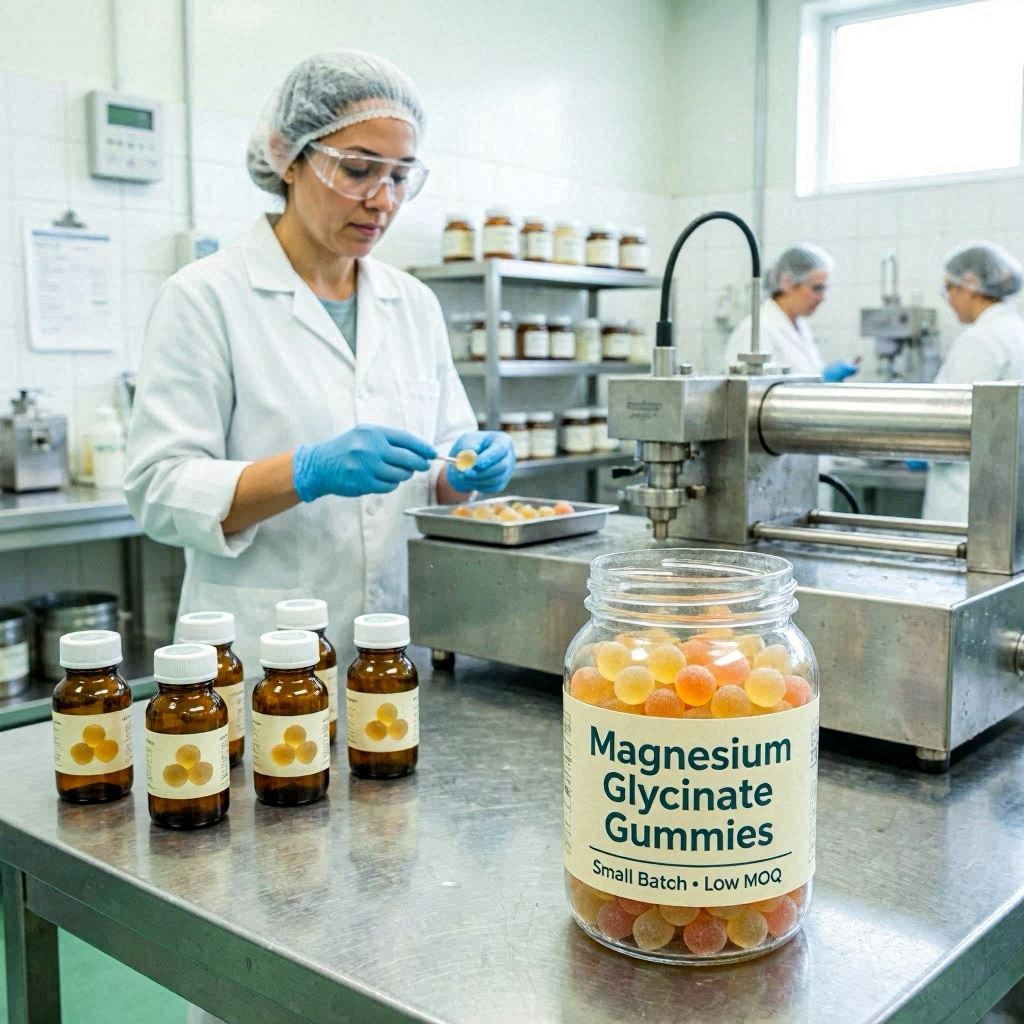
Minimum order quantity considerations vary by manufacturer, but many shilajit gummy producers offer MOQ flexibility in the range of 500 to 2,000 units per SKU, making private label launches accessible to smaller brand owners and first-time supplement entrepreneurs. Some manufacturers further reduce entry barriers by offering packaging and labeling services that meet Amazon’s FBA labeling requirements, eliminating the need for separate vendor management during the launch phase.
Custom Formulation Services for Distinctive Products
For brand owners seeking differentiation beyond private label, custom formulation through an ODM partner provides full creative control over the product’s composition, sensory profile, and competitive positioning. Custom formulation typically involves a collaborative development process in which the manufacturer contributes technical expertise on ingredient compatibility, regulatory compliance, and manufacturing feasibility while the brand owner defines the product’s strategic direction.
The custom formulation process generally follows a structured workflow: initial concept discussion and feasibility assessment, laboratory development and bench-top sampling, pilot batch production and stability testing, scale-up to commercial production, and final quality verification. A thorough custom formulation engagement will include stability studies conducted under accelerated aging conditions to predict shelf-life performance, as well as third-party testing to verify active compound content and heavy metal screening.
Brand owners should evaluate potential manufacturing partners based on their technical capabilities, quality management systems, and willingness to provide transparent documentation throughout the formulation process. The most reliable partners treat brand owners as collaborative partners rather than transactional customers, offering technical consultation and proactively identifying potential issues before they affect the final product.
Quality Assurance and Compliance Standards
GMP Certification and Regulatory Requirements
Quality assurance in the shilajit gummy manufacturing space must address both general supplement production standards and the specific challenges posed by a natural ingredient sourced from a high-mineral environment. The foundational requirement is compliance with Current Good Manufacturing Practice regulations as defined by the FDA under 21 CFR Part 111, which establishes minimum standards for the identity, purity, strength, and composition of dietary supplements.
A manufacturer that operates under cGMP-compliant conditions will maintain facilities with controlled environments, documented production procedures, and rigorous personnel training programs. For shilajit specifically, cGMP compliance means that incoming raw material inspection, in-process quality controls, and finished product testing are all conducted according to written procedures with complete traceability records.
Beyond cGMP, manufacturers may hold additional certifications that strengthen quality assurance and market positioning. These include NSF International certification, which involves independent testing and facility audits, as well as organic certification for products formulated without synthetic pesticides or fertilizers. For brands targeting Muslim consumers, halal certification provides market access, while kosher certification serves the broader kosher-observant demographic.
Third-Party Testing and Certificate of Analysis
Third-party laboratory testing is the cornerstone of quality verification for Himalayan shilajit products, and brand owners must insist on comprehensive testing protocols from their manufacturing partners. The most critical tests include heavy metal screening—particularly for lead, arsenic, cadmium, and mercury, given the natural mineral content of shilajit—and potency verification to confirm that the finished product contains the stated quantity of fulvic acid or shilajit extract.
A reliable manufacturer will provide a Certificate of Analysis for every production batch, issued by an independent ISO/IEC 17025-accredited laboratory. The COA should include test results for identity verification, potency, microbial limits, heavy metals, residual solvents (if applicable), and moisture content. For Amazon FBA compliance, sellers should retain COA documentation for each batch and make it available to Amazon upon request or during any compliance review.
Beyond basic safety testing, progressive manufacturers invest in advanced analytical methods such as High-Performance Liquid Chromatography (HPLC) for compound quantification and inductively coupled plasma mass spectrometry (ICP-MS) for multi-element mineral analysis. These techniques provide the granularity needed to verify shilajit’s complex composition and to confirm that the specific bioactive compounds responsible for the ingredient’s perceived benefits are present at stated levels.
Shilajit Delivery Format Comparison
Gummies Versus Capsules
The choice between gummy and capsule delivery formats involves trade-offs that brand owners must evaluate based on their target market, pricing strategy, and product positioning. Gummies offer superior consumer appeal, particularly among younger demographics and individuals who experience difficulty swallowing pills. The sensory experience of chewing a flavored gummy creates a more engaging supplementation ritual compared to swallowing a capsule with water.
However, capsules provide certain technical advantages that may be relevant for shilajit products specifically. Capsule manufacturing involves lower processing temperatures, which better preserves heat-sensitive compounds like fulvic acid and dibenzo-alpha-pyrones. Capsules also offer simpler formulations without the need for taste-masking systems, reducing the number of excipients required and potentially supporting cleaner label positioning. For products positioned at very high potency levels, capsules may also provide more precise dosage control.
From a commercial perspective, gummies command a retail price premium over equivalent capsule products in most markets, reflecting both the manufacturing complexity and the consumer preference for the format. For brands targeting the premium wellness segment, gummies are typically the preferred format, while brands focused on clinical or therapeutic positioning may find capsules more appropriate.
Powder and Liquid Alternatives
While gummies represent the fastest-growing delivery format for shilajit, powder and liquid alternatives remain relevant in specific market segments. Shilajit powder products—typically offered as a resinated substance meant to be dissolved in water or another beverage—appeal to traditional users and practitioners of Ayurvedic medicine who value the whole-resin form and its associated ritual. These products typically carry lower retail price points and may be sourced by consumers who use shilajit at higher doses for specific therapeutic purposes.
For brand owners, the powder and gummy formats serve different market segments and can coexist within a product portfolio. A brand might launch a gummy SKU targeting the convenience-driven mass market through Amazon FBA while simultaneously offering a premium resin powder SKU through its own e-commerce channel, catering to committed shilajit users who prefer traditional formats.
Frequently Asked Questions
What makes a Himalayan shilajit gummy manufacturer Amazon FBA compliant?
Amazon FBA compliance for supplement products requires manufacturers to operate within a framework of regulatory, operational, and documentation standards that exceed basic cGMP requirements. An Amazon FBA compliant manufacturer will maintain facilities that pass third-party Good Manufacturing Practice audits, provide batch-specific Certificates of Analysis from ISO-accredited laboratories, and produce products that meet Amazon’s labeling and packaging requirements for the supplements category. This includes compliance with FDA labeling standards, proper allergen declarations, and adherence to any Amazon-specific requirements for supplement products stored in FBA warehouses. Brand owners should request documentation of compliance audits and testing protocols during the vendor evaluation process.
What is the typical minimum order quantity for private label shilajit gummies?
Minimum order quantities for private label shilajit gummy production vary significantly across manufacturers and depend on factors including packaging configuration,瓶 size, and whether standard or custom formulations are selected. Most manufacturers offering Amazon FBA compliant production establish MOQs in the range of 500 to 2,000 units per SKU, though some may accommodate smaller orders at premium per-unit pricing. Brand owners should confirm that the MOQ aligns with their inventory forecasting, launch budget, and storage capacity planning before committing to a manufacturing agreement.
How is the authenticity of Himalayan shilajit verified in finished products?
Authenticity verification for Himalayan shilajit involves a combination of sourcing protocols and analytical testing. Reputable manufacturers source shilajit from certified suppliers with established supply chains originating from Himalayan regions, backed by Certificates of Origin documentation. Analytical verification typically employs multiple techniques including HPLC profiling to identify the characteristic fingerprint of Himalayan shilajit, mineral composition analysis to detect the unique trace element signature associated with high-altitude deposits, and fulvic acid content quantification to confirm the presence and concentration of the primary bioactive compound.
What certifications should I look for when selecting a manufacturer?
Key certifications for shilajit gummy manufacturing include FDA-registered facility status, cGMP compliance verified through third-party audits, ISO/IEC 17025 laboratory accreditation for testing services, and certifications relevant to specific market segments such as organic, halal, or kosher. For Amazon FBA specifically, a manufacturer’s ability to provide COA documentation and compliance support documentation is as important as any particular certification badge.
What shelf life can I expect from shilajit gummies?
Properly formulated and packaged shilajit gummies typically carry a shelf life of 18 to 24 months when stored under recommended conditions—generally cool, dry environments away from direct sunlight. The actual shelf life depends on the specific formulation, packaging barrier properties, and whether preservatives or natural antioxidant systems are incorporated. Accelerated stability testing conducted during the product development phase provides predictive data on shelf life, and a reputable manufacturer will conduct real-time stability monitoring as part of ongoing quality assurance.
Can shilajit gummies be combined with other adaptogenic ingredients?
Yes, shilajit gummies are frequently formulated with complementary adaptogens and nootropic ingredients. Common combinations include ashwagandha for stress support, Rhodiola rosea for energy and endurance, cordyceps mushroom extract for athletic performance, and various B-vitamin complexes for metabolic support. When combining ingredients, it is important to work with a manufacturer who can assess ingredient compatibility, verify that the combined formulation remains stable over the product’s shelf life, and confirm that the final product complies with regulatory requirements for combination supplements.
What testing is required for heavy metals in shilajit products?
Heavy metal testing is among the most critical quality assurance requirements for any shilajit supplement product, given the mineral-rich nature of the raw material and its geological origin. Testing protocols should screen for lead, arsenic, cadmium, and mercury using ICP-MS or equivalent analytical methods. Regulatory thresholds vary by market, with the FDA establishing specific potency limits for lead in dietary supplements. A comprehensive heavy metal testing program will include testing of incoming raw material, in-process monitoring at appropriate stages, and finished product verification to ensure that all batches meet acceptable safety limits.
How does the manufacturing process affect fulvic acid content in gummies?
The manufacturing process can significantly impact fulvic acid content in shilajit gummies if temperature and processing conditions are not carefully controlled. Shilajit’s bioactive compounds, particularly fulvic acid, are sensitive to heat and prolonged exposure to processing temperatures. Skilled manufacturers mitigate this through low-temperature cooking procedures, phased ingredient addition where shilajit is introduced after the hottest processing stage, or encapsulation techniques that protect the active compounds during manufacturing. Brand owners should request potency testing data comparing the fulvic acid content of the raw shilajit material against the finished gummy product to quantify any losses during processing.
Conclusion
Launching a competitive Himalayan shilajit gummy product through Amazon FBA requires navigating a complex intersection of ingredient sourcing, formulation science, manufacturing capability, regulatory compliance, and marketplace requirements. Success depends not on any single factor but on the quality of decisions made across every dimension of the product development process.
The foundation of a strong shilajit gummy product is authentic, laboratory-verified Himalayan shilajit with documented fulvic acid content and a clean heavy metal profile. From there, formulation expertise transforms raw material into a consumer-ready gummy that delivers consistent potency, stable shelf life, and an appealing sensory experience. Quality assurance systems built on cGMP compliance, third-party testing, and transparent documentation create the compliance infrastructure that Amazon’s marketplace demands.
For brand owners, the choice of manufacturing partner is the single most consequential decision in the product development process. A partner who understands both the science of shilajit and the operational requirements of Amazon FBA provides a strategic advantage that goes far beyond mere production capacity. The right manufacturer contributes formulation expertise, quality assurance support, and regulatory guidance that compound over time as brands scale their product lines and expand into new market segments.
The shilajit category is growing, consumers are increasingly educated about the ingredient’s benefits, and gummy formats continue to capture market share across the supplement industry. Brand owners who approach shilajit gummy manufacturing with the same rigor they apply to their brand strategy and marketing execution will be best positioned to capture the opportunity that this dynamic category presents.
Disclaimer: These statements have not been evaluated by the Food and Drug Administration. This product is not intended to diagnose, treat, cure, or prevent any disease. The information provided in this article is for educational and informational purposes only and does not constitute medical advice. Always consult with a qualified healthcare professional before starting any supplement regimen.