










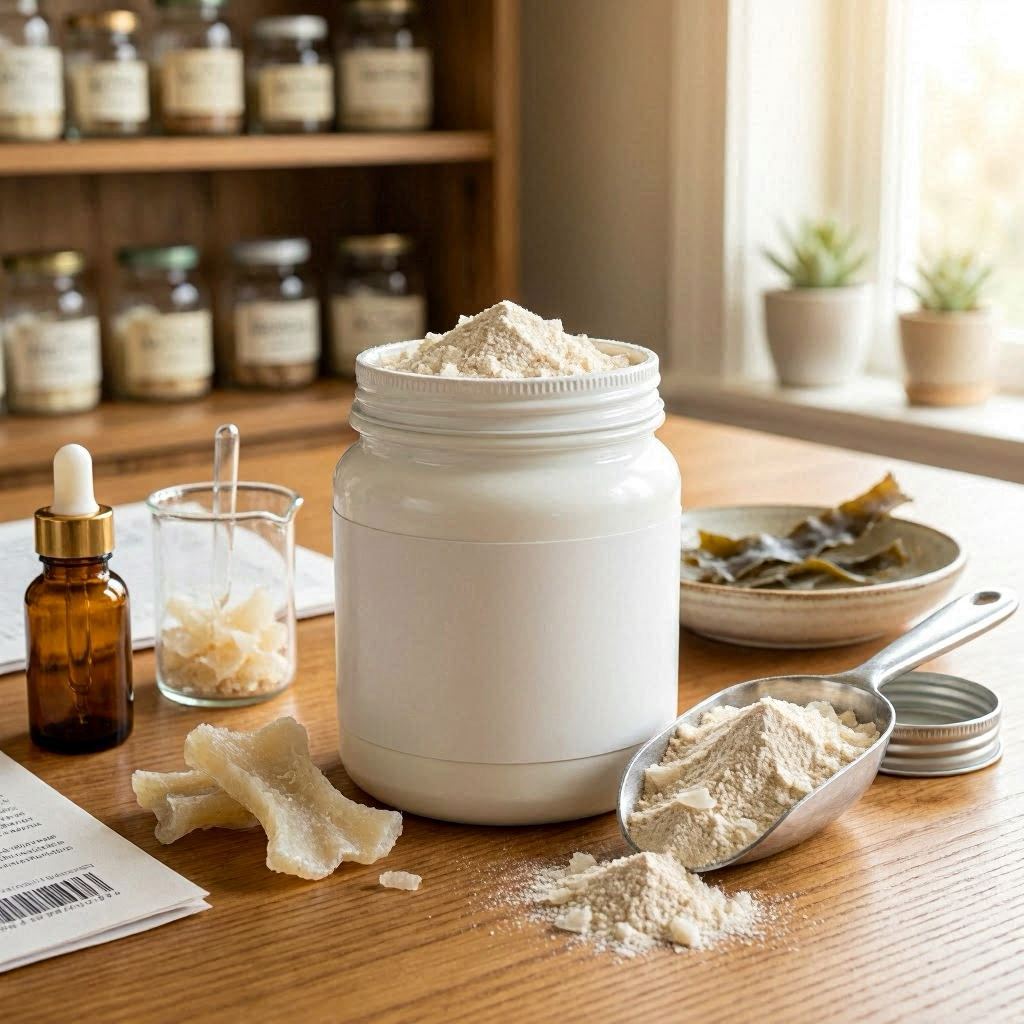
The Rising Demand for Alpha GPC Powder in the Global Supplement Industry
The dietary supplement industry has witnessed a significant shift toward cognitively-focused ingredients over the past decade. Among these, Alpha Glycerophosphocholine (Alpha GPC) has emerged as one of the most scientifically validated and commercially viable compounds for brain health formulations. For B2B buyers, contract manufacturers, and brand owners seeking reliable alpha gpc powder wholesale supplier partnerships, understanding the complexities of this ingredient has become essential for making informed procurement decisions.
Alpha GPC stands apart from other choline sources due to its superior bioavailability and ability to cross the blood-brain barrier efficiently. These pharmacological advantages have driven its adoption across multiple product categories, from sports nutrition to healthy aging formulations. As consumer awareness of nootropic ingredients continues to expand, the demand for high-quality Alpha GPC powder has created both opportunities and challenges for brands looking to enter or expand within this market segment.
This article examines the critical factors that B2B buyers must evaluate when sourcing Alpha GPC powder at wholesale volumes. From manufacturing specifications and quality assurance protocols to formulation considerations and regulatory compliance, the following analysis provides a comprehensive framework for navigating the complexities of the Alpha GPC supply chain.
Understanding Alpha GPC: Biochemical Mechanisms and Therapeutic Applications
Alpha GPC, chemically identified as L-alpha-glycerylphosphorylcholine, functions as a natural choline compound found in the brain and various food sources. Its molecular structure consists of a glycerol backbone linked to phosphorylcholine, which enables unique pharmacokinetic properties that distinguish it from alternative choline donors such as choline bitartrate or CDP-choline.
The primary mechanism of action involves Alpha GPC’s role as a precursor to acetylcholine, a neurotransmitter critical for cognitive function, memory consolidation, and muscular contraction. Upon ingestion, Alpha GPC is hydrolyzed by phospholipase D to release choline, which subsequently enters the brain via the blood-brain barrier through specialized transport mechanisms. Clinical research indicates that oral administration of Alpha GPC (300-1200 mg daily) can increase plasma choline levels by approximately 50-100% within two to four hours post-consumption.
Beyond its cholinergic activity, Alpha GPC demonstrates additional physiological benefits that enhance its commercial appeal. The compound supports the synthesis of phosphatidylcholine, a fundamental component of cellular membranes. This membrane-stabilizing effect contributes to neuroprotection and may slow age-related cognitive decline. Furthermore, Alpha GPC influences growth hormone secretion, with studies documenting a 44% increase in growth hormone levels following acute supplementation in older adults—a finding that has driven its inclusion in healthy aging and sports nutrition formulations.
The dosage spectrum for Alpha GPC varies significantly depending on the intended application. Cognitive support formulations typically incorporate 150-300 mg per serving, while products targeting athletic performance or age-related cognitive decline may utilize 300-600 mg per serving. These dosage variations directly impact raw material procurement strategies, as higher-dose products require greater powder volumes and more precise formulation accuracy.
From a stability perspective, Alpha GPC powder presents specific handling requirements. The compound is hygroscopic and susceptible to degradation under high-humidity conditions. Premium-grade Alpha GPC powder should maintain a moisture content below 2% and be stored in climate-controlled environments to preserve potency. These storage requirements influence packaging decisions for wholesale buyers and necessitate careful evaluation of supplier warehousing capabilities.
Market Dynamics and Global Demand Trends for Alpha GPC Powder
The global nootropics market, within which Alpha GPC occupies a significant position, reached an estimated valuation of $4.2 billion in 2023, with projections indicating growth to $7.8 billion by 2030 at a compound annual growth rate (CAGR) of 9.2%. Within this broader category, Alpha GPC has established itself as a top-tier ingredient, ranking among the top five most frequently formulated nootropic compounds in new product launches tracked by industry databases.
Regional demand patterns reveal distinct market characteristics. North America accounts for approximately 38% of global Alpha GPC consumption, driven by a well-established sports nutrition sector and growing consumer interest in preventive cognitive health. Europe follows with 28% market share, where regulatory clarity under EFSA guidelines has facilitated product innovation. The Asia-Pacific region, particularly China, Japan, and South Korea, represents the fastest-growing demand center, with a projected CAGR of 12.4% through 2030, fueled by aging populations and increasing disposable income.
Supply chain dynamics have undergone substantial changes in recent years. Historically, European manufacturers dominated Alpha GPC production through proprietary fermentation and extraction processes. However, advancements in synthetic chemistry and purification technologies have enabled manufacturers in Asia to scale production capacity while maintaining competitive pricing. This shift has resulted in more accessible wholesale pricing for B2B buyers, with bulk Alpha GPC powder (99% purity) currently ranging from $85 to $180 per kilogram depending on order volume, purity grade, and supplier location.
The COVID-19 pandemic accelerated consumer interest in immune and cognitive health, creating a sustained demand surge for evidence-backed ingredients like Alpha GPC. Market research indicates that 62% of dietary supplement consumers now actively seek products with clinically studied ingredients, compared to 41% in pre-pandemic surveys. This educated consumer base has compelled brand owners to prioritize ingredient quality and transparency, further emphasizing the importance of sourcing from reputable wholesale suppliers.
Application diversification represents another significant trend. While cognitive enhancement remains the primary use case, Alpha GPC has gained traction in pre-workout formulations, sleep support products, and even pet supplements targeting cognitive function in aging dogs. This expansion into adjacent categories has broadened the customer base for wholesale suppliers and created opportunities for innovative formulation strategies.
Manufacturing Specifications and Formulation Considerations for Alpha GPC Powder
Procuring Alpha GPC powder at wholesale volumes requires a thorough understanding of manufacturing specifications that directly impact product quality and regulatory compliance. The two primary grades available in the market are pharmaceutical grade (99% purity) and food grade (95-98% purity), with the former commanding a price premium of 15-25% but offering superior consistency for high-end formulations.
High-performance liquid chromatography (HPLC) serves as the gold standard analytical method for verifying Alpha GPC content and detecting potential impurities. Comprehensive certificates of analysis (COA) should document not only the primary compound concentration but also heavy metal profiles (lead, arsenic, cadmium, mercury), microbial limits, residual solvents, and pesticide residues. For B2B buyers serving the North American or European markets, compliance with USP (United States Pharmacopeia) or EP (European Pharmacopoeia) monographs provides an additional layer of quality assurance.
Particle size distribution represents a frequently overlooked but critically important specification. Alpha GPC powder intended for capsule filling should exhibit a mean particle size of 80-150 microns to ensure consistent flow properties and accurate dosing. For powder-to-powder blending applications, a narrower particle size distribution (D90 < 200 microns) minimizes segregation risks during mixing. Wholesale suppliers should provide laser diffraction analysis data to verify these parameters.
Stability testing constitutes an essential component of formulation development. Accelerated stability studies (40°C/75% relative humidity for three months) should demonstrate less than 5% degradation of Alpha GPC content. Real-time stability data, while requiring longer durations, provides the most reliable foundation for establishing shelf life claims. B2B buyers should request stability data from suppliers, particularly when developing products with multi-year shelf life requirements.
Bioavailability enhancement strategies have gained prominence as brands seek to differentiate their formulations. Alpha GPC inherently offers excellent bioavailability (approximately 85-90% oral absorption), but certain formulation techniques can further optimize uptake. Liposomal delivery systems, while increasing production costs by 30-50%, have demonstrated the ability to enhance cellular uptake in preliminary studies. Alternatively, co-formulation with absorption-enhancing compounds such as piperine or healthy lipids can provide cost-effective bioavailability improvements.
Taste masking presents a significant formulation challenge. Alpha GPC powder exhibits a distinctly bitter, somewhat soapy taste profile that becomes pronounced at doses exceeding 150 mg per serving. For powder-based products intended for direct consumption, flavor system development requires substantial investment in sensory testing. Encapsulation formats circumvent this challenge but introduce additional manufacturing complexity and cost considerations that B2B buyers must factor into their product development timelines.
OEM/ODM Partnerships: Accelerating Speed-to-Market for Alpha GPC Products
For brand owners and entrepreneurs entering the Alpha GPC market, OEM (Original Equipment Manufacturer) and ODM (Original Design Manufacturer) partnerships offer a strategic pathway to commercialization without the capital expenditure associated with establishing dedicated manufacturing facilities. These partnerships have evolved significantly, with leading contract manufacturers now providing end-to-end services encompassing formulation development, regulatory support, packaging design, and supply chain management.
Minimum order quantity (MOQ) flexibility has emerged as a key differentiator among OEM/ODM providers. Traditional contract manufacturers often required minimum production runs of 50,000 to 100,000 units, creating barriers for emerging brands. However, the proliferation of flexible manufacturing systems has enabled low-MOQ options, with some facilities accepting orders as low as 1,000 to 3,000 units for standard capsule or tablet formats. For Alpha GPC powder-based products, MOQ considerations also extend to raw material procurement, as wholesale suppliers may impose separate minimum order requirements that influence overall production planning.
Customization capabilities represent another critical evaluation criterion. Advanced OEM/ODM partners offer proprietary delivery technologies such as sustained-release matrices, enteric coating systems, and novel excipient blends that enhance stability and bioavailability. For Alpha GPC formulations, these technologies can address the compound’s hygroscopic nature and optimize dissolution profiles. Brand owners should assess potential partners’ formulation portfolios and request case studies demonstrating successful Alpha GPC product launches.
Speed-to-market advantages constitute perhaps the most compelling rationale for pursuing OEM/ODM partnerships. While establishing an in-house manufacturing operation may require 12-18 months for facility setup, equipment installation, and regulatory approvals, experienced contract manufacturers can execute product launches within 8-12 weeks from formulation finalization to finished goods delivery. This accelerated timeline enables brands to capitalize on market trends and seasonal demand fluctuations.
Cost structure analysis reveals that OEM/ODM partnerships typically result in 20-35% higher per-unit costs compared to in-house manufacturing at scale. However, this cost differential must be evaluated against the avoided capital expenditure (often $500,000 to $2 million for a GMP-compliant supplement manufacturing facility) and the opportunity cost of delayed market entry. For most emerging brands, the OEM/ODM model provides a financially prudent pathway to market validation before committing to vertical integration.
Intellectual property considerations warrant careful attention in OEM/ODM relationships. Brands should ensure that formulation specifications, proprietary ingredient blends, and branding elements are protected through appropriate non-disclosure agreements and intellectual property assignment clauses. Reputable contract manufacturers maintain strict confidentiality protocols and should willingly accommodate these protective measures.
Quality Assurance Protocols and Regulatory Compliance in Alpha GPC Sourcing
Quality assurance in the Alpha GPC supply chain encompasses a multi-tiered verification system that begins at the raw material source and extends through finished product release. For B2B buyers, establishing robust supplier qualification protocols is not merely a regulatory obligation but a fundamental risk management imperative.
GMP (Good Manufacturing Practice) compliance serves as the foundational quality standard. Wholesale suppliers should operate facilities registered with relevant regulatory authorities and undergo regular third-party audits by accredited certification bodies such as NSF International, SGS, or TUV. These audits evaluate critical control points including raw material receiving and testing, production process controls, finished product release procedures, and documentation integrity. B2B buyers should request audit summaries and corrective action reports to assess supplier performance trends over time.
Third-party testing represents an indispensable verification layer. While supplier-generated COAs provide initial quality confirmation, independent laboratory analysis eliminates conflicts of interest and provides objective quality validation. Leading brands implement a “test-on-test” protocol, wherein 10-15% of incoming raw material lots undergo independent testing to verify supplier COA accuracy. For Alpha GPC powder, critical test parameters include identity confirmation (via infrared spectroscopy or mass spectrometry), assay potency, heavy metal contamination, and microbiological purity.
Regulatory compliance requirements vary significantly across target markets. In the United States, Alpha GPC is regulated as a dietary ingredient under the Dietary Supplement Health and Education Act (DSHEA), requiring manufacturers to submit a New Dietary Ingredient (NDI) notification unless the ingredient was marketed prior to 1994. In the European Union, Alpha GPC is classified as a novel food ingredient, and products containing it must comply with EFSA novel food regulations. B2B buyers sourcing Alpha GPC powder for international markets must ensure their supplier can provide the requisite regulatory documentation and support.
Certification portfolios enhance market access and consumer trust. Halal certification has become increasingly important for brands targeting Muslim-majority markets in Southeast Asia and the Middle East. Organic certification, while challenging for synthetic Alpha GPC, may be attainable for fermentation-derived variants and appeals to the growing segment of consumers prioritizing clean label products. Additional certifications such as Non-GMO Project verification, vegan suitability, and allergen-free production (gluten-free, soy-free) further differentiate products in competitive marketplaces.
Supply chain transparency has gained prominence as consumers and regulators demand greater visibility into ingredient sourcing. Blockchain-enabled traceability systems, while still emerging, offer promising solutions for documenting the complete journey of Alpha GPC from raw material extraction to finished product. B2B buyers should inquire about supplier traceability capabilities and assess whether these systems align with their brand’s transparency commitments.
Delivery Format Selection: Powders, Capsules, and Gummies for Alpha GPC Formulations
The selection of an appropriate delivery format represents one of the most consequential decisions in Alpha GPC product development, influencing not only manufacturing complexity and cost but also consumer acceptance and compliance. Each format presents distinct advantages and limitations that B2B buyers must carefully evaluate against their target market positioning and operational capabilities.
Powder formulations offer the highest dose flexibility and cost efficiency. Bulk Alpha GPC powder can be packaged in jars or single-serving sachets, providing consumers with customizable dosing options. This format appeals particularly to sports nutrition consumers who frequently combine multiple supplements in pre-workout or post-workout beverages. However, the bitter taste profile of Alpha GPC presents a substantial barrier to powder-based product acceptance. Successful commercial products typically incorporate comprehensive flavor systems utilizing natural masking agents such as citrus extracts, stevia, and fruit juice concentrates. The development of palatable Alpha GPC powder formulations may require 6-12 months of iterative sensory testing and represents a significant formulation investment.
Capsule formats, including both hard gelatin and vegetarian alternatives (HPMC), remain the dominant delivery system for Alpha GPC products. Capsules effectively mask taste, provide precise dosing, and offer excellent stability profiles. Standard 00-size capsules can accommodate approximately 400-500 mg of Alpha GPC powder (depending on bulk density), enabling single-capsule servings for lower-dose applications. Higher-dose products may require two-capsule servings, which can impact consumer compliance and manufacturing costs. Vegetarian capsule adoption has accelerated in response to plant-based consumer preferences, though these capsules typically command a 15-20% price premium over gelatin alternatives.
Gummy formulations represent the fastest-growing delivery format in the dietary supplement industry, with the global gummy supplement market projected to reach $8.6 billion by 2027. Alpha GPC presents unique formulation challenges in gummy applications due to its hygroscopic nature and potential interaction with gelling agents. Successful Alpha GPC gummies require specialized manufacturing processes, including low-temperature deposition and controlled humidity curing, to maintain both the active ingredient stability and the desired texture profile. The typical gummy format can incorporate 50-100 mg of Alpha GPC per piece, necessitating multiple-piece servings for standard therapeutic doses. Despite these challenges, the consumer appeal of gummy formats—particularly among younger demographics and those averse to swallowing pills—justifies the additional formulation investment for many brands.
Bioavailability comparisons across formats reveal nuanced differences. Powder formulations, when consumed in liquid suspensions, may offer the most rapid absorption kinetics, with peak plasma concentrations achieved within 30-60 minutes. Capsule formulations introduce a dissolution step that delays absorption by approximately 15-30 minutes but may provide more sustained release profiles. Gummy formulations, due to their gelatinous matrix, typically exhibit the slowest dissolution and absorption rates but may offer extended retention in the gastrointestinal tract, potentially enhancing overall bioavailability.
Shelf life considerations vary substantially across formats. Powder formulations, when properly packaged with desiccants in moisture-barrier packaging, can achieve 24-36 month shelf lives. Capsule products typically maintain stability for 18-24 months under recommended storage conditions. Gummy formulations present the most challenging stability profile, with typical shelf lives of 12-18 months due to the potential for moisture migration, texture changes, and active ingredient degradation. B2B buyers must align their format selection with their distribution strategy and anticipated product turnover rates.
Frequently Asked Questions About Alpha GPC Powder Wholesale Procurement
What is the typical lead time for bulk Alpha GPC powder orders?
Lead times vary based on order volume, supplier location, and current demand cycles. For standard grades (95-99% purity), typical lead times range from 2-4 weeks for quantities under 100 kg and 4-8 weeks for larger orders requiring dedicated production runs. Buyers should account for additional time for quality testing, customs clearance (for international shipments), and domestic transportation. Establishing framework agreements with suppliers that include forecast sharing can reduce lead times by enabling proactive production planning.
How should Alpha GPC powder be stored to maintain stability?
Alpha GPC powder is hygroscopic and sensitive to elevated temperature and humidity. Optimal storage conditions include temperatures between 15-25°C (59-77°F), relative humidity below 40%, and protection from direct light. Packaging should utilize moisture-barrier materials such as aluminum foil laminates with desiccant inserts. Under these conditions, properly manufactured Alpha GPC powder maintains potency for 24-36 months. Buyers should verify that wholesale suppliers employ climate-controlled warehousing and implement first-expiry-first-out (FEFO) inventory management systems.
What analytical methods are used to verify Alpha GPC powder purity?
High-performance liquid chromatography (HPLC) with refractive index or evaporative light scattering detection represents the industry-standard method for quantifying Alpha GPC content. Additional analytical techniques include Fourier-transform infrared spectroscopy (FTIR) for identity confirmation, inductively coupled plasma mass spectrometry (ICP-MS) for heavy metal analysis, and gas chromatography-mass spectrometry (GC-MS) for residual solvent detection. Buyers should request detailed analytical method descriptions and ensure that supplier testing protocols align with recognized pharmacopeial standards.
Are there any regulatory restrictions on Alpha GPC concentration in finished products?
Regulatory limits on Alpha GPC concentration vary by jurisdiction. In the United States, the FDA has not established a specific upper limit for Alpha GPC in dietary supplements, though products must be safe under labeled conditions of use. The European Food Safety Authority (EFSA) has evaluated Alpha GPC and established an acceptable daily intake of up to 1200 mg for adults. Brands should conduct thorough regulatory reviews for each target market and consider obtaining legal counsel or regulatory consulting to ensure compliance with local requirements.
What is the price differential between different purity grades of Alpha GPC powder?
Food-grade Alpha GPC (95-98% purity) typically costs $85-120 per kilogram at 25-100 kg order volumes. Pharmaceutical-grade material (99%+ purity) commands prices of $140-180 per kilogram for comparable order sizes. The price differential reflects additional purification steps, more stringent quality control requirements, and lower production yields. For most dietary supplement applications, high-quality food-grade material provides sufficient purity, though pharmaceutical-grade material may be preferable for products making specific therapeutic claims or targeting the pharmaceutical crossover market.
Can Alpha GPC powder be blended with other nootropic ingredients?
Yes, Alpha GPC is highly compatible with other nootropic and cognitive support ingredients. Common blend components include Bacopa monnieri extract, L-theanine, lion’s mane mushroom extract, and various B-vitamin complexes. However, pre-blend stability testing is essential to identify potential incompatibilities. Certain ingredients with extreme pH values or high reactivity may accelerate Alpha GPC degradation. Reputable wholesale suppliers can provide compatibility guidance based on historical formulation data and may offer pre-blended raw material solutions to simplify downstream manufacturing.
What documentation should be requested from Alpha GPC wholesale suppliers?
Essential documentation includes the certificate of analysis (COA) for each lot, GMP compliance certificates, heavy metal and microbiological testing reports, allergen statements, country of origin documentation, and regulatory status confirmations for target markets. For brands pursuing premium positioning, additional documentation such as organic certification, halal certification, and non-GMO verification may be required. Buyers should establish standardized supplier documentation requirements and incorporate these into quality agreements to ensure consistent information flow.
How can buyers verify the authenticity of Alpha GPC powder suppliers?
Supplier authentication requires a multi-faceted approach. Buyers should conduct on-site audits or retain third-party inspection services to verify production capabilities and quality systems. Reference checks with existing customers provide valuable insights into supplier reliability and responsiveness. Additionally, buyers can request sample quantities for independent laboratory verification before committing to large-volume purchases. Participation in industry trade associations and attendance at major supplement expos provide opportunities to vet suppliers and assess their market reputation through direct engagement.
Conclusion: Strategic Considerations for Alpha GPC Powder Procurement
The procurement of Alpha GPC powder at wholesale volumes represents a multifaceted endeavor that extends far beyond simple price comparison. Successful B2B buyers approach supplier selection as a strategic partnership evaluation, weighing factors such as manufacturing capabilities, quality assurance protocols, regulatory support, and supply chain reliability alongside unit pricing.
As the nootropics market continues its robust growth trajectory, the differentiation between successful and struggling brands will increasingly hinge on ingredient quality, formulation innovation, and supply chain transparency. Alpha GPC, with its well-established efficacy profile and expanding application spectrum, offers compelling opportunities for brands that navigate its formulation challenges and source intelligently.
The insights presented in this analysis underscore the importance of thorough due diligence, whether evaluating OEM/ODM partners, assessing delivery format options, or establishing quality verification protocols. By prioritizing supplier quality over short-term cost savings and investing in robust formulation development, brand owners can position their Alpha GPC products for sustained success in an increasingly competitive marketplace.
For B2B buyers ready to advance their Alpha GPC product initiatives, the next step involves developing a comprehensive supplier evaluation framework tailored to their specific formulation requirements, target markets, and growth objectives. The investment in systematic supplier assessment yields dividends through reduced quality risks, enhanced regulatory compliance, and stronger foundations for long-term brand growth.
Disclaimer: These statements have not been evaluated by the Food and Drug Administration. This product is not intended to diagnose, treat, cure, or prevent any disease. The information provided in this article is for educational and informational purposes only and does not constitute medical advice. Always consult with a qualified healthcare professional before starting any supplement regimen.