










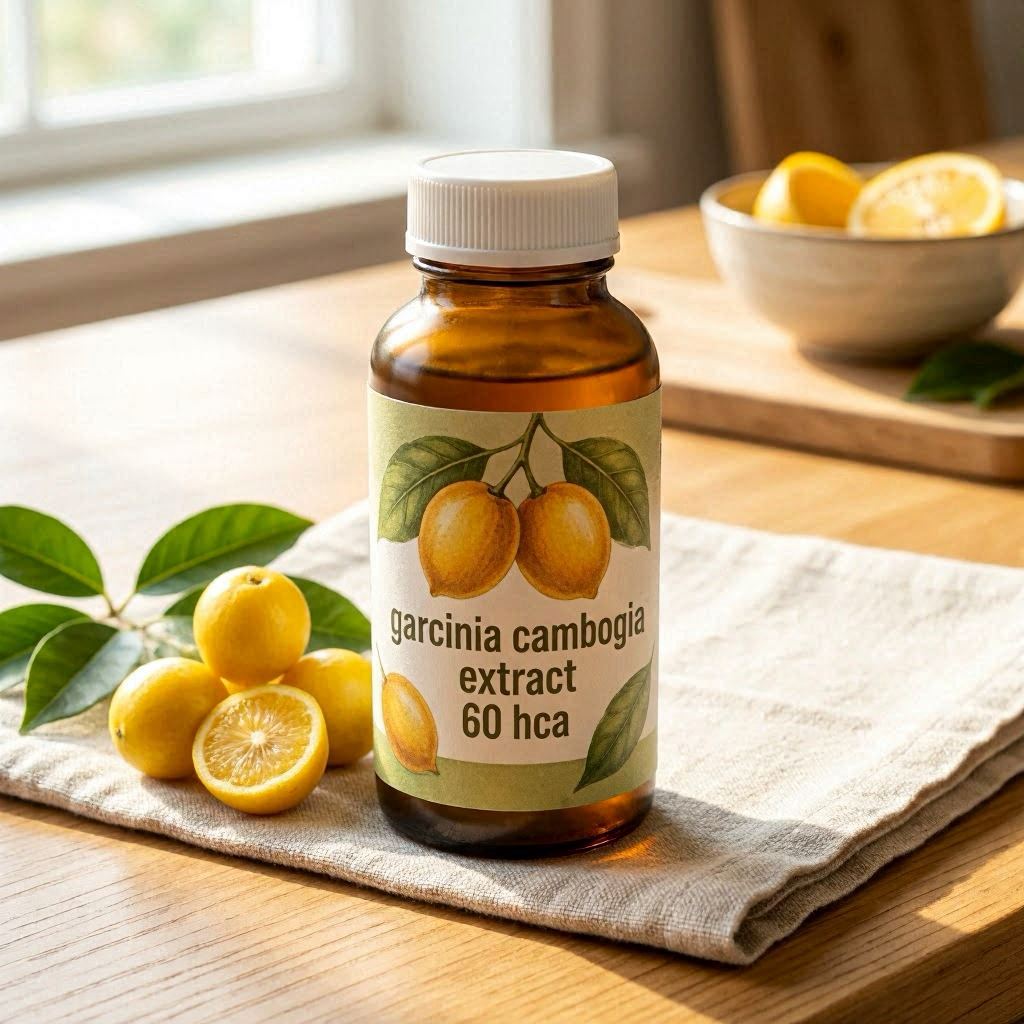
Garcinia cambogia extract remains one of the most searched weight management ingredients globally, yet the market is flooded with low-grade material that fails to deliver on label claims. For supplement brands and private label buyers, knowing exactly what 60% HCA means — and how to verify it — is the difference between a product that builds repeat customers and one that generates refund requests.
What Is Garcinia Cambogia Extract 60% HCA?
Garcinia cambogia is a small, pumpkin-shaped fruit native to Southeast Asia and India, botanically known as Garcinia gummi-gutta. The fruit’s rind is the source of hydroxycitric acid (HCA), the compound credited with most of the extract’s metabolic effects.
The “60% HCA” designation refers to the standardized concentration of hydroxycitric acid in the dried extract. This is the most widely used commercial grade, balancing efficacy, cost, and formulation flexibility. Higher concentrations (70%, 95%) exist but come at significantly higher cost and are more hygroscopic, creating manufacturing challenges.
The Mechanism of Action
HCA works through two primary pathways that have been studied extensively in preclinical and human trials:
ATP-citrate lyase inhibition HCA competitively inhibits ATP-citrate lyase, the enzyme responsible for converting citrate into acetyl-CoA — a key precursor for fatty acid synthesis. By blocking this step, HCA may reduce the rate at which dietary carbohydrates are converted into stored fat.
Serotonin modulation and appetite suppression HCA has been shown in several studies to increase serotonin availability in the brain, which is associated with reduced appetite and lower caloric intake. This dual-pathway approach is part of why garcinia cambogia maintains strong consumer interest compared to single-mechanism weight management ingredients.
What the Research Says
The clinical evidence for Garcinia cambogia 60% HCA is mixed but meaningful when the research is read carefully:
Studies that used standardized 60% HCA extract at doses of 1,500–3,000mg per day over 8–12 weeks showed modest but consistent reductions in body weight and BMI in overweight adults. The key variable in most negative studies was subtherapeutic dosing or poor bioavailability due to calcium-bound HCA salts.
The bioavailability issue is important for formulators: free-acid HCA and potassium/magnesium HCA salts have demonstrated superior absorption compared to calcium HCA alone. When evaluating supplier material, ask specifically about the HCA salt form.
Understanding Extract Quality and Adulteration
This is where many buyers get burned. Garcinia cambogia extract is one of the most commonly adulterated botanical ingredients on the market. Common issues include:
Underdeclared HCA content Certificates showing 60% HCA may not reflect the actual product. Always request HPLC test reports from an independent third-party lab, not just the supplier’s internal COA.
Excessive filler material Some manufacturers dilute extract with maltodextrin or other carbohydrate fillers to hit weight targets while reducing active content. Ask for the filler declaration and the extract ratio (e.g., 10:1 means 10kg of raw fruit per 1kg of extract).
Heavy metal contamination Botanical extracts from South and Southeast Asia carry elevated risk for lead and arsenic contamination if the raw material sourcing and processing controls are inadequate. Require heavy metal test results that comply with USP or EU Pharmacopoeia limits.
Formulation Considerations for Supplement Brands
Dosage and format A single serving typically delivers 500–1,000mg of 60% HCA extract, equating to 300–600mg of actual HCA. Two to three servings per day is the standard protocol seen in positive clinical trials. This means capsule count matters — buyers building meal-time formulas should design for convenience.
Combination formulas Garcinia cambogia 60% HCA pairs well with:
- Chromium picolinate (blood sugar support)
- Green tea extract (thermogenesis)
- Glucomannan (satiety fiber)
- B vitamins (metabolic co-factors)
These combinations allow brands to build comprehensive weight management SKUs rather than single-ingredient products, which typically command higher retail price points.
Stability and shelf life Garcinia cambogia extract at 60% HCA is relatively stable when stored below 25°C with low humidity. Request stability data at accelerated conditions (40°C/75% RH) covering at least 6 months to ensure your finished product will meet label claim at expiration.
Sourcing Checklist for Buyers
Before finalizing a supplier for Garcinia cambogia 60% HCA, confirm the following:
- HPLC-verified HCA content from third-party lab
- Heavy metals panel (lead, arsenic, mercury, cadmium) meeting USP limits
- Microbial testing (TPC, yeast/mold, E. coli, Salmonella)
- HCA salt form declaration (free acid, potassium, magnesium, or calcium)
- Extract ratio and solvent declaration
- Allergen statement
- Packaging specifications (moisture barrier, nitrogen flush recommended)
- Available certifications: Organic, Non-GMO, Halal, Kosher, ISO 22000
Why 60% HCA Is the Sweet Spot for Private Label Brands
For brands at the 100–500 unit launch scale, 60% HCA extract offers the best combination of:
- Proven consumer familiarity and search volume
- Regulatory straightforwardness (dietary supplement status in US, EU, and most Asian markets)
- Formulation flexibility (capsule, tablet, gummy, powder sachet)
- Cost-effectiveness relative to higher-concentration grades
- Strong label claim potential with appropriate dosing
Final Thoughts
Garcinia cambogia 60% HCA is not a fading trend — it is a mature, high-demand ingredient that rewards buyers who source it correctly. The difference between a winning product and a liability is almost entirely in the quality of the raw material and the rigor of the supplier relationship.