










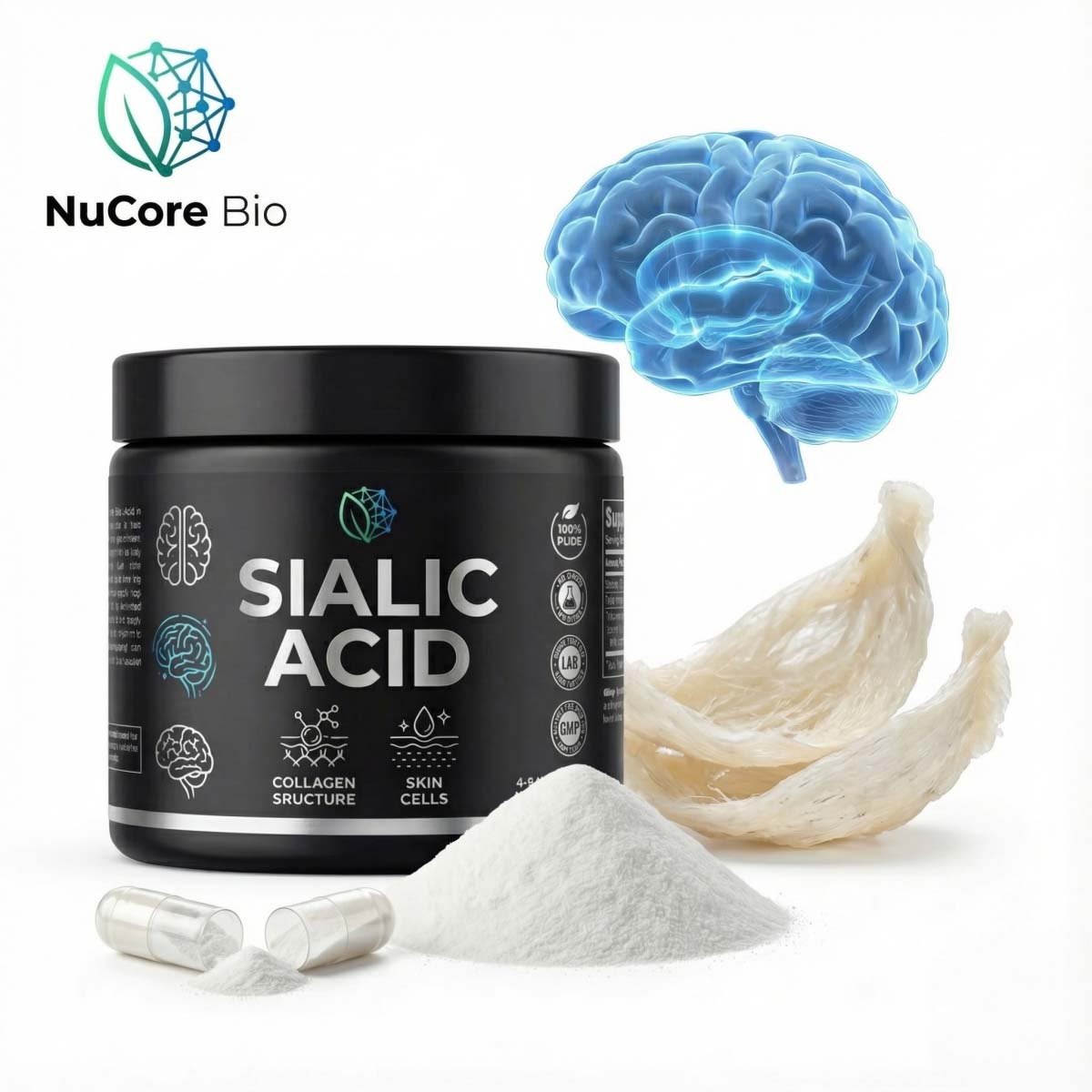
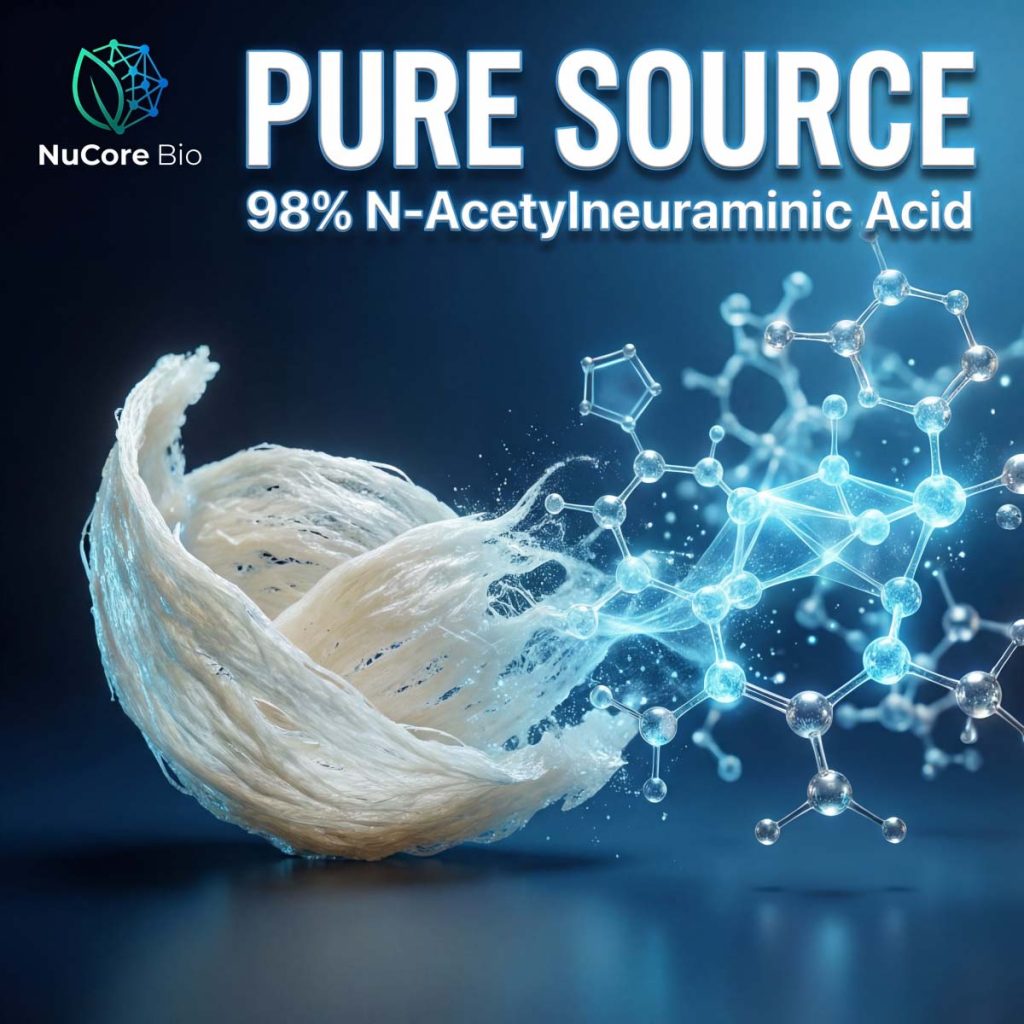
![Sialic Acid Molecular Structure] (Image placeholder: Insert chemical structure of sialic acid or a product image of white powder / bird’s nest extract)
Scientific Insight: Sialic acid is far more than a simple sugar—it is the “commander” of cellular communication. In humans, the predominant form (N-acetylneuraminic acid, Neu5Ac) is concentrated 20 times higher in the gray matter of the brain than in other tissues. Recent studies in Nature and Cell sub-journals confirm that sialic acid is not only essential for infant development but also plays critical roles in modulating gut microbiota, anti-inflammation, anti-tumor activity, and metabolic health.
Part 1: What is Sialic Acid?
Sialic acid (SA) is a family of nine-carbon alpha-keto acid sugars found at the terminal ends of glycoproteins and glycolipids on the surface of mammalian cell membranes. It was first isolated from salivary gland mucin, which gave it its name.
Key Sources
| Source | Content | Feature |
|---|---|---|
| Breast Milk | Up to 2,157 mg/L (colostrum) | Mainly in oligosaccharide-bound form, highly bioavailable |
| Edible Bird‘s Nest (EBN) | Approx. 5.9 – 19.3 g/100g | Recognized as the highest natural source of sialic acid; a key quality marker |
| Dairy | 10 – 250 mg/L (cow milk) | Predominantly N-acetylneuraminic acid (Neu5Ac) |
| Red Meat | Contains Neu5Gc | Note: Neu5Gc in red meat is associated with inflammation |
Part 2: 5 Core Benefits of Sialic Acid
1. Promotes Brain Development & Cognition
Sialic acid is an essential component of brain gangliosides and glycoproteins, participating in synaptogenesis and neural transmission.
- Scientific Evidence: Research shows that exogenous sialic acid can cross the blood-brain barrier. In neonatal piglet models, intravenous administration of Neu5Ac resulted in significantly higher sialic acid levels in brain tissue compared to other organs. Infants cannot synthesize sufficient endogenous sialic acid, making exogenous supplementation (via breast milk or fortified formula) crucial for intellectual development.
- Conclusion: Sialic acid is widely recognized as “brain gold,” vital for both infants and adults seeking to maintain cognitive function.
2. Modulates Gut Microbiota & Immune Barrier
Sialic acid caps the mucin glycans in the gut, serving as a critical interface between the host and intestinal microbiota.
- Scientific Evidence: A 2023 review in Foods highlighted that sialic acid exerts antioxidant, anti-inflammatory, and immunomodulatory effects by regulating gut microbiota and its metabolites. More recent research (2025) also demonstrated that multivalent sialidase inhibitors can effectively block the degradation of mucin by pathogenic bacteria (such as AIEC E. coli associated with Crohn’s disease), thereby alleviating intestinal inflammation.
- Conclusion: Maintaining gut sialic acid levels helps protect the intestinal mucosal barrier and inhibits the overgrowth of harmful bacteria.
3. Anti-inflammatory, Anti-viral & Anti-bacterial
Sialic acid residues act as receptors for various viruses and bacteria, while also masking antigenic recognition sites.
- Scientific Evidence: Sialic acid derivatives have been shown to inhibit infections by respiratory syncytial virus, influenza virus, and parainfluenza virus. In terms of anti-inflammation, sialic acid can reduce inflammatory responses by inhibiting leukocyte adhesion.
- Conclusion: Supplementation with sialic acid or its derivatives represents a potential strategy for preventing viral infections and treating chronic inflammation.
4. The Emerging Role in Metabolic Diseases
Recent studies have revealed a strong correlation between sialic acid metabolism, obesity, and diabetes.
- Scientific Evidence: A 2025 review in Biomolecules noted that levels of sialic acid change significantly under conditions of obesity and insulin resistance, accompanied by dysregulation of sialyltransferases (ST) and neuraminidases (NEU).
- Conclusion: Targeting the sialic acid metabolic axis may become a novel therapeutic direction for treating diabetes and obesity in the future.
5. Anti-tumor & Disease Biomarker
During carcinogenesis, the level of sialylation on cell surfaces is often abnormally elevated, correlating with metastasis and immune evasion.
- Scientific Evidence: Sialic acid can serve as a tumor marker in certain cases. For example, total serum sialic acid levels in cancer patients increase with disease severity. A 2024 review further emphasized the therapeutic significance of protein and lipid sialylation in cancer, cardiovascular, and neurodegenerative diseases. Recent studies also indicate that targeting sialic acid metabolism (e.g., via agents like WZ35) may be a novel strategy for treating gastric cancer.
- Conclusion: Sialic acid is not only a valuable auxiliary biomarker for early tumor diagnosis but also a highly promising drug target.
Part 3: Summary of Authoritative Research
| Research Topic | Journal | Year | Key Finding |
|---|---|---|---|
| Structure, Metabolism, Biofunction & Molecular Mechanisms | Foods (NIH) | 2023 | Systematically show sialic acid’s neuroprotective and anti-inflammatory effects via gut microbiota and key signaling pathways |
| Multivalent Inhibitors Against Gut Inflammation | ChemRxiv (HAL) | 2025 | Multivalent sialidase inhibitors exhibit strong inhibition against Crohn’s disease-associated adherent-invasive E. coli (AIEC) |
| Role in Obesity & Diabetes | Biomolecules (DOAJ) | 2025 | Confirms the remodeling of the sialic acid axis in metabolic diseases and its therapeutic potential |
| Protein & Lipid Sialylation Review | Int. J. Mol. Sci. (MDPI) | 2024 | Summarizes sialylation as a therapeutic target in cancer, cardiovascular, and neurodegenerative diseases |
| Physiological Properties & Applications | npj Science of Food (Nature) | 2025 | Explores the metabolism of Neu5Ac, Neu5Gc, and KDN, and their prospects in functional foods |
Conclusion
Sialic acid, particularly Neu5Ac, has evolved from a traditional “bird’s nest essence” into an indispensable functional ingredient in modern nutritional science. Whether used in premium infant formulas, cognitive health supplements, or products targeting gut health and anti-aging, sialic acid demonstrates tremendous commercial value.
Disclaimer: This article is for informational purposes only and does not constitute medical advice. Please consult a healthcare professional before adding new supplements. This product is a dietary supplement ingredient and is not intended to replace medication.