










Introduction: The Surge of High-Absorption Minerals in Global E-Commerce
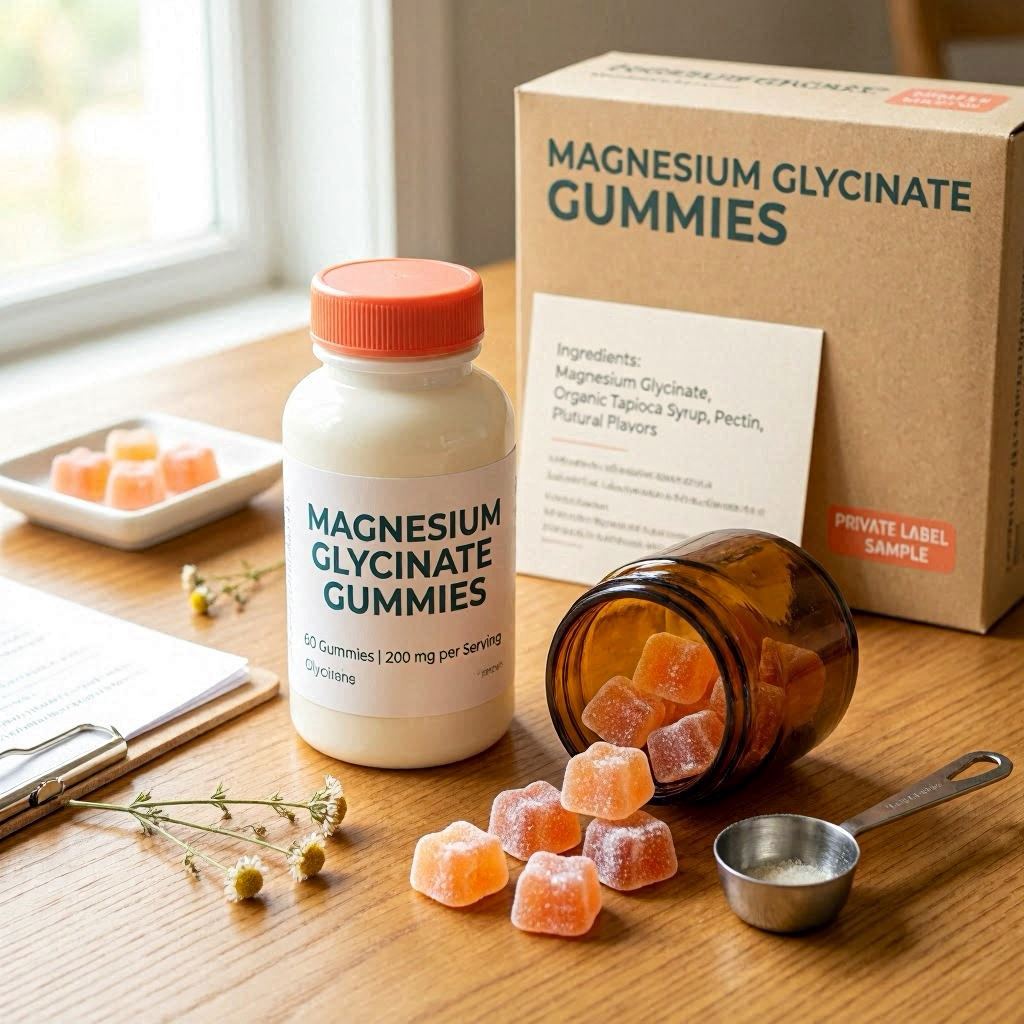
The mineral supplement marketplace is undergoing an aggressive flight to quality. Consumers have become thoroughly educated on the concepts of bio-accessibility and mineral chemical forms. Inorganic magnesium variants, historically utilized in low-cost formulations due to cheap raw material cost, are rapidly declining in market share on major retail platforms. Today, elite supplement brands, digital startups, and e-commerce growth operators are urgently seeking a premium glycinate magnesium gummies private label supplier to anchor their cognitive wellness, stress mitigation, and sleep enhancement SKUs.
For B2B buyers, navigating this hyper-growth niche requires an acute understanding of the structural differences between chelated organic minerals and inorganic salts. This industrial report breaks down the foundational chemistry of magnesium glycinate formulation, outlines the rigorous manufacturing benchmarks required for stable gummy delivery, and presents a scientific evaluation matrix to inform professional supplier selection.
The Molecular Science: Why Magnesium Glycinate Dominates Consumer Demand
Magnesium is involved in over 300 enzymatic reactions in the human body, including ATP synthesis, muscle relaxation, and neurotransmitter regulation. However, the delivery vehicle matters profoundly.
Inorganic salts such as Magnesium Oxide ($MgO$) possess high elemental density but dismal bioavailability (frequently cited below 5%). They dissociate rapidly in the gastrointestinal tract, attracting water into the intestinal lumen via osmosis, which leads to unwanted laxative side effects and gastric cramping.
Conversely, Magnesium Bisglycinate features elemental magnesium structurally bound to two molecules of glycine—an inhibitory amino acid that synergizes with magnesium to cross the blood-brain barrier. This stable organic chelate does not dissociate prematurely in the stomach. Instead, it utilizes active dipeptide transport channels in the intestinal wall, achieving a significantly higher absorption velocity without triggering any osmotic gastrointestinal distress.
Technical Obstacles in Gummy Matrix Infiltration
While the consumer demand for Magnesium Glycinate Gummies is exceptionally high, manufacturing this specific mineral in a shelf-stable, organoleptically pleasing hydrocolloid matrix presents massive engineering challenges. Brand operators must verify that their chosen private label supplier has mastered these specific hurdles:
1. Mineral Loading vs. Texture Degradation
Magnesium glycinate is physically bulky and possesses a low percentage of elemental magnesium by weight (typically around 10-12%). Loading therapeutic dosages into a single gummy slurry requires highly specialized machinery. Poorly managed mineral integration alters the hydrocolloid network, resulting in a gritty, sandy texture or a chalky gummy that breaks apart prematurely.
2. Flavor Masking and pH Stabilization
Pure magnesium glycinate has a distinctly metallic, alkaline, and bitter sensory profile. It naturally elevates the pH of the gummy slurry. If the supplier does not possess precise, proprietary organic acid buffering systems (such as malic or citric acid micro-encapsulation), the pH deviation will cause the pectin network to fail, yielding a sticky, un-set gel that degrades rapidly in storage.
Strict Compliance and “Anti-K-Site” Product Labeling Rules
To maintain the safety and indexing longevity of an independent B2B e-commerce domain, product detail pages and catalog technical specifications must completely reject high-risk medicinal language.
Verifiable Structural Claims Only
Compliant Formulation Language: “Assists in maintaining optimal muscular relaxation, supports nervous system calmness, and contributes to healthy sleep architecture.”
Prohibited Phrasing (Severe K-Site De-indexing Trigger): “Instantly cures chronic insomnia,” “Reverses clinical depression and severe anxiety disorder,” “Eliminates heart palpitations.” If your independent site features phrases asserting that a magnesium supplement acts as a treatment for medical conditions, search engine quality filters will flag the domain under the YMYL (Your Money or Your Life) guidelines, severely damaging search visibility.
Selecting the Right Private Label Partner: B2B Procurement Benchmarks
A professional small-to-medium e-commerce operator should audit prospective glycinate magnesium gummies private label suppliers against three foundational parameters:
- True Chelated Verification: Ensure the supplier utilizes verified, fully reacted chelated raw materials rather than a crude dry blend of magnesium oxide and free glycine (often referred to in the industry as “adulterated” or “fake” glycinate).
- In-House Analytical Capabilities: The facility must employ High-Performance Liquid Chromatography (HPLC) and Fourier-Transform Infrared Spectroscopy (FTIR) to verify raw material authenticity and bond structure before production.
- Modular Packaging Solutions: To accommodate fast market testing, the supplier should offer rapid prototyping and flexible labeling options, such as low-minimum runs of sleek PET bottles or modern stand-up gusset pouches with child-resistant closures.
Frequently Asked Questions (FAQ)
Q1: How can a brand prove that a supplier is using real reacted Magnesium Glycinate instead of a cheap mix of Magnesium Oxide and Glycine?
A: Brands should demand a Fourier-Transform Infrared Spectroscopy (FTIR) fingerprint analysis and an X-ray diffraction (XRD) test report from the supplier. A genuine, fully reacted chelate displays completely unique crystalline structure peaks and distinct molecular bond vibrations on the spectrum. If the test reveals unbonded magnesium oxide or independent glycine fractions, the raw material is an inferior physical blend that will trigger gastrointestinal irritation.
Q2: What is the maximum stable elemental magnesium yield achievable per gummy?
A: Due to the physical volume of the glycinate molecule and the structural limits of pectin cross-linking, the industry benchmark for stable manufacturing is typically 50 mg to 100 mg of elemental magnesium per serving (usually 2 gummies). Any supplier claiming to pack 400 mg of pure, unadulterated magnesium glycinate into a single standard 3-gram gummy is likely utilizing unauthorized hidden inorganic magnesium oxide or misrepresenting the dosage on the label.
Q3: Does the alkaline nature of magnesium glycinate cause pectin gummies to degrade or become sticky over time?
A: Yes, unbuffered magnesium glycinate raises the slurry pH above the optimal pectin gelation zone (which is highly sensitive and restricted between pH 3.2 and 3.6). Advanced suppliers resolve this by using encapsulated acidulants. The organic acid is coated in a microscopic food-grade lipid layer that prevents it from reacting prematurely during cooking, releasing only during the final cooling phase to lock the pH and ensure a stable, non-sticky texture over a 2-year shelf life.
Q4: Are magnesium glycinate gummies safe for children, and what are the specific labeling regulations?
A: Magnesium glycinate is highly safe for pediatric applications due to its non-laxative nature. However, labeling must strictly reflect the FDA’s Recommended Dietary Allowance (RDA) for specific age tiers: typically 80 mg/day for ages 1-3 and 130 mg/day for ages 4-8. The label must include a clear dosage guide and a standard cautionary statement advising parents to keep the product out of reach of children to prevent accidental over-ingestion due to the candy-like delivery form.