










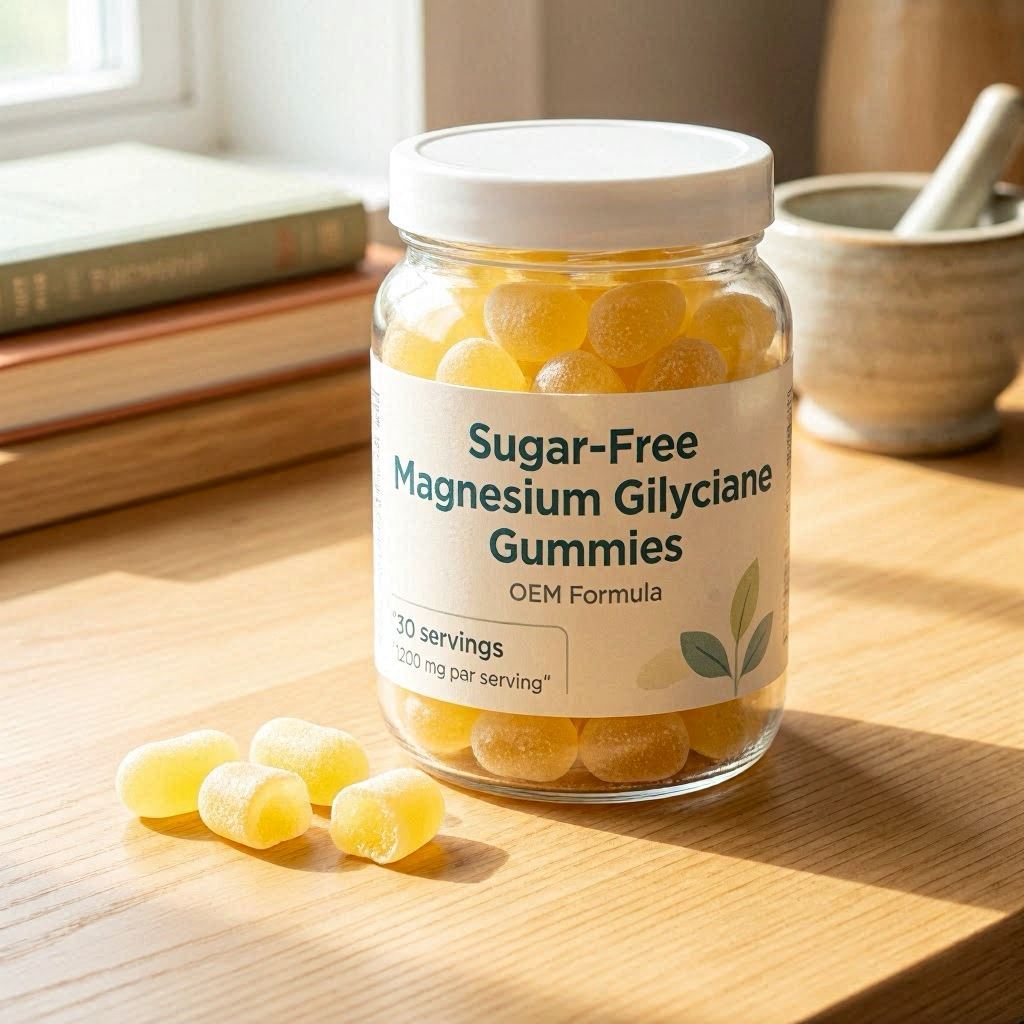
The Magnesium Market Explosion & Gummy Delivery Format
The dietary supplement industry has seen an extraordinary surge in the magnesium category, driven by shifting consumer dynamics and viral digital awareness regarding mineral deficiencies. Market research evaluations project the magnesium glycinate market to cross USD 2.2 billion by 2035, exhibiting a robust CAGR of over 5.8% starting from 2026. Within this macro-trend, the consumer delivery preference has evolved dramatically: traditional, oversized chalky tablets are being replaced by sophisticated functional confectionery formats.
Magnesium gummies are leading this delivery system revolution, growing rapidly at an 11.5% compound annual growth rate. The modern wellness consumer actively seeks preventive solutions for chronic stress, occupational burnout, and sleep disruptions—a cultural shift accelerated by viral wellness trends. However, modern consumers demand functional optimization without compromising dietary preferences.
For brand owners, Amazon FBA merchants, and independent e-commerce store operators, the ultimate competitive edge now rests on providing Sugar-Free Magnesium Glycinate Gummies. Eliminating sugar satisfies the surging consumer demand for keto-friendly, low-glycemic, and dental-safe products, positioning the brand firmly within the ultra-premium tier of the functional supplement market.
Biochemical Efficacy of Glycinate vs. Traditional Magnesium Forms
When structuring a high-converting B2C product line, brands must understand the underlying science to differentiate their listings from commoditized, low-cost alternatives. Many entry-level supplements utilize Inorganic Magnesium (such as Magnesium Oxide or Magnesium Sulfate). While these forms offer high elemental magnesium weight ratios, their fractional bioavailability is extremely low (often below 4%), frequently triggering osmotic diarrhea and gastrointestinal irritation due to unabsorbed mineral salts drawing water into the intestinal lumen.
Conversely, Magnesium Glycinate (also chemically known as Magnesium Bisglycinate) represents an organic chelate where magnesium is chemically bonded to two molecules of the amino acid glycine. This biochemical configuration alters the absorption pathway entirely:
- The Dipeptide Absorption Pathway: Magnesium Bisglycinate does not rely on regular pH-dependent mineral ion channels. Instead, it is absorbed via dipeptide channels (PepT1 transport systems) intact within the intestinal mucosa. This bypasses competitive inhibition from other minerals like calcium, yielding vastly superior bioavailability and absorption velocity.
- Gastric Comfort & Consumer Retention: Because the mineral is fully chelated, it does not dissociate prematurely in stomach acid. This prevents the typical laxative side effects associated with cheaper oxide forms, resulting in exceptional gastric comfort, higher consumer compliance, and superior recurring subscription rates for retail brands.
- Synergistic Cognitive Calming: Upon absorption, the molecule splits into elemental magnesium and free glycine. Glycine acts as an inhibitory neurotransmitter in the central nervous system, binding to NMDA receptors and amplifying the calming, sleep-supportive, and neuromuscular relaxation mechanisms of the magnesium ion.
Industrial OEM Challenge: Sugar-Free & Gelly Matrix Innovation
Manufacturing a highly stable, delicious, and functional sugar-free magnesium gummie presents immense industrial challenges that require expert Contract Manufacturing (OEM/ODM) technical solutions.
- The Active Loading Constraint: Magnesium Glycinate is notoriously bulky as a raw material molecule. Each gram of magnesium bisglycinate yields approximately 10% to 14% of elemental magnesium. Packing effective structural dosages into a small 3-4 gram gummy candy matrix without compromising texture or creating a chalky, sand-like mouthfeel requires precise micronization technologies and advanced taste-masking flavors.
- The Sugar-Free Matrix Stability: Replacing traditional corn syrup and sucrose requires a highly sophisticated sugar substitute matrix. Utilizing advanced sugar alcohols (such as Maltitol syrup or Erythritol) paired with natural soluble prebiotic fibers (like Isomaltooligosaccharides or Soluble Corn Fiber) is essential. The moisture activity ($a_w$) of sugar-free gummy bases must be rigorously monitored to prevent severe hygroscopic issues (sticky gummies) or premature staling and hardening over shelf life.
- Gelation Base Options (Pectin vs. Gelatin): Modern OEM setups must cater to lifestyle preferences:
- Pectin (Plant-Based): Derived from citrus peels, clean-label, vegan-friendly, possesses a higher melting threshold (crucial for Amazon cross-border shipping without melting in transit), and delivers an excellent clean, bite-through texture.
- Gelatin (Bovine/Porcine): Delivers the traditional elastic, melt-in-the-mouth chewiness, but limits suitability for kosher, halal, or plant-based market demographics.
Legal and Regulatory Marketing Boundaries (Compliance Assurance):
To ensure an indie storefront or retail listing does not face regulatory actions by enforcement authorities, product managers must apply strict discipline regarding label and web content claims:
- The Compliance Red Line: Never claim that magnesium glycinate gummies can “cure clinical insomnia,” “treat generalized anxiety disorder (GAD),” or “lower high blood pressure.”
- Compliant Structure/Function Statements: Utilize clinically supportable, law-abiding text strings approved by regulatory review frameworks: “Helps support muscle relaxation and nervous system function,” “Promotes a calm, restful sleep state,” and “Supports healthy bone density.”
Technical B2B FAQ
Q1: What is the exact elemental magnesium yield in your OEM sugar-free magnesium glycinate gummies, and why do you emphasize chelation verification?
A: Because pure Magnesium Bisglycinate molecules naturally yield approximately 10% to 14% elemental magnesium by molecular mass, each 4-gram gummy formulated with 500mg of pure magnesium bisglycinate provides roughly 50mg to 70mg of active elemental magnesium. For B2B clients, we emphasize utilizing 100% fully reacted chelated raw materials verified via FT-IR (Fourier-Transform Infrared Spectroscopy) and XRD. This guarantees the magnesium is completely bonded to the glycine matrix rather than being a dry physical blend of unreacted magnesium oxide and free glycine amino acids, ensuring maximum therapeutic efficacy and consumer digestive tolerance.
Q2: How do your sugar-free pectin-based magnesium gummies resist melting during cross-border sea shipping and FBA fulfillment?
A: We deliberately engineer our sugar-free gummies using a premium, high-methoxyl citrus-derived pectin matrix instead of animal-derived gelatin. Pectin forms a robust thermal-irreversible three-dimensional gel network that features an industrial melting threshold exceeding 60°C (140°F). Gelatin-based alternative options typically experience structural collapse and sticky agglomeration around 32°C to 35°C. This makes our plant-based formulation highly resilient against international cross-border logistics fluctuations, tropical transit environments, and unconditioned Amazon or independent fulfillment warehouses.
Q3: Which sugar alternatives are used in your proprietary sugar-free formula, and does it cause the gastric distress common with maltitol?
A: Our advanced OEM formulation minimizes high-dose maltitol reliance to protect consumers with sensitive bowel profiles. We deploy a balanced, synergistic sweetening system combining liquid Isomaltooligosaccharides (IMO)—a non-digestible prebiotic dietary fiber—with low-dose Erythritol and Stevia or Monk Fruit extract. This strategic multi-sweetener profile keeps the net glycemic impact at zero and ensures optimal caloric metrics, while keeping osmotic water shifting in the lower colon beneath the threshold that triggers bloating or gastric laxation.
Q4: What is the standard shelf-life profile of your private label magnesium glycinate gummies under ambient humidity conditions?
A: Under proper packaging conditions (such as high-density PET or amber glass bottles equipped with an induction-sealed airtight inner foil layer), our sugar-free magnesium glycinate gummies maintain excellent structural stability and active ingredient assay performance for 24 months. Because sugar-free polyol formulas are naturally more hygroscopic than conventional sugar matrices, we control the post-curing moisture activity ($a_w$) tightly below 0.60 during cleanroom manufacturing and incorporate food-grade desiccant packets inside every bulk container or retail bottle to prevent moisture degradation.