










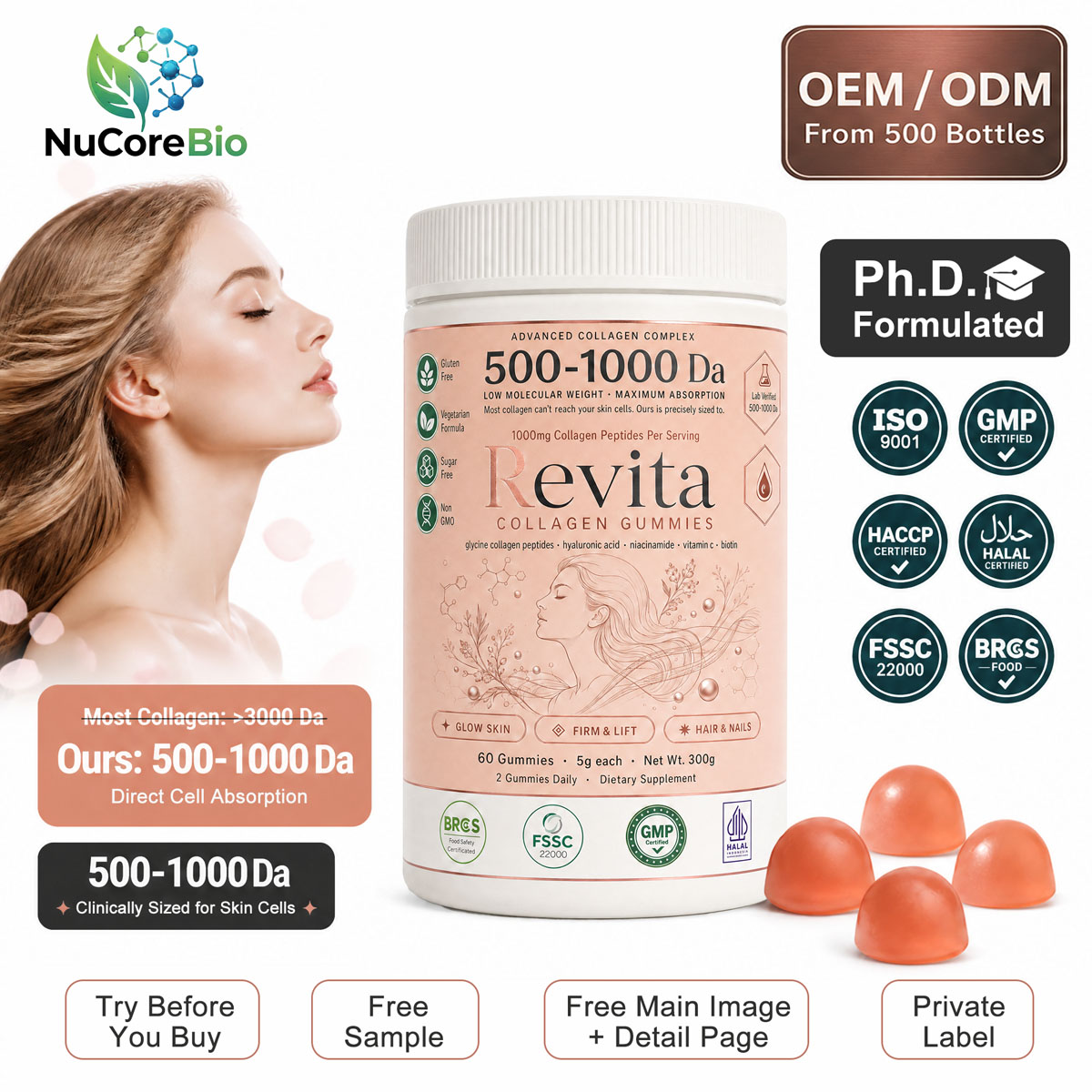
Quick answer for B2B buyers: Collagen peptides private label projects should be planned by format first, then by source, serving size, flavor, supporting beauty ingredients, packaging and document needs. A collagen product that works as a powder may not work economically or sensorially as a gummy, and a capsule concept may need a different positioning strategy altogether.
Collagen is a crowded category. Many articles repeat the same consumer-facing benefits, but buyers do not need another generic explanation. They need to know how to turn collagen peptides into a sellable product: which format fits the brand, what source makes sense, how to handle taste and serving size, and how to avoid packaging or label problems before production.
Choose The Format Before You Chase The Trend
The first manufacturing decision is not the headline ingredient. It is the delivery format. Collagen powders, gummies, capsules and beauty blends all create different constraints.
| Format | Best Fit | Manufacturing Consideration |
|---|---|---|
| Powder | Brands that want larger collagen servings, scoop routines or beauty drink positioning. | Flavor, solubility, flowability, pouch or jar choice and moisture protection matter early. |
| Gummy | Beauty brands that want convenience, taste, color and a consumer-friendly daily format. | Active loading, texture, sugar system, pectin/gelatin choice and heat sensitivity must be checked. |
| Capsule | Brands prioritizing simple labels, compact packaging or combination formulas. | Capsule count, fill weight and realistic serving size shape the commercial offer. |
| Beauty blend | Collagen combined with biotin, vitamin C, glutathione, hyaluronic acid or botanical support. | Ingredient compatibility, taste masking, claim-safe language and cost target must align. |
Marine Collagen, Bovine Collagen And Peptide Specification
Marine collagen peptide powder and bovine collagen peptide ingredients can both support private label programs, but they speak to different buyer expectations. Marine collagen often fits premium beauty positioning. Bovine collagen may fit broader wellness, powder or value-driven formulas. The right choice depends on market positioning, ingredient documentation, sensory requirements and cost target.
Peptide specification should be discussed in practical terms: source, grade, sensory profile, solubility, documentation and whether the ingredient can work inside the planned format. Do not build a product around a technical phrase if the serving size, taste and packaging do not support the finished product.
Beauty Gummies Need More Than A Pretty Label
Collagen gummies often compete on flavor, color, shape and convenience. The hard part is keeping the formula commercially realistic. A buyer may want collagen, glutathione, biotin, vitamin C and hyaluronic acid in one product, but each active affects serving size, texture, taste, cost and label space.
For a serious beauty gummy brief, define the target active direction, number of gummies per serving, sugar-free or conventional base, color preference, flavor reference, bottle count, label style and first-order quantity. This lets the formulation team test whether the product can be made cleanly before the buyer commits to mass production.
Long-Tail Signals To Fold Into One Stronger Page
Search Console showed several collagen and peptide pages with low impressions but average rankings in the top 10. These are useful signals: Google already understands those angles, but the individual pages are too small and overlapping. They should become supporting sections inside one stronger collagen OEM guide.
- Collagen peptides sourcing: Compare source, specification, supplier documentation and private label readiness.
- Marine collagen manufacturer angle: Explain when marine collagen supports premium beauty positioning and what buyers should verify.
- Bioactive peptide trend angle: Use trend context carefully, then connect it to shelf-ready manufacturing decisions.
- Application from lab to product: Show how a peptide concept moves from ingredient discussion to sample, packaging and production.
- High-absorption wording: Keep claims conservative and evidence-aware; do not rely on exaggerated absorption promises in B2B label planning.
How To Brief A Collagen OEM Partner
- Define the sales channel: Amazon, DTC, retail, distributor, clinic or beauty brand extension.
- Choose the product format before locking the ingredient list.
- Confirm source preference: marine, bovine or blended collagen peptide direction.
- Set a realistic serving size and daily-use format.
- Share packaging expectations: jar, pouch, bottle, sachet, carton and label status.
- Clarify support ingredients: biotin, vitamin C, glutathione, hyaluronic acid, elastin, botanicals or flavor system.
- List required documents and any destination-market label review needs.
How NuCoreBio Builds Collagen Private Label Projects
NuCoreBio approaches collagen OEM work as formula development first, not just ingredient trading. The team reviews the buyer's target format, market, packaging and quote range, then checks whether the collagen direction can fit the finished-product plan.
For powders, the focus may be serving size, flavor, solubility and packaging protection. For gummies, the focus may be texture, taste, active loading and bottle presentation. For capsules, the focus may be fill weight and positioning. For beauty blends, the focus is ingredient compatibility and claim-safe commercial language.
Related NuCoreBio Resources
- Collagen gummies private label
- Hydrolyzed fish collagen peptide
- Bovine bone collagen peptide
- Peptide gummies OEM
- Supplement OEM resource hub
- Request a collagen formula and packaging quote
FAQ
Which collagen format is best for a private label launch?
The best format depends on serving size, flavor expectations, target price, packaging channel and brand positioning. Powders can carry larger servings, while gummies and capsules may fit convenience-led beauty launches.
What should buyers compare before choosing marine collagen or bovine collagen?
Compare source, peptide specification, sensory profile, documentation, target market expectations, formula compatibility and the format you plan to sell.
Can collagen be combined with biotin, glutathione, vitamin C or hyaluronic acid?
Yes, these combinations are common in beauty-positioned formulas, but the final serving size, taste, stability, label wording and cost target should be checked before sampling.
What usually delays collagen private label projects?
Unclear source preference, changing serving size, late packaging decisions, over-aggressive claim language and missing label or export requirements are common delays.