










Introduction
The global demand for marine-derived bioactive ingredients has accelerated sharply over the past five years, driven by a convergence of aging demographics, growing consumer preference for natural-origin supplements, and a shift toward evidence-based nutraceuticals. Among the ingredients gaining the most traction in premium supplement formulations, Antarctic krill peptide stands out as a category with distinctive scientific merit and significant commercial upside.
Unlike conventional krill oil, which delivers omega-3 fatty acids in triglyceride and phospholipid form, krill peptide represents a hydrolyzed protein fraction extracted through enzymatic processes that break down complex krill proteins into bioavailable peptide chains. These smaller molecular structures confer advantages in absorption kinetics, functional versatility, and targeted health applications that raw oil or intact protein simply cannot match. For supplement brand owners, ingredient distributors, and contract manufacturers evaluating their next product pipeline decisions, understanding the science, manufacturing realities, and market dynamics behind Antarctic krill peptide is no longer optional — it is a competitive necessity.
This article provides a thorough examination of Antarctic krill peptide from a B2B perspective. It covers the biochemical mechanisms that underpin its health benefits, current and projected market data, manufacturing and formulation considerations specific to peptide ingredients, quality assurance frameworks, and practical guidance for OEM/ODM partnerships. Whether you are developing a new product line, expanding an existing portfolio, or evaluating contract manufacturing partners, the following sections offer the actionable intelligence needed to make informed sourcing and formulation decisions.
Biochemical Profile and Mechanism of Action
Antarctic krill (Euphausia superba) is a small crustacean harvested from the Southern Ocean, one of the most pristine marine environments on the planet. The species has evolved to thrive in extreme cold, producing proteins and lipids with unique structural properties. When these proteins undergo controlled enzymatic hydrolysis, the result is a complex mixture of peptides — typically ranging from 500 to 3,000 Daltons in molecular weight — along with free amino acids, residual phospholipids, and naturally occurring astaxanthin.
The therapeutic relevance of krill peptides centers on several well-documented mechanisms. First, angiotensin-converting enzyme (ACE) inhibition has been observed in specific peptide sequences isolated from krill hydrolysates. This mechanism is directly relevant to cardiovascular health, as ACE inhibition reduces the production of angiotensin II, a potent vasoconstrictor. Unlike pharmaceutical ACE inhibitors, krill-derived peptides achieve this effect through milder, food-grade enzymatic pathways with a substantially lower risk of adverse side effects.
Second, krill peptides demonstrate significant antioxidant capacity through multiple pathways. The presence of hydrophobic amino acid residues — particularly leucine, valine, and proline — within the peptide chains enables electron donation and free radical scavenging. The co-presence of astaxanthin, a carotenoid with one of the highest antioxidant activities among natural compounds, creates a synergistic effect that amplifies overall oxidative stress protection. Studies measuring ORAC (Oxygen Radical Absorbance Capacity) values for krill peptide preparations have consistently reported values exceeding those of comparable fish-derived peptides.
Third, anti-inflammatory activity has been documented through the inhibition of pro-inflammatory cytokines, including TNF-α and IL-6. The di- and tripeptide fractions within krill hydrolysates appear to modulate NF-κB signaling pathways, reducing the cascade that leads to chronic low-grade inflammation — a root factor in metabolic syndrome, joint degeneration, and cardiovascular disease.
Fourth, bioavailability distinguishes krill peptide from intact krill protein. The enzymatic hydrolysis process predigests the protein, resulting in peptide chains that are absorbed via PepT1 transporters in the small intestine more rapidly and more completely than whole proteins. Bioavailability studies comparing intact krill protein versus hydrolyzed krill peptide have shown plasma amino acid appearance rates that are 40-60% higher for the peptide form within the first two hours post-ingestion.
The combined effect of these mechanisms positions Antarctic krill peptide as a multifunctional ingredient — a single input that addresses cardiovascular support, oxidative stress reduction, anti-inflammatory response, and protein nutrition simultaneously. For formulators, this multifunctionality translates to simpler supplement architectures, fewer co-ingredients, and cleaner label declarations.
Market Trends and Demand Dynamics
The marine peptide ingredient market has entered a period of sustained expansion. Industry analyses estimate the global marine-derived peptide market at approximately $800 million to $1 billion in 2024, with a compound annual growth rate (CAGR) projected between 7.5% and 9.2% through 2032. Within this broader category, Antarctic-sourced ingredients command a premium positioning due to the perceived purity of the harvesting environment, the sustainability certifications attached to CCAMLR-regulated fisheries, and the growing body of clinical literature supporting krill-derived bioactives.
Several demand drivers are converging to accelerate growth in krill peptide specifically. The anti-aging and healthy longevity supplement market — valued at roughly $44 billion globally — increasingly demands peptide-based ingredients because of their demonstrated bioactivity and consumer-friendly labeling. Krill peptide fits squarely within this trend, offering a naturally sourced, marine-origin ingredient with cardiovascular and antioxidant positioning that appeals to the 45+ demographic cohort, which accounts for the largest share of supplement spending per capita.
Geographically, North America and Western Europe represent the largest current markets for krill-derived supplements, but Asia-Pacific is the fastest-growing region, with growth rates exceeding 12% annually in the marine nutraceutical segment. Japan and South Korea have well-established consumer familiarity with peptide-based functional foods, creating a receptive market for krill peptide products positioned around joint health, skin elasticity, and cardiovascular maintenance.
From a pricing perspective, Antarctic krill peptide typically trades at a 30-50% premium over standard krill oil on a per-kilogram basis, reflecting the additional processing required for enzymatic hydrolysis, purification, and quality testing. However, this premium is increasingly accepted by brand owners because the peptide format enables differentiation from commoditized krill oil products that have faced margin compression in retail channels over the past three years. The shift from oil to peptide is, in effect, a category upgrade strategy that allows brands to justify higher price points and avoid direct price competition on the shelf.
Regulatory tailwinds also support growth. The ingredient is classified as a food or dietary supplement ingredient in most major markets — including the United States (FDA dietary ingredient notification pathway), the European Union (Novel Food considerations for specific peptide fractions), Japan (FOSHU-eligible claims), and China (Blue Hat health food registration). This broad regulatory acceptance reduces the barrier to market entry and shortens product development timelines for international brands.
Manufacturing Considerations and Formulation Science
Producing Antarctic krill peptide at commercial scale requires expertise in enzymatic hydrolysis, membrane filtration, and spray drying — processes that are significantly more complex than the cold-press extraction used for krill oil. Understanding these manufacturing realities is essential for B2B buyers evaluating supplier capabilities and negotiating specifications.
The hydrolysis process begins with raw krill material, which may be whole krill, krill meal, or krill protein concentrate depending on the supplier’s upstream supply chain. This material is suspended in water, and pH and temperature conditions are optimized for the selected protease enzyme — commonly food-grade proteases such as Alcalase, Flavourzyme, or Papain. The choice of enzyme directly affects the peptide profile, degree of hydrolysis (DH), and functional properties of the final product. Higher DH values produce shorter peptide chains with faster absorption but may reduce certain biofunctional activities that depend on specific larger peptide sequences.
Following hydrolysis, the reaction is terminated through heat inactivation of the enzyme. The resulting slurry undergoes centrifugation to separate the soluble peptide fraction from insoluble residues. The peptide-rich supernatant is then processed through ultrafiltration membranes — typically at 3 kDa and 10 kDa cutoff points — to fractionate the peptides by molecular weight and remove residual lipids, ash, and larger protein fragments. This fractionation step is critical because bioactivity profiles vary significantly between molecular weight fractions; the 1-3 kDa fraction, for instance, has shown the highest ACE-inhibitory activity in published research.
The final peptide concentrate is spray-dried to produce a free-flowing powder. Spray drying parameters — inlet temperature, outlet temperature, atomization pressure, and carrier agent selection — directly influence the solubility, bulk density, color, and stability of the finished ingredient. Maltodextrin or gum arabic are commonly used as carrier agents at 10-20% inclusion levels to improve powder flow and prevent caking.
Stability is a primary concern in krill peptide manufacturing. The residual lipid content, even at low levels (typically 1-5%), can oxidize over time, leading to off-flavors and reduced bioactivity. Reputable suppliers address this through nitrogen flushing during packaging, inclusion of natural antioxidants such as mixed tocopherols or rosemary extract, and cold-chain storage recommendations. Shelf life for properly packaged krill peptide powder typically ranges from 24 to 36 months when stored below 25°C in sealed containers.
For B2B buyers, key specification parameters to evaluate when comparing suppliers include: degree of hydrolysis (typically 15-30%), peptide content (minimum 70-80% on dry basis), molecular weight distribution (request a HPLC or SEC chromatogram), protein content by Kjeldahl or Dumas method (minimum 60-70%), residual lipid content (below 5% preferred), ash content (below 15%), heavy metals compliance (lead, cadmium, mercury, arsenic), and microbiological limits (total plate count, coliforms, Salmonella, E. coli).
OEM/ODM Partnership Advantages for Brand Owners
For supplement brands evaluating Antarctic krill peptide as a product opportunity, the OEM/ODM pathway offers compelling advantages over in-house development, particularly for companies without existing peptide processing capabilities.
Speed to market is perhaps the most immediate benefit. A qualified contract manufacturer with established krill peptide formulations can move from specification agreement to finished product in 8-12 weeks, compared to 6-9 months for an in-house development cycle that includes ingredient sourcing trials, formulation optimization, stability testing, and regulatory review. In a market where ingredient trends can shift rapidly, this timeline advantage translates directly into competitive positioning.
Minimum order quantity (MOQ) flexibility is another significant factor. Many contract manufacturers specializing in marine-derived supplements offer MOQs as low as 10,000-30,000 units for capsule formats and 50,000-100,000 units for gummy formats, depending on the complexity of the formulation and the degree of customization required. For brands testing a new market segment or launching a limited-edition SKU, this lower capital commitment reduces risk and enables faster iteration.
Customization depth varies by manufacturer but typically encompasses dosage strength, capsule size and shell color, gummy shape and flavor profile, powder blend ratios, and co-ingredient combinations. Common co-ingredients paired with krill peptide include vitamin D3 for bone and immune synergies, coenzyme Q10 for cardiovascular stacking, and collagen peptides for joint and skin positioning. Experienced formulators can advise on compatibility, stability interactions, and label claim substantiation for these combinations.
Private labeling versus custom formulation represents a spectrum of OEM engagement. At the private-label end, brands select from pre-developed stock formulations with minimal customization — fastest turnaround, lowest cost, but less differentiation. At the custom-formulation end, brands work with the manufacturer’s R&D team to develop proprietary blends from scratch — higher cost and longer lead times, but full ownership of the formula and stronger brand exclusivity.
Geographic sourcing strategy is worth evaluating carefully. Contract manufacturers based in China, Vietnam, and India offer the most competitive per-unit pricing for krill peptide supplements, while manufacturers in the United States, Canada, and Germany command premium pricing but may offer advantages in regulatory perception, consumer trust, and supply chain transparency. A growing number of brands adopt a hybrid approach — sourcing the raw krill peptide ingredient from a certified marine ingredient supplier (often based in Norway, Japan, or Australia) and contracting the finished product manufacturing with a GMP-certified facility in the target sales market.
Quality Assurance and Regulatory Compliance
Quality assurance for Antarctic krill peptide products demands a multi-layered approach that covers raw material traceability, in-process controls, finished product testing, and documentation standards.
Raw material traceability is the foundational layer. Antarctic krill harvesting is regulated by the Commission for the Conservation of Antarctic Marine Living Resources (CCAMLR), which sets annual catch limits and monitors vessel compliance. Buyers should require their suppliers to provide CCAMLR catch documentation, vessel identification records, and lot-specific traceability linking the finished peptide ingredient to a specific harvest date, location, and vessel. Marine Stewardship Council (MSC) certification, while not universal among krill suppliers, provides an additional sustainability assurance layer that resonates with environmentally conscious consumers.
Good Manufacturing Practice (GMP) compliance is non-negotiable. For products sold in the United States, FDA 21 CFR Part 111 cGMP compliance is required. For products targeting the European market, EU GMP (Directive 2003/94/EC) or FSSC 22000 certification provides the necessary framework. Buyers should verify not only the manufacturer’s GMP certification status but also the scope — some facilities hold certifications for pharmaceutical manufacturing but operate their supplement lines under a different standard.
Third-party testing is the verification layer that builds consumer and regulatory confidence. A comprehensive testing program for krill peptide products should include: heavy metals (ICP-MS testing for lead, cadmium, mercury, arsenic at or below California Prop 65 thresholds), microbiological panels (total aerobic count, yeasts and molds, coliforms, E. coli, Salmonella, Staphylococcus aureus), pesticide and contaminant screening, peptide molecular weight distribution (HPLC-SEC), protein and amino acid profiling, and residual solvent testing if extraction solvents are used in upstream processing.
Certificate of Analysis (COA) documentation should accompany every production batch. Best-practice COAs include: product name and lot number, manufacture and expiry dates, specification parameters with both “specification” and “actual result” columns, test methods referenced, testing laboratory identification, and authorization signatures. Brands selling into Amazon, iHerb, or other major e-commerce platforms should expect these platforms to request COAs as part of compliance documentation.
Additional certifications that enhance marketability and access include: Halal certification (IFANCA or JAKIM), Kosher certification (OU or OK), Non-GMO Project Verified, Gluten-Free certification (GFCO), and Organic certification where applicable. While organic certification for wild-caught marine ingredients is complex — the USDA National Organic Program has specific provisions for wild seafood — some brands pursue it through sustainable harvesting documentation combined with organic-compliant processing.
Formulation Formats: Capsules, Gummies, and Powders
The choice of delivery format for Antarctic krill peptide significantly impacts product positioning, manufacturing complexity, consumer experience, and margin structure. Each format carries distinct advantages and trade-offs that B2B buyers must weigh against their target market and distribution strategy.
Capsules remain the most established format for krill-derived supplements. Hard vegetarian capsules (HPMC) are the dominant choice, driven by consumer demand for non-animal capsule materials and the vegetarian/vegan positioning that many brands pursue — even though krill peptide itself is a marine animal product. Dosage typically ranges from 300 mg to 1,000 mg of krill peptide per capsule, with two-capsule daily servings being the most common serving size in the market. Capsules offer excellent protection against oxidation and moisture, a shelf life advantage over gummies, and straightforward manufacturing with standard encapsulation equipment. Labeling is clean, with minimal excipients required — typically just the peptide powder, a flow agent such as rice flour or magnesium stearate, and the capsule shell.
Gummies represent the fastest-growing delivery format in the supplement industry, and krill peptide is increasingly being adapted for gummy formulations. The primary formulation challenge is taste masking. Krill peptide, depending on the degree of hydrolysis and residual lipid content, carries a marine flavor profile that requires careful management. Formulators address this through a combination of natural flavor systems (commonly citrus, berry, or tropical fruit profiles), sweetener optimization (stevia, monk fruit, or sugar combinations), and encapsulation technologies that coat individual peptide particles to delay flavor release until after swallowing. Gummy dosage typically ranges from 100 mg to 250 mg of krill peptide per piece, with two to four gummies constituting a daily serving. Manufacturing requires pectin or gelatin-based gummy production equipment with controlled temperature and humidity environments.
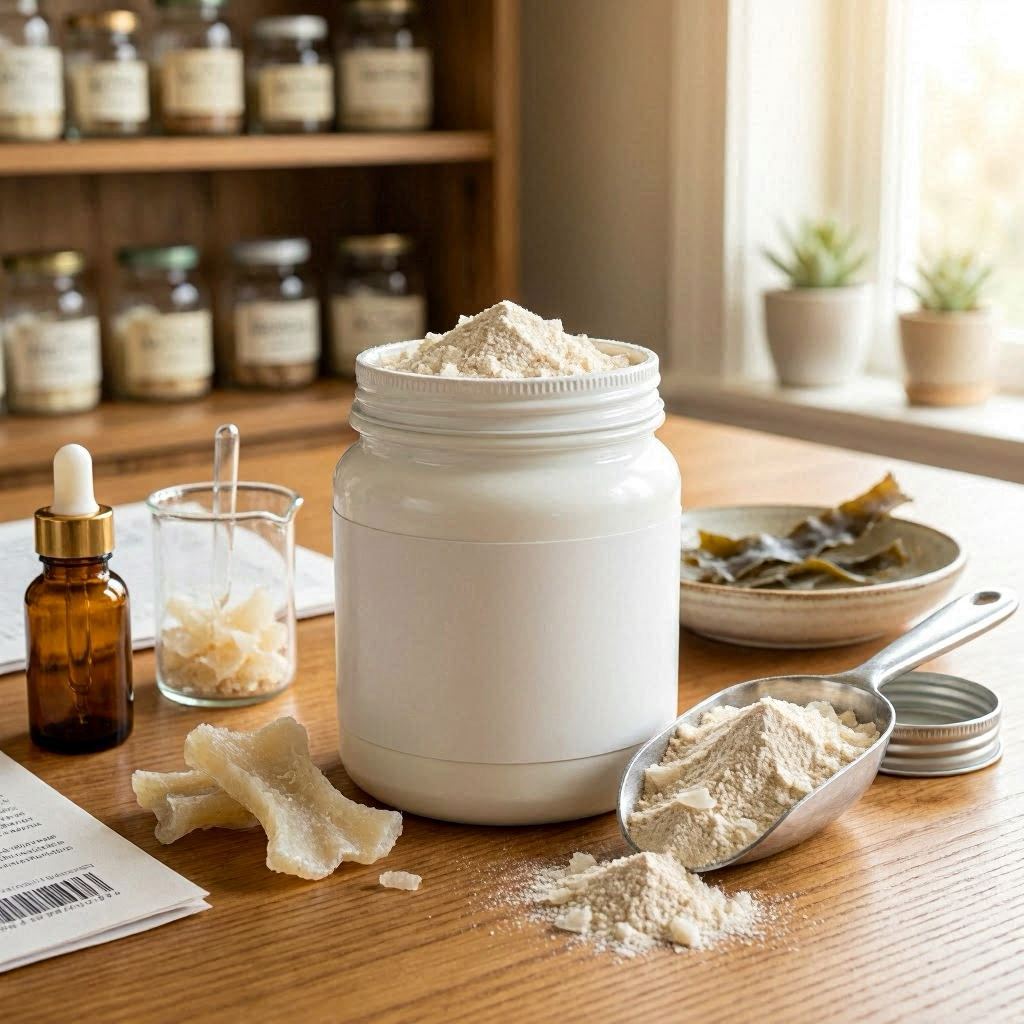
Powders offer the highest dosage flexibility and are particularly well-suited for the sports nutrition and functional food crossover market. Krill peptide powder can be blended into protein shakes, smoothie mixes, or standalone functional powder products. Solubility is a key specification — properly processed krill peptide should dissolve fully in water within 30 seconds with gentle stirring. Flavor masking is again a consideration; most commercial krill peptide powders intended for direct consumer use incorporate a flavor system. Dosage in powder formats typically ranges from 500 mg to 2,000 mg per serving. Packaging requires moisture-barrier pouches or tubs with desiccant canisters to prevent caking and oxidation.
For brands evaluating multi-format strategies, the capsule format offers the lowest barrier to entry and the strongest positioning for the core supplement buyer. Gummies appeal to demographics less comfortable with swallowing capsules — including older adults and younger consumers — but require more extensive formulation work and carry higher per-unit manufacturing costs. Powders serve niche segments and offer the flexibility for brands to build broader functional food or beverage product lines.
Frequently Asked Questions
What distinguishes krill peptide from krill oil?
Krill oil is a lipid extract rich in omega-3 fatty acids (EPA and DHA) in phospholipid form, plus astaxanthin. Krill peptide is a hydrolyzed protein fraction derived through enzymatic breakdown of krill proteins into smaller peptide chains. While krill oil primarily delivers essential fatty acids, krill peptide provides bioactive protein fragments with ACE-inhibitory, antioxidant, and anti-inflammatory properties. The two ingredients can be used together in a single formulation for complementary benefits, but they are distinct raw materials with different manufacturing processes, specifications, and functional applications.
What is a typical effective dosage for Antarctic krill peptide?
Published research and current commercial formulations suggest a daily dosage range of 500 mg to 2,000 mg for general wellness and cardiovascular support applications. Anti-inflammatory protocols in clinical settings have used doses up to 3,000 mg per day. The optimal dose depends on the peptide concentration (measured as protein or peptide content percentage), the degree of hydrolysis, and the specific molecular weight fraction. Brands should work with their raw material supplier to align dosage recommendations with the specific batch specifications and available clinical evidence for that ingredient profile.
Is Antarctic krill peptide sustainable?
Antarctic krill is one of the most abundant multicellular species on Earth, with biomass estimates ranging from 300 to 500 million metric tons. Harvesting is strictly regulated by CCAMLR, which sets conservative catch limits — currently around 620,000 metric tons per year, representing less than 1% of the estimated total biomass. Reputable suppliers provide CCAMLR traceability documentation linking their ingredient to specific, regulated harvests. MSC certification, where available, adds a third-party sustainability verification layer. Buyers should request and verify this documentation as part of their supplier qualification process.
What are the main quality markers to evaluate in a krill peptide ingredient?
Critical quality markers include: peptide content (minimum 70-80% on dry basis by nitrogen or spectrophotometric methods), degree of hydrolysis (typically 15-30%), molecular weight distribution (request an SEC-HPLC chromatogram showing the distribution profile), protein content (minimum 60-70%), residual lipid content (below 5% preferred for stability), heavy metals compliance (lead below 1 ppm, cadmium below 0.5 ppm, mercury below 0.1 ppm, arsenic below 2 ppm), microbiological specifications meeting pharmacopeial standards, and ORAC value for antioxidant activity. COAs should reference specific test methods and provide both specification limits and actual batch results.
Can krill peptide be combined with other active ingredients in a single formulation?
Krill peptide is formulation-compatible with a wide range of co-ingredients. Common combinations include vitamin D3 (bone and immune synergies), coenzyme Q10 (cardiovascular support), collagen peptides (joint and skin applications), magnesium glycinate (muscle and nervous system), and omega-3 fish oil or algal oil (enhanced lipid profile). Stability considerations require attention to moisture content when combining hygroscopic ingredients, and pH compatibility should be verified for powder formats. Experienced formulators can advise on specific interactions and optimal processing sequences for multi-ingredient blends.
What are the key regulatory considerations for selling krill peptide supplements in the United States?
In the United States, krill peptide is marketed as a dietary ingredient under the FDA’s DSHEA framework. If the ingredient was marketed in the United States before October 1994, it qualifies as a “grandfathered” dietary ingredient. If introduced after that date, the supplier should have filed a New Dietary Ingredient (NDI) notification, or the brand should ensure that the ingredient’s regulatory status has been established. Structure/function claims are permitted with the required disclaimer statement (“This statement has not been evaluated by the FDA…”). Disease claims are prohibited. All manufacturing must comply with FDA 21 CFR Part 111 cGMP regulations, and products must be properly labeled per 21 CFR Part 101. Amazon, iHerb, and other major retailers may impose additional documentation and testing requirements beyond federal minimums.
How does the cost of krill peptide compare to other marine peptide ingredients?
Antarctic krill peptide typically commands a premium over fish-derived peptides (such as salmon peptide, cod peptide, or bonito peptide) due to the remote sourcing location, CCAMLR-regulated harvest costs, and the relatively lower global production volume. Per-kilogram pricing for krill peptide powder generally falls in the range of $40 to $80, depending on peptide concentration, molecular weight fraction, purity grade, and order volume. This compares to $20 to $50 for standard fish collagen peptides and $60 to $150 for specialized bioactive peptide fractions (such as specific ACE-inhibitory isolates). The premium is offset by krill peptide’s broader bioactivity profile, its natural astaxanthin co-presence, and the consumer perception premium associated with Antarctic-sourced ingredients.
Conclusion
Antarctic krill peptide occupies a compelling position at the intersection of marine science, consumer health trends, and supplement industry dynamics. Its multi-mechanism bioactivity profile — spanning cardiovascular support, antioxidant defense, and anti-inflammatory modulation — provides formulators with a versatile, naturally sourced ingredient that delivers more than a single benefit per input. The market fundamentals are strong: growing demand for peptide-based nutraceuticals, a consumer base increasingly willing to pay premiums for evidence-backed marine ingredients, and a regulatory environment that facilitates market entry in most major supplement geographies.
For supplement brands, the practical path forward involves selecting a qualified contract manufacturing partner with demonstrated krill peptide processing and formulation expertise, establishing rigorous quality specifications backed by third-party testing, and choosing the delivery format — capsule, gummy, or powder — that best aligns with target consumer demographics and distribution channels. The brands that move early into well-differentiated krill peptide products, with solid clinical positioning and transparent supply chain documentation, will be best positioned to capture value in this growing category as consumer awareness and demand continue to build.
Disclaimer: These statements have not been evaluated by the Food and Drug Administration. This product is not intended to diagnose, treat, cure, or prevent any disease. The information provided in this article is for educational and informational purposes only and does not constitute medical advice. Always consult with a qualified healthcare professional before starting any supplement regimen.