










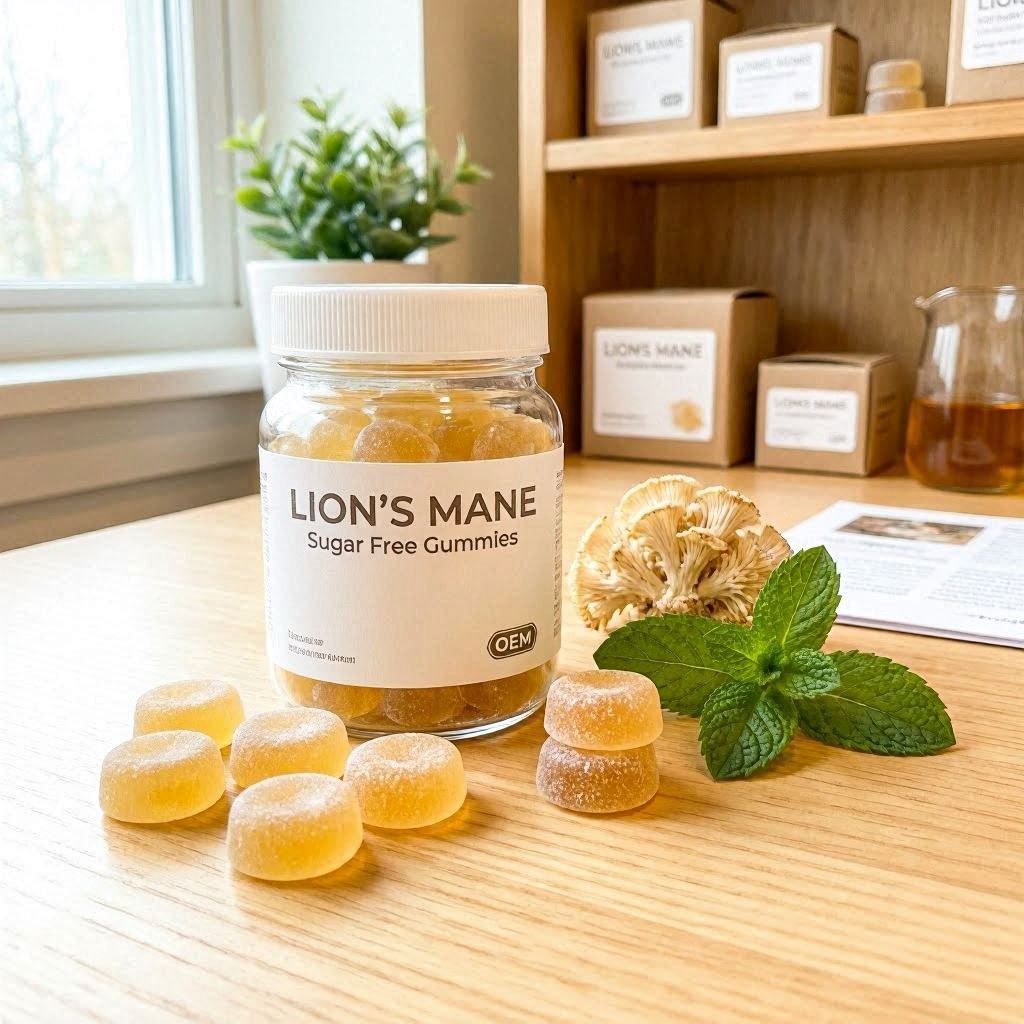
The Evolution of Creatine Delivery: Why Gummies Are Reshaping the Supplement Landscape
The dietary supplement industry has witnessed a seismic shift in consumer preferences over the past five years. While creatine monohydrate has long been the gold standard for athletic performance enhancement, the traditional delivery formats—powder and capsules—are increasingly giving way to a more consumer-friendly alternative: gummies. For brand owners and private label entrepreneurs targeting the Amazon FBA marketplace, this transition represents both a significant opportunity and a complex manufacturing challenge.
The global creatine market was valued at approximately $736 million in 2023 and is projected to reach $1.2 billion by 2030, representing a compound annual growth rate (CAGR) of 7.2%. Within this broader market, the creatine gummies segment is expanding at nearly double that rate, driven by consumer demand for convenient, great-tasting alternatives to chalky powders and hard-to-swallow capsules. Amazon’s marketplace data indicates that search volume for “creatine gummies” increased by 340% between 2022 and 2024, with conversion rates significantly higher than traditional creatine formats.
However, manufacturing Amazon FBA compliant creatine monohydrate gummies is far more complex than producing standard nutraceutical gummies. Creatine monohydrate presents unique formulation challenges: it is highly hygroscopic, notoriously difficult to mask for taste, and susceptible to degradation in high-moisture environments. For contract manufacturers and OEM/ODM suppliers, delivering a stable, efficacious, and FBA-compliant creatine gummy requires specialized expertise in formulation chemistry, moisture control, and pharmaceutical-grade manufacturing protocols.
This article examines the critical considerations for brand owners seeking to launch creatine monohydrate gummies in the Amazon FBA ecosystem. From raw material selection and stability testing to labeling compliance and FBA packaging requirements, we will explore the technical and regulatory landscape that determines whether a product succeeds or fails in this competitive marketplace.
—
The Science of Creatine Monohydrate: Mechanisms, Dosage, and Bioavailability in Gummy Formulations
Creatine monohydrate remains the most extensively researched sports nutrition ingredient in history, with over 500 peer-reviewed studies documenting its efficacy. At the molecular level, creatine functions as a rapid energy buffer in the phosphocreatine system, regenerating adenosine triphosphate (ATP) during high-intensity, short-duration activities such as weightlifting, sprinting, and explosive athletic movements. The standard clinical dosage ranges from 3 to 5 grams daily for maintenance, with a loading phase of 20 grams daily (divided into four 5-gram doses) often employed to saturate muscle stores rapidly.
Translating this dosage requirement into a gummy format presents immediate formulation challenges. A single gummy typically weighs between 2 to 4 grams total, meaning that achieving a 3-5 gram creatine payload per serving requires either multiple gummies per dose or highly concentrated formulation techniques. Most commercial creatine gummy products deliver 1 to 1.5 grams of creatine monohydrate per individual gummy, requiring consumers to take two to five gummies daily to achieve the clinically effective dose. This multi-gummy dosing strategy has important implications for manufacturing: each gummy must contain precisely calibrated creatine content, with tight coefficient of variation (CV) limits to ensure label claim accuracy.
Bioavailability is another critical consideration. Creatine monohydrate exhibits excellent oral bioavailability (approximately 95-100% in powder form when dissolved properly), but the gummy matrix can alter dissolution kinetics. The pectin or gelatin base, combined with sugars and acids in the formulation, creates a complex matrix that may slow creatine release. Advanced manufacturers employ pre-dissolution techniques, micronization of creatine particles (reducing particle size to <100 microns), and strategic acidulant selection (typically citric acid or malic acid) to enhance in-vitro dissolution rates and ensure the creatine is bioavailable upon consumption.
Stability is perhaps the most significant scientific hurdle. Creatine monohydrate is chemically unstable in the presence of moisture and elevated temperatures, undergoing irreversible conversion to creatinine—a biologically inactive byproduct. In the high-moisture environment of a gummy, this conversion can accelerate rapidly without proper formulation safeguards. Manufacturers must maintain water activity (Aw) levels below 0.6 in the finished gummy, employ humidity-controlled manufacturing environments (typically <30% relative humidity), and incorporate stabilizing agents such as potassium sorbate or natural tocopherols to inhibit creatine degradation throughout the product's shelf life.
The taste-masking challenge cannot be overstated. Creatine monohydrate has a distinctly bitter, metallic taste profile that becomes increasingly pronounced at higher concentrations. Effective taste masking in gummies requires a multi-layered approach: selecting appropriate fruit flavor profiles (berry blends, tropical fruit combinations, and citrus medleys are most effective), incorporating acidulants that complement rather than clash with creatine’s flavor notes, and utilizing natural sweeteners such as stevia leaf extract, monk fruit extract, or allulose to achieve palatability without excessive sugar content that could trigger Amazon’s warning label requirements for added sugars.
—
Amazon FBA Compliance: Navigating the Regulatory and Logistical Requirements for Supplement Gummies
Selling dietary supplements on Amazon through the FBA (Fulfillment by Amazon) program requires strict adherence to a complex web of regulatory, labeling, and packaging requirements. Amazon’s policy for dietary supplements, formalized under the Amazon Supplement Policy, mandates that all products comply with applicable FDA regulations, including current Good Manufacturing Practices (cGMPs) under 21 CFR Part 111, proper labeling under 21 CFR Part 101, and the Dietary Supplement Health and Education Act (DSHEA) requirements for new dietary ingredients and structure/function claims.
For creatine monohydrate gummies specifically, FBA compliance begins with the Certificate of Analysis (COA) for every batch. Amazon routinely requests COAs during account reviews or in response to customer complaints. A compliant COA must verify identity, purity, strength, and composition of the creatine monohydrate ingredient, typically through High-Performance Liquid Chromatography (HPLC) testing with a minimum purity threshold of 99.9% for pharmaceutical-grade creatine monohydrate. The COA must also confirm the absence of heavy metals (lead <0.5 ppm, arsenic <1.0 ppm, cadmium <0.5 ppm, mercury <0.5 ppm), microbial contaminants (total plate count <10,000 CFU/g, yeast and mold <100 CFU/g, absence of E. coli and Salmonella), and residual solvents if applicable.
Labeling compliance represents another critical FBA requirement. The product label must include a Supplement Facts panel (not a Nutrition Facts panel, which is reserved for conventional foods), listing creatine monohydrate by its exact name, the amount per serving, and the percent Daily Value (DV) if established. Currently, creatine does not have a published DV,
Packaging requirements for FBA add another layer of complexity. Amazon’s FBA program requires that supplements be packaged in sealed, tamper-evident containers. For gummies, this typically means double-sealed pouches (inner food-grade polyethylene liner plus outer mylar or foil pouch) or bottles with induction-sealed caps plus a tamper-evident outer band. The packaging must also protect the product from moisture and light degradation during transit and storage in Amazon’s fulfillment centers, which may not maintain optimal temperature and humidity conditions. Desiccant packets (silica gel or clay-based) are strongly recommended for gummy products, and oxygen absorbers may be necessary for long-term stability.
Perhaps most importantly, Amazon requires that supplement sellers provide proof of product liability insurance (typically $1 million minimum coverage) and maintain a valid business address in the United States or an authorized international location. For brand owners working with overseas manufacturers, establishing a domestic importer of record with a U.S. business address is essential for FBA account approval. Additionally, Amazon’s increasingly stringent review process for new supplement listings may require submission of a 483 response (if the manufacturer has received FDA Form 483 observations), proof of third-party GMP audit certification (such as NSF/ANSI 455-2 or SQF Edition 9), and documentation of adverse event monitoring procedures as required under the FDA’s MedWatch system.
—
Manufacturing Considerations: Formulation, Stability, and Production Scale-Up for Creatine Gummies
The manufacturing of creatine monohydrate gummies demands a sophisticated understanding of both confectionery science and pharmaceutical stability principles. Unlike standard gummy vitamins, which typically contain water-soluble vitamins (B-complex, vitamin C) that are relatively stable in moist environments, creatine monohydrate requires meticulous moisture management throughout the entire production process.
The formulation process begins with selecting the appropriate gelling agent. Gelatin-based gummies offer superior elasticity and mouthfeel but present stability challenges for creatine due to gelatin’s hygroscopic nature. Pectin-based gummies, while more technically challenging to produce (requiring precise pH and soluble solids concentration control), provide a plant-based alternative with superior moisture barrier properties, making them the preferred choice for manufacturers prioritizing creatine stability. Agar-agar and carrageenan blends represent emerging alternatives, particularly for vegan formulations, though they require specialized processing equipment and formulation expertise.
Moisture content in the finished gummy must be tightly controlled within the range of 12% to 18% total moisture, depending on the gelling system. Too little moisture results in excessively hard, unpalatable gummies; too much moisture accelerates creatine degradation and creates an environment conducive to microbial growth. Manufacturers employ starch molding, silicone molding, or starchless molding technologies, each with distinct implications for moisture control and production scalability. Starch molding, the traditional confectionery method, offers excellent moisture absorption control but requires extensive starch recycling infrastructure and presents contamination risks. Silicone molding and starchless systems offer cleaner production environments more aligned with pharmaceutical GMP standards, making them increasingly preferred for dietary supplement applications.
The incorporation of creatine monohydrate into the gummy matrix requires careful timing and temperature control. Creatine begins to degrade at temperatures above 40°C (104°F), particularly in acidic or high-moisture environments. Manufacturers must add creatine during the final stages of the cooking process, after the sugar-acid-pectin solution has cooled to below 40°C, and ensure rapid setting to minimize creatine exposure to degrading conditions. Some advanced manufacturers employ microencapsulation techniques, coating creatine particles with a protective lipid or polymer layer that delays release and protects against moisture-induced degradation, though this adds significant cost and complexity to the production process.
Scale-up considerations are equally critical. Laboratory-scale formulation (5-50 kg batches) rarely translates directly to commercial production (500-5000 kg batches). Mixing homogeneity becomes a significant challenge at scale: creatine monohydrate powder must be uniformly distributed throughout the gummy mass to ensure consistent dosage across every piece. High-shear mixers, inline homogenizers, and statistically validated sampling protocols are essential for ensuring that the coefficient of variation (CV) for creatine content remains below 10% across a production batch—a common specification for dietary supplement GMP compliance.
Shelf-life stability testing is mandatory and must be conducted under accelerated conditions (40°C/75% RH for 3 months) and real-time conditions (25°C/60% RH for 12-24 months). The primary stability indicator is creatine content retention (target: ≥95% of label claim at end of shelf life) and creatinine formation (target: ≤1.5% of total creatine content). Additional stability parameters include microbial growth, color change, texture degradation, and flavor deviation. For Amazon FBA sellers, a minimum 18-month shelf life from the date of manufacture is strongly recommended to accommodate storage in Amazon’s fulfillment network and provide adequate time for product turnover.
—
OEM/ODM Advantages for Brand Owners: Customization, Speed-to-Market, and Risk Mitigation
For entrepreneurs and established brands seeking to enter the creatine gummy market through Amazon FBA, partnering with an experienced OEM/ODM manufacturer offers compelling strategic advantages over attempting to build proprietary manufacturing capabilities. The dietary supplement contract manufacturing industry has matured significantly, with top-tier manufacturers offering turnkey solutions that encompass formulation development, regulatory compliance, packaging design, and even Amazon listing optimization support.
Low Minimum Order Quantities (MOQs) have democratized access to high-quality contract manufacturing. While traditional supplement manufacturing required MOQs of 50,000 to 100,000 units per SKU, many manufacturers now offer flexible MOQ structures starting at 3,000 to 5,000 units for standard formulations, with some specialized manufacturers offering pilot runs as low as 1,000 units for market testing. This low-MOQ accessibility enables brand owners to test multiple flavor variants, dosage formats, and packaging configurations without committing to massive inventory investments. For Amazon FBA sellers, where inventory storage fees and long-term storage penalties can erode margins, the ability to order smaller, more frequent production runs aligned with actual sales velocity is a significant financial advantage.
Customization capabilities extend far beyond simple flavor selection. Advanced OEM/ODM manufacturers offer proprietary formulation platforms that allow brand owners to differentiate their creatine gummies through novel ingredient combinations. Common value-added formulation options include: adding AstraGin® or BioPerine® (piper nigrum extract) to enhance creatine absorption; incorporating branched-chain amino acids (BCAAs) or essential amino acids (EAAs) for comprehensive workout support; including electrolytes (sodium, potassium, magnesium) for hydration support; and blending nootropic ingredients such as L-tyrosine or alpha-GPC for cognitive performance. Each of these additions requires careful stability assessment and potential reformulation to ensure compatibility with creatine monohydrate, highlighting the importance of selecting a manufacturer with robust in-house formulation science capabilities.
Speed-to-market is a decisive competitive advantage in the rapidly growing creatine gummy category. Experienced contract manufacturers can take a product from concept to shippable inventory in 8 to 14 weeks, compared to 6 to 12 months for brands attempting to develop formulations and manufacturing processes in-house. This timeline includes formulation development and stability testing (2-4 weeks), pilot batch production and analytical testing (2-3 weeks), label design and regulatory review (1-2 weeks), full-scale production (1-2 weeks), and third-party laboratory testing and COA generation (1-2 weeks). For Amazon FBA sellers, this accelerated timeline means capturing market share during peak demand periods and responding rapidly to emerging consumer trends.
Risk mitigation is perhaps the most underappreciated benefit of OEM/ODM partnerships. Dietary supplement manufacturing carries inherent regulatory, quality, and financial risks. A single FDA warning letter, Amazon account suspension, or customer safety complaint can devastate a brand’s reputation and revenue. Established contract manufacturers carry comprehensive product liability insurance, maintain current GMP certifications, and have dedicated regulatory affairs teams that monitor evolving compliance requirements. By leveraging the manufacturer’s compliance infrastructure, brand owners transfer significant regulatory risk while focusing their internal resources on marketing, brand building, and customer acquisition—the activities that actually drive revenue growth.
—
Quality Assurance and Certification Standards: GMP, Third-Party Testing, and Supply Chain Transparency
Quality assurance in creatine monohydrate gummy manufacturing extends far beyond basic compliance with FDA’s cGMP regulations. For Amazon FBA sellers, where customer reviews and product ratings directly impact sales velocity and search ranking, quality failures can be catastrophic. A single batch of gummies with off-flavors, texture defects, or—worst of all—creatine degradation can generate negative reviews that suppress product visibility for months.
Current Good Manufacturing Practices (cGMPs) under 21 CFR Part 111 establish the regulatory baseline, but leading manufacturers voluntarily pursue additional certifications that demonstrate higher quality standards. NSF/ANSI 455-2 (Dietary Supplements) certification is increasingly recognized as the gold standard for supplement manufacturing quality, requiring annual unannounced facility audits, documented quality management systems, and rigorous supplier qualification protocols. SQF (Safe Quality Food) Edition 9 certification, administered by the Safe Quality Food Institute, provides another globally recognized quality benchmark, particularly valuable for brands targeting international Amazon marketplaces (Amazon.ca, Amazon.co.uk, Amazon.de, Amazon.co.jp).
Third-party testing represents the final quality assurance gate before product release. A comprehensive third-party testing protocol for creatine monohydrate gummies should include: identity testing (HPLC or FTIR verification that the ingredient is indeed creatine monohydrate), potency testing (quantification of creatine content with acceptable range of 95-105% of label claim), purity testing (heavy metals, microbial contaminants, residual solvents), and stability testing (creatine retention and creatinine levels). The testing laboratory should be ISO 17025 accredited, and certificates of analysis should be batch-specific, not generic or averaged across multiple production runs.
Supply chain transparency is an emerging differentiator in the dietary supplement industry. Creatine monohydrate is primarily manufactured in China, with a limited number of API (Active Pharmaceutical Ingredient) facilities producing pharmaceutical-grade material. Reputable manufacturers maintain direct relationships with these upstream suppliers, conduct on-site supplier audits, and require comprehensive documentation packages including TSE/BSE (Transmissible Spongiform Encephalopathy/Bovine Spongiform Encephalopathy) certifications, country of origin documentation, and allergen statements. For Amazon FBA sellers marketing to health-conscious consumers, the ability to provide supply chain traceability documentation upon customer request can be a powerful trust-building tool.
Organic certification, halal certification, and non-GMO verification represent additional quality differentiators that can justify premium pricing on Amazon. Organic certification requires that all agricultural ingredients (typically the sweetener system and fruit flavor components) be certified organic under USDA NOP (National Organic Program) standards, and that the manufacturing facility maintain organic handling certification. Halal certification requires that all ingredients and processing aids comply with Islamic dietary law, with particular attention to gelatin sources (bovine halal-certified or plant-based alternatives). Non-GMO verification, administered by the Non-GMO Project, requires traceability documentation for all genetically modified organism risk ingredients, though creatine monohydrate itself is not a GMO risk ingredient as it is synthetically produced.
—
Formulation Formats Compared: Gummies vs. Capsules vs. Powder for Amazon FBA Success
The choice of delivery format is one of the most consequential decisions facing supplement brand owners, with implications for manufacturing cost, consumer appeal, regulatory compliance, and Amazon marketplace performance. Each format—gummies, capsules, and powder—presents distinct advantages and trade-offs that must be evaluated against the target customer profile and competitive landscape.
Creatine monohydrate gummies have gained tremendous momentum because they address the primary consumer objections to traditional formats: taste and convenience. Powders require mixing with water or another beverage, can have gritty texture and unpleasant taste, and are inconvenient for on-the-go consumption. Capsules are tasteless
However, gummies carry the highest manufacturing complexity and cost per gram of creatine delivered. The sophisticated formulation requirements, moisture control challenges, and stability testing investments translate to higher unit costs. For Amazon FBA sellers, gummies also present higher shipping weights (due to the gummy mass and protective packaging) and greater susceptibility to temperature-related damage during transit. Despite these challenges, the consumer preference premium—gummies typically command 30-50% price per gram of creatine compared to powders—makes this format highly attractive for premium positioning.
Capsules remain the most cost-effective format for creatine monohydrate delivery. Hard-shell gelatin or vegetarian capsules (HPMC) provide an excellent moisture barrier, protecting creatine from degradation throughout the product’s shelf life. Manufacturing costs are lower, MOQs are more flexible, and encapsulation is a mature, highly standardized process with predictable timelines and costs. However, capsules suffer from consumer perception challenges: they are associated with “pills” and “medicines,” require swallowing multiple units daily (a 5-gram dose requires 8-10 size 00 capsules), and offer no taste experience. For Amazon FBA sellers, capsule products face intense price competition and typically achieve lower conversion rates than gummies, though they may be appropriate for cost-focused market segments or specialized applications such as pre-workout stacks.
Powder remains the gold standard for dosage precision and cost efficiency. A single scoop can deliver 5 grams of creatine monohydrate with minimal excipients, and the manufacturing process is straightforward: micronization, blending, and packaging. Powders achieve the lowest cost per serving of any format, making them attractive for value-positioned Amazon listings. However, powder products face significant convenience and taste barriers. Unflavored creatine monohydrate powder has a gritty mouthfeel and bland taste; flavored powders add manufacturing complexity and may trigger added sugar labeling requirements. Furthermore, powder products are highly commoditized on Amazon, with intense price competition and limited opportunities for brand differentiation beyond packaging and marketing.
The optimal strategy for many Amazon FBA sellers is a multi-format product line that captures customers across the preference spectrum. Launching with gummies as the flagship premium product, supported by powder as a value-tier entry point, allows brands to maximize customer lifetime value and reduce reliance on a single SKU. The key to success across all formats is uncompromising quality: accurate dosing, third-party tested ingredients, and transparent labeling that builds the trust necessary for sustainable Amazon marketplace performance.
—
Frequently Asked Questions
What is the minimum MOQ for private label creatine monohydrate gummies?
Minimum order quantities vary significantly among contract manufacturers based on formulation complexity, customization requirements, and production capacity. For standard creatine gummy formulations with minimal customization, MOQs typically range from 3,000 to 5,000 units. Manufacturers offering low-MOQ pilot programs may accept orders as low as 1,000 units for market testing, though per-unit costs are substantially higher at this volume. For fully customized formulations requiring proprietary blends, unique flavor profiles, or specialized packaging, MOQs generally start at 10,000 units. Brand owners should also consider that Amazon FBA’s storage fee structure and restock frequency requirements may make very low MOQs impractical for sustained marketplace performance. A pragmatic approach is to negotiate a graduated MOQ structure: commit to 3,000 units for the initial launch, with contractual commitments for follow-on orders at predetermined volume tiers that trigger per-unit cost reductions.
How do I ensure my creatine gummies remain stable throughout their shelf life?
Stability assurance begins with formulation science and extends through packaging, storage, and ongoing quality monitoring. The most critical formulation parameter is water activity (Aw), which must be maintained below 0.6 to prevent creatine conversion to creatinine. This requires precise control of the gummy formula’s total soluble solids (typically 75-80% solids) and the incorporation of humectants and stabilizing agents. Packaging must provide an effective moisture and oxygen barrier: foil pouches with inner polyethylene liners, or amber PET bottles with induction seals and desiccant packets. Accelerated stability testing (40°C/75% RH for 3 months) should be conducted on every new formulation, with real-time stability testing initiated concurrently. Brands should establish release specifications requiring that every production batch retains ≥95% of label-claim creatine content after accelerated testing before being released to the Amazon FBA fulfillment network.
What certifications should I look for when selecting a contract manufacturer?
At minimum, the manufacturer must comply with FDA cGMP regulations under 21 CFR Part 111, and you should verify this through a recent third-party GMP audit report (not self-certification). Highly desirable certifications include NSF/ANSI 455-2, SQF Edition 9 (Level 2 or 3), and ISO 9001:2015. For creatine-specific quality assurance, inquire whether the manufacturer conducts identity testing on every incoming raw material batch using HPLC or FTIR, and whether they maintain a certificate of analysis library that is batch-traceable. If you plan to market to specialized consumer segments, confirm that the manufacturer can produce halal-certified, kosher-certified, organic-certified, or non-GMO-verified gummies, as these certifications require facility-level compliance and cannot be added post-production.
Can I make structure/function claims on my Amazon listing for creatine gummies?
Yes, provided the claims are truthful, not misleading, and substantiated by scientific evidence. Common compliant structure/function claims for creatine include “supports muscle strength and power,” “promotes ATP production for high-intensity exercise,” and “aids in muscle recovery after intense training.” You must have substantiation (typically peer-reviewed clinical studies) for each claim, and you must file a structure/function claim notification with the FDA within 30 days of first marketing the product. Importantly, you cannot make disease claims (e.g., “treats muscle weakness” or “cures creatine deficiency”), which would cause the product to be regulated as an unapproved drug. Amazon’s advertising policies also prohibit certain claim language in sponsored product ads, even if the claims are technically compliant on the product label, so review Amazon’s restricted products and claims policies before finalizing listing content.
How does Amazon FBA’s storage environment affect creatine gummy stability?
Amazon fulfillment centers are not climate-controlled to the standards of a pharmaceutical warehouse. While Amazon does not publish specific temperature and humidity ranges for their fulfillment centers, third-party sellers have documented temperature excursions exceeding 40°C (104°F) in summer months and humidity levels above 60% in certain geographic regions. These conditions can accelerate creatine degradation in gummies. To mitigate this risk, manufacture gummies with a stability margin (formulate for 24-month stability even if the labeled shelf life is 18 months), use desiccant packets in every unit, select packaging with high moisture barrier properties (metalized foil pouches with oxygen transmission rates <0.1 cc/100 in²/day), and implement an inventory rotation strategy that prioritizes shipping older batches to customers before they spend excessive time in FBA storage. Consider using Amazon's FBA Label Service or Seller Fulfilled Prime for high-value inventory to maintain greater control over storage conditions.
What are the most common reasons Amazon suspends supplement listings, and how can I prevent them?
Supplement listing suspensions on Amazon most commonly result from: missing or inadequate COAs, customer safety complaints (adverse event reports), labeling violations (missing Supplement Facts panel, incorrect serving size, unapproved new dietary ingredients), and intellectual property complaints. Prevention requires a proactive compliance strategy: maintain a compliance folder for every SKU containing the current COA, finished product specifications, structure/function claim substantiation dossier, and label compliance review. Monitor customer reviews daily for adverse event mentions and have a protocol for reporting serious adverse events to the FDA within 15 business days as required by law. Ensure your labeling exactly matches the COA (same ingredient names, same potency values, same serving size), and conduct periodic listing audits to verify that Amazon has not auto-updated your product detail page with non-compliant content.
How do I differentiate my creatine gummies in a crowded Amazon marketplace?
Differentiation strategies should focus on attributes that are visible to the consumer and difficult for competitors to replicate quickly. Consider: unique flavor profiles (exotic fruit blends, seasonal limited editions), enhanced absorption formulations (creatine plus absorption-enhancing ingredients), clean-label positioning (organic, vegan, sugar-free, non-GMO), transparent dosing (clear communication of grams of creatine per gummy, not hidden in proprietary blends), and premium packaging (resealable pouches, individu
What is the typical production timeline from order placement to FBA warehouse delivery?
For a new formulation with no prior manufacturing history, the end-to-end timeline is typically 12-16 weeks: 2-3 weeks for formulation and pilot batch, 4-6 weeks for stability testing and label design, 2-3 weeks for production and quality control testing, and 3-4 weeks for shipping and FBA inbound processing. For repeat orders of an established formulation, the timeline compresses to 8-10 weeks, assuming raw material inventory is available. Brands can accelerate timelines by maintaining approved label artwork on file, pre-qualifying packaging suppliers, and establishing call-off order agreements where the manufacturer reserves production capacity in advance. For Amazon FBA sellers, aligning production timelines with Q4 holiday demand patterns is critical: manufacturers’ capacity is heavily constrained from August through October, so placing orders by June for holiday season inventory is strongly recommended.
—
Conclusion
The convergence of creatine monohydrate’s proven efficacy, consumer preference for gummy delivery formats, and the expansive reach of Amazon’s FBA platform has created a compelling market opportunity for dietary supplement brand owners. However, realizing this opportunity requires navigating a complex intersection of formulation science, manufacturing quality assurance, regulatory compliance, and Amazon-specific marketplace requirements.
Success in this category demands uncompromising attention to product quality. Creatine monohydrate’s inherent instability in moist environments makes gummies one of the most technically challenging supplement formats to manufacture correctly. Brand owners must partner with contract manufacturers that possess demonstrable expertise in moisture control, stability testing, and pharmaceutical-grade GMP compliance. The lowest-cost manufacturing quote is rarely the most economical choice when quality failures can result in Amazon listing suspensions, customer refunds, and irreversible brand reputation damage.
For Amazon FBA sellers, the investment in quality, compliance, and differentiated formulation is justified by the marketplace’s scale and the premium pricing that consumers willingly pay for convenient, great-tasting creatine delivery. As the dietary supplement industry continues its evolution toward food-like delivery formats, the brands that combine scientific rigor with consumer-centric product design will capture disproportionate market share. Creatine monohydrate gummies represent not just a product category,
The manufacturers that will thrive in this ecosystem are those that view themselves not merely as toll manufacturers, but as strategic partners in brand building—providing formulation innovation, regulatory guidance, and quality assurance infrastructure that enables brand owners to focus on what they do
For the dietary supplement industry, the gummy revolution is not a passing trend—it is a fundamental shift in how consumers expect to receive the nutritional support they seek. Creatine monohydrate, with its overwhelming scientific backing and clear consumer benefits, is perfectly positioned to lead this transformation. The question for brand owners is not whether to enter this market,
—
Disclaimer: These statements have not been evaluated by the Food and Drug Administration. This product is not intended to diagnose, treat, cure, or prevent any disease. The information provided in this article is for educational and informational purposes only and does not constitute medical advice. Always consult with a qualified healthcare professional before starting any supplement regimen.