










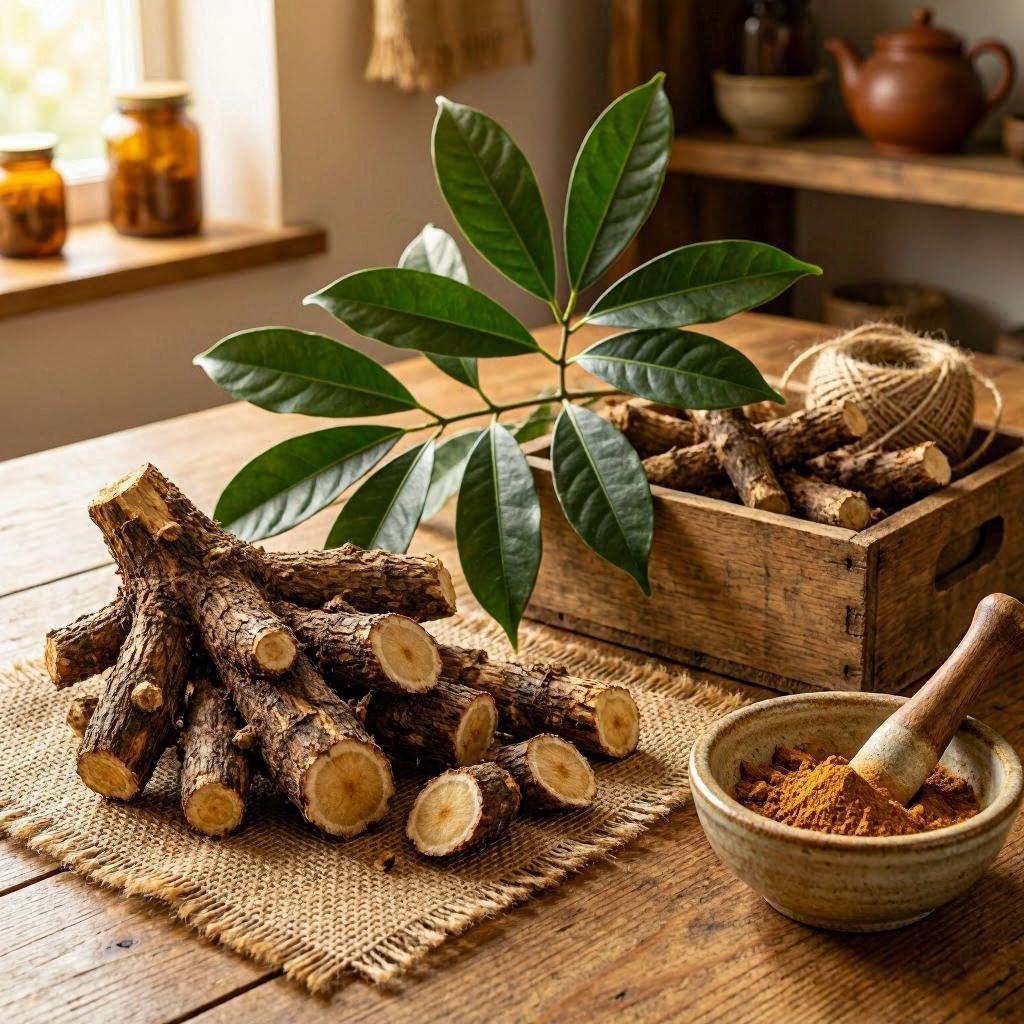
The global demand for Tongkat Ali (Eurycoma longifolia), a potent adaptogenic herb native to Southeast Asia, has experienced substantial growth over the past decade. As consumers increasingly seek natural alternatives for energy enhancement, hormonal balance, and stress management, brand owners and supplement companies are actively exploring private label opportunities in this category. However, the effectiveness of Tongkat Ali supplements hinges critically on one factor: bioavailability.
When sourcing high bioavailability Tongkat Ali capsule private label products, brand owners must navigate complex considerations ranging from extract standardization and manufacturing protocols to regulatory compliance and supply chain reliability. This comprehensive guide examines the science behind Tongkat Ali bioavailability, market dynamics driving demand, manufacturing best practices, and strategic considerations for brands seeking to launch or expand their presence in this rapidly growing segment.
The Science of Tongkat Ali: Bioavailability and Mechanism of Action
Tongkat Ali, also known as Longjack or Malaysian Ginseng, has been used in traditional medicine across Southeast Asia for centuries. Modern research has identified several classes of bioactive compounds responsible for its therapeutic effects, with quassinoids—particularly eurycomanone—emerging as the primary active constituents. These compounds interact with the hypothalamic-pituitary-gonadal axis, influencing testosterone production, cortisol regulation, and various metabolic pathways.
Despite its potent biological activity, Tongkat Ali faces significant bioavailability challenges that directly impact supplement efficacy. The active compounds exhibit poor water solubility, variable absorption rates across individuals, and susceptibility to first-pass metabolism in the liver. Standard water-based extracts typically deliver absorption rates ranging from 15% to 30%, meaning a substantial portion of the active ingredients never reach systemic circulation.
This bioavailability limitation has catalyzed innovation in extraction and formulation technologies. Advanced manufacturing processes now employ techniques such as full-spectrum water extraction with specific temperature controls, standardization of eurycomanone content to minimum 1% or 2%, and particle size reduction to improve dissolution rates. Some manufacturers incorporate bioavailability enhancers such as BioPerine (black pepper extract) or formulate with lipid-based delivery systems to increase absorption.
Capsule format offers particular advantages for Tongkat Ali delivery. The capsule shell protects sensitive active compounds from degradation during storage and transit, provides a barrier against oxygen and moisture infiltration, and dissolves rapidly in the gastric environment to release the extract for absorption. For high bioavailability formulations, vegetarian capsules made from HPMC (hydroxypropyl methylcellulose) offer excellent stability while accommodating clean-label consumer preferences.
Market Trends and Demand Data: Understanding the Opportunity
The global herbal supplement market reached approximately $43.5 billion in 2023 and is projected to grow at a compound annual growth rate (CAGR) of 7.5% through 2030, according to industry analyses. Within this broader category, Tongkat Ali occupies a specialized niche with distinct growth dynamics driven by expanding awareness of its adaptogenic and testosterone-supporting properties.
Market research indicates that the Tongkat Ali supplement segment specifically is valued at roughly $80-120 million globally, with projections suggesting growth rates between 8% and 12% annually through 2028. Southeast Asia remains the dominant consumption region, but North American and European markets are demonstrating accelerating demand as clinical research validates traditional uses and consumer education improves.
Several demographic and lifestyle trends fuel this growth. The male vitality and wellness category, particularly products targeting testosterone support, energy enhancement, and stress reduction, has experienced sustained expansion as consumers become more proactive about preventive health. Additionally, the broader adaptogen trend—encompassing products like ashwagandha, rhodiola, and lion’s mane—has elevated consumer awareness of herbal solutions for cortisol management and resilience support.
E-commerce platforms report that Tongkat Ali capsules consistently rank among the top-selling SKUs in the male performance and vitality supplement categories. Private label products, which offer brands the ability to differentiate through branding and formulation customization while controlling costs, account for an increasing share of this market segment.
For brand owners, this environment presents a compelling opportunity to establish or expand presence in a category with demonstrated consumer demand, favorable growth trajectories, and relatively limited branded competition compared to more commoditized supplement categories.
Manufacturing Considerations: Formulation, Stability, and Bioavailability Enhancement
Successful high bioavailability Tongkat Ali capsule private label production requires attention to multiple manufacturing variables that collectively determine product quality, shelf stability, and consumer efficacy.
Extract Selection and Standardization: The foundation of any Tongkat Ali capsule lies in the quality and standardization of the raw extract. Reputable manufacturers specify extract ratios (commonly 100:1 or 200:1 concentration), eurycomanone content (minimum 1% for standard formulations, 2% for premium high-potency products), and sourcing origin (Malaysian and Indonesian-grown Eurycoma longifolia demonstrate the highest bioactive compound concentrations). Third-party testing using HPLC (High-Performance Liquid Chromatography) should confirm active compound content and screen for contaminants.
Bioavailability Enhancement Techniques: Forward-thinking manufacturers employ various strategies to maximize the bioavailability of Tongkat Ali extracts:
- **Particle Size Optimization**: Micronization and nano-sizing reduce particle diameter, increasing surface area and improving dissolution rates. Particles below 100 microns demonstrate significantly faster and more complete absorption.
- **Bioenhancer Addition**: Black pepper extract (piperine) at concentrations of 0.5-2mg per capsule inhibits glucuronidation in the liver, extending the circulation time of active compounds. Clinical studies suggest piperine can increase bioavailability by 30-60%.
- **Lipid-Based Delivery**: Formulating Tongkat Ali extract with medium-chain triglycerides or phospholipid complexes (phytosomes) enhances lymphatic absorption and provides protection against first-pass metabolism.
- **Full-Spectrum Extraction**: Comprehensive extraction processes that capture the complete range of bioactive compounds—including minor quassinoids and alkaloids—may provide synergistic effects that exceed the activity of isolated compounds.
Stability and Shelf Life: Tongkat Ali extracts are susceptible to degradation from heat, light, oxygen, and moisture. Quality manufacturers address these vulnerabilities through desiccant inclusion, opaque or UV-protective packaging, nitrogen flushing during encapsulation, and冷水溶性 stabilization technologies. A properly formulated and packaged Tongkat Ali capsule should maintain potency through a minimum 24-month shelf life when stored under recommended conditions.
Dosage Considerations: Clinical research and traditional use suggest effective daily dosages ranging from 200mg to 400mg of standardized extract. Common capsule sizes include 300mg, 400mg, and 500mg of extract per capsule, with typical dosing protocols recommending 1-2 capsules daily. Manufacturers should clearly label extract content and provide recommended usage guidance compliant with regional regulatory requirements.
OEM/ODM Benefits for Brand Owners
Partnering with experienced OEM (Original Equipment Manufacturer) or ODM (Original Design Manufacturer) suppliers for Tongkat Ali capsule private label production offers strategic advantages that enable brands to compete effectively in this dynamic market.
Reduced Capital Investment and Risk: Contract manufacturing eliminates the need for brands to invest in specialized extraction equipment, cleanroom facilities, and quality control infrastructure. This capital-light approach allows companies to launch products with significantly lower upfront investment, testing market demand before committing to larger production volumes.
Low Minimum Order Quantities (MOQ): Many private label manufacturers offer MOQs starting at 50-100 units per SKU, with some offering sample quantities as low as 20-30 units for new product development. This flexibility enables brands to test multiple formulations, packaging variations, or label designs simultaneously without overcommitting inventory.
Accelerated Speed-to-Market: Established OEM/ODM partners maintain ready-to-formulate ingredient inventories, possess validated production processes, and understand regulatory requirements across major markets. This infrastructure enables rapid product development cycles—typically 8-16 weeks from concept to finished goods—compared to 18+ months required to establish in-house manufacturing capabilities.
Formulation Customization: Beyond standard extract capsules, ODM partners can develop differentiated products incorporating proprietary ingredient blends, specialized delivery technologies, and unique dosage forms. Options include multi-ingredient formulations combining Tongkat Ali with complementary botanicals (maca, fenugreek, tribulus), incorporating additional bioavailability enhancement systems, or creating sustained-release formulations for optimized dosing.
Scalability: Successful private label partnerships provide pathways for volume scaling as brand sales grow. Initial production runs of hundreds of units can evolve seamlessly to thousands or tens of thousands as demand increases, with corresponding pricing improvements through economies of scale.
When evaluating OEM/ODM partners, brand owners should assess manufacturing certifications (GMP, FDA-registered facilities), quality control capabilities, supply chain transparency, and communication responsiveness. Requesting facility audits, reviewing certificate of analysis (COA) documentation, and requesting pilot samples enables informed partner selection.
Quality Assurance: Certifications, Testing, and Compliance
Rigorous quality assurance protocols distinguish premium Tongkat Ali capsule private label products from substandard alternatives flooding the market. Brand owners must ensure their manufacturing partners implement comprehensive testing and documentation systems at every production stage.
Current Good Manufacturing Practice (cGMP) Certification: Facilities operating under cGMP guidelines adhere to documented quality management systems covering personnel training, equipment calibration, production procedures, and record-keeping. cGMP certification—verified through第三方审核 (third-party audits)—provides assurance that products are consistently manufactured to identity, strength, purity, and quality specifications.
Raw Material Verification: Reputable manufacturers implement supplier qualification programs that verify Tongkat Ali sourcing through certificate of analysis review, identity testing, and heavy metal/contaminant screening. Raw materials should undergo:
- **Identity Authentication**: Botanical verification through macroscopic and microscopic examination, DNA testing, or chromatography fingerprinting
- **Potency Testing**: HPLC quantification of eurycomanone and other marker compounds
- **Contaminant Screening**: Testing for heavy metals (lead, mercury, cadmium, arsenic), pesticide residues, microbial contamination, and aflatoxin
- **Adulteration Detection**: Screening for undeclared ingredients or substitution with related but ineffective species
In-Process and Finished Product Testing: Each production batch should undergo testing at critical control points and final release testing before distribution. Certificate of Analysis documentation should accompany every shipment, confirming potency, purity, dissolution, and microbial compliance with established specifications.
Regulatory Compliance: Products intended for the United States market must comply with FDA dietary supplement regulations under the Dietary Supplement Health and Education Act (DSHEA). European Union products must meet EFSA novel food requirements. International distribution requires familiarity with destination country regulations, label claims requirements, and import documentation.
Additional Certifications: Depending on target market demographics and consumer expectations, brands may seek:
- **Halal Certification**: Required or preferred in Muslim-majority markets and among Muslim consumer segments globally
- **Kosher Certification**: Market requirement for Jewish consumers and valued by mainstream consumers as a quality indicator
- **Organic Certification**: USDA Organic or equivalent for products meeting organic agricultural standards
- **Non-GMO Project Verified**: Growing consumer preference in North American markets
- **Vegan/Vegetarian Certification**: Plant-based certifications for HPMC capsule products
Formulation Formats: Comparing Capsules, Gummies, and Powder
While capsules represent the dominant delivery format for Tongkat Ali supplements, brand owners should understand the comparative characteristics of alternative formulations to make informed product development decisions.
Hard Shell Capsules: Gelatin or HPMC capsules offer several advantages for Tongkat Ali delivery:
- Excellent protection of sensitive active compounds from environmental degradation
- Rapid dissolution in gastric fluid (typically 15-30 minutes)
- Precise dosage delivery with minimal variability
- Ease of swallowing compared to tablets
- Compatibility with diverse capsule sizes (00, 0, 1, 2, 3)
- Clean-label appeal, particularly with HPMC vegetarian options
- Cost-effective production for moderate batch sizes
Capsules perform exceptionally well for Tongkat Ali extract delivery, where product stability and ingredient protection directly impact bioavailability and consumer-perceived efficacy.
Gummies: The gummy supplement category has experienced explosive growth, particularly for daily wellness and general health products. However, gummies present specific challenges for Tongkat Ali formulations:
- Heat and moisture exposure during production can degrade sensitive compounds
- Added sugars and flavoring may conflict with premium positioning and clean-label preferences
- Limited effective dose per gummy due to volume constraints
- Higher per-unit production costs compared to capsules
- Limited shelf stability for botanical extracts
For Tongkat Ali specifically, capsules deliver superior bioavailability and formulation stability compared to gummies.
Powder/Ready-to-Drink: Bulk powder formats and ready-to-drink beverages offer dosing flexibility but face challenges with standardization, convenience, and flavor masking requirements. Tongkat Ali’s bitter taste profile makes flavor masking particularly challenging in liquid applications.
For high bioavailability emphasis in the Tongkat Ali category, capsule format provides the optimal balance of stability, efficacy, consumer convenience, and manufacturing efficiency.
Frequently Asked Questions
What extract standardization should I request for high bioavailability Tongkat Ali capsules?
Look for extracts standardized to contain minimum 1% eurycomanone content, with premium formulations specifying 2% or higher. The extract ratio should be clearly stated (typically 100:1 or 200:1), and HPLC testing should confirm active compound content. Request the certificate of analysis demonstrating actual eurycomanone concentration rather than relying on label claims alone.
What is a reasonable minimum order quantity for Tongkat Ali capsule private label production?
MOQs vary significantly by manufacturer and packaging configuration. Standard capsule private label typically starts at 50-100 units for basic configurations, with lower quantities available through premium pricing or sample programs. Bottle packaging with 30-count or 60-count options often requires minimum orders of 100-500 units. Discuss your anticipated launch volume and growth projections with potential partners to find optimal arrangements.
How can I verify the bioavailability claims of a Tongkat Ali manufacturer?
Request documentation of bioavailability testing studies, whether conducted by the manufacturer or independent laboratories. Look for data comparing absorption rates, blood plasma levels, or pharmacokinetic parameters. Be skeptical of claims lacking supporting evidence. Additionally, evaluate the manufacturer’s extract technology, particle sizing processes, and inclusion of bioenhancers as indirect indicators of bioavailability optimization.
What certifications should I require from a Tongkat Ali capsule manufacturer?
At minimum, ensure your manufacturer holds cGMP certification verified through third-party audits. FDA registration is required for US market distribution. Depending on your target market, also consider requirements for Halal, Kosher, Organic, or Non-GMO certifications. Request copies of current certificates and verify their validity through issuing organization databases.
What shelf life can I expect from properly formulated Tongkat Ali capsules?
A well-formulated and packaged Tongkat Ali capsule product should demonstrate stability for 24-36 months under recommended storage conditions (cool, dry environment, away from direct sunlight). Verify that the manufacturer conducts real-time or accelerated stability testing and can provide supporting stability data. Request that shelf life expiration dating be printed on all packaging.
How do I ensure regulatory compliance for label claims on Tongkat Ali products?
Work with your manufacturer to ensure label claims align with FDA guidelines for dietary supplements. Avoid disease claims or unauthorized structure-function statements. Use only approved ingredient names and ensure supplement facts panels accurately reflect formulations. For products entering international markets, consult with regulatory specialists familiar with destination country requirements, as claim regulations vary significantly across jurisdictions.
What packaging options are available for Tongkat Ali capsules?
Common packaging configurations include amber glass bottles (offering excellent light protection and premium positioning), white or opaque HDPE plastic bottles (cost-effective with good protection), and blister cards (individual dose protection, though higher packaging costs). All options should include tamper-evident sealing and may incorporate desiccant packets for moisture protection. Work with your manufacturer to select packaging that balances cost, protection requirements, shelf presentation, and consumer preferences.
How long does it typically take from order to finished goods delivery?
Standard lead times for Tongkat Ali capsule private label production range from 8-16 weeks depending on formulation complexity, packaging requirements, and manufacturer capacity. Simpler formulations with standard packaging configurations may complete in 6-8 weeks, while custom formulations or specialized packaging may require 12-16 weeks or longer. Build adequate lead time into your product launch planning and maintain buffer inventory to avoid stockouts during peak demand periods.
Conclusion
The Tongkat Ali supplement category presents compelling opportunities for brand owners seeking to capitalize on growing consumer demand for natural energy, vitality, and adaptogenic support. Success in this competitive market depends critically on sourcing high bioavailability formulations that deliver demonstrable consumer results.
By partnering with experienced private label manufacturers who prioritize extract quality, employ advanced bioavailability enhancement technologies, maintain rigorous quality assurance protocols, and offer flexible production arrangements, brands can bring differentiated products to market efficiently and cost-effectively. The capsule format provides optimal delivery characteristics for Tongkat Ali’s sensitive bioactive compounds while meeting consumer expectations for convenience and efficacy.
As the market continues evolving, brands that invest in understanding manufacturing complexities, prioritize quality over cost minimization, and build transparent supplier relationships will position themselves for sustainable growth in this expanding category. The foundation of a successful Tongkat Ali private label venture lies not merely in identifying the right product opportunity, but in executing with manufacturing partners who share your commitment to quality and consumer value.
Disclaimer: These statements have not been evaluated by the Food and Drug Administration. This product is not intended to diagnose, treat, cure, or prevent any disease. The information provided in this article is for educational and informational purposes only and does not constitute medical advice. Always consult with a qualified healthcare professional before starting any supplement regimen.