










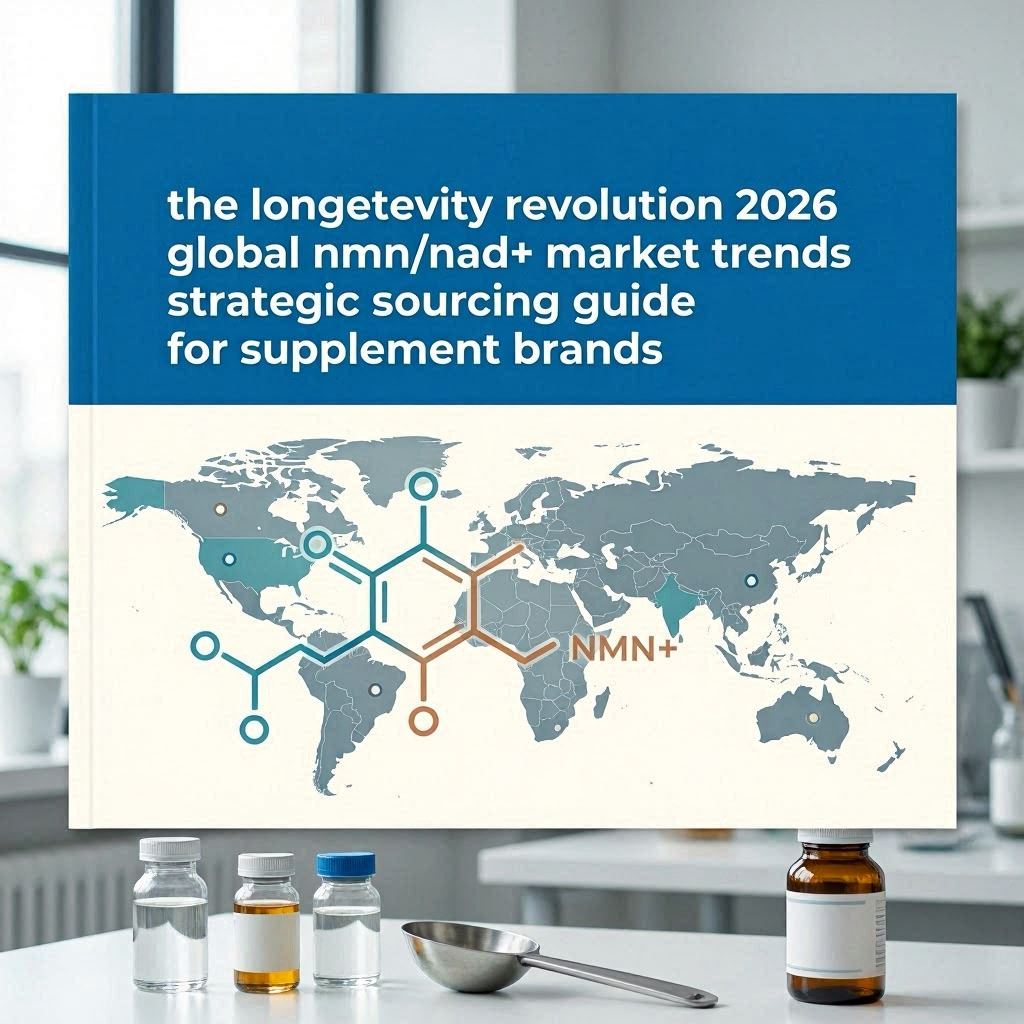
Acid Resistant Pure NMN Probiotics Powder Wholesale: A Comprehensive Guide for Brand Owners and Formulations
Introduction
The convergence of longevity science and gut health research has created unprecedented demand for innovative supplement formulations. Among the most compelling developments is the emergence of acid-resistant pure NMN probiotics powder as a wholesale ingredient that addresses two critical consumer health concerns simultaneously: cellular energy optimization through nicotinamide mononucleotide (NMN) and microbiome support through carefully selected probiotic strains.
For brand owners, contract manufacturers, and private label operators, understanding the science, market dynamics, and manufacturing considerations surrounding this dual-action ingredient has become essential for competitive positioning. The wholesale market for acid-resistant probiotic formulations combined with NMN presents significant opportunities, but success requires deep knowledge of strain selection, encapsulation technology, stability requirements, and regulatory compliance.
This comprehensive guide examines the biological mechanisms that make this combination particularly effective, analyzes current market conditions and growth projections, and provides practical guidance for companies seeking to source or formulate acid-resistant pure NMN probiotics powder at wholesale scale. Whether you are launching a new product line, reformulating an existing supplement, or evaluating contract manufacturing partners, the insights presented here will help you make informed decisions about this sophisticated ingredient category.
The Science Behind NMN and Acid-Resistant Probiotics
Understanding Nicotinamide Mononucleotide (NMN)
Nicotinamide mononucleotide is a naturally occurring nucleotide that serves as a critical precursor to nicotinamide adenine dinucleotide (NAD+), a coenzyme found in every living cell. NAD+ plays fundamental roles in cellular energy production, DNA repair, and sirtuin activation—processes directly linked to cellular aging and metabolic function.
As individuals age, NAD+ levels decline significantly, with some research suggesting reductions of 50% or more by midlife. This decline correlates with decreased mitochondrial function, reduced cellular energy production, and increased susceptibility to age-related metabolic dysfunction. NMN supplementation has emerged as a strategy to support NAD+ restoration, with published research demonstrating that oral NMN administration effectively elevates blood NAD+ levels in human subjects across multiple clinical studies.
The typical effective dosage range for NMN in supplement formulations falls between 100mg and 500mg daily, though higher dosages have been studied. Bioavailability considerations are paramount, as NMN must survive digestive transit and be absorbed through the intestinal lining to reach systemic circulation. Research indicates that NMN absorption occurs primarily through the small intestine, with transport mechanisms that help protect the molecule during gastrointestinal passage.
Acid-Resistant Probiotic Technology
Probiotic microorganisms face significant challenges when navigating the human digestive system. The stomach’s highly acidic environment (typically pH 1.5-3.5) can destroy a substantial percentage of viable bacteria before they reach the intestinal target site. This reality has driven the development of acid-resistant technologies designed to protect probiotic strains during gastric transit.
Acid-resistant probiotic formulations employ various protective mechanisms, including enteric coating, microencapsulation with protective polymers, and strain selection for acid tolerance. The most effective approaches combine multiple protective strategies to ensure that targeted probiotic strains arrive at their site of action in viable concentrations.
For wholesale formulations, acid-resistant probiotics typically deliver a minimum of 10 billion colony-forming units (CFU) per serving, with premium formulations offering 50 billion CFU or more. The most research-supported probiotic strains for general wellness applications include Lactobacillus acidophilus, Bifidobacterium lactis, Lactobacillus plantarum, and Bifidobacterium longum, among others.
Synergistic Potential of Combined Formulations
The rationale for combining NMN with acid-resistant probiotics extends beyond convenience to potential synergistic effects. Research suggests bidirectional communication between the gut microbiome and cellular NAD+ metabolism. Certain probiotic strains may influence nicotinamide metabolism and NAD+ salvage pathways, while NAD+ precursors like NMN may support intestinal epithelial function and gut barrier integrity.
This mechanistic overlap creates opportunities for formulations that address both pathways simultaneously. For brand owners, dual-action products offer simplified regimens, enhanced consumer value propositions, and potential differentiation in crowded supplement categories.
Market Analysis and Industry Growth Trends
Global Supplement Market Overview
The global dietary supplements market has demonstrated remarkable resilience and growth, with industry analysts consistently projecting expansion at compound annual growth rates (CAGR) between 7% and 9% through the current decade. Within this broader category, specific segments addressing longevity, metabolic health, and gut microbiome function have shown accelerated growth trajectories.
The probiotics supplement market alone represents a substantial and growing category, with global market valuations exceeding $6 billion and projections suggesting continued expansion driven by consumer awareness of gut-brain axis connections and immune function support. Premium probiotic segments, particularly those featuring acid-resistant formulations and clinically validated strains, command significant price premiums and demonstrate stronger growth rates than commodity probiotic products.
NMN Market Trajectory
The NMN supplement category has experienced explosive growth since 2020, driven by substantial media coverage of longevity research and the entry of major supplement brands into the space. Market sizing estimates vary considerably due to the category’s rapid evolution and varying definitions of inclusion, but credible industry analyses suggest the NMN supplement market represents several hundred million dollars globally, with growth rates potentially exceeding 20% annually in key markets.
Consumer awareness of NMN has expanded significantly beyond early adopter circles, with growing interest from mainstream consumers seeking to support their cellular health as part of proactive aging strategies. This broadening awareness creates opportunities for differentiated formulations that combine NMN with complementary ingredients.
Wholesale Demand for Advanced Formulations
The convergence of these trends has created substantial wholesale demand for sophisticated multi-ingredient formulations. Brand owners increasingly recognize that single-ingredient products face commoditization pressures and margin compression, while differentiated formulations combining NMN with acid-resistant probiotics offer enhanced value propositions and reduced competitive vulnerability.
Market intelligence suggests that wholesale procurement of combined NMN-probiotic formulations has increased substantially, with contract manufacturers reporting heightened inquiry volumes and expanding production runs for these product categories. Growth is particularly pronounced in North American and Asian markets, where consumer interest in longevity-focused supplements and microbiome health converges.
Manufacturing Considerations for Wholesale Procurement
Formulation Development Requirements
Developing stable, effective acid-resistant pure NMN probiotics powder formulations requires careful attention to ingredient compatibility, processing conditions, and stability optimization. The formulation scientist must consider the physicochemical properties of NMN, including its water solubility and potential sensitivity to heat and moisture, alongside the viability requirements of probiotic microorganisms.
Wholesale procurement specifications should address several critical parameters. The NMN purity standard should exceed 98% by HPLC analysis, ensuring minimal contamination from nicotinamide or other nucleotide precursors. Particle size distribution affects both solubility and manufacturing performance, with finer powders generally offering improved dissolution characteristics but potentially increased hygroscopicity.
Probiotic viability specifications must account for projected shelf life, with manufacturers typically guaranteeing minimum CFU counts at the time of manufacture with appropriate overages to ensure label claim compliance throughout the product’s usable life. A common specification would require 50 billion CFU per gram at manufacture with a guaranteed minimum of 25 billion CFU at expiration.
Stability Challenges and Solutions
Maintaining both NMN potency and probiotic viability in powder formulations presents distinct stability challenges. NMN degradation may occur through hydrolysis or other chemical pathways, particularly under elevated temperature or humidity conditions. Probiotic organisms require protection from oxidative stress, moisture, and processing stresses that can reduce viable cell counts.
Advanced manufacturing approaches address these challenges through careful excipient selection, with moisture-barrier packaging materials, oxygen-absorbing packets in final containers, and stabilized strain technologies that enhance probiotic stress resistance. Some manufacturers employ dual-encapsulation approaches that protect NMN from degradation while maintaining a favorable environment for probiotic survival.
Shelf life stability studies should demonstrate that finished formulations maintain specified potency levels throughout their intended shelf life, typically 24 months at room temperature storage. Wholesale buyers should request stability data and certificates of analysis demonstrating compliance with label claims at multiple time points.
Bioavailability Optimization Strategies
Beyond basic stability, manufacturers must consider bioavailability optimization to ensure that consumed NMN and probiotics achieve their intended physiological effects. For NMN, absorption occurs primarily through the intestinal SLC12A8 transporter, with research suggesting that co-administration with certain compounds may enhance uptake efficiency.
Probiotic bioavailability depends critically on survival through gastric acid and bile salt exposure. Acid-resistant technologies, including enteric coatings, pH-triggered release systems, and strain-specific protective encapsulation, can significantly improve the proportion of administered probiotics reaching the intestinal mucosa intact.
Wholesale specifications should reference validated testing methodologies that demonstrate gastric transit survival, such as simulated gastric fluid challenge protocols. Premium formulations typically achieve greater than 80% survival through a standardized acid challenge, compared with potentially less than 10% survival for unprotected strains.
OEM/ODM Partnership Advantages for Brand Owners
Customization Opportunities
Original Equipment Manufacturing (OEM) and Original Design Manufacturing (ODM) partnerships provide brand owners with access to specialized formulation capabilities and manufacturing infrastructure without requiring capital investment in dedicated production facilities. For acid-resistant pure NMN probiotics powder formulations, these partnerships offer numerous customization pathways.
Formulation customization options include NMN dosage within evidence-based ranges, probiotic strain selection from validated strain libraries, inclusion of complementary ingredients such as prebiotic fibers or absorption-enhancing compounds, and flavor masking for improved consumer experience. Packaging format flexibility allows brands to specify bottle sizes, closure types, and label configurations appropriate for their market positioning.
Customization extends to specification development, with manufacturing partners capable of producing formulations meeting specific customer requirements for purity, potency, particle size, and sensory characteristics. This flexibility enables brand differentiation through unique formulations rather than reliance on commodity ingredients.
Minimum Order Quantities and Scalability
Wholesale procurement through contract manufacturing arrangements typically offers favorable minimum order quantities (MOQ) compared with establishing proprietary manufacturing operations. MOQ structures vary by manufacturer and formulation complexity, but many partners offer starting quantities in the 10-50 kilogram range for powder formulations, enabling market testing and gradual scale-up.
Scalability represents a critical advantage of OEM/ODM partnerships. As brand sales grow, manufacturing partners can accommodate production volume increases without requiring fundamental changes to formulation or supply relationships. Many contract manufacturers offer tiered pricing structures that provide cost efficiencies as order volumes increase, creating alignment between brand growth and manufacturing economics.
Speed-to-market acceleration represents another significant benefit. Established manufacturing partnerships can often deliver production runs within 4-8 weeks of order confirmation, compared with 12-18 months typically required to establish proprietary manufacturing capabilities. This speed advantage enables brands to capitalize on market opportunities and respond to emerging consumer trends.
Supply Chain Integration
Strategic manufacturing partnerships provide supply chain integration benefits that extend beyond simple production services. Experienced contract manufacturers maintain established relationships with raw material suppliers, potentially securing preferential pricing and supply availability for key ingredients including NMN and probiotic strains.
Quality assurance infrastructure, including analytical testing capabilities, regulatory affairs support, and documentation systems, represents fixed-cost investments that manufacturing partners amortize across multiple client relationships. This shared infrastructure enables even small brands to access capabilities that would otherwise require prohibitive investment.
Quality Assurance and Regulatory Compliance
GMP Manufacturing Standards
Good Manufacturing Practice (GMP) certification represents a foundational requirement for wholesale supplement ingredient procurement. GMP standards, established by regulatory authorities including the FDA in the United States, mandate specific requirements for facility design, equipment qualification, personnel training, documentation systems, and quality control procedures.
GMP-certified manufacturers implement comprehensive quality management systems that encompass raw material qualification, in-process testing, finished product release testing, and complaint investigation procedures. These systems provide reasonable assurance that products consistently meet established specifications and regulatory requirements.
Wholesale buyers should verify GMP certification status through recognized certification bodies and review recent inspection findings. Third-party GMP audits, such as those conducted under the NSF International or UL verification programs, provide additional assurance of manufacturing quality systems.
Third-Party Testing and Verification
Beyond internal quality control, reputable manufacturers employ third-party laboratory testing to verify product specifications and provide independent verification of quality claims. For acid-resistant pure NMN probiotics powder, relevant testing includes NMN purity analysis by HPLC, probiotic strain identification and enumeration, heavy metal screening, microbial limit testing, and potentially allergen testing.
Certificates of Analysis (COA) should accompany each production lot, documenting actual test results against established specifications. Wholesale buyers should establish clear acceptance criteria for COA review and maintain records of testing results to support regulatory compliance and quality assurance programs.
Advanced manufacturers may also provide additional verification services, including DNA testing for probiotic strain confirmation, stability study data, and dissolution testing demonstrating acid-resistant performance characteristics.
Regulatory Compliance Considerations
Supplements containing NMN and probiotics must comply with applicable regulatory requirements in target markets. In the United States, the FDA regulates supplements under the Dietary Supplement Health and Education Act (DSHEA), requiring compliance with current Good Manufacturing Practice (cGMP) regulations and ensuring that products do not contain adulterated or misbranded ingredients.
International markets present varying regulatory frameworks. The European Union treats NMN as a Novel Food requiring pre-market authorization, creating distinct compliance pathways for products intended for European distribution. Asian markets, including Japan, South Korea, and China, maintain specific regulatory requirements that wholesale buyers and their manufacturing partners must navigate appropriately.
Wholesale buyers should engage regulatory affairs specialists to ensure formulations comply with target market requirements, including ingredient approvals, label claims, and documentation standards. Manufacturing partners with international distribution experience can provide valuable guidance on market-specific compliance requirements.
Formulation Format Considerations
Powder Format Advantages
Powder formulations offer distinct advantages for acid-resistant pure NMN probiotics combinations. Manufacturing flexibility allows precise dosage control and uniform distribution of active ingredients throughout the powder matrix. Consumer convenience options include direct consumption, mixing with beverages, or incorporation into food applications.
Powder formats typically offer favorable stability characteristics compared with moisture-sensitive formats, though appropriate packaging remains essential for maintaining product quality. The absence of capsule or tablet manufacturing steps may provide cost advantages and reduce processing stresses that could affect probiotic viability.
Wholesale procurement of powder formats enables brand owners to offer flexible serving options, allowing consumers to adjust dosage based on individual needs or preferences. This flexibility can enhance consumer satisfaction and support premium positioning strategies.
Alternative Delivery Formats
While powder formats offer significant advantages, alternative delivery formats may better serve specific market segments or consumer preferences. Capsule formats provide convenient, pre-measured dosing that appeals to consumers seeking simplicity and portability. Advanced capsule technologies, including plant-based options derived from pullulan or HPMC, address vegetarian and vegan consumer requirements.
Tablet formulations enable high-volume production at potentially favorable unit costs and allow for sophisticated delivery technologies including enteric coatings for targeted release. Tablet production does subject ingredients to compression forces that may affect probiotic viability, requiring careful formulation development and potentially protective excipient selection.
Gummy formats have achieved substantial market growth, particularly in consumer-facing retail channels, though their application for probiotic products presents specific challenges related to moisture content and processing temperatures that may affect bacterial viability. Reconstitution of powder formats into liquid products represents another consideration, requiring attention to stability in aqueous environments.
Format Selection Factors
Format selection should consider target consumer demographics, intended use patterns, distribution channel requirements, and competitive positioning objectives. Retail channels with prominent gummy categories may favor gummy delivery formats, while professional or practitioner channels may prefer capsule or tablet formats with more precise dosage delivery.
Manufacturing capabilities and scale economics vary by format. Powder and capsule production typically offer favorable economics at moderate production volumes, while gummy and tablet production may require larger minimum quantities to achieve competitive unit costs. Wholesale buyers should evaluate total cost of goods, including packaging materials and filling costs, when comparing format options.
Frequently Asked Questions
What NMN dosage is typically included in wholesale probiotic formulations?
Effective NMN dosages in supplement formulations typically range from 100mg to 500mg per serving, with most commercial products falling within the 250-300mg range based on current research supporting this dosage range for NAD+ elevation. Wholesale formulations should specify exact NMN content and provide testing documentation confirming potency. Higher dosages may be appropriate for specific consumer segments, though emerging research continues to inform optimal dosage recommendations. Brands should consider regulatory requirements and label claim substantiation when establishing NMN potency specifications.
How do acid-resistant probiotics differ from standard probiotic formulations?
Acid-resistant probiotics employ protective technologies to enhance survival through the gastric environment. These technologies may include enteric coating materials that remain intact at low pH but dissolve in the higher-pH intestinal environment, microencapsulation with protective polymers, or strain selection for inherent acid tolerance. Testing methodologies, including simulated gastric fluid challenge protocols, can quantify acid resistance performance. Wholesale specifications should reference validated testing methodologies and establish minimum survival thresholds.
What is the typical shelf life for NMN-probiotic powder formulations?
Premium NMN-probiotic powder formulations typically carry 24-month shelf life guarantees when stored under recommended conditions (cool, dry environment, protected from excessive heat and humidity). Shelf life is supported by accelerated stability studies and real-time stability monitoring programs. Actual shelf life may vary based on specific formulation composition, packaging configuration, and storage conditions. Wholesale buyers should request stability data and establish storage handling requirements for distribution channels.
What quality certifications should wholesale buyers require from manufacturers?
Essential certifications include GMP (Good Manufacturing Practice) certification from recognized bodies, confirming compliance with regulatory manufacturing standards. Third-party verification programs, such as NSF International dietary supplement certification, provide additional quality assurance. Testing certifications for specific analyses (HPLC purity, CFU enumeration) should come from accredited laboratories meeting ISO/IEC 17025 standards. Depending on target markets, halal, kosher, organic, or non-GMO certifications may be required or advantageous.
What minimum order quantities can brands expect for private label NMN-probiotic products?
MOQ structures vary by manufacturer and formulation complexity, but powder formulations often start at 10-25 kilograms for initial production runs. Some manufacturers offer smaller quantities for market testing purposes, potentially with premium pricing. As order volumes increase, manufacturers typically offer more favorable unit pricing through economies of scale. Brands should discuss growth projections with potential manufacturing partners to establish MOQ structures that accommodate both current requirements and anticipated volume growth.
How can brands verify probiotic strain identity and potency?
Verified strain identity requires genetic testing methods, including 16S rRNA sequencing for bacteria, which provides definitive strain identification. Quantitative enumeration should use validated microbiological methods with appropriate media and incubation conditions. Third-party laboratory testing from ISO-accredited facilities provides independent verification. COA documentation should reference specific testing methods and include acceptance criteria for both identity and potency specifications.
What packaging options protect powder formulations effectively?
Optimal packaging for powder formulations includes high-density polyethylene (HDPE) containers with induction-sealed membranes that provide moisture and oxygen barrier protection. Desiccant packets inside containers provide additional moisture protection. For extended stability requirements, aluminum blister packaging or foil-lined pouches may be appropriate. Packaging selection should consider target market requirements, retail display conditions, and overall product shelf life objectives.
How do wholesale costs compare between powder and alternative formats?
Powder formats typically offer favorable manufacturing economics due to simplified processing requirements and reduced capital equipment investment compared with gummy or tablet production. Unit packaging costs may vary based on format and volume, with larger containers offering economies compared with individual-serving packets. Total cost analysis should include raw material costs, manufacturing fees, packaging materials, and anticipated production volumes to accurately compare format economics.
Conclusion
The wholesale market for acid-resistant pure NMN probiotics powder represents a compelling opportunity for brand owners seeking to differentiate their supplement portfolios through scientifically supported, consumer-relevant formulations. The convergence of longevity-focused NMN ingredients with proven probiotic technologies addresses meaningful consumer needs while creating barriers to commoditization.
Success in this category requires careful attention to formulation science, including NMN purity standards, acid-resistant probiotic technologies, and stability optimization strategies. Quality assurance considerations, including GMP certification, third-party testing, and regulatory compliance, protect both brand reputation and consumer safety.
OEM/ODM manufacturing partnerships provide efficient pathways to market, offering formulation customization, flexible MOQ structures, and supply chain integration benefits that enable brands of all sizes to access sophisticated manufacturing capabilities. By selecting experienced manufacturing partners with demonstrated expertise in advanced supplement formulations, brands can confidently pursue market opportunities in this growing category.
As consumer interest in cellular health and microbiome function continues to expand, formulations that address both pathways through high-quality, stable, and bioavailable ingredients will increasingly capture market share. Brand owners who develop deep expertise in these formulation categories and establish strategic manufacturing partnerships position themselves to capture value from this dynamic market segment.
Disclaimer: These statements have not been evaluated by the Food and Drug Administration. This product is not intended to diagnose, treat, cure, or prevent any disease. The information provided in this article is for educational and informational purposes only and does not constitute medical advice. Always consult with a qualified healthcare professional before starting any supplement regimen.