










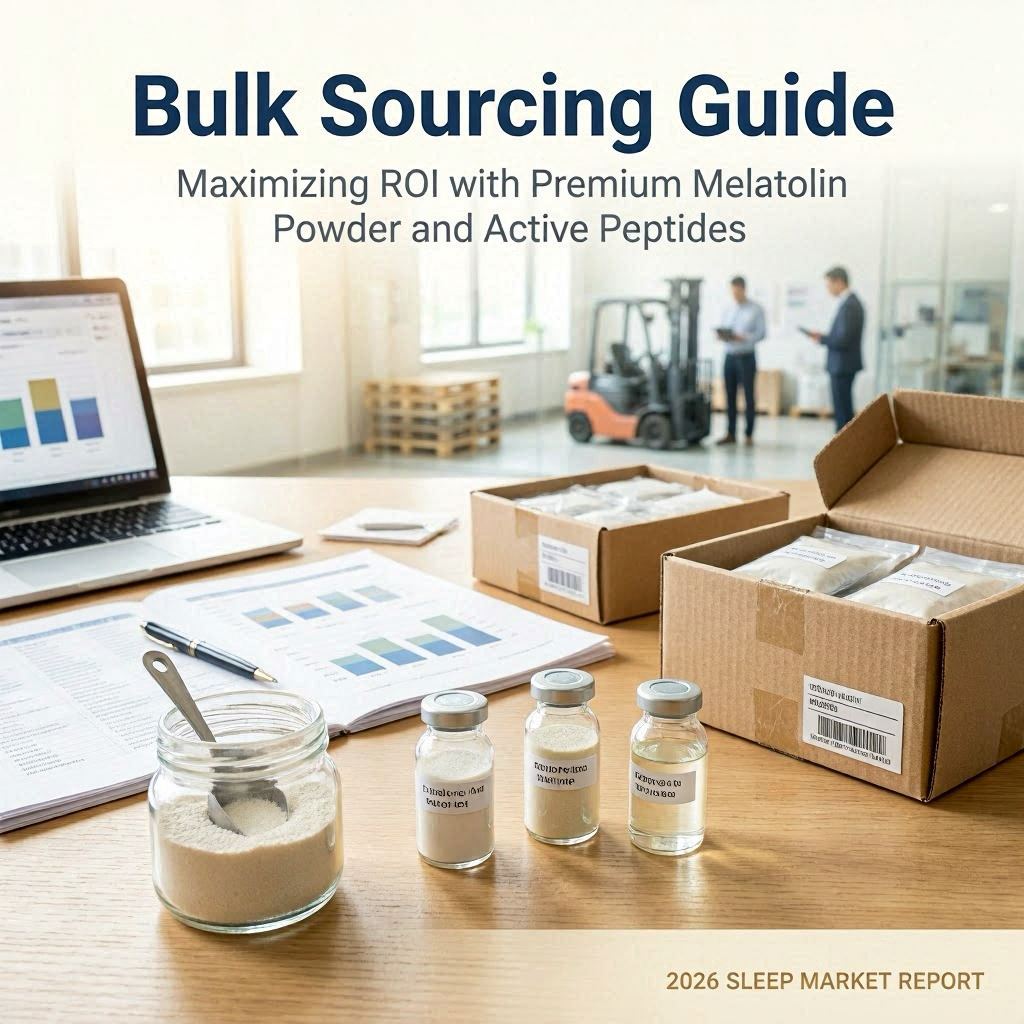
The Surging Global Demand for Sleep Health Solutions: A B2B Market Overview
The global sleep aid market has transitioned from a niche pharmaceutical segment into a mainstream wellness powerhouse. As modern consumers face unprecedented levels of stress, digital blue light exposure, and circadian rhythm disruptions, the demand for non-prescription, clean-label sleep solutions has skyrocketed.
Market intelligence indicates that the global sleep economy is projected to surpass hundreds of billions of dollars by the late 2020s. For dietary supplement brands, Amazon aggregators, and private label entrepreneurs, this represents a highly profitable, high-repeat-purchase product category.
Historically, the market was dominated by synthetic sleep aids or simple single-ingredient formulas. However, today’s informed consumers demand multi-functional wellness products. They don’t just want to fall asleep; they want cellular recovery, metabolic balancing, and anti-aging benefits while they rest. This shifting consumer psychology creates a massive opportunity for contract manufacturing. By combining pure Melatonin Powder with innovative active peptides, brands can differentiate themselves from generic market competitors and build strong consumer loyalty.
Technical Insights: Why Melatonin Powder Remains the Gold Standard
Melatonin ($N$-acetyl-5-methoxytryptamine) is a naturally occurring hormone synthesized primarily by the pineal gland. It plays a critical role in regulating the sleep-wake cycle (circadian rhythm) and synchronizing peripheral molecular clocks within human tissues.
For brands looking to develop private label sleep formulations, sourcing high-purity raw materials is crucial. Melatonin Powder is highly preferred by manufacturers over liquid solutions or pre-made tablets due to its superior stability, blending flexibility, and cost efficiency.
🔬 Molecular Stability and Blending Flexibility
Pure melatonin powder exhibits excellent stability profile when stored under proper conditions. It can be effortlessly formulated into various delivery formats, including:
- Traditional hard capsules or tablets.
- Advanced fast-dissolving sublingual strips.
- High-growth functional gummies (utilizing pectin for thermal stability).
- Functional beverage mixes and powdered sleep elixirs.
From a biochemical standpoint, melatonin acts as a direct free radical scavenger and indirect antioxidant, stimulating the production of superoxide dismutase (SOD) and glutathione peroxidase. This dual mechanism—regulating sleep while neutralizing oxidative stress—makes it a versatile primary ingredient for modern wellness portfolios.
Innovative Synergy: Combining Melatonin with Active Peptides for Premium Formulas
The modern supplement industry is highly competitive. To command a premium price point, brands must move beyond single-ingredient formulas. The next evolutionary step in sleep supplement design is the synergy between Melatonin Powder and bioactive peptides.
🧬 The Peptide Sleep Stack Explained
When formulating for OEM/ODM projects, combining ingredients with complementary biological pathways is key to product efficacy.
Casein Phosphopeptides (CPP) & Sleep Peptides: Certain milk-derived bioactive peptides act as natural agonists for $GABA_A$ receptors in the central nervous system. When paired with melatonin, they help calm mind racing, allowing the melatonin to initiate sleep more rapidly.
Collagen Peptides for Nighttime Beauty: The “beauty sleep” market is expanding rapidly. Combining low-molecular-weight collagen peptides with melatonin powder creates a powerful dual-action formulation. While melatonin improves sleep architecture, the active peptides trigger dermal fibroblast proliferation during peak nighttime cellular regeneration cycles.
Immune Peptides: Sleep and immunity are deeply linked. Integrating small-molecule immune-modulating peptides allows brands to market a comprehensive “Rest & Protect” product line.
Compliance and Sourcing Guidelines for Smart Brands
Navigating the regulatory landscape in Western markets is essential for the longevity of your brand. Both the US Food and Drug Administration (FDA) and the European Food Safety Authority (EFSA) maintain strict oversight regarding ingredient purity, labeling claims, and manufacturing environments.
🛡 Regulatory & Quality Benchmarks
- Purity Standards: Sourcing agents must ensure that melatonin powder meets or exceeds USP (United States Pharmacopeia) or EP (European Pharmacopoeia) standards, typically requiring a minimum purity of 99.5% with zero heavy metal or residual solvent contamination.
- Structure/Function Claims: Under the Dietary Supplement Health and Education Act (DSHEA) in the US, labels must avoid drug-like claims (e.g., “cures insomnia”). Instead, compliant text should focus on physiological support, such as: “Supports natural sleep cycles,” “Promotes a relaxed mind,” or “Helps regulate circadian rhythm.”
- Manufacturing Certifications: Ensure your contract manufacturing partner operates within facilities certified under GMP (Good Manufacturing Practices), FSSC 22000, or BRC Food to prevent cross-contamination and guarantee consistent batch dosing.
FAQs
Q1: What is the recommended dosage of Melatonin Powder for private label capsules?
- A: Standard dosages in commercial dietary supplements typically range from 1mg to 10mg per serving. Lower doses (1mg–3mg) are ideal for daily wellness and jet lag formulas, while higher doses (5mg–10mg) are usually marketed for maximum sleep support.
Q2: How does temperature affect the stability of melatonin powder during manufacturing?
- A: Melatonin powder is relatively heat-stable, with a melting point around 117°C to 120°C. However, to preserve its molecular integrity and avoid degradation, it should be kept away from prolonged high heat and direct UV light during the blending and compounding processes.
Q3: Can melatonin powder be formulated into vegan-friendly functional gummies?
- A: Yes. By utilizing a 100% plant-based pectin base instead of animal gelatin, melatonin powder can be cleanly incorporated into premium vegan formulas. This approach ensures excellent thermal stability and satisfies clean-label consumer preferences.
Q4: What certifications are necessary for exporting melatonin-based supplements to Europe?
- A: Products exported to the EU must comply with EFSA guidelines. Key requirements include manufacturing in a ISO 22000 or GMP-certified facility, clear allergen declarations, and ensuring that the melatonin dosage complies with individual member state classification limits for food supplements vs. medicinal products.